


FW
Bangladesh exports up 36 per cent
In August 2022 Bangladesh’s exports increased by 36 percent compared to the same period of the previous year.
Main reasons for this growth are the increased prices of raw materials, increase in cost of freight transportation and some orders from China shifting to Bangladesh. Key players in this growth were the readymade garments, home textiles and leather and leather goods sectors. Earnings of the readymade garment sector increased 26 per cent over that of last fiscal.
Knitwear earnings grew 20 per cent and woven garment export earnings were up by 34 per cent.Home textile also has a significant contribution to Bangladesh’s exports after readymade garments. Home textile exports from July to August 2022 were 53 percent higher than in the same period of the previous financial year.
Entrepreneurs are not yet seeing any negative impact on orders in this sector. Rather, they have plenty of orders in hand. Several orders are coming to Bangladesh, especially from Pakistan. They are expecting more orders because of the flood.
After the Covid crisis, demand increased in Bangladesh’s main export destination countries, so people started placing large orders. But the US and EU are facing record high inflation as the Ukraine-Russia war rages. Consumers have cut back on purchases again. As a result, orders are falling and the reflection will be seen in the next two to three months.
Chinese T&A exports up 17 per cent
China’s exports of textiles, apparel and clothing accessories increased by 17 per cent in the first seven months of 2022.
Garments and clothing accessories exports in the first seven months were 18 per cent higher than in the same period of last year. The country’s garment exports grew 19 per cent in the same period.China’s textile exports grew 16 per cent year-on-year in January to July 2022. Of this, the export of textile yarn increased by 19 per cent, fabrics by 20.2 per cent and textile products by 11 per cent.
Viewed from the proportion of major products exported, knitted garments made of chemical fiber took the largest part, and cotton knitted garments came second, followed by woven fabrics made of chemical fibers and other fabrics. From January to July, the share of fabric exports was rather large, accounting for about 23 per cent of total textile and apparel exports.
China’s exports of textile and apparel made of chemical fibers performed better than cotton goods. One of the reasons lies in the ban on Xinjiang cotton and another reason is that the unit price of cotton products increases faster than the unit price of products made of chemical fibers.
YesAnd and Kornit launch digital printing
YesAndandKornit Digital have launched customizable on-demand printing. Sharing the core values of fashion and innovation and non-toxic, zero-waste production, and the fusion of technology to accelerate impact, this launch represents a cutting-edge and sustainable solution that’s accessible, traceable, customizable, and scalable.
YesAnd and Kornit Digital are co-creating digital, on-demand printed certified organic blank merchandise, with graphic designs by artists, celebrities, influencers, musicians, fashion VIPs, NGO’s and more.Debuting the first of their brand collaborations with farm-to-print organic merchandise, the brands will be debuting their select blank styles of digitally-printed designs from the initial capsule collection
By joining forces, this collaboration is aimed at educating, engaging, and activating both consumers and industry alike. This collaboration is aimed at minimizing waste, water, chemical use, and energy, while celebrating climate action, manufacturing efficiencies, and sustainable innovation.
This strategic collaboration showcases the power of on-demand, digital production—and how it can unleash new levels of creativity for designers to fulfill their ultimate visions. It’s also a reflection of the seamless way designers are being more efficiently connected direct to the consumer.
Kornit Digital is a worldwide market leader in sustainable, on-demand, digital fashion and textile production technologies.YesAnd offers people a way to buy what they love and seek with modern design, color, high quality, accessibility, and inclusivity.
Singapore to host fashion summit
Global Fashion Summit will be held in Singapore, November 3, 2022. The event will focus on the perspectives of manufacturers and supply chain partners to understand how the industry can collaborate to reduce social and environmental impact in the entire value chain. The summit will call on the industry to accelerate change, encouraging more alliances between manufacturers, suppliers, investors, brands, NGOs, policymakers and more. It will also examine cross-industry alliances in a bid to accelerate the transition to a net positive reality.
This event usually takes place in Copenhagen. By bringing the forum to Asia, the new edition will include even more manufacturer and supply chain partner voices in the program to discuss sustainability challenges, differences, and opportunities to collaborate with brand executives on equal terms.
Plenary sessions will consider topics such as renewable energy transformation, better wage systems and performance measurement. Half the program will be dedicated to educational and action-oriented business case studies with options for direct interaction and live reactions. These will include tangible learnings and concrete recommendations to mobilise guests to take immediate action following the event.
The event will foster further collaboration across stakeholder groups through productive roundtable sessions that create an exchange of views among key decision makers in both the public and private sectors.
Disaster looms over factories in Pakistan
Pakistan’s garment and textile workers work under unsafe conditions.
Deadly safety violations persist in factories supplying H&M, C&A, Bestseller, and Zara. There are still no binding agreements in place between apparel brands and labor unions to keep workers safe.
Factories have no fire-rated stairwells or exits. Explosions happen and workers are exposed to electrical discharge and harmful substances. Gas leaks happen. In the past 18 months alone there have been over 30 serious safety incidents in garment and textile factories in Pakistan. Over a dozen people have died and more have been injured. And yet the true extent of the safety violations in factories remains unknown.Ten years ago more than 250 people died in a factory fire in Pakistan – the deadliest factory fire ever in the global garment industry. Ironically the factory was audited as safe only a few weeks before the devastating fire.
The brands which have been named above are accused of delaying the implementation of the International Accord for Health and Safety in the Textile and Garment Industry. Bringing factories under the program can ensure credible, independent inspections, remediation, safety training, and a complaint mechanism to keep workers safe.
So Pakistan’s garment and textile workers remain in the exact same unsafe conditions that led to the horrific disaster a decade ago.
India and Bangladesh hope for trade pact
India can double its merchandise exports to Bangladesh if the latter reduces its peak tariff of 25 per cent on 415 goods under the proposed Comprehensive Economic Partnership Agreement (CEPA).
India has export competitiveness in these 415 goods. However, India meets hardly 22 per cent of the total import demand of Bangladesh in these 415 goods as the 25 per cent peak import tariff levied by Bangladesh acts as an impediment for Indian exports.These 415 products include denim, woven fabrics, iron and steel articles, paper and paperboard, fresh grapes, electric conductors, gems and jewelry, plastic products, cardamom, footwear, tricycles, washing and cleaning chemicals, ceramic sinks, stranded wires and cables etc.
The deal may also increase India’s share in the total import of Bangladesh, which currently stands around 19 per cent behind China’s share of 33 per cent.
A trade agreement between India and Bangladesh, two large economies in South Asia, can boost intra-regional trade in South Asia, which is the least connected region in terms of trade when compared to other regions such as North America, Europe and Asean.
Intra-regional exports in South Asia account for hardly nine per cent of the total exports of this regioncompared to 13 per cent in Sub-Saharan Africa, 22 per cent in Asean, 30 per cent in North America and 60 per cent in the European Union.
Bemberg to unveil new fiber at Filo
Bembergby Asahi Kasei will unveil a new yarn range at Filo.
The staple fiber expands the company’s realm of applications for the fashion and luxury industry, including also knitwear, jersey and casualwear. The fiber comes with a circular economy footprint obtained from cotton linters through a closed-loop process. Bemberg also ensures certified sustainability credentials through its transparent and traceable approach.
Bemberg by Asahi Kasei is a one-of-a-kind, matchless, and original new generation material made from the smart-tech transformation of cotton linter pre-consumer material, converted through a traceable and transparent closed loop process.
Bemberg has the RCS, Oeko-Tex Standard 100 e ISO 14001 certifications. Bemberg is the brand name of the regenerated cellulose fiber cupro, produced only by Asahi Kasei.Bemberg is cool and sensual with a unique, supple drape. It is antistatic and breathable while its soft versatility makes it perfect for the modern wardrobe for fashion, athleisure, and everyday casual wear.
Bemberg by Asahi Kasei expands its journey and evolution in contemporary style with a brandnew staple fiber that unlocks creative paths towards new aesthetics, touch and sustainability.
Filo, to be held in Italy, September 14 to 15, 2022, is an international trade show and business platform dedicated to premium collections of yarns and fibers with a sustainable and ethical imprint.
Federico is the Redress award winner
Federico Badini Confalonieri is the winner of the Redress Design Award. Redress is the world’s largest sustainable fashion design competition and is collaboration between VF Corporation and NGO Redress.
The aim of this partnership is to reduce waste and advance circular design in the fashion industry. VF Corporation is a global leader in branded lifestyle apparel, footwear and accessories.NGO Redress, an environmental charity, is based in Hong Kong.
Confalonieri impressed the judges with his collection which uses zero-waste techniques to upcycle waste fabrics from his previous collections, and draws attention to the issue of microplastics in the fashion industry, with garments made with synthetic fabrics that have an incorporated filter fabric to retain pollution during washing.
In their fourth year of collaboration, the partnership between VF and Redress reflects a shared mission to innovate and foster the next generation of forward-thinking, environmentally conscious designers in the apparel and footwear industry. The winner, Federico Badini Confalonieri, will gain the opportunity to work with VF’s Timberland team and collaborate on a special sustainable design project that advances the brand’s vision for a greener future.
Creating sustainable circular designs is crucial to VF’s mission of bettering both people and the planet. Therefore, VF wants to equip talented next-generation designers with the tools and experience needed to further develop innovative circular solutions.
Pakistan seeks the help of ICA
The cotton industry in Pakistan is getting the help of the International Cotton Association (ICA) especially in regard to the issues faced by Pakistani cotton buyers.
Pakistan is emerging as a cotton importing country but importers are not fully aware of ICA rules and their rights as buyers.
ICA is visiting Pakistan to learn at first-hand how current market conditions, logistic challenges and retail demands are affecting the cotton trade and Pakistan’s textile manufacturers are being updated about the best global practices in the cotton and textile trade being adopted by various countries to meet the new challenges.
Pakistan is an important textile country in South Asia, having a significant ICA membership and playing a major international role in yarn and textile manufacturing. Cotton is an important cash crop for Pakistan and a major raw material for its textile industry, representing 75 percent in the fiber mix of the textile industry products.
The industry provides livelihood to 25 million people in Pakistan. The present demand for cotton in Pakistan is at least 13 million bales. Cotton production in Pakistan has dropped to less than eight million bales this year due to water shortage, fake pesticides, and poor pest management.
Growing fascination for trendy fashion drives up growth in menswear globally
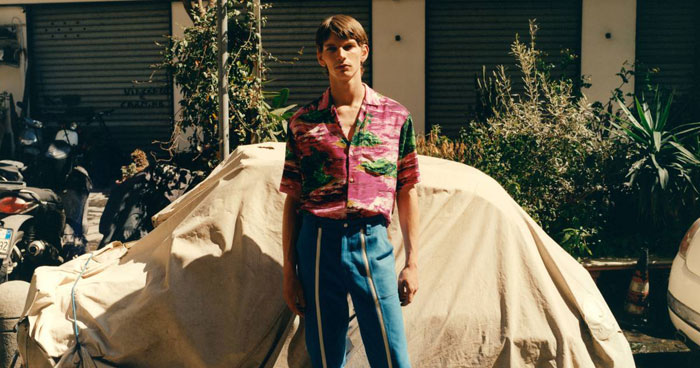
With shoppers trading their skinny jeans and fitted suits for wide-legged trousers, loose-fitted tees and casual attire, menswear business is booming across the globe. As per a Business of Fashion report, the category grew 40 per cent compared to the same period last year at London-based luxury retailer MatchesFashion. It is expected to grow faster than women’s wear over the next four years, expanding to $547.9 billion by 2026, projects Euromonitor International. The average annual growth rate is projected to at around 5.8 per cent compared to 5.3 per cent for women’s wear.
Brands capitalize on the category growth
Betting on this shift, brands are launching their new range. The Outnet launched a menswear range in March while J Crew plans to relaunch its revamped menswear category under Noah designer Brendon Babenzien in fall.
Menswear category is also attracting investments from luxury players like Louis Vuitton that opened a dedicated men’s store in Beverly Hills in July. Italian luxury tailoring brand Zegna plans to launch a sportier and more immersive menswear range. Labels like Burberry, Gucci and Dior have signed new sports stars as ambassadors to capitalize on growing interest from new audiences of men.
Driven by a reset in fashion, menswear boom was cemented with the launch of new silhouettes prioritizing comfort. The category’s revival is also being driven by gender fluidity with men now opting for wider-legged cropped trousers, cargo pants and oversized shirts — clothing they can wear on most life occasions, points out Chris Black, Menswear Consultant for brands like Thom Browne, New Balance and Stüssy through his agency, Done to Death Projects.
Customized tailored pieces
UK-based luxury retail chain Flannels has launched a more personalized shopping experience to cater to the demand for bespoke product alterations. According to David Epstein, Managing Director, Frasers Group, the retailer’s new flagship store in Liverpool enables consumers to shop for clothing made to measure at a tailoring hub on the menswear floor. Meanwhile, brands like Zegna are promoting more causal pieces of clothing including sports coats and knitwear. New luxury cult brands like Aimé Leon Dore are capitalizing on trends like ‘blokecore’, a viral subculture that celebrates the style of middle-aged men, like wide-legged jeans, quilted cardigans, polo shirts and bucket hats.
Accessories continue to drive growth
Micheal Kliger,CEO, Mytheresa points out menswear retailers have also been focusing on accessories over the last year. Leather accessories and hit items like Prada’s crossbody nylon bags are driving sales category sales at Mytheresa. Demand for bags and sunglasses have also increased. Sales of men’s accessories have grown 35 per cent year-on-date, explains Epstein, Managing Director, Mytheresa. Meanwhile, Mr Porter has doubled its fine jewelry brand offering in the last year thanks to increased demand, the company said. And Matches Fashion noted a rise in spending on watches and fine jewelry this year as well.
Men’s deepening engagement with fashion
Black says, men’s engagement with fashion has grown with new cultural channels launching menswear ranges. Enabling menswear to reach new audiences, podcasts like Throwing Fits, Instagram accounts such as NCL Gallery, Hidden and JJJound, as well as subreddits and Discord Channels are providing menswear fans an environment reserved for industry insiders. The market is being driven by influencers or aspirational personalities.











