FW
Global shapewear market grows at seven per cent
The compression wear and shapewear market is growing at a CAGR of seven per cent a year.
Compression wear and shapewear are tight-fitted apparels designed specifically to keep the body in a certain posture. Change in lifestyles, rise in disposable income of consumers, high-end advancements in fabrics and garment design and a surge in demand from the geriatric population are driving the growth of the market. Male users are leading the global compression wear and shapewear market. Men prefer compression garments during a workout, further fueling the demand from the male consumer segment. The women’s segment too is growing owing to interest in fitness and comfortable clothing and an increased participation of women in sports activities.
North America accounts for about 42 per cent of the market share. Among various distribution channels, the specialty retail stores segment holds a revenue share of 62 per cent and is expected to maintain its dominance ahead as well. This segment constitutes company-owned outlets that possess extensive penetration in various geographies and sell wide product lines of compression wear and shapewear. The performance and recovery segment accounts for the maximum revenue share. This segment is expected to grow owing to extensive usage of compression wear to prevent injuries, improve blood circulation, and speed up recovery.
Puma dabbles in metaverse
German sports brand Puma has rolled out an interactive metaverse project dubbed Black Station to display a collection of its limited-edition sneaker NFTs.
The sneaker tokens are part of the firm’s Futrograde collection. Holders of these NFTs can redeem them for physical sneakers at any time.
The Black Station project brings Puma up to par with fellow sports giant Adidas as it becomes the latest sportswear brand to launch digital collectibles.Twenty years ago, Black Station was Puma’s label for its most innovative designs in fashion. Now it is a portal for digital exploration across fashion, sport performance, heritage classics, and innovation. Puma's Futrograde collection follows a recent trend among clothing and luxury brands that are releasing physical products affiliated with digital assets, generally known as phygitals. Other popular brands that have towed a similar path include luxe brands Prada, Tommy Hilfiger, and Estee Lauder.
Ever since its foundation in 1948, it has been the company’s philosophy to provide the fastest athletes with the fastest products, an attitude summarized in the brand’s motto Forever Faster.Track and field is sports and athleticism in its purest form and embedded in the very core of Puma. There are also improved versions of the gold-medal-winning PumaevoSpeed Nitro Elite and several new products for long-distance runners.
Indonesia export earnings up 41 per cent
Indonesia’s earnings from exports of leather, finished leather goods, and footwear increased by 41 per cent in June 2022 compared to the same period in the previous year.
There has been a diversion of orders from several global brands to Indonesia. Utilities of the leather industry, leather goods, and footwear industries also increased to 84 percent in July 2022. Utilities before the pandemic were around 80 percent.
Indonesia holds exhibitions of footwear, leather, and finished leather products. These are a means of product introduction and a bridge between business actors and between business actors and consumers. The goal is to increase inter-industry linkages between national footwear manufacturers and domestic leather producers as well as efforts to make the import substitution program a success and strengthen the supply chain between upstream and downstream sectors of the domestic shoe industry.
Exports of shoes from Indonesia grew 28 percent in 2021. Indonesia is the sixth largest footwear exporter in the world. Indonesia believes the Regional Comprehensive Economic Partnership (RCEP) will open up opportunities to increase exports of footwear. The country’s shoe exports to RCEP countries reached 29 percent of total exports in 2020 followed by the United States at around 27 percent.
EU textile sector wants cap on gas price
The European textiles industry has called on the European Union to adopt a wholesale price cap for gas.
It says a cap above a certain level will result in collapse of businesses. It wants the TTF benchmark parameters to be changed and TTF to be decoupled from the electricity market and the revision of the merit-order principle for the electricity market, which is no longer serving the purpose it was designed for.
Another proposal is that the state-aid framework should be amended and includes textiles finishing, textiles services and the nonwoven sectors as well. If this doesn’t happen, says the industry, Europe will remain without its integrated textiles ecosystem and would not be able to translate into reality the EU textiles strategy for more sustainable and circular textiles products.
Given the dire international competition in which the EU textiles industry operates, it says, it is not possible to just pass on the increased costs to consumers. Yet, with these sky-high prices, companies cannot afford to absorb those costs.EU textile companies are mainly small and medium units that do not have the financial structure to absorb such a shock. The industry fears that if the EU does not act international competitors will have an advantage in the market, resulting in the de-industrialisation of Europe and a worsened reliance on foreign imports of essential products.
Result of high energy prices causes production loss Last month gas wholesale prices reached record levels, triggering sky-high electricity prices. Already, in March 2022, with EU gas wholesale prices what they were, the business case for keeping textiles production was no longer there. To date, natural gas wholesale prices are more than 15 times higher compared to 2021. Many businesses have suspended their production processes to avoid the loss of tens of thousands of euros every day.
MMF production, Nonwovens are the affected sectors
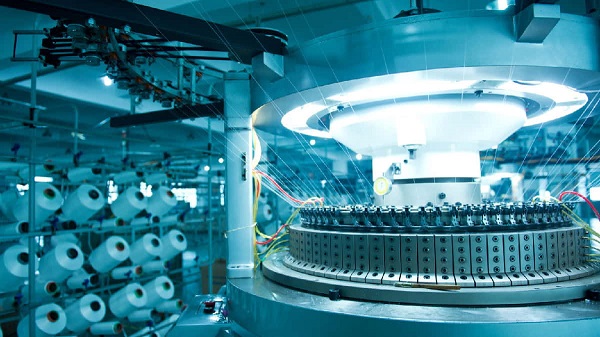
The manmade fibers industry is an energy intensive sector and a major consumer of natural gas and electricity in the manufacturing of its fibers.Not only is it being affected by higher energy process, it is also experiencing shortages and sharply rising costs of its raw materials.For the nonwovens segment, production processes – which use both fibers and filaments extruded in situ – are also highly dependent on gas and electricity. Polymers melting and extrusion, fibers carding, web-forming, web-bonding and drying are energy-intensive techniques. Nonwoven materials can be found in many applications crucial to citizens like in healthcare (face masks) or automotive (batteries).
For some segments the use of gas has no technological substitute: for example the dyeing and finishing production units make very intense use of gas. These production units are mainly composed by boilers and driers, which only work on gas and there is no alternative technology.
The textile services sector requires a considerable amount of energy to keep services, particularly hospitals and care homes, stocked with lifesaving material as well as clothing and bed linens for patients themselves. Losing these businesses would cause a lack of clothing for healthcare professionals, including protective sanitary gowns for surgeons, nurses and doctors, uniforms including other forms of personal protective equipment.
To grow exports to Bangladesh, India to revise strategy under CEPA
The Indian textile industry needs to develop its strength and formulate an effective strategy when the Comprehensive Economic Partnership Agreement (CEPA) comes into effect.
Bangladesh and India are interested in deepening trade ties.Bangladesh is an emerging star in the global textile industry as it has succeeded in converting itself into a global factory for textile products.Bangladesh’s apparel exports over the last fiscal increased 35 per cent over the previous fiscal. On the other hand, India’s apparel exports increased 33 per cent in the last fiscal.
Currently, Bangladesh imports more yarn and fabric from India and exports finished products like apparel. The Comprehensive Economic Partnership Agreement may change this equation.There is a view that exporting cotton and yarn from India would enable competing countries including Bangladesh to offer tough competition to Indian exporters after getting cheaper raw materials. A trade agreement between India and Bangladesh, two large economies in South Asia, can boost intra-regional trade in South Asia, which is the least connected region in terms of trade when compared to other regions such as North America, Europe and Asean. India can double its merchandise exports to Bangladesh if the latter reduces its peak tariff of 25 per cent on 415 goods under the CEPA.
Made in Bangladesh Week will showcase apparel strength
Made in Bangladesh Week will begin on November 12, 2022.The event will showcase the strength and potential of Bangladesh’s apparel industry. The goal is to present the important and positive sides of the apparel industry on the world stage.
The apparel industry will be presented as a sustainable and innovative industry to international brands and retailers. The hope is that branding Bangladesh-made garment products will aid in recovering from the pandemic losses.
Bangladesh has been enjoying growth in garment exports since August last year. Numbers were high in July to August this year as well but purchase orders have been shrinking and for the next holiday season orders have dropped by 20 per cent to 30 percent due to rising inflation and recession in Europe and the US, Bangladesh’s main markets.
Bangladesh’s huge clothing industry is looking for new markets in countries such as Japan and South Korea. Inflation has stifled orders from its key buyers, North America and Europe.Most factories are getting orders of less than 30 per cent of their capacity for the next winter season amid record inflation rates across Europe and the US. The South Asian nation’s producers of readymade garments contribute around a fifth of its gross domestic product and more than 80 per cent of its export earnings.
Bangladesh aims at enhancing apparel share in world market
Bangladesh aims at a ten per cent share of the global apparel market by 2025 and an eight per cent share by 2022.
This will be done on the back of the diversification of both products and markets. Currently, Bangladesh’s share of the global apparel market is six per cent. The share is expected to cross seven per cent soon. Asian markets such as India and Japan will be the major export destinations for Bangladesh as it looks to earn $100 billion from the sales of apparel items in the global markets by 2030.
Bangladesh is the world’s second-largest garment exporter. Bangladesh’s huge clothing industry is looking for new markets in countries such as Japan and South Korea. Inflation has stifled orders from its key buyers, North America and Europe.Most factories are getting orders of less than 30 per cent of their capacity for the next winter season amid record inflation rates across Europe and the US. Maintaining healthy exports will be crucial for Bangladesh as it struggles with dwindling foreign exchange reserves.
Nine countries -- Canada, the US, Belgium, France, Germany, Italy, the Netherlands, Spain and the UK -- account for more than 70 per cent of Bangladesh's readymadegarment exports.
Chinese textiles up four per cent
China’s textile industry posted stable revenue growth of four per cent in the first seven months of the year.
The total value-added output of these companies rose 0.3 percent year-on-year during the period. Combined sales of primary retailers were up one percent from a year earlier.The country’s garment exports increased 12 percent year-on-year.
China’s exports of textiles, apparel and clothing accessories increased by 17 per cent in the first seven months of 2022.Garments and clothing accessories exports in the first seven months were 18 per cent higher than in the same period of last year. China’s textile exports grew 16 per cent year-on-year in January to July 2022. Of this, the export of textile yarn increased by 19 per cent, fabrics by 20.2 per cent and textile products by 11 per cent. Viewed from the proportion of major products exported, knitted garments made of chemical fiber took the largest part, and cotton knitted garments came second, followed by woven fabrics made of chemical fibers and other fabrics. From January to July, the share of fabric exports was rather large, accounting for about 23 per cent of total textile and apparel exports.China’s exports of textile and apparel made of chemical fibers performed better than cotton goods.
Indian exports optimistic despite downtrend
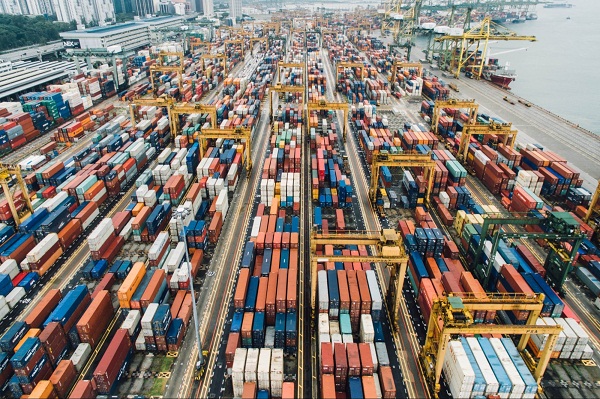
India’s upbeat export figures weren’t immune to the pandemic outbreak and Russo-Ukrainian conflict. Last month, exports recorded a decline of 1.15 per cent year-on-year. The worst hit were cotton yarn, fabrics and handloom products which experienced negative growth of nearly 33 per cent.
Weak demand from traditional markets
Ajay Sahay, Director General and CEO, Federation of Indian Export Organisation points out, the trend being witnessed now is, receiving orders for low-value products because of high inflation. He believes, going ahead, we may see a little impact on the value of these products but volumes exported will remain intact. Stable volumes will have a positive impact on employment and job creation. This certainly signals practical optimism as sector experts feel India has pulled off a speedy post-pandemic recovery before Russia declared war on Ukraine. Sahay, also says, weak demand from India’s some of the biggest export markets, such as China, the European Union and the US, due to a slowdown in these regions and high inflation, as well as export restrictions on some commodities, has resulted in export drop.
Confidence on FTAs for future growth
As we moves towards the festive season at the end of the year, imports from the West are expected to increase. Additionally, the upcoming free-trade agreement with UK is another growth opportunity the sector is looking forward to. Apart from reducing tariffs, the FTA also looks at lowering non-tariff barriers, particularly technical barriers to trade around rules of origin, investor protection and IPR.
The Indian government is currently engaged in multiple FTA deals, prominent ones being the EU and Canada. It must be noted that the EU is the second largest trading bloc after the US. India’s exports to the EU jumped 57 per cent in 2021-22 to $65 billion. FTA negotiations are part of India’s broader strategy to forge balanced trade agreements with key economies and revamp existing trade pacts to improve trade and investment.
The recently-signed FTAs with the UAE and Australia are reaping good yields for Indian exports. The deal with Australia has 95 per cent of Indian merchandize duty free. Similarly, the figure stands at 90 per cent of exported merchandize to the UAE exempt from duties.
The department of commerce has revealed figures that clearly indicate that India’s export forges forward, growing from strength to strength. In March 2022, Indian exports recorded a whopping $40 billion plus, the largest figure for any given month. Whilst the department of commerce has set a target of $400 billion in merchandize exports for 2021-22, Indian exports overreached the target with total value of $418 billion.
India has moved away from exporting primary goods and is focused on value-added items instead. Local manufacturers who are the backbone of the ‘Make in India’ initiative have been the direct beneficiaries of the current sweep of FTAs. With each FTA signed, the scenario keeps getting more favorable for India.
Centrestage begins in Hong Kong

Centrestage is being held in Hong Kong, September 9 to 11, 2022.
This is Asia's premier fashion event being organised by the Hong Kong Trade Development Council (HKTDC). A number of renowned and emerging fashion brands from Hong Kong and overseas are presenting their spring/summer 2023 collections during the three-day event. Visitors have the opportunity to browse and shop for the latest designs from around the world, with some brands offering exclusive discounts.The event is playing host to more than 240 brands from 15 countries and regions, including newly participating brands from Hong Kong, Mainland China, Macao, Japan, UK, Sweden and Italy. Three thematic zones feature a broad spectrum of designs and styles: Metro presents the leisure aspects of urban life; Iconic represents modern, chic and avant-garde design and Allure showcases the elegance and refinement of design excellence and craftsmanship.
HKTDC has proactively engaged local and overseas fashion buyers to support Centrestage exhibitors in expanding their businesses. Local buyers such as Lane Crawford, Joyce, Next Sourcing, Palmers and online fashion store Farfetch have a physical presence at the event. In addition, online business meetings have been arranged to match exhibitors with fashion buyers from the mainland and overseas. During the fair period, Fashion Hong Kong Studio will collect and upcycle unwanted white 100 per cent cotton T-shirts or polo shirts from visitors. The first 100 donors will receive a limited-edition souvenir made from upcycled materials. Entering its seventh year, Centrestage has adopted inclusion and diversity as its theme in 2022, highlighting individuality and self-expression.
AI insights
An artificial intelligence design institute shared insights into the application of artificial intelligence in the fashion industry.A 3D visual effects animation firm along with a digital service provider looked into topics such as the metaverse and sustainability in the fashion industry. This year’s Centrestage venue has integrated cyber and metaverse elements into its design and features a host of interactive virtual experiences. Visitors can create their own avatar and connect with others in the Centreverse, as well as enjoying an augmented reality fashion try-on.To further enrich the visitor experience, workshops on making eco-friendly scented pouches and the co-creation of large-scale artworks are also on offer.
About HKTDC
Hong Kong Trade Development Council (HKTDC) is a statutory body established in 1966 to promote, assist and develop Hong Kong's trade. With 50 offices globally, including 13 in Mainland China, HKTDC promotes Hong Kong as a two-way global investment and business hub. HKTDC organises international exhibitions, conferences and business missions to create business opportunities for companies, particularly small and medium-sized enterprises in the mainland and international markets. HKTDC also provides up-to-date market insights and product information via research reports and digital news channels.