


FW
IAF aims at fair risk distribution
The International Apparel Federation (IAF) is aiming at a fairer distribution of risks and rewards between buyers and producers.
IAF, a global network uniting brands, manufacturers and their associations, has identified the need to urgently rebuild trust and has begun emphasising on supply chain issues. IAF will focus on bringing manufacturers' voice more clearly into the global industry infrastructure that is being built to reduce apparel's global environmental footprint.
When western brands collapsed during the Covid pandemic, one of the first things they did was to cancel already completed orders.As buyers cancelled orders, suppliers were left in a lurch. So a fairer distribution of risks and rewards between buyers and producers will be one of the core focuses of the International Apparel Federation.
Even though intentions are often good, purchasing practices are more an offer by buyers. Financial flows fuelling the supply chain including a fairer distribution of risk and reward are a major part of this new contract and IAF is developing both guidance and concrete services to its members in this area.
For IAF circularity – the practice of encouraging reuse, recycling, or sustainability in consumption, manufacturing – is the most effective method to reduce the pressure on climate exerted by the apparel industry.
Cotton market moves up and down
The cotton market continues its remarkable gyrations. Starting in mid-August, cotton futures declined substantially. The first Monday in November saw cotton futures little changed.
Then the market took off like a rocket. The explanation for this bounce is short covering. Hedge fund speculators had built an outright short position, the largest such position since April 2020.The early November price rally was driven by short speculators rushing to buy back their positions. The combination of bullish Chinese economic news, i.e. relaxing Covid restrictions, technical buy signals, and limit up market reactions (with even higher prices reflected in the options market) induced speculative shorts to buy back their positions. Any remaining discrepancy between undervalued cotton futures relative to cash cotton prices should be eliminated, and the result is that remaining speculative shorts may get squeezed as they try to exit their position.
It remains to be seen where the new equilibrium price level will be when the short covering and squeeze dynamics are passed. Back in April 2020, the hedge fund net short position came and went in about eight weeks, but the resulting price rally continued, fed by fundamental forces like pandemic recovery and supply concerns. The current demand situation appears uncertain. The 2022/2023 supply picture could get tighter, but it remains to be seen.
Bangladesh underwear exports up 31 per cent
Bangladesh’s earnings from underwear shipments have grown 31 per cent year on year. Export earnings from underwear accounted for six per cent of the garments exported last fiscal year.
Over the last decade Bangladesh has been enjoying the benefits of a shift in work orders from China and some other countries in many product categories. This has come about as the cost of production in China has gone through the roof while there prevails a dearth of skilled workers in the apparel sector. Workers in China are preferring working with sophisticated technologies in the garment sector.
The underwear sector in Bangladesh is directly benefitting from the shift of work orders from China and Sri Lanka and growing silently over the last few years.Currently underwear is the fifth most exported category from Bangladesh. It is a glowing example of diversification of garment products in recent years.Only a few factories used to produce underwear for some select international retailers and brands as this was not a regular export product for the country.Now more than 500 factories are regularly producing underwear as demand for the domestically made items is growing in the west for their competitive prices.Usually, prices of underwear, such as lingerie, are higher than prices for other attire as specialised fabrics are required for their manufacture.
COP 27 puts the spotlight on fashion
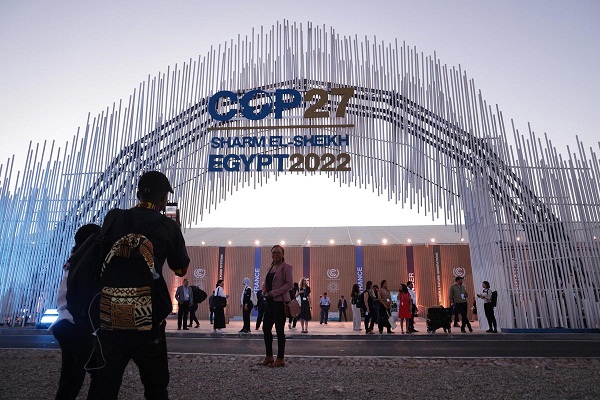
With COP 27 underway at Egypt’s Sharm El Sheikh, the fashion industry and its associates are present in large numbers to attend exhibitions, discussions and announcements pertaining to the sector that is under the spotlight for its excesses. For a while now, the global fashion industry has been pulled up for its damaging impact on the environment with several governments, particularly the EU, creating policies that require the industry’s compliance. Additionally, a new generation of environment-conscious consumers is demanding a more responsible approach from brands and retailers through transparency, from source to store.
Many industry attendees have expressed concern over the apparent lip service that fashion brands often pay, thereby questions are being raised about their commitment to sustainability and greenwashing techniques that many reputable brands have been accused of. In August this year, a New York resident filed an action suit in the US to sue global fast fashion giant for misleading consumers with its greenwashing methods. Whilst Uniqlo and Zara have not been taken to court yet, consumers are accusing them for greenwashing as well. The biggest concern about the fashion industry at the moment is that if it continues down the current path, , it will fall short of the decarbonisation targets required to conform with the UNFCCC’s 1.5-degree pathway by 50%.
Is net zero a possibility?
On the second day of COP 27, Copenhagen-based Global Fashion Agenda (GFA), a non-profit organisation that promotes collaborations on sustainability within the industry launched its Fashion Industry Target Consultation in partnership with the UN Environment Programme. The main objective is to achieve net zero through identifying and converging the sector’s current targets with a more concrete and holistic approach.
GFA hosted three events that were insightful as the events brought together various experts to put forward analysis-based solutions to address the critical concerns of the industry. The focus of these three events was on how to become net positive, alliances between sectors to decarbonize the fashion value chain and implementing circular systems. Federica Marchionni, CEO, GFA, said. “It is essential that leaders attending COP27 move beyond words to set clear commitments that are rigorously followed through beyond the conference, leading to implementation of concrete and urgent actions. Policymakers can have a tremendous influence over the future of the fashion industry and should use this moment to set ambitious and transformative parameters, not only on the climate but also considering the intersectionality of sustainability topics from equality and empowerment to living wages and contextual nature targets for instance on fresh water and biodiversity.”
Non-profit Canopy gains 500 pledges
Just prior to the commencement of COP 27, non-profit organisation dedicated to preserving forests, species and climate reached a milestone 500 mark of brands that pledged to work together to end the sourcing of viscose from ancient and endangered forests. Canopy and its partners have also pledged to push forward Next Generation Solutions that have on average 95 to 130 per cent less CO2 emissions, 18 to 70 per cent less fossil energy resource depletion, 88% to 100% less land-use impacts and at least five times lower impact on biodiversity and threatened species when compared to forest fibers.
The large representation of the global fashion industry at COP 27 was seen as a positive presence. This has called for optimism about the sector’s commitment on reducing its negative environmental impact steadily towards net zero at some point in time at least.
Make in India project can help transform textiles sector

From a proud stamp of ‘Made in India’, Modi’s vision of a ‘Make In India’ dream project has now completed eight years with annual FDI doubling to $83 billion while transforming the country into a leading global manufacturing and investment destination. This flagship program of the government has helped to increase foreign and domestic investment, foster innovation, enhance skill development, and build best-in-class manufacturing infrastructure.
A reduction in compliance burden has brought down costs and enhanced the ease of doing business. At the same time Production Linked Incentive Scheme (PLI) has given a big boost to local manufacturing with all 14 schemes being operational.
Gujarat the big budget state for PLI’s
The Centre now plans to focus on key sectors like semi-conductors to achieve Modi’s vision of an ‘Atmanirbhar Bharat’. Along with this, the government’s key focus will be on some specific sectors such as solar modules, mobile handsets etc. Other sectors to benefit are textiles, which is one of the biggest employer in the country, along with some earlier-proven areas where India has done well such as automobile components.
However, analysts feel the PLI programs are not well-though out and most of them seem to be biased towards Modi’s home state of Gujarat, while other states like Maharashtra is being side-lined. The prestigious Tata-Airbus deal which most industry insiders had thought would be located in Maharashtra, has recently gone to Gujarat which has led to a political spat within the states.
Right after this, Maharashtra lost yet another big PLI project by mega-giants Foxconn and Vedanta to next-door neighbour Gujarat. For this ambitious project, the budget of $10 billion for semiconductor subsidies would have been helpful for the huge state but that was not to be. Although Modi talks about ‘cooperative competitive federalism” where every state would freely compete for investors and raise each other’s standards but New Delhi seems to be in control as to what happens where in the PLI scheme of things.
Gains for the textile sector
India’s textile and apparel sectors happen to be one of the biggest employment generator in the country. India is one of the few textile producing countries in the world which can claim the complete value chain productivity strength. The sector also has several advantages like, abundance of availability of raw materials like cotton and silk, and the comparative advantage in terms of skilled manpower. Make in India can lead to penetration of organized retail, favorable demographics and rising income levels. As per a research paper by Sujit Shrikrushnarao Gulhane and Ranjit Turukmane “Effect of Make in India on Textile Sector”, the project is already proven to be a boon on the textiles sector with several MNCs already investing in the country like textile machinery makers like Rieter and Trutzschler already investing in the country. In fact, growth of the textile sector is expected to get a huge boost with the project. PM Modi’s vision of a Make in India and ‘Atmanirbhar Bharat’ will help in doing that in the long run if the focus is right.
Nike offers web3
Nike has launched a web3 project called Swoosh. This is a platform for Nike’s customers to learn about web3, collect virtual products like sneakers or jerseys and, eventually, help to co-create them — even potentially earning royalties on their sales.
In December 2022, Nike plans to begin educating members about web3, helping them set up digital wallets and encouraging them to get involved through prompts like community challenges on Instagram. In January, Nike will drop its first collection on .Swoosh and begin testing out different utilities for its virtual items, which it wants to be more than just collectables.
Like other brands testing the waters of web3, it’s exploring them as a means to sell physical products. Visitors with an access code given out to select Nike community members will be able to register on the site and claim a username. Nike’s Swoosh is aimed at the web3 curious rather than those deeply enmeshed in the space. The complicated user experience involved in setting up a digital wallet and minting NFTs — meaning logging the digital assets on a blockchain — is a barrier to entry in itself.
Nike was ahead of the curve among fashion and footwear brands making moves into crypto, securing a patent for blockchain-linked sneakers called CryptoKicks back in 2019.
Candiani develops blue cotton seed
Candiani and Gowan have developed a strain of cotton called Blue Seed.
Candiani is an Italian denim mill. Gowan, based in the US, is an agricultural advising company. Blue Seed cotton is an exclusive hybrid, non-GMO cotton variety, designed to be a stronger fiber but also more resistant in the field, requiring less water and chemicals than traditional cotton. The crops have been planted–and thrived–in Spain, Greece and the US so far.
Candiani started collaborating with Gowan after acquiring the genetics of the magical hybrid GMO-free seed. Candiani was targeting a superior quality type of cotton which had to be GMO free so it could be cultivated in the EU and could go organic too. This particular variety already existed, but it was languishing in obscurity and so together with its farming partners Candiani rescued it and renamed it Blue Seed. The seed is actually blue.
Blue Seed was birthed through cross-pollination of GMO-free upland and extra long staple, resulting in the best advantages from both parent plants. The current Blue Seed has also much higher strength and tenacity. Candiani and Gowan are currently looking into the development of other varieties. Candiani found excellent results in an experiment when it grew Blue Seed cotton at an institute in California with its Coreva natural stretch fiber as a regenerative fertilizer.
India: Grasim Q2 revenue up, profit down by one per cent
For the second quarter Grasim’s standalone net profit fell by 1.5 per cent. Revenue from operations rose nearly 37 per cent. Earnings before interest, taxes, depreciation and amortization (ebitda) for the quarter increased 19.4 per cent but margins contracted 206 basis points to 14 per cent. The fall in margins was due to a sharp rise in input costs and other expenses.
Revenue from the viscose staple fiber business increased 30 per cent while the chemicals business reported a 66 per cent growth in sales. Caustic soda sales volume rose 17 per cent. Captive consumption of chlorine increased during the quarter witnessing double-digit growth on a year on year basis. The business is working on plans to add new chlorine value-added products in the portfolio to increase the chlorine integration levels.
Viscose staple fiber sales volume for the quarter rose ten per cent year on year even though they were 14 per cent down on a quarter on quarter basis due to demand conditions coupled with cheaper imports from Indonesia and China.
The India-centric demand for viscose staple fiber remained largely intact but value chain partners for the global markets have started witnessing the impact of recessionary conditions. China’s average viscose staple fiber operating rates reduced to 66 per cent in the second quarter.
BlockTexx opens world’s first blend recycling unit
An Australian company BlockTexx has opened the world’s first commercial poly-cotton recycling facility. This facility will recycle around 50,000 tons of textiles and create 140 jobs over the next four years, if all goes to plan.
This is the world’s first commercial scale textile resource recovery facility focused on blended (cotton-polyester) products. The patented technology of BlockTexx, soft (separation of fiber technology), processes pure polyester, poly/cotton blends, pure cotton and any other cellulosic material.
Through the soft process, the company has achieved a very high processing recovery rate of almost one to one from feedstock input, around a 95 percent recovery rate. The recycling process of BlockTexx sees material being placed into a bespoke reactor, where polyester and cotton are separated. Cotton is broken down to cellulose, and this can be used for paints, cosmetics, concrete and other sectors. Polyester goes through a heating and liquifying process to be turned into pellets that can be used for playground equipment, furniture, coat-hangers and other products.
In terms of feedstock, BlockTexx receives materials to recycle from large scale laundries and workwear companies and as the facility’s capacity scales will integrate more post-consumer clothing into its feedstock intake. The fiber blend is critical to the process. Polyester/cotton blends, 100 percent polyester and cellulosics are the preferred fibers and brands using these materials will be the company’s priority.
For sustainability, buyers and apparel makers need to collaborate, says Dirk Vantyghem, Euratex
An effective collaboration between global apparel manufacturers and buyers is needed for a successful transformation of the industry towards sustainability.
Dirk Vantyghem, director general of EURATEX, the European Apparel and Textile Confederation, speaking at the 37th World Fashion Convention 2022, Dhaka , said that the new strategy of the EU had set out the vision and concrete actions to ensure that by 2030 textile products placed on the EU market would be long-lived and recyclable, made as much as possible of recycled fibres, free of hazardous substances and produced in respect of social rights and the environment.
So the major challenges of the industry today can only be realistically met when there is true collaboration between buyers and manufacturers. The supply chain situation has become harder than it was during the Covid period.
To deal with the sustainability issue, a crucial strategy is improving efficiency through technological innovation. Without adopting sustainable technology, apparel exports to the European Union would be affected after 2030 due to the EU Green Deal.
This can address the major challenges the global clothing industry is facing and bring about a successful transformation in its supply chain. Apparel makers are feeling the squeeze from higher costs and lower demands while new rounds of order cancellation, full warehouses and big discounts show the ineffectiveness of the global textile and clothing industry.











