FW
Fibre52 cotton rivals synthetics with its eco-friendly dye technology
Fibre52 may change the way cotton is prepared and dyed. The technology will minimize the use of water and energy and eliminate harsh chemicals while also offering a more durable and vastly improved natural-performance cotton fiber to rival synthetics. Traditional cotton treatment method, used for nearly 80 years, has involved hazardous chemicals and high heat that weaken the cotton fibers.
Fibre52’s process replaces harmful chemicals with bio-active products and uses lower levels of heat in the pretreatment process, saving up to 50 per cent in water, energy use and process cycle time. By including Fibre52’s dye technology, the cotton retains its natural properties and allows moisture to be transferred away from the skin, as opposed to the normal clingy feel of cotton. Fibre52’s technology combines the comfort of cotton with strength properties and moisture-management performance.
This inexpensive, eco-friendly alternative technology is easily transferable, allowing textile manufacturers to utilize current machinery with no additional capital investments and repeatable in resultant coloration and shade of material with no need to change dye recipes. Fibre52 cotton provides a steady heat flux and a short drying time, proving the wearer would feel more comfortable in hot and cold temperatures due to the slow change of the micro-climate.
Bangladesh looking for zero tariffs on apparels in the US
Bangladesh wants zero tariffs on exports of finished apparel products — made with American cotton — to the US. This means Bangladesh is hoping for preferential market access of its readymade garment exports to the US. Compared to other countries, Bangladesh now pays the highest tariff on its apparel products exported to the US, which seriously reduces Bangladesh’s competitiveness in the US market.
Bangladesh will also request the US Food and Drug Administration to facilitate the registration process for Bangladeshi drug products and for US technical assistance in building quality certification infrastructure. On the other hand, the US wants to discuss the provisions of the SEED Act to reduce import duties on tree nuts (walnuts, almonds) in Bangladesh, opportunities for the export of agricultural biotechnology and seeds to Bangladesh, draft data protection law, draft regulations on digital, social media, OTT platforms and other digital systems and intellectual property rights. Other issues, the US wants to discuss relate to labor rights, such as freedom of association and collective bargaining, safe and healthy working environment, labor rights in EPZs, child labor and forced labor.
Bangladesh cannot access US Development Finance Corporation (DFC) funding for private sector energy, healthcare, critical infrastructure and technology projects after the suspension of GSP (Generalized System of Preferences) benefits in the US market since June 2013.
Heimtextil 2023 in January to showcase a range of fibers and yarns
Heimtextil will be held in Frankfurt am Main, from January 10 to 13, 2023. Manufacturers and weavers will be offered a global range of fibers and yarns for decorative and upholstery fabrics, from the preliminary stage to textile finishing. Trevira will show the wide range of possibilities CS fabrics offer in the textile design of interiors. The focus will be on the functions and properties that Trevira CS fabrics offer in addition to their flame retardancy.
Other leading suppliers include Korteks and Reliance, Turkish manufacturer Bulut Tekstil. Architects, hotel decision-makers and designers will find a high quality range of outdoor fabrics, technical textiles for the contract sector, and imitation leather, including a large number of Spanish outdoor and contract specialists.
Italian manufacturer Tendaggi Paradiso as well as leather and imitation leather suppliers such as Turkish brand Flokser and German companies mah-ATN and Vowalon will also showcase their new products. The range will be rounded off by exhibitors Ambienta, Futura Leathers, Gebruder Munzert, Gruppo Mastrotto, and Indetex, who will present their high-quality fabrics for contract business directly on the boulevard in the form of selected complete stands. Citel has completely changed the finishing of its fabrics to reduce the environmental impact and will present new designs with thicker textures that the market is demanding.
Global baby clothing market to be worth over $30 bn from 2022-27: Study
As per latest Technavio study the baby clothing market is expected to grow $30.62 billion from 2022 to 2027 at a CAGR of 7.86 per cent during the forecast period. The market is fragmented due to the presence of a large number of players. Some key vendors are dominating, with their wide range of product lines and popular fashion brands.
Vendors operating in the global baby clothing market compete on different factors such as price, quality, brand, and variety. Companies incorporate different strategies to increase their share in the global market. The expansion of product lines provides an opportunity for leading players to maintain their dominance.
The outerwear segment accounts for the highest share of the market's growth. Outerwear baby clothing is further segmented into dresses, pyjamas, bodysuits, socks, cardigans, sweatshirts, and others. Among these, bottom wear products such as trousers and leggings hold a higher share, as they are available as unisex products, which has increased their demand.
The Asia Pacific and China account for 38 per cent of the market's growth. China, India, Japan, and Australia are the key markets for baby clothing in this region. The growth of the market in these countries is driven by factors such as the rising birth rate and changing lifestyles of the population. In addition, the rising disposable incomes of consumers in these economies are influencing consumers to purchase premium baby clothing products.
Bangladesh November apparel exports up 26%
Bangladesh’s apparel exports in November 2022 were 26 per cent higher than the same month a year ago. The country’s total exports in the first five months of the current 2022-2023 fiscal year were up 10 per cent year on year. Of the total earnings, the country's income from readymade knitwear and woven garments surged 15 per cent.
Bangladesh saw exports soar more than 34 per cent in the 2021-22 fiscal year. Bangladesh’s readymade garment exports to non-traditional markets grew by 24 per cent from July 2022 to October 2022. Of the total amount, export revenue from woven products grew by 29 per cent. Earnings from knitwear goods were up by 19 per cent. From July 2022 to October 2022 apparel exports to Japan rose by 26 per cent. Exports to India rose by 55 per cent. Garment exports to Australia grew by eight per cent.
Apparel exports to South Korea saw a 40 per cent growth. Apparel export earnings to Mexico grew by 46 per cent. Bangladesh is exploring new destinations to make the garment sector sustainable. Exports to non-traditional markets have grown from less than a billion dollars to five billion dollars in the last 12 years.
US manufacturing activity shrinks in Nov
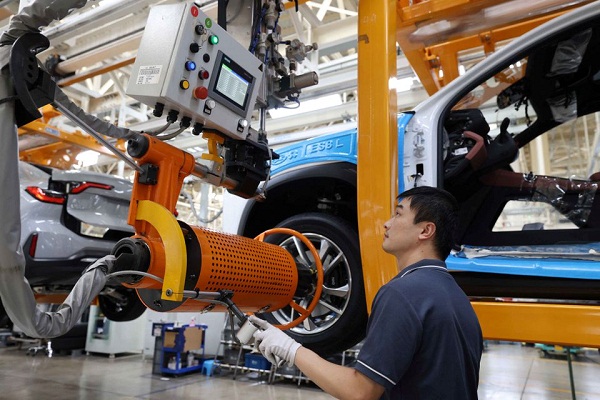
Economic activity in the US manufacturing sector contracted in November 2022 for the first time since May 2020.
The November manufacturing Purchasing Managers’ Index registered 49 percent, 1.2 percentage points lower than the 50.2 percent recorded in October 2022. Six manufacturing industries reported growth in November, led by apparel, leather and allied products, while among the 12 industries reporting contraction were textile mills, furniture and related products.
The past relationship between the manufacturing PMI and the overall economy indicates that the manufacturing PMI for November corresponds to a 0.1 percent increase in real gross domestic product on an annualized basis. The US manufacturing sector dipped into contraction, with the manufacturing PMI at its lowest level since the coronavirus pandemic recovery began.Of the 18 manufacturing industries, only one reported growth in new orders in November–apparel, leather and allied products, while 14 industries reported a decline.The production index registered 51.5 percent in November, down 0.8 percent from October, but indicating growth for the 30th consecutive month.
The ISM prices index declined 3.6 percent in November to 43 percent, indicating raw materials prices decreased for the second time in 29 months. This was the index’s lowest level since a reading of 40.8 percent in May 2020.Over the past eight months, the index has decreased 44.1 percent, including a combined 26 percent plunge in July and August.
Price declines continue to be driven by relaxation in energy markets, copper, steel, aluminum, plastics and corrugate, as well as volatility in freight costs. The ten industries which paid decreased prices for raw materials in November were topped by textile mills and included furniture and related products. Seven industries, including apparel, leather and allied products, reported no change in prices for the month.
Employment
A number of companies reduced employment levels through hiring freezes, attrition and now layoffs. Turnover rates remained consistentand retirement issues generally the same rate since September 2022. Apparel, leather and allied products led the list of seven of the 18 manufacturing industries reporting employment growth in November. The five industries reporting a decrease in employment in November were topped by textile mills, while furniture and related products were among the six industries reporting no change in employment month to month.
Supplier deliveries
The delivery performance of suppliers to manufacturing organizations was faster for a second straight month in November. The Supplier Deliveries Index registered 47.2 percent, 0.4 percent higher than October. Prior to October, the last reading under 50 percent was in February 2016.Six of 18 manufacturing industries reported slower supplier deliveries in November, topped by apparel, leather and allied products and textile mills. The 11 industries reporting faster supplier deliveries in November compared to October included furniture and related products. Companies continue their efforts to reduce their total supply chain inventories, indicated by the contraction in new orders, slow expansion in manufacturing inventories and the right level of customers’ inventories. Of 18 manufacturing industries, the eight reporting contracting inventories in November included textile mills, and apparel, leather and allied products.Six industries reported customers’ inventories as too high in November, led by textile mills.
Order backlog
Only two industries reported growth in order backlogs in November–apparel, leather and allied products, and machinery. Twelve industries reported lower backlogs in November, including textile mills and furniture and related products.Weakness in European economies and China’s economic sluggishness, as well as the strong dollar, continued to constrain new export order activity and negatively impact new order rates. Apparel, textiles and furniture were among the ten industries reporting no change in new export orders for the month.
Fashion drives India’s e-commerce boom, young millennials lead retail

The pandemic-induced lockdown has catapulted online shopping for garments and accessories to a huge business for the fashion sector. As a great leveler, fashion became accessible beyond metros and Tier I cities, reaching out to larger consumer groups with purchase power in Tier II, III cities where many brands did not have a physical presence.
Traditionalists may have spoken about the advantage of tangible experience of shopping in a physical store, engaging ones senses of sight and touch, the success story of online shopping begs to differ to these pundits. What’s more, smart use of social media, technology and rich content, brought to life clothes and accessories for a customer to make a purchase decision. To corroborate this fact, many reputable brands have disclosed figures.
Gen Z takes the lead in online shopping
Puma for instance relies on online shopping for half its sales whilst H&M, Woodlands, Marks & Spencer and Arvind Fashions (Tommy Hilfiger, Calvin Klein, Arrow and U.S. Polo Assn.) attribute online sales as 42 per cent, 35 per cent, 25 per cent and 26 per cent respectively.
This phenomenal success story is being led by young consumers categorized as young millennial and Gen Z as they are natural inhabitants of the digital world and see no problem in living their fashion desires from online shopping. Many fashion and accessories brands are leveraging the popularity of e-platforms like Amazon, Myntra, Ajio and Flipkart to channel their sales whilst the big brands not only use these platforms but also offer their own branded e-stores.
Surprisingly, India’s department store chains are yet to experience the success story as substantially as individual brands. Westside, Pantaloons, Shoppers Stop and Lifestyle have reported positive growth but currently online sales contribute only between 6 to 10 per cent.
Growing online fashion marketplaces
As India surges ahead with the introduction of indigenous 5G network, online and smartphone penetration across the country is continually growing. Fashion marketplaces have become immensely popular after Myntra revolutionized this channel. Reliance’s Ajio and Tata’s Cliq are also catching up and consistently growing market share. Unhindered by individual brand guidelines, these e-commerce fashion sites are agile, quick to respond and provide customized portfolios for individual shoppers that have proven to be a winning strategy. Additionally, these marketplaces with their huge portfolio of brands don’t get as impacted on fickle brand loyalty.
Unprecedented growth of e-commerce
A recent Bain & Co. report projected for the next five years states, India will experience an annual growth rate of 25 to 30 per cent in online shopping. If this projections turns out to be true, India will then nudge the US out to become the world’s second largest online shopping market by 2024. In 2021, the Indian online shopper base was between 180 and 190 million. By 2027, the figures would read 400 to 450 million and valued at $150 billion. In 2022, the value is $50 billion, up 40 per cent compared to 2021. As online became the dominant channel and continue through 2022, many brands are now dedicating exclusive online collections and products that cater to a wider segment across price points.
Online shopping has spread across categories such as groceries, personal electronic devices, pharmaceuticals, etc but it is still the fashion sector that retains its pole position as the driver of India’s e-commerce boom.
YKK aims at being climate neutral
YKK has a roadmap for achieving climate neutrality by 2050.
Sustainable materials (such as recycled or plant-derived materials) used in zipper textiles has increased to 13 per cent (up seven points yearonyear). Eleven plants are worldwide operating on 100 per cent renewable energy. Sustainable packaging use has increased to 3.3 percent. Landfill waste has been reduced by 272 tons year on year. Waste resource conversion rate has increased to 87 per cent (up 3.7 points yearonyear). There has been a 7.5 per cent reduction in total water intake by all manufacturing sites.
The company has implemented wastewater management using voluntary control standards stricter than government regulations and has developed paints with reduced toluene and xylene for use on main products. The expanded lineup of products produced with YKK’s new eco-friendly AcroPlating technology eliminates 100 per cent of cyanide, chromium, selenium, and other harmful substances. The volume of products made with this technology increased 75 per cent for zippers and 48 per cent for snaps and buttons. YKK, based in Japan, has continuously set industry standards for quality, innovation, and sustainability in the production of zippers, plastic hardware, hook and loop fasteners, webbing tapes, and snap and buttons.
India: Yamuna to present new products at Itme
Yamuna Machine Works will launch three knitting machines at the trade fair India Itme, Noida, December 8 to 13, 2022.
These are the Open Width Knit Compactor, the Open Width Knit Singeing Machine and the Alea-Yamuna Multilayer Stenter. Textile machinery manufacturer Yamuna caters to the demands of Indian textile processors by offering state-of-the-art machines.Yamuna has a strong market position in India as well as in the US, Europe, Brazil, Portugal, Argentina and other countries.
The manufacturer has also been the recipient of several export awards for the past three years.Yamuna Machine Works flagged off operations in 1990 and entered the Indian textile industry by introducing the stenter machine for the benefit of domestic companies. Yamuna designs, develops and delivers hot air stenters, hydraulic jiggers, coating lines, singeing machines, polymerisers, thermo bonding lines, dye pedders, drying ranges, shrinking ranges, rope scouring, washing ranges and dipping lines, all manufactured to global standards of excellence.
The company currently operates with an annual production capacity of 130 machines for its complete range, about 50 per cent of which make up the stenter business. Apart from the finishing machines, the company has also ventured into wet processing machines and this segment has also been growing considerably in recent times.
Trident India joins ITMF
Indian textile major Trident has joined ITMF as corporate member. Joining ITMF (International Textile Manufacturers Federation) will offer Trident a network of international companies covering the entire textile value chain that will help to better understand and navigate the changing business environment.
Joining an international industry platform like ITMF enables access to the various statistics, reports, webinars and meetings that help explain the short- and long-term dynamics of the global textile industry. Having the opportunity to attend the exclusive ITMF annual conferences is another important aspect. In today’s world meeting industry colleagues on a personal level in an atmosphere of trust and respect is invaluable.
ITMF will also benefit since Trident is one of the leading producers of home textiles in the world, supplying retailers and brands around the world, and can therefore provide an important international perspective on many issues ranging from sustainable production to social compliance.
Trident began by making high-quality yarn and in due course has become the largest manufacturer of terry towels and one of the largest integrated home textile manufacturers in the world. In the meantime, Trident has also diversified beyond home textile products by successfully diversifying into paper, chemicals, energy, and more.
Founded in 1904, the ITMF is the international forum of the global textile value chain for producers of fiber to finished products. Its members are from textile and apparel-producing countries representing approximately 90 per cent of global production.