


FW
Bangladesh focuses on new markets
In the last fiscal, Bangladesh’s earnings from non-traditional or new markets were 14 per cent of total readymade garment export earnings.
In the context of Bangladesh’s key export destinations, the United States, Canada, the United Kingdom and the European Union countries are generally known as traditional markets. Japan, Australia, Russia, India, China, South Korea, UAE, Malaysia, Brazil, Mexico and many other countries are major destinations from the non-traditional side. Bangladesh’s apparel exports to non-traditional markets grew by 32 per cent year on year in the first half of this fiscal year compared to the same period of the last fiscal year.
The impact of the ongoing economic turmoil and geopolitical crisis is higher in traditional destinations like the US and the EU but comparatively lower in the non-traditional markets. Bangladesh has an opportunity to grab a big slice of the pie of the non-traditional market. Hence, apparel manufacturers of the country are preparing a roadmap to capture ten per cent of the global market by 2025, riding on exploring new markets or non-traditional markets. They are focusing on new markets as exports to Europe and the US may slow down due to the looming recession and inflation. For instance, Japan has long been one of the major destinations for Bangladesh.
Deloitte Retail Outlook 2023 indicates possibility of profitability
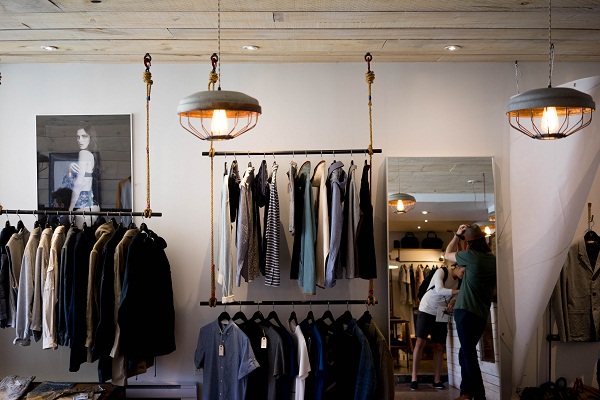
Conducted between October 21 and 31 2022 with 50 retail executives working in the US, the Deloitte study indicates retailers can expect positive growth and profitability even during inflationary period. The study has been particularly insightful on how retailers can confidently build on their resiliency and make a good year of 2023.
Inflationary pressures on retail
So far the biggest confidence-downer has been a constant parade of changes and almost all retail executives expect inflation to pressure their profit margins. They’re also predicting hard times for consumers, with nearly all anticipating diminished consumption in 2023, resulting from rising financial concerns. Sixty per cent of the respondents feel that due to the ongoing inflation, operational costs have to be raised. Almost 80 per cent respondents stated they predict a sizeable drop in consumption as the US and many parts of the world enter or deep in recession.
However, 2020 to 2022 has been a learning curve for retailers as they realised a shift from archaic retailing models had to change and the price would in many cases trump loyalty. Moreover, it has now been well established that consumers opt for the best price and the most seamless shopping experience. Three economic trends as indicated by these 50 top American retail executives is a good picture of the year ahead.
To begin with, as the economy continues to slow down, retail growth will be restrained. The GDP forecast for the US in 2023 is expected at 0.9 per cent growth, a sharp drop from 2 per cent in 2022. Deloitte has predicted a 35 per cent chance of the US slipping in to recession this year which would lead to a contracting economy and higher unemployment. Secondly, inflation has lowered consumers' purchasing power. Whilst nominal average weekly earnings have increased by 8.3 per cent since December 2020, real earnings have fallen 5 per cent and this is bound to affect consumer demand and therefore, retail sales volume.
Thirdly, consumer spending on services has been picking up steadily as consumers return to bars and restaurants, take vacations, and enjoy sporting events as they did before the pandemic. To some extent, consumers are dipping into their savings to make up for what they missed during 2020-2021. The personal saving rate is now at 3.1 per cent, much lower than pre-pandemic levels. A shift in spending to services will therefore weigh on retail sales at stores selling consumer goods. To meet these challenges, some key strategies are being considered by retailers who are future-thinking things through.
A smooth supply chain up to the end
Almost 70 per cent respondents expressed confidence in providing a seamless customer experience across channels. To achieve this, retailers should consider creating more profitable last-mile delivery solutions by investing in automated micro-fulfillment centers (MFCs). MFCs can increase storage capacity and throughput rate (filling orders for multiple store) and create efficiencies by freeing up employees who otherwise would be picking orders. MFCs are particularly attractive given they can expand the range of same-day and next-day services retailers can potentially reach.
The omnipotent omnichannel
Reverse logistics will translate to an opportunity to save a sale. Retailers should take advantage of in-store reverse logistics capabilities. In-person returns satisfy customers' desire for immediate credit while reducing expenses for mailed return delivery. And with the growing popularity of return bars that are stores that pack and ship returns for partnering retailer, there is an opportunity to drive additional store traffic and expand the footprint of their client base, an ideal situation during inflationary times. Recent data suggests retailers participating in return bars save over 20 per cent in processing costs.
Digital capabilities
The cost of acquiring a new customer can be up to six to seven times more than retaining old customers and social commerce can help reinforce existing customer loyalty. Retailers should invest in technologies to provide a seamless purchasing experience within social channels and shoppable media to nudge users toward purchases and create loyalty. Enabling shoppable tags with product information, embedding the brand website into the social media app, and enabling in-app transactions can help reduce friction on the shopping journey.
Cotton Association of India announces further drop in 2022-23 production

The CAI has announced it further expects a decrease in total seasonal production which stands at 330.50 lakh bales, a decrease of 9.25 lakh bales as was projected earlier. The decrease of 9.25 lakh bales was due to readjustment of production in India’s cotton-producing states. Gujarat was the only cotton producing state that projected a 0.5 per cent growth and has the distinction of growing output by 17 lakh bales.
As per Ajay Dalal, member of the CAI crop committee Gujarat cotton sowing increased to 25 lakh hectares this season from 22 lakh hectares in previous year and yield has also improved. Dalal also stated Gujarat’s cotton crop is expected to increase by at least 17 lakh bales to 93.50 lakh bales. Maharashtra, Andhra Pradesh and Karnataka experienced the highest decrease of 2 per cent whereas the decrease in Haryana was 1.5 per cent. Telegana experienced a decrease of 1 per cent whilst Lower Rajasthan had the least decrease of 0.5 per cent. The 330.5 lakh bales were calculated based on per unit being 170 kgs each.
Supply statistics reinforce decrease imports
The cotton supply estimated by the CAI till end of cotton season 2022-23 i.e. upto September 30, 2023 is 374.39 lakh bales of 170 kg each. The total cotton supply consists of opening stock of 31.89 lakh bales of 170 kg each at the beginning of the cotton season on October 1, 2022, crop for the season estimated at 330.50 lakh bales of 170 kg and the imports for the season estimated by the CAI at the same level i.e. at 12 lakh bales of 170 kg each.
CAI’s import estimates for the corresponding year 2021-22 was 14 lakh bales of 170 kg each. The decrease in import has been attributed to the 11 per cent duty requirement and cotton-growers and mill owners are hoping that the next Budget will see a decrease in the import tariff. The total cotton supply for the months of October 2022 to December 2022 is estimated at 116.27 lakh bales of 170 kg each which consists of the arrivals of 80.13 lakh bales of 170 kg each, imports of 4.25 lakh bales of 170 kg each and the opening stock estimated by the CAI at 31.89 lakh bales of 170 kg each at the beginning of the season.
Domestic consumption and exports
The report stated cotton consumption estimate was at 300 lakh bales of 170 kg each, whilst the previous year’s consumption estimate was 318 lakh bales of 170 kg each. This season’s domestic consumption has been the same as the previous season, pegged at 65 lakh bales of 170 kg each for the months of October 2022 to December 2022. In terms of exports, the CAI estimate up to 31st December 2022 is the 2 lakh bales of 170 kg each. Stock at the end of December 2022 is estimated at 49.27 lakh bales of 170 kg each including 35 lakh bales of 170 kg each with textile mills and the remaining 14.27 lakh bales of 170 kg each with the CCI, Maharashtra Federation and other MNCs, traders, ginners, MCX, etc. This includes cotton sold but not delivered.
Vietnam GFT exports grow double digit despite fall in Q4
Despite facing the impact of a global economic recession coupled with high inflation, leading to a sharp decline in the consumption demand and export orders, Vietnam’s garment, textile and footwear (GFT) sector was able to achieve double-digit growth in 2022.
The garment and textile sector achieved robust growth in the fourth quarter of 2021 as well as during the initial eight months of 2022.However, export orders recorded a significant drop in the fourth quarter of 2022, thereby leading to several businesses being forced to lay off their workers.
High inflation in the majority of major Vietnamese markets such as the United States and the EU will have an impact on the furniture, garment and textile, footwear, electronics, and plastics sectors, moving forward.
With a decline in the number of orders, the export market for the textile, garment and footwear industry is therefore forecast to remain quiet until the end of the first quarter of the year. As the major export industries of the national economy, the textile and footwear industry has decided to retain skilled workers, promote investment in the production of raw materials and auxiliary materials, focus on producing artificial fabrics, as well as encourage the production of domestic yarns.
Planet Textiles to return at Itma
Planet Textiles, the international sustainability conference, will return this summer at the world’s largest textile industry trade fair, Itma.
Following on from the previous Planet Textiles held pre-pandemic at Itma 2019 in Spain, this time the event will be organised by the Sustainable Apparel Coalition (SAC) and will run for two full days, June 12 to 13, 2023, in Italy.
Planet Textiles will welcome industry leaders to discuss the sector’s most pressing environmental challenges and how best stakeholders can work together to drive practical, collective change in the textile industry.
The two-day event will also provide a perfect opportunity for attendees to network with peers, learn about the latest trends and explore the full textile ecosystem. This will also include the latest Higg Index updates, the role of manufacturers in driving change, getting data right and the need for further action on science-based targets.
Planet Textiles is renowned within the industry as a key sustainability event and so will explore sustainability innovation across the value chain and the vital role played by manufacturers. Planet Textiles promises to dive deeper into the key, practical environmental issues facing the industry. Itma will spotlight new solutions on sustainability and circularity, innovative technologies, and the rise of digitisation in the global textile and fashion sectors.
EU: 300 textile and 3,000 chemical units bound by new norms
Some 300 textile industry and 3,000 chemical plants in the European Union will have to comply with new legal norms to reduce their environmental impact.
In the case of the textile sector, the environmental legislative changes concern in particular the wet processing of textiles, which include treatments such as bleaching, dyeing, or finishing treatment to give specific properties to the textile, like water repellence.
The new norm is part of the EU strategy for sustainable and circular textiles which aims to create a greener, more competitive textiles sector. The new norm for the textile sector has a particular emphasis on emissions to air and to water and targets over 20 air and water pollutants including formaldehyde, total volatile organic compounds, dust as well as ammonia for emissions to air or metals for emissions to water.The new norm focuses also on environmental issues relevant to circular economy—including energy efficiency and resource efficiency (water consumption, chemicals consumption, waste generation).
It also promotes more sustainable industrial production through the substitution of chemicals that are hazardous, harmful, or have a high environmental impact by introducing an approach underpinned by a chemical management system. Particular attention is paid to carcinogenic or toxic substances. In addition, they introduce a new approach based on a management system for preventing, reducing, and quantifying diffuse emissions.
India’s leather exports may fall, says Crisil
India’s revenues from the export of leather apparel and accessories, including bags, belts, and harnesses, may fall by seven to eight per cent in the fiscal year 2024.So says Crisil.
The decline in revenue is expected because of the slowdown in consumer demand in Europe and the United States, which are key markets for Indian exporters. Much of the leather apparel and accessories produced in the country are exported, with Europe and North America accounting for 75 per cent of orders.
Demand for discretionary goods in key export markets — essentially the advanced western economies — has been shrinking because of pinching inflation and rising recession fears.Though domestic demand for the leather apparels and accessories segment remains resilient, the overall sectoral revenue is seen declining in the medium term.
As costs remain high, operating margins of companies are expected to compress by 150 basis points this fiscal and will remain range bound at six per cent to 6.5 per cent over the medium term. Given the increased raw material cost, inventory holding has become costlier. Additionally, due to lower cash generation, the working capital requirement at the sector level will be 15 per cent to 20 per cent higher in the near term.
India: December exports down 12 per cent
India’s exports in December 2022 have fallen 12 per cent from a year ago. This is the second time in three months that the value of outbound merchandise shipments has tanked yearonyear.
In October 2022, exports fell 16 per cent for the first time in 21 months. Shipments to as many as 19 of 30 major exporting sectors shrank in December 2022, including cotton yarn and handlooms (by 40 per cent), handicrafts ( by 36 per cent), petroleum products ( by 26 per cent), plastic and linoleum (by 26 per cent), gems and jewellery ( by 15 per cent). Engineering goods exports, the mainstay of India’s exports in recent years, dropped nearly 12 per cent in December 2022. Overall engineering exports are down three per cent so far in 2022-23 following six consecutive months of contraction.
Exports of Indian apparels and textiles got a major hit due to recessionary trend in major economies. Given the cumulative growth until December 2022, and the indicators of the slowdown in global economic activity, there is cautious optimism on international trade in the last quarter of the current financial year. Despite a dip in two months, merchandise exports in the first nine months of 2022-23 are still nine per cent higher than a year ago. Goods imports, on the other hand, are up 25 per cent.
European group urges for circularity
European Fashion Alliance aims to make a significant contribution to achieving a carbon-neutral, environmentally sustainable, non-toxic and fully circular textile industry and to raise awareness among fashion producers, designers and consumers.
The alliance, composed of 29 organizations, including numerous fashion councils, fashion weeks and research and educational institutes, represents more than 10,000 European companies in the fashion industry and gathers from micro enterprises to large corporations.
EFA believes that sustainability and digital transformation, along with innovation, education and labor market measures, will be the factors that will drive the fashion industry to make textiles more durable, repairable, reusable and recyclable.To accelerate this transition process, EFA will also focus on exchanges and mutual interactions among creatives and support young talents as drivers of change through actions, research and campaigns.
For the period from 2023 to 2027, the European Fashion Alliance has defined four pillars of action: the establishment of an ethical, social and sustainable code of conduct for EFA members and, by extension, for the fashion industry; the creation of a new Green Deal for fashion at the European level based on a Europe-wide circular and social fashion ecosystem based on shared data and measurement; the creation and application of sustainable, technological and socially and culturally responsible training practices for key EFA stakeholders; and the empowerment of the younger generation as driving forces toward the digital, circular and social transition of the fashion industry.
Textile auxiliaries market up 5 per cent
The global textile auxiliaries market is growing at five per cent a year. The expanding textile chemical market is predicted to bolster the growth of the textile auxiliaries market. Specialty chemicals that are applied in different steps in the fabrication of textiles and fabrics are categorized as textile chemicals.
These chemicals have the capacity to make fabric stronger, more adaptable, and further improve its original characteristics.The constant demand and growth of the textile chemicals industry is a prime growth driver of the global textile auxiliaries market.
In addition to this, the increasing adoption of technical textiles in various industries is likely to promote the growth of the textile auxiliaries market. Technical textiles provide strength, resistance, and ensure protection from different pollutants and environmental factors.These textiles are in high demand from rising infrastructural development and rapid urbanization. This is because technical textiles are more durable and effective as compared to traditional textile materials. This ultimately leads to the expansion of the target market.The expanding automotive sector, increasing environmental awareness and rising application of technical textiles in environmental protection initiatives like erosion protection, waste treatment/recycling, and domestic water sewerage plants are some of the other factors that are promoting the growth of the textile auxiliaries market.











