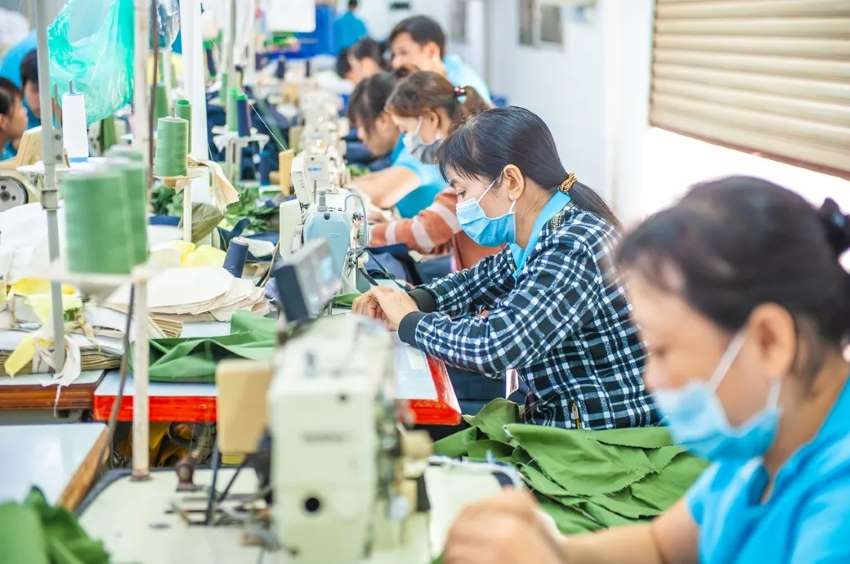
Some 300 textile industry and 3,000 chemical plants in the European Union will have to comply with new legal norms to reduce their environmental impact.
In the case of the textile sector, the environmental legislative changes concern in particular the wet processing of textiles, which include treatments such as bleaching, dyeing, or finishing treatment to give specific properties to the textile, like water repellence.
The new norm is part of the EU strategy for sustainable and circular textiles which aims to create a greener, more competitive textiles sector. The new norm for the textile sector has a particular emphasis on emissions to air and to water and targets over 20 air and water pollutants including formaldehyde, total volatile organic compounds, dust as well as ammonia for emissions to air or metals for emissions to water.The new norm focuses also on environmental issues relevant to circular economy—including energy efficiency and resource efficiency (water consumption, chemicals consumption, waste generation).
It also promotes more sustainable industrial production through the substitution of chemicals that are hazardous, harmful, or have a high environmental impact by introducing an approach underpinned by a chemical management system. Particular attention is paid to carcinogenic or toxic substances. In addition, they introduce a new approach based on a management system for preventing, reducing, and quantifying diffuse emissions.