


FW
Pak industry runs out of cotton, faces loses of orders
Pakistan’s textile industry is running out of cotton stocks. So says the All Pakistan Textile Mills Association (APTMA).
As a consequence, mills are in danger of shutting down. Exporters are turning away orders as they are not sure of the availability of raw materials to fulfill the orders. The damage to Pakistan would not only be lower exports this year but also the permanent shift of the orders to other countries which would be very difficult to reverse.
A dollar spent on the import of cotton yields $3 in exports. The estimated cost of ten million bales of cotton at today’s price is $4 billion, which would translate to minimum exports of $12 billion. The country’s textile sector consumed 15 million bales in the last year which indicates that approximately ten million bales would need to be imported in order to retain exports at the same level as last year.
Pakistan’s economy largely depends on textile exports for foreign currency and employment. A dicey international economic situation and catastrophic floods have pushed the country’s economy to the brink. Since banks are willing to entertain only small and limited letters of credit for companies that are direct exporters, says APTMA, this excludes 80 percent of the basic industry and ignores the fragmented structure of the industry. The raw material (cotton) is not available to the entire sector.
Exporters hope for raised interest benefit
The interest benefit under the Interest Equalisation Scheme should be raised to five per cent across the board. So says the Tirupur Exporters Association (TEA).
Raising the interest benefit under the Interest Equalisation Scheme would, it is felt, help protect the knitwear industry. Some export units in Tirupur have been finding it difficult to fulfill their export obligation for capital goods imported under the Export Promotion Capital Goods scheme and raw materials imported under the Advance Licensing Scheme within the stipulated period due to the impact of the pandemic, a rise in yarn prices and the Ukraine-Russia war.As the exporting units have to pay the interest apart from normal customs duty to regularise the case,
TEA says an amnesty scheme to settle export obligation defaults would be helpful. Since knitwear exporting units in the Tirupur cluster are now facing a severe threat to their existence due to issues like low orders, delay in receiving payment, non-acceptance of booked orders, and deferment of shipment, TEA has suggested that the Export Refinance Scheme be extended to banks to augment export credit, and banks may be encouraged to provide export credit in Indian rupee to exporters and the same amount can be refinanced by the Reserve Bank of India at the repo rate.
Despite increase in raw material costs, brands and retailers underpay B’desh suppliers
Zara’s parent company Inditex, H&M, and Next paid clothing suppliers in Bangladesh during the pandemic less than the cost of production. So say the University of Aberdeen and Transform Trade.
Of the 1,000 factories in Bangladesh producing garments for the retailers, 19 percent of Lidl’s suppliers, eleven percent of Inditex’s, nine percent of H&M’s, and eight percent of Next’s said they were producing at less than the cost of production.The majority of suppliers to those four brands, as well as Tesco and Aldi, say they were still being paid at the same rate from March 2020 to December 2021.
Despite rising raw material prices and the need to implement Covid mitigation measures, factories were unable to pass on additional production costs to buyers during the pandemic. Larger retailers buying from 15 or more factories were more likely than smaller retailers to engage in unethical practices such as delaying payments or canceling orders.Such practices impact suppliers’ employment conditions, with nearly one in five factories struggling to pay the country’s legal minimum wage.Only when suppliers are able to plan ahead, with confidence that they will earn as expected, can they deliver good working conditions for their workers.
Recycling yet to take off in Bangladesh
Spinners in Bangladesh are facing a shortage of waste cotton and textile scraps since a major portion of them is shipped abroad amid higher demand for recycled yarns and fabrics worldwide.
Bangladeshsees a huge volume of cotton textile scraps, but these wastes are usually dumped into a landfill, burned, exported, or recycled into low-quality fabrics.This means the country misses the opportunity to produce recycled yarn from the bi-products with a view to manufacturing the apparel products whose demand is rocketing globally.
Higher cotton farming is hampering the environment whereas the manufacturing of apparel involves more groundwater, especially during washing and dyeing.So many clothing retailers and brands prefer the reuse and recycling of garments to avoid environmental damage. But some traders in Bangladesh feel encouraged to export waste cotton and fabrics than sell them in the local market because of the price factor.
In some cases, imported recycled yarns are made from the wastes and scrap fabrics exported from Bangladesh. In 2019, Bangladesh produced approximately 5,77,000 tons of waste just from the readymade garments and fabric mills of which almost half was 100 per cent pure cotton waste.On the other hand, Bangladesh heavily relies on the import of textile fiber.
E-commerce emerges as key growth driver for lingerie
The online lingerie market is growing at eight per cent a year. The market is fragmented, with the presence of a few established players and many start-ups.
Many lingerie brands are entering the direct-to-consumer online retail space. They are also selling their products through third-party online retailers. Private brands largely or solely sell their products online, with the growing e-commerce industry and the online lingerie market. Many multi-brand pure-play online lingerie retailers have also entered the market. This will enable them to strengthen their position in the online lingerie market.
Thus, high rates of internet and smartphone penetration contribute to the market growth.The bra segment is growing at a significant rate. The growth of this segment is attributed to factors such as the high price and replacement cycle of bras when compared to other types of intimate apparel. The trend of customizable bras is also driving the market. Moreover the penetration of mobile tablets and smartphones globally has boosted the growth of the segment.
The cost benefits for retailers operating in the online space are driving the market growth. Online lingerie stores offer a wide range of products. They also offer easy return and exchange policies, thereby attracting more consumers. Online lingerie stores also help consumers purchase bras with the right fit through apps. These factors will fuel the market’s growth.
Bangladesh exports to India up 50 per cent
In the first six months of the current fiscal year Bangladesh’s garment exports to India grew by 50 per cent compared to the same period of the previous fiscal year.
Knitwear exports to India grew by 56 percent and woven exports grew by 44 percent. In these six months, Bangladesh’s total exports to India were four percent of the country’s total export earnings of the period and seven percent more than the same period of the last financial year.
In the same six month period Bangladesh’s apparel exports to the United States grew by only one percent. Apparel exports to Germany increased by three percent. Bangladesh’s apparel exports to Spain and France increased by 17 percent and 33 percent respectively. Exports to the United Kingdom and Canada increased by 11 percent and 28 percent respectively.
In addition to traditional markets, Bangladesh’s apparel exports to non-traditional markets increased by 32 percent compared to the same period in the last fiscal. Among non-traditional markets, exports to Japan rose 42 percent. Exports of Bangladesh have increased to all countries in the last two fiscal years, but the largest increase has been in India. Bangladesh’s product exports to India in the last fiscal year were 55 percent more than they were in the previous fiscal year.
Mumbai to host Technotex
Technotex will be held in Mumbai, February 22 to 24, 2023.This technical textiles flagship event will consist of exhibitions, conferences and seminars.
Technotex is one of the largest composite events of the technical textile industry of the Asia-Pacific region. The exhibition exemplifies the immense potential for bilateral trade and investment between India and foreign countries in the technical textile sector in a mutually beneficial way.
The event is expected to attract the participation of all major stakeholders from the global technical textile fraternity as well as institutional buyers from the army, navy, air force, CISF, CRPF, paramilitary force, police, hospitals, BRO, agriculture institutions, CPWD, PWD, municipalities, sports institutions, and others. The event will also be supported by all related industry associations.
The roundtable conference is expected to be attended by several senior central and state government officials. Top CEOs from various fields of the technical textile sector will be present at the event. Technical textiles are high performance textiles which find application not only in clothing but in areas such as agriculture, medicine, infrastructure development, automotive, aerospace, sports, protective clothing, packaging, etc. Technical textiles have seen an upward trend globally in recent years due to improving economic conditions.
The Lycra Company’s innovative legwear trend forecast for AW23/24 fosters imaginative designs
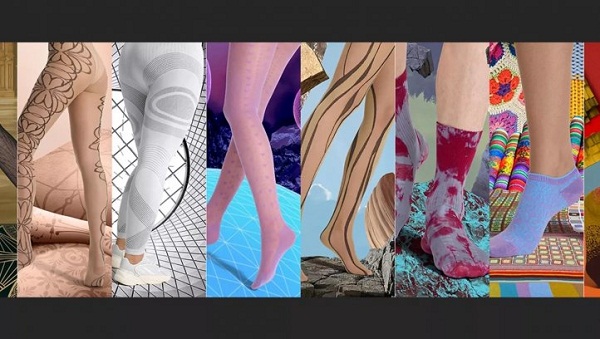
Stepping forward into an innovative AW23/24 season trend forecast, US-based manufacture of exceptional fibre and technology solutions The Lycra Company is looking at changing the legwear fashion segment. With trend forecasting experts from Stijlinstituut Amsterdam, the company each year presents a prediction of cutting-edge trends through a capsule collection highlighting the latest legwear innovations, based on scientific technologies. “In a post-pandemic world where many live with one foot in the physical reality and the other in our digital communities, technology and creativity are key in defining new identities. This year’s forecast looks at how this, in turn, enables fashion and legwear to express individuality and foster brands to become more diverse and imaginative,” says Sybille Bald, Strategic Marketing Director for legwear at The Lycra Company.
Four key trends in legwear fashion
Keeping changing style trends of the modern global woman in mind, The Lycra Company and Stijlinstituut Amsterdam together have showcased the following four key themes that of fashion legwear and addresses the needs of today’s women:
Manmade: This trend is inspired by nature and perfected by science, this trend showcases a simulated feel of nature with its three key looks of Fossil, Camouflage and Organic Tech and Algae Cool. While the Fossil Camouflage key look is texture, combined with practical functionality as the Lycra Soft Comfort technology offers the ultimate all-day comfort and the Coolmax toughFX technology transports moisture away from the body with permanent evaporative cooling, plus rugged durability. Look 2 of Organic Tech, uses high-performance materials such as Lycra Shaping technology with Lycra Adaptiv fibre to bring comfort with smooth, yet firm support. Look 3 of Algae Cool which uses Lycra Xceptionelle technology as a patented garment construction that enables the creation of hosiery with no sewn-in panels and anti-friction zones, accommodating larger and more fashionable silhouettes.
Empowered: Fearlessness, confidence and inclusivity are the core of this legwear collection that embodies women’s empowerment. Look 1 of the Women Domination range has designs that utilise technologies to improve inclusivity with Lycra Made To Fit You technology that provides the perfect stay stay-in-place for all thigh sizes with no digging in and red marks. Look 2 is of Canvas Skin with canvas body art as an expression of body ownership with sheer designs with a tattoo effect and 3D stretch from Lycra Super Summer Sheer technology.
Reconfigured: This trend is all about re-creating craft traditions for modern women and creating styles that go beyond one season with their own story to tell. Look 1 is the New Collective range made from 100 per cent post-consumer recycled resources with Coolmax EcoMade PRO technology as well as Lycra Adaptability. Look 2 is of Hippie Origin that is recycled, upcycled and reused with designers looking at ways to create and breathe new life into old fashion items and uses Lycra Xtra Life fibre to deliver long-lasting comfort, fit and shape. Look 3 is Art Fair which reconnects with traditional crafts such as knitting while using 100 per cent post-consumer textile waste with the e Coolmax EcoMade All Season technology keeps the wearer comfortable everywhere.
Hybradised: In this collection, the designers reveal the potential of virtual and augmented realities with four main looks. Look 1 is of AI Design, where designers find ways to work with AI to enrich practices through aesthetic and creative imagination with the key technology of Lycra FitSense technology offers compression across targeted power zones. Look 2 is of Meta World targeting digital consumers with key technologies of Lycra freshFX with HeiQ technology that gives comfort, fit and shape with freshness and hygiene applications..Look 3 is the Virtual Team that uses digital design to re-model real-world clothing, where Lycra Energize fibres delivers graduated compression, helps to enhance muscle recovery, and protects against injuries. The Lycra Company’s innovative AW23/24 fashion portfolio is set to rock the post-pandemic world with the company hoping to make great strides in expressing a woman’s individuality through her clothes as well as fostering global brands to become more diverse and imaginative.
Rimtex makes spinning more efficient
Rimtex enables spinning mills in being future-ready.
With its pioneering innovations, Rimtex has paved the way for the growth of the spinning industry in the years ahead. Among the innovations are new generation spinning cans, sliver can transportation, ultra-precision combination spinning rings and travellers, new age castor wheel designs along with a huge leap in the domain of sliver intelligence. Spinning cans have a huge bearing on the sliver quality, which has irreversible consequences on yarn quality.
Rimtex Duo and Rimtex Sumo help spinners in the reduction of static and increased sliver loading respectively. Designed especially for the textile industry, Tango powered can mover and Tango powered doffing vehicle are new-age locomotives for efficient material movement.
Rimtex Wizcan is a home-grown system that combines propriety software and hardware that empowers spinners with real-time sliver can tracking and monitoring. This has huge advantages for a spinning mill. The on-toes castors provide fluff-free movement, thus saving a lot of time and hassle for spinners. They also secure the sliver from any form of breakage during the movement.optimum contact area, which has multiple advantages. The company has brought to the fore a new understanding of not looking at spinning rings and ring travellers in isolation but looking at them as a combination product.
Turkish fabric fair in March
Texhibition will take place in Turkey, March 8 to 10, 2023. This is a fabric, yarn and textile accessories fair.
Texhibition is a platform that efficiently networks high-quality Turkish textile production and the international fashion business. Texhibition meets the industry's need for secure nearshore supply chains and is a catalyst to boost Turkey’s exports.
The event will present the trends for spring/summer 2024 with a special focus on sustainability. More than 25,000 international visitors are expectedsuch as large clothing manufacturers, purchasing managers of international chain stores and department stores, managers of international brands and chains with their own brand collections, managers of online sales platforms, importers, wholesalers, distributors, designers, etc.
More than 400 exhibitors from the areas of knitwear, woven fabrics, denim, yarns and accessories will present their collections. Worldwide, Turkey is the fifth most important sourcing market for the textile industry. For Europe it is even the second most important sourcing location. Turkish production offers high-quality products, reliability and short delivery times.
With an export volume of about 13 billion dollars in 2022, the textile industry achieved its best result and exported to a total of 200 countries and regions. An export volume of around 15 billion dollars is targeted for 2023.











