


FW
India’s cotton import bill up 200 per cent
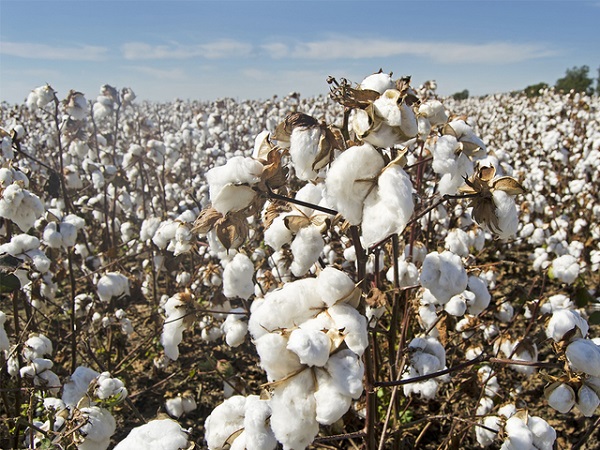
Driven by record high cotton prices amid a global shortage last year, India’s cotton import bill surged 200 per cent in the 10 months to January 2023. Imports picked up sharply between July 2022 and December 2022. India imported close to 1,750,000 bales in the second half of 2022 compared to 4,90,000 bales in the same period last year.
To ease pressure on the industry, customs duty was waived on cotton imports. Popularizing high density planting, farm mechanization, providing policy support to scientists and technology to increase productivity and giving a thrust to research-oriented agronomy are some other important way-forwards to increase India’s cotton productivity at least to the world cotton average productivity mark.
Stagnant production
While cotton prices have eased due to a global demand slowdown in the meanwhile, stagnant cotton production is especially worrying as prices of textiles have risen consistently over the last three years. Clothing and footwear were among the major contributors of headline inflation in fiscal year 2023. The Cotton Association of India (CAI) has reduced India’s cotton crop size to 33 million bales down by 9,25,000 bales from the earlier projection for the 2022-23 season in its latest outlook.
Global production is projected down 3,00,000 bales and largely attributed to lower yields in India. Consumption is forecast down due to lower use in India, Indonesia, and Vietnam.
Unique interpretations rebound jeanswear at Milan Fashion Week 2023

The comeback of denim was already evident during the January menswear shows and was even more pronounced during the recent Milan shows. Each designer offered their own unique interpretation of the trend, showcasing their sensitivity and taste.
Brands and designers offer their unique interpretations
Diesel, a well-established luxury denim brand, opened the Milan shows with its unique aged effects juxtaposed with tulle and flocked velvet strata mixes. The brand offered highly innovative and strong research denim pieces, encouraging self-expression and freedom, as denim has always been perceived.
John Richmond, a British designer, strongly supported the return of jeans, given his origins in the denim world. For f/w 2023/2024, he presented a wide selection of total looks that included trousers, jackets, dresses, coats, and down jackets, as well as boots, shoes, and accessories. Among the elegant attires was a black satin jacket with denim-like printed lapels. The pieces in this special party collection all looked super-ripped and heavily aged denim, but appearances can be deceiving as most of the pieces were made with silks, satin, and jerseys. Richmond explained that he photographed aged denim pieces and printed the motifs on the collection's items. He also mentioned that some pieces were made with real ripped off denim fabrics, creating a game and a challenge for consumers to recognize which denim was real and which one was just printed. The final result was incredibly chic and fresh.
Giorgio Armani's newest project, the second edition of the Armani - 10 Corso Como collection, was entirely made from denim. The new capsule combined an unmistakable style with the exploration of unexpected territories, offering a total look rich in nuances. The entire collection, from blazers and dust coats to blouses, shorts, and clean-cut trouser suits, featured denim in thin and elongated forms with supple silhouettes. The intense blue of the unwashed denim complemented the soft cognac-colored leather detailing on each garment. The look was completed with boots and the La Prima bag, also made from denim, resulting in a compact and essential wardrobe of different pieces that can be combined for different occasions.
Rocco Iannone's new Ferrari collection showcased cool interpretations of the blue cloth fabric, reinventing workwear overalls and aging the iconic fabric with fringed logos and irregular treatments that expressed the chic and exclusive world that the iconic Ferrari red car embodies.
Different fits, cuts and looser variants set trend
The trend also featured lots of different fits, often resembling pajamas, sailor-style or boyfriend cuts. Every interpretation was allowed, but looser variants in denim total looks or worn with wide blazers stolen from a man's wardrobe, as seen at Gucci and Seafarer, were popular choices. Kiton presented a drapey lucid denim business woman suit version, offering yet another interpretation of the trend.
Vietnam foresees falling orders
Vietnamese apparel firms expect global demand to decrease by nearly five percent this year.
This may result in a 25 per cent decrease in the number of orders. Major importers of Vietnamese apparel such as the US, China and Korea have reduced demand since October 2022. Demand from the European Union and Japan is still maintaining positive growth but lower than what was in earlier months.
In the near future, some 35 percent of apparel makers in Vietnam may suffer from a shortage of orders while the remainder may face price pressures. The sector is facing competition from countries like Bangladesh, India and Indonesia.
In the meanwhile Vietnamese apparel firms have been busy so far this year completing orders on the back of incentives brought about by free trade agreements that have already taken effect. The sector is still able to produce mid and high-end products, which is seen as one of the ways to accelerate exports. Businesses also plan to invest in modern technology to improve business efficiency and workers’ income. In order to achieve sustainable development, the sector will continue calling for investment to the material supply chain, building sale solutions, and developing automation, digital governance, a transparent business environment and a high-quality workforce.
Japan January imports up 21 per cent
Japan’s clothing and accessories imports increased by 21.6 per cent in January 2023.
Imports of textile yarn and fabric in January 2023 rose by 5.6 per cent from the same period last year. Yarn and fabric imports accounted for one per cent of the total imports by Japan. The country’s imports of yarn and fabric from China in January 2023 were 4.3 per cent higher than the corresponding period in 2022.The imports accounted for one per cent of Japan’s total imports from China.
During January 2023, Japan’s exports of textile yarn and fabric increased by 4.6 per cent year on year. The country’s exports of textile machinery rose by 12.1 per cent from January 2022, contributing 0.5 per cent to the total exports.In 2022, Japan’s clothing imports rose by 23.2 per cent from imports in 2021. Imports of textile yarn and fabric in 2022 rose by 25.7 per cent. Japan’s exports of textile yarn and fabric in 2022 increased by 15.2 per cent year on year. The country’s exports of textile machinery increased by 26 per cent in 2022.
Apparel imports of Japan from January 2022 to October 2022 rose by 27 per cent year on year in terms of value.
India’s garment exports in Jan 2023 was positive as retail outlook in US remained high: Wazir Report

The February 2023 edition of Wazir Report has just been published and the findings indicate the outlook for Indian garment exports, global imports that affect developing and under-developed countries in Asia and global retail scenarios are all positive with no major shift since November 2022.
India’s readymade garments exports stable
In January 2023, India exported garment worth $1.5 billion. This figure is the same as the figure 12 months ago in January 2022. In January 2021 exports were 12 per cent higher than 2021. In terms of share of apparel exports, US’ share has increased by 8 per cent while UAE and UK have recorded a dip in share by 3 per cent and 1 per cent, respectively since 2019. The UAE’s share is 8 per cent and the UK’s 9 per cent in the total volume of readymade garments exports from India in January 2023.
Whilst January 2023 may not have registered a year-on-year growth, in these uncertain times in the West, it may be looked upon as a blessing that Indian readymade garments did not lose grounds in terms of exports value.
Imports down in UK and US, up in EU and Japan
Out of the three Western markets, only the UK showed a drop in imports of readymade garments in November 2022 by 4 per cent compared to November 2021. However, on YTD basis, imports in 2022 are 18 per cent higher than in 2021. Among the countries that whose exports increased to the UK, China once gain topped the list with 6 per cent; Bangladesh and Turkey gained 4 per cent and 2 per cent respectively since 2019. India lost 1 per cent in the same period.
In December 2022, US’ apparel imports were $6.5 billion, which is 11 per cent lower than in December 2021. On YTD basis, imports are 22 per cent higher than in 2021. China’s share in the US market has reduced by 8 per cent since 2019, whereas Vietnam and Bangladesh’s shares have risen by 2 per cent and 3 per cent, respectively.
In December 2022, Japan’s apparel imports stood at $1.8 billion, which is equal to that of December 2021. On YTD basis, imports in 2022 are 5 per cent higher than last year. Bangladesh’s and Cambodia’s share increased in Japan’s apparel imports, by 1 per cent each while China’s share dropped by 2 per cent compared to 2019.
EU’s apparel imports in October 2022 were 14 per cent higher compared to October 2021, although the higher percentage is attributed to price inflation and low base value. In the EU apparel market, China’s share increased 1 per cent whereas Bangladesh’s share increased by 4 per cent since 2019. Clearly Bangladesh is gaining ground at China’s cost in the EU market.
US, UK reflect high retail growth in January 2023
In January 2023, US’ monthly apparel store sales were estimated at $18.2 billion, 47 per cent more than in January 2022. In 2022, sales were 7 per cent higher than in 2021. In January 2023, US’ monthly home furnishing store sales were estimated at $5.2 billion, 6 per cent more than in January 2022. In 2022, sales were 1 per cent higher than in 2021. In Q4 of 2022, online sales of clothing and accessories registered a growth of 5 per cent over the same quarter in 2021. The fourth quarter of 2022 was 42 per cent higher than the sales in the third quarter of 22. This was attributed mainly to the festive season. Overall, in 2022 sales were 7 per cent higher than 2021.
In January 2023, UK’s monthly apparel store sales were £3.1 billion, 19 per cent higher than in January 2022. In 2022, sales were 21 per cent higher than in 2021, mainly on account of low base value. In Q4 of 2022, online sales of clothing registered a growth of 1 per cent over the same quarter in 2021. Overall online sales in 2022 saw negative growth of 18 per cent over 2021. This may be due to the extremely high inflation in UK since second quarter of 2022.
US luxury discount brand Saks Off 5th expands India operations
Saks Off 5th plans to expand its team in Bangalore, India. The Bangalore team has played a vital role in driving the company’s business and operational growth and the team itself has doubled in size over the past 12 months.
The US discount luxury fashion retailer is committed to continued growth in India and looks to India as an incredible source of talent to support its growing business as it works to fulfil the mission of providing access to modern luxury to everyone.
The retailer is focusing on a digital-first operating model in India and is working to ameliorate its customer experience. Saks Off 5th currently counts 220 employees at its Bangalore office working in sectors including data analytics, business intelligence, supply chain operations, finance, HR, IT, and merchant operations, among others. The engineering, transportation, customer service, digital operations and merchant operations capabilities are being expanded.
Saks Off 5th has stores in the US, Canada and online and set up its office in India in 2017. The business aims to provide premium fashion brands at value prices.Saks Off 5th is the premier destination for luxury off-price fashion and has more than 100 stores across the United States and Canada.
Philippines expects garment exports to rise
The Philippines expects garment exports in 2023 to be higher than 2022 garment exports.
One reason for the optimism is that Vietnam and China no longer take on small orders but are geared for bigger quantities due to their robotics and automation systems. This gives a chance for smaller volume producers like the Philippines to step in.
Another factor driving the country’s garment exports is the ongoing US campaign of anything but China. The campaign is gaining momentum and production is spreading among Asean countries including Philippines. The third factor is the political issues in Myanmar that are causing apparel orders being shifted, some of which are now in the Philippines. Also the Philippines hopes to take advantage of the anticipated flight of foreign orders of garments and other apparel from Vietnam due to counterfeiting issues.
Buyers from the United States have approached garment producers in the Philippines asking them if they can meet the demand that is normally filled by Vietnamese producers. Foreign buyers are turned off by the rampant counterfeiting of apparel and other wearables in Vietnam. In contrast counterfeiting is not a major problem in the Philippines, where piracy and counterfeiting complaints and reports have declined year on year by 40 per cent from January 2022 to November 2022.
Prominent e-commerce platforms in the Philippines have signed a memorandum of understanding with several big brand names to combat the sale of fake products online.
Home textile players focus on growing domestic market
Indian home textile and furnishing industry continues to grow despite several challenges.
Though exports to Europe and the EU are stagnant at this point the domestic market continues to grow at 15 per cent per annum. Consumers are shifting towards ready-to-use products like readymade sofas, cushion covers, curtains, blinds, bed sheets and towels instead of customising them. About 40 per cent of domestic consumption in home textiles is for the bed and bath category alone. Still, over 95 per cent of domestic demand is met by the unorganised and micro, small and medium sectors.
Wider definition of furnishing will also include furniture and home décor accessories and these numbers would get bigger.With demand for home products increasing at 20 per cent per annum, business growth opportunities in the Indian market will continue to grow for domestic and global players. People are learning to spend more on their homes and living environment and opt for better quality.
The current year looks very promising in the domestic market across all home product categories, including home textiles., apparel fabrics and home textiles.
MAS fabric mill partners with Bluesign
MAS Fabrics – Intimo has become Asia’s first seamless textile mill to become a Bluesign system partner.
This will enable MAS Fabrics – Intimo to meeting the highest sustainability criteria, in particular with regard to resource efficiency, environmental impact, health and safety at work, and consumer protection. Bluesign is the most rigorous standard for the textile industry. With its holistic approach, Bluesign is the most rigorous standard for the textile industry, and adopting it means meeting these criteria without compromising the functionality, quality, or design of the products.
Environmentally sustainable manufacturing is at the heart of what MAS does and the aim is to reduce harmful chemicals in its manufacturing process. This partnership brings the company closer to its 2025 chemical management ambition and progresses towards the company’s vision to onboard all its dyeing facilities to the Bluesign system.
MAS Fabrics – Intimo, based in Sri Lanka, is a 147,000 sqft fabric mill with in-house knitting and dyeing facilities. The facility currently uses Bluesign approved chemical substances and aims to increase its utilisation of Bluesign approved textiles to 100 per cent by 2025.
Since its inception over 35 years ago, MAS Holdings has operated on the foundation of doing things differently by focusing on social sustainability and employee well-being. The company is committed to doing its part to reduce its own impact as a business, through its unified group-wide sustainability strategy.
Home textile players focus on growing domestic market
Indian home textile and furnishing industry continues to grow despite several challenges.
Though exports to Europe and the EU are stagnant at this point the domestic market continues to grow at 15 per cent per annum. Consumers are shifting towards ready-to-use products like readymade sofas, cushion covers, curtains, blinds, bed sheets and towels instead of customising them. About 40 per cent of domestic consumption in home textiles is for the bed and bath category alone. Still, over 95 per cent of domestic demand is met by the unorganised and micro, small and medium sectors.
Wider definition of furnishing will also include furniture and home décor accessories and these numbers would get bigger.With demand for home products increasing at 20 per cent per annum, business growth opportunities in the Indian market will continue to grow for domestic and global players. People are learning to spend more on their homes and living environment and opt for better quality.
The current year looks very promising in the domestic market across all home product categories, including home textiles., apparel fabrics and home textiles.











