


FW
Rwanda signs partnership deal with Pink Mango C&D
Rwanda has signed partnership deal with a Chinese garment firm, China’s Pink Mango C&D, to set up a modern garment factory in the Kigali Special Economic zone to produce garments for both the domestic and export markets. Pink Mango C&D is expected generate cumulative export earnings of $20million over the next five years and provide 7,500 jobs to Rwandans by the fifth year. Furthermore, the company will build capacity and skills transfer to 500 workers of local garment cooperatives who will also benefit from some of their supply contracts through an outsourcing model.
Pink Mango C&D establishment will support the construction of a garment industry ecosystem attracting other players in dyeing, knitting and weaving as well as accessories suppliers to open up shop in Rwanda hence it is indeed an exciting addition to this growing industry. The firm's decision was attracted by Rwanda's conducive business environment, and its investor facilitation. The government of Rwanda provides tax incentives, affordable utility services, and land accessibility, among others.
China’s C&H Garments was the first player to invest in the Rwanda’s manufacturing. It entered the market in 2014 and currently produces police and military uniforms, immigration department and schools. The firm also employs more than 1,000 people, arguably one of the largest private sector employers in the country.
Pakistan’s PRGMEA recommends sector task forces to boost exports
Ijaz A. Khokhar, Chief Coordinator of Pakistan Readymade Garments Manufacturers and Exporters Association (PRGMEA) has urged the government to set up sector wise, central, provincial and regional level task forces to boost exports in the sector. He advised the government to take effective steps for making the value-added textile industry competitive and vibrant in International market. According to him, the value-added garments sector was showing considerable growth as it exported $6 billion products and was a major tax payer.
Khokhar says, the China-Pakistan Economic Corridor (CPEC) opened not only fundamentals of industrial cooperation between the two friendly countries but also had paved the way for new vistas of economic stability, industrial growth and development in Pakistan. He therefore urged upon the Chinese government to simplify the visa process particularly for the business community adding that Chinese Embassy in Pakistan should grant multiple visas to Pakistani businessmen.
Kering publishes new animal welfare standards
Kering has published its new animal welfare standards in order to ensure and verify the humane treatment of animals across the Group’s supply chains. The Kering Animal Welfare Standards are the first-ever set of full standards covering animal welfare for luxury and fashion and aim to drive positive change in industry practices, and beyond.
The Kering Animal Welfare Standards cover all species around the world that are part of the Group’s supply chains. The first phase of the standards include detailed requirements for the treatment of cattle, calves, sheep and goats throughout their entire lives, as well as guidelines for abattoirs. Developed over three years with input from animal welfare experts, farmers and herders, scientists and NGOs, the standards are based on the latest scientific research as well as legislation, comparative standards, best management practices and guidelines from different sectors.
Kering’s Standards feature a number of requirements for animal management that would significantly improve the welfare of animals in countries around the world if they were adopted by the industry more broadly. Kering has been piloting these standards on the ground with farms in different regions and will continue to work closely with the farmers to support further implementation.
The standards are structured in Bronze, Silver and Gold tiers to provide clear guidance on critical compliance and with the expectation that the Group’s suppliers will make continuous improvements. At the Bronze entry level the Standards reflect minimum requirements, which equal, and in some cases go beyond, European legislation.
India’s use of man-made fibre increases
As per industry estimate India’s use of man-made fibre in fabric blends has increased to 45 per cent over the last few months from 40 per cent earlier. However, India is far below the global average of man-made fibre use of 70 per cent in blended fabrics. India is gradually catching up with the global trend of a bigger share of man-made fibres than natural fibres in textile blends. The preference of consumers is moving from cotton to man-made fibres like polyester, given the increasing demand for casual-wear and sports-wear. The decreasing acreage of cotton cultivation in the country is also contributing towards the shift.
Some spinning mills in the South Indian states including Tamil Nadu have started using manmade fibre again after a wide gap of several years. Traditionally, they were using manmade fibre but had shifted to cotton about a decade ago. They have again switched to manmade fibre as it is abundantly available and substantially cheaper than cotton.
Evonik develops new generation of fibers
Evonik has developed a new generation of fibers P84® – which fulfill the demand of the industry. The new product offers improved mechanical stability at permanent operating temperature. This high tech fiber has a unique multi-lobal cross section which ensures the highest level of filtration efficiency. Because of its excellent physical and chemical properties, P84® high performance fibers are used in a variety of applications. The spectrum reaches from filter materials for high temperature filtration, protective clothing, sealing applications for spacecraft to a number of other high temperature applications, e.g. insulating panels for thermal insulation.
In high temperature filtration processes filter materials made of P84® fibers maintain a higher permeability at constant pressure drop through the entire life cycle. This leads to lower dust emissions and minimised energy costs. For example, more than 150 cement kiln applications are using P84® based filter materials. The energy saving of these optimised filters reduce the CO2 emissions by approximately 60,000 metric tons per year.
Evonik is the worldwide leader of chemical resistant, thermostable and non-flammable polyimide fibers. These fibers are produced at the chemical plant in Lenzing, Upper Austria and further processed and customised in the neighboring production plant in Schörfling am Attersee.
C.L.A.S.S to display smart innovations at Copenhagen Fashion Summit
C.L.A.S.S. will have a special place fully dedicated to its smart innovation within the "Design Studio" at the next edition of Copenhagen Fashion Summit. The Design Studio is specifically designed to present a unique curation of sustainable solutions across a number of researched design challenges displayed together in one space alongside tangible garment prototypes.
It is specifically tailored to the needs of creative directors and designers, equipping them with the necessary tools to translate words into action. C.L.A.S.S is the perfect place to take a wider view on the range of smart innovation materials, becoming also more aware of the importance of a switch to circular economy.
Devan launches two new technologies at the Techtexil Show
Textile innovator Devan Chemicals launched two new technologies at the Techtextil show in Frankfurt. These are: Bio-flam, a bio-based flame retardant product and Odour Breakdown, a wash durable, non-biocidal odour control solution.
Bio-based FR treatments, like Bio-flam, are made from renewable, vegetable sources and enable the FR treated products to be biodegradable. Its active components are 100 per cent halogen- and heavy metal-free. Bio-flam P307 is the first introduction in the new Devan BIO-FR family, is biodegradable and developed to be used on 100 per cent cotton or cotton/viscose mixtures, in order to create an ecological concept, safe for people and planet, whatever might happen.
Bio-flam P 307 is developed for mattress ticking to pass EN 597 1&2. The company’s researchers are developing other bio-based products for other market segments and for other fire standards.
Devan’s Odour Breakdown captures and neutralises these mal odours produced by the bacteria. It is a wash-durable, non-biocidal odour control solution and has different application levels. This technology contains Devan’s Moov & Cool technology which helps in cooling during the sports activities.
Archroma opens Global Competence Center in Germany
Archroma, a global leader in color and specialty chemicals towards sustainable solutions, inaugurated its new Global Competence Center for Automotive & Synthetic Dyeing in Korschenbroich, Germany. The site is part of former M. Dohmen, an international group specialising in the production of textile dyes and chemicals for the automotive, carpet and apparel sectors that Archroma acquired between 2014 and 2018. It will continue to operate as a specialist production and laboratory facility specialising in dyes and auxiliaries for synthetic fibers and wool, such as the Dorospers®, Dorolan® and Fadex® ranges.
The center will be a global hub for technical expertise, market knowledge, technology and creativity. It will strive to create the new innovative and sustainable system solutions that its customers need to win on their markets. Its exceptional combination of global experts, R&D laboratory and production will help manufacturers of automotive and synthetic textiles to optimise their productivity and create value in their markets.
Experts of the new Archroma Global Competence Center for Automotive & Synthetic Dyeing will participate in the upcoming Techtextil exhibition to introduce the latest of its innovations: Fadex® AS New, a new “super UV protector” to make automotive & transportation textiles more resistant to light.
Colored cotton makes its way into the Turkey market
"To exploit its dominance in cotton production, Turkey now plans to develop colored cotton. The country will produce two completely natural and colored cotton known asx‘sarı gelin’ (yellow bride) and ‘gelincik’ (poppy). The Ministry of Agriculture and Forestry plans to produce fabrics by using both natural and colored cotton as they do not need to be dyed."
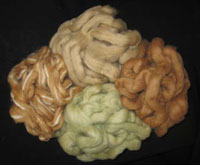 To exploit its dominance in cotton production, Turkey now plans to develop colored cotton. The country will produce two completely natural and colored cotton known asx‘sarı gelin’ (yellow bride) and ‘gelincik’ (poppy). The Ministry of Agriculture and Forestry plans to produce fabrics by using both natural and colored cotton as they do not need to be dyed.
The ministry recently collaborated with a textile company for the mass production of the coloured cotton developed by the General Directorate of Agricultural Research and Policies (TAGEM). This company will produce in an area of 25,000 sq. mt. in 2019, and that after 2020 production with a more extensive contract will be established. As this cotton is natural, it does not have a carcinogenic effect, is environmentally harmless, organic and important for children’s clothing.
Saves water, energy, chemicals and time
The naturally colored cotton was produced in India, Pakistan, Egypt and Peru in B.C. 2700. The colors and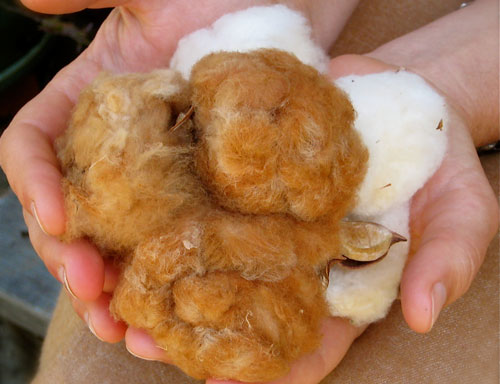 shades of this cotton vary according to the climate and soil characteristics of the cultivation area. Its most common tone is yellowish brown. These cottons are either naturally derived from colored seeds or produced by breeding studies of universities and institutes.
Naturally colored cotton refers to brown and green cotton in different shades. As these cotton fibers do not need to be dyed, they eliminate the use of water, energy, chemicals and time spent for dyeing. They also prevent waste and pollution reducing the dyeing and finishing cost by almost half.
Market continues to grow
The fastness values of colored cotton are similar to those of the white cotton. The spinning of this cotton also demonstrate similar good values. Also, the color of this coloured cotton takes longer to fade after washing. It is therefore, considered as a value-add to the original white cotton.
The market for colored cotton market continues to grow with important researches being conducted on seeds and fibers across the world. Various universities and institutes have also introduced important studies in the field of colored cotton. For example, the Nazilli Cotton Research Institute produces colored cotton. Its patent for Nazilli DT15 type buff naturally colored cotton was obtained in 2005.
Another point working on colored cotton production in Turkey is Kahramanmaraş. After a long period of research, the production of colored cotton in this region began in the early 2000s with the Eastern Mediterranean Passage Agricultural Research Station Directorate and the Kahramanmaraş University Department of Agricultural Engineering with the production of three-different colors of cotton. Another institute that carries out studies on this subject is the Çukurova University Agricultural Engineering Department.
Total cotton production increased to 502,000 hectares in the 2017/18 season in Turkey. Cultivation of cotton, which was 2 million 100,000 ton in 2016/17 season, increased to 2 million 570,000 ton in 2017/18 season. For the 2018/19 season, it is estimated to be around 2 million 200,000 tonne over 525,000 hectare.
Bangladesh invests $ 4 billion for workplace safety
BGMEA has invested around $ 4 billion to ensure workplace safety and occupational health. Around 80 green garment factories currently in operation in the country are completely LEED-certified, and additional 300 are in the process of getting the certification. The inspection of Accord and Alliance has helped remediate garments factories and prompted factory owners to emphasise on workplace safety.
As per provisional data by Export Promotion Bureau (EPB), Bangladesh exported RMG worth $ 28.49 billion during the July-April period of the current financial year. This was 12.59 per cent increase from $ 25.30 billion worth of RMG exported during the same period of the previous fiscal year. Growth was mainly attributed to its value added products, government policy support, capacity enhancement and completion of 90 per cent of the factory remediation work set by Accord and Alliance.
Of the total export earnings by the apparel sector, knitwear products earned $14.08 billion, which is 12.32 per cent higher than the $12.54 billion earned during the same period of FY2017-18. Woven products earned $ 14.40 billion, up by 12.85 per cent from the earning of $12.76 billion during the same period of the previous fiscal year. Specialised textile sector grew by 36 per cent to $125 million from $ 92 million, while the home textile products declined by 3.74 per cent to $723.60 million.











