


FW
Coalition launches new campaign to protect workers’ rights
A coalition of more than 200 organizations have launched a campaign titled #PayYourWorkers to demand cash relief from apparel brands and retailers for suffering garment workers and reform of the industry.
The #PayYourWorkers campaign brings together more than 200 unions and civil society groups from over 40 countries to demand that brands provide immediate relief to garment workers and make enforceable commitments to reform their broken industry. With the website, the coalition is launching a petition, urging brands and retailers like Amazon, Nike, and Next to live up to their responsibility to contribute funds to sustain workers' income throughout the pandemic, respect the right to organize and bargain collectively, and make sure workers are never again left penniless if their factory goes bankrupt by signing onto a negotiated severance guarantee fund.
The PayYourWokers campaign includes grassroots worker unions like Garment Labour Union in India, major trade union federations, including UNI Global union, and international organizations and networks such as Oxfam and Clean Clothes Campaign. These trade unions and activists are holding planned socially distanced in-person actions at store fronts and in front of factories in countries around the world this week, along with digital and social media actions.
H&M Q1 sales drop by 21%
H&M Group’s Q1 net sales dropped by 21 per cent in local currencies to SEK40 billion. . As per Fashion Network, the brand’s sales were significantly affected by the COVID-19 situation, with extensive restrictions and (at most) over 1,800 stores temporarily closed”.
Yet the situation seemed to be improving as early as February, with stores reopening in a number of markets. As of March 13, only 900 of the companies stores remained shut. This boosted sales during March by as much as 10 per cent in local currencies. The company’s was helped by the launch of the Simone Rocha collaboration this month, which has been a sell-out so far.
Hennes & Mauritz (H&M) AB is a Swedish multinational clothing-retail company known for its fast-fashion clothing for men, women, teenagers and children. The company operates in 74 countries with over 5,000 stores under the various company brands, with 126,000 full-time equivalent positions. It is the second-largest global clothing retailer, behind Spain-based Inditex. Founded by Erling Persson and run by his son Stefan Persson and Helena Helmersson, the company makes its online shopping available in 33 countries.
Adidas opens first global flagship in Dubai
Adidas has opened its first global flagship across the Middle East, India and Africa in The Dubai Mall. As per reports, focusing on sustainability, the technologically advanced store blurs the lines between the physical and the digital realm to provide a snapshot of the future of retail
Through this store, adidas alters the brick-and-mortar experience through technological innovations aiming to improve consumer-to-brand relations. The store includes its new “Bring it to Me” initiative — a futuristic concept tailored specifically for consumer needs. Redefining uninterrupted browsing by bringing products directly to you, its screen-clad RFID Smart Fitting Room also creates an immersive experience giving you the ability to cycle through different backdrops to see whether your fits can withstand real-life scenarios.
The store boasts a bespoke lineup of additional in-store concessions such as MakerLab — the one-stop-shop for customizing purchases that will enlist specialist staff in hosting a variety of activations. To further build on its community-led ethos, London-based shoe care leaders Crep Protect maintain a permanent space to bring together and nurture the local community’s affinity for sneakers.
Alongside the best sports offerings from adidas, this unique 15,909sqft space also marks the introduction of the region’s first dedicated Outdoor collection, focused in particular, on hiking and trail running. A prominent women’s and kid’s area houses a wide selection of products in addition to an internal DXB shop stocking Dubai-only exclusives as well as the latest collaborative releases.
Rated gold by the LEED green building certification body, the store also provides an educational area for the importance of eco-friendly practices relayed via both digital and analog means.
Duke’s spring/summer ’21 collection reflects Indian sensibilities
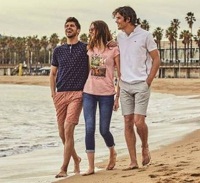 Inspired by international fashion culture, the essence of Duke’s spring/summer collection remains Indian. Featuring floral and nature-inspired prints with clean cuts, the collection uses light and airy fabrics such as cotton linen, pique, single jersey sub and textured materials to offer customers a wide range of T-shirts, shirts, denim, trousers, tops, jeggings, activewear, sportswear, accessories, and footwear. Aimed at mid-income customers its priced between Rs 425 and Rs 2,499.
Crafted for the free-spirited young fashionistas, the collection offers casual light colors including soft blush, lime green and pale blue blended with strong earthy tones like burgundy and navy blue. The cotton or poly-cotton fabrics are a treat for casual lovers. Menswear collection also offers essentials range comprising tank tops and graphic printed T-shirts in cotton and rayon fabrics.
Soft designs, airy fabrics for a relaxed feel
Known for its clean fittings, Duke relaxes its tailoring for the spring/summer collection by offering softer designs, airy fabrics and relaxed textures. The brand deploys its expert workmanship and craft techniques throughout the collection with superb fits and interesting patterns. Full of strip designs, prints, embroideries around collars, the collection embodies Duke’s passion for precision and quality and offers complete value for money with user-friendly characteristics.
“The range reflects our commitment to meet the needs of modern customers through its sophisticated, bold designs and robust features, says Kuntal Raj Jain, Director, Duke Fashions. “Each garment reflects the vivacity of today’s youth who are our main target audience. We aim to offer complete value for money by launching international designs and styles at affordable rates,” he adds.
Classic colors, graceful styles for authenticity
Duke has also updated its exclusive Militaire collection ’21 for men by adding a wide range of T-shirts, polos, shorts, lowers, bermudas, and accessories. The classic color combination of this collection combined with graceful styling lends a touch of originality and authenticity to the range.
Shaping Indian industry with diverse styles and network
Winner of the President’s Award and three national awards: Excellent Quality Readymade Garments, Outstanding Entrepreneurship, and Quality Garments; Duke is known for standardized fits, superior quality, a wide range of styles. Incepted in Ludhiana in 1966, the brand was also crowned India’s Power Brand in the US. It is known for innovations and product quality, and has widely shaped the Indian hosiery industry. It connects with customers through online operations, over 4,000 MBOs and 400 EBOs across India.
China’s new five-year plan to transform textile and apparel industry by 2035
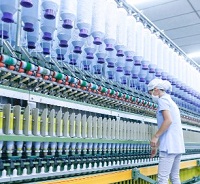 The 14th Five Year Plan and long term goals proposed by China’s local governments not only aim to transform its textile and apparel industry but also strengthen its manufacturing capabilities by 2035. As per a China Textile report, the Tianjin province aims to set up industrial clusters in the textile and light industry with an investment of 200 billion yuan by 2025. Manufacturing sector will add 25 per cent more value to the regional GDP while other emerging industries will add 40 per cent of added value of industrial enterprises above designated size.
Developing smart and green textiles
The Jiangsu Province will focus on building quality infrastructure, robust standards, measurements, patents, etc. It will bring in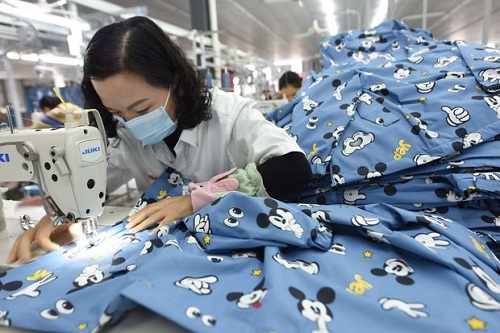 a large-scale technological transformation by promoting smart manufacturing and introducing high-end, smart and green textiles. The province will also support mergers and reorganizations, and shut down outdated factories.
Zhejiang Province will upgrade its manufacturing capabilities and industrial chain. It will build advanced textile and apparel clusters by reorganizing its textile dyeing and printing units, promote the development of chemical fibers, high-end and green textile fabrics, and new apparel and home textile brands, for building a world-class textile manufacturing cluster.
Hubei Province will focus on improving the variety and quality of textile and other consumer goods. It will also launch new brands, and encourage professional development of enterprises.
Shaanxi Province will promote the transformation of the textile industry by developing new high-end, intelligent, and green buildings. The province will also promote the transition of private economy towards the mid-to-high end of the industrial chain and value chain.
Modernizing traditional setups
One common aim for all these provinces is to modernize their traditional industrial chains. Beijing will promote the coordinated development of Beijing-Tianjin-Hebei regions in a systematic manner, while Shanghai will accelerate the development of six key industries of advanced materials and fashionable consumer goods. It will also create high-end industrial clusters and promote construction of industrial parks across the region.
The Jiangxi Province will focus on the apparel and home textile industry b though technological transformation, brand promotion and extension of industrial chain. It will also develop industrial textiles, viscose fibers, own brands, textile clusters and a fashion center in the country.
The Inner Mongolia Autonomous Region will develop emerging industries with new materials and graphite resources. It will also build new graphite (ene) material production bases in Ulanqab.
Heilongjiang Province will accelerate development of carbon-based materials by using key core technologies.
PRGMEA calls for final approval of new textile policy
PRGMEA has called for the final approval of new textile policy 2020-25 by the Economic Coordination Committee (ECC) of the Cabinet as it is vital for new investment and marketing plan in this major export-oriented sector.
As per Daily Times, AdeebIqbal Sheikh, Vice Chairman, PRGMEA, said that Prime Minister Imran Khan has already approved the five-year textile policy for onward submission to the ECC. However, the ministry was unable to oblige due to undisclosed reasons.
He said the government announced several schemes including settlement of outstanding refund claims, rationalization of refund regime, establishment of Exim bank, duty-free import of textile machinery and reduction of mark up rate for export refinance in past but the sector was not getting benefits yet.
Textile sector contributed about 60 percent to the country’s total exports, besides providing direct and indirect millions of jobs which required a proper policy, he added.
He urged the government to redress the problems of the industry by taking comprehensive and innovative solutions in the new textile policy.
AdeebIqbal added that a clear long-term policy will provide investors a clear vision that the government of Pakistan is ready to support the apparel sector of Pakistan on long-term basis.
He was of the view that further delay in textile policy would result in delay or even backing out of investors from future local and foreign investment in the industry. Presently, we are in short production capacity and several exporters are refusing export orders because there is not enough capacity available in the country.
Purpose, transparency and inclusivity to define sustainable luxury in 2030
As per a Bain & Company report, five qualities that will define a sustainable luxury brand in 2030 include: brand purpose, growth decoupled from volume, a fully transparent and traceable supply chain, real inclusivity and a bottom-line driven by sustainability. The report affirms, in future, luxury will be defined by growth decoupled from volume increases. It will focus on the resale and rental models with reselling lifting a luxury brand’s profit margin by 40 percent and its revenues by 65 per cent.
The rental model will also represent similar gains as a single luxury item will earn 41 per cent profit through the model besides acquiring new customers. The report also focuses on assembling more diverse boardrooms and re-centering inclusivity by working with ‘think-fluencers’ who are a channel of communication between the brand and customers.
The report believes, Gen Z will reward brands that have a positive impact on the environment and society. Visual supply chain maps are also a vision of the future, capturing trends toward localized, digitized and verticalized supply chains. According to the report, sustainable luxury, will also endorse brands that give detailed product end-of-life information.
Zhejiang Export Online Fair to be held from March 15-19
The Zhejiang Export Online Fair is being organized by the Department of Commerce of Zhejiang Province and co-organized by Zhejiang Expo from March 15-19, 2021. The fair targets Indian buyers looking to source innovative products and accessories from key Chinese suppliers.
Supported by CREAT the expo features over 50 top manufacturers from Zhejiang showcasing latest garment and textile equipment products and accessories. It offers innumerable options such as sewing machine spare parts, industrial sewing machine & motor, overlock sewing machine, lockstitch sewing machine!, tape cutting/button feeding machine, industrial sewing machine, embroidery machine, hot air seam sealing machine, mattress overlock, brushless servo motor, cap making machine, ironing machine/equipment, pocket pasting machine, electric steam iron, sock linking machine, fusing machinebusbar trunking system, v belt, rotating hook, automatic sewing machine, automatic elastic joining machine, fusing machine, finishing press machine, etc.
The fair will strengthen trade relations between India and Zhejiang at a time when business has hit a new low due to the restrictions on travel and transportation. The range of products has been selected keeping in mind the requirements of the Indian market. All discussions amongst participants will take place online via the Zoom Video Conferencing platform.
German University installs new Stoll knitting machine
The ITA Institut für Textiltechnik (ITA), RWTH Aachen University in Germany has installed a new Stoll CMS ADF 32 W next generation flat knitting machine for the research and development of advanced textiles. As per Knitting Industry, the machine will help the department of Fabric Production at ITA exploit the advantages of the flat knitting technology by digitalizing the product development, increasing productivity and creating new types of textile products through processing and integration of new types of fibers into the knitted fabric.
The Autarkic Direct Feed machine gives its user complete freedom in design and production. The yarn carriers are independent of the carriage and can move both horizontally and vertically. With this innovative yarn carrier technology, the machine creates a variety of knitting techniques and endless possibilities for pattern and color combinations.
The machine combines all advantages of different machine generations and yarn carrier techniques into one unique, high-performance, high-quality, efficient, flat knitting machine.
Benetton Group halts Mynamar distribution over military coup
Following the military coup in Myanmar, Benetton Group has temporarily halted its distribution activities in the country for all new orders until peace and democracy are restored. Over the years, Benetton Group has become synonymous with inclusive and thought provoking advertisements portraying people of all backgrounds. The company’s latest move follows a statement issued last week by a dozen fashion trade and labor organizations, including the American Apparel & Footwear Association, the Ethical Trading Initiative, the Fair Labor Association and Social Accountability International, which called for quick and peaceful restoration of Myanmar’s legitimate civilian government.
The military coup on February 1 stirred civil unrest and protests across the country in support of Suu Kyi, who has been charged with violating import restrictions and contravening a natural disaster law, among other allegations. The civilian leader was denied legal representation. The country’s police and military forces have responded to the protests with at times lethal violence.











