


FW
Products rather than brands to drive future growth in luxury market
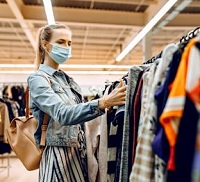 The global online luxury market was the first to recover from the impact of COVID-19 pandemic. As per Bain & Luxury Study 2021 Spring Update report, driven by China’s growing appetite for luxury goods coupled with robust online business and recovery of the US market, the online luxury market returned to growth in the first quarter of 2021, reporting a flat to 1 per cent gain in revenues compared with 2019.
However, the market’s outlook for 2021 mainly depends on two possible scenarios. As a per a Women’s Wear Daily report, the market is either expected to grow by 5 per cent and record €280-€295 billion sales or is expected to fully recover in 2022 only. In 2021, the market is expected to record sales between €250 billion and €265 billion.
New trends shaping the market
The pandemic has forced luxury brands to innovate rapidly and switch to digital platforms, says Claudia D’Arpizio, Partner, Bain & Company. The analyst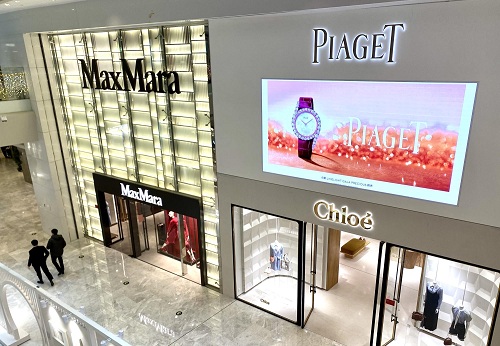 estimates 85 per cent luxury purchases in 2021 were digitally influenced. The rise in digital literacy of luxury customers is leading to a sales spike, explains Federica Levato, Partner, Bain & Company. The rise of new shopping hubs is impacting retail channel mix with most department stores reorganizing their operations. Levato advises brands to be aware of emerging trends and also stay connected to their roots.
Levato expects China to lead the growth in online luxury market. More activity in the apparel market is expected as people start dressing up for work again. However, future growth will be determined more by products than brands, Levato opines. A strong product can help attract consumers more than the brand itself. Consumers may have the best brands but they are missing out if they don’t have the bestselling product in the market, Levato adds.
Growing emphasis on brand ethics
To increase customer base, brands are also widening their price range. They are including entry-level products as well as high-end items and new categories in their portfolio, says Levato.
This has increased the importance of brand customer’s ethics. They are opting for brands upholding the values of sustainability, affiliation and belonging. They are evaluating brands for behavior towards workers and the environment. Consumers are also curbing waste by opting for secondhand goods. Bain & Company Report estimates, the online second-hand luxury market grew from €26 billion in 2019 to €28 billion in 2020. The growth was driven by both entry-level younger consumers and high-end shoppers, it adds.
TRIPS waiver ensures equal access to COVID vaccines, testing kits for workers
 Finalized in January 1995, the Agreement of Trade-Related Aspects of Intellectual Property Rights (TRIPS) establishes minimum standards for protecting and enforcing all forms of intellectual property rights (IPR), including those for patents. In October 2020, the Indian and South African government proposed a temporary waiver of this agreement to simplify laws related to manufacturing of medical products needed to control the spread of COVID-19.
Till date, the proposal has been supported by over 100 governments including the US and New Zealand. However, the EU, UK, Canada and Japan governments are opposing this proposal, delaying manufacturing of COVID-19 PPE, testing, kits and vaccines required to protect workers in global garment supply chains. In COVID-19 era, business recovery of global brands mostly depends on their workers who continue to work in factories that offer no protection from the infection. If workers are not protected against the virus, they may be infected with emerging new variants resulting in repeated lockdowns and factory closures.
Blocking workers’ rights to health
Garment manufacturing countries are currently facing an acute shortage of COVAX-used to treat COVID-19. Though many of countries have made huge donations to increase vaccine manufacturing, these cannot substitute for the TRIPS waiver. The Clean Clothes Campaign, a global network of labor rights groups spanning across 44 countries, warns, by blocking TRIPS waiver proposal these governments are blocking their workers’ rights to health. Sharing technologies to expand vaccine manufacturing
The TRIPS waiver helps protect the health and safety of garment workers engaged in global supply chains of international brands and retailers, including those headquartered in the US, UK, Europe, Japan, Canada, and Australia. Workers’ unions and labor and human rights group - People’s Vaccine Alliance has therefore urged governments to support the support the TRIPS waiver proposal.
The alliance has also urged governments to expand the production of COVID-19 vaccines, treatments, testing kits, and personal protective equipment by sharing technologies and participating in the COVID-19 Technology Access Pool. It also urges global brands having a reliant business model to ensure that all their garment workers have an equal access to COVID-19 vaccines. According to the Alliance, brands need to publicly support the TRIPS waiver proposal to ensure equal access to COVID-19 vaccines and testing and treatment kits. The Alliance has collaborated with the Clean Clothes Campaign Network for this initiative.
Texworld Evolution Paris to showcase 7,000 fabric samples
To be held from July 05-09, Texworld Evolution Paris will showcase almost 7,000 samples by more than 150 manufacturers. This event will adopt the format of professional meetings, imagined and successfully developed by Messe Frankfurt France.
A total of 7,000 samples from manufacturers in ten countries will be directly accessible to visitors. Chinese, Turkish and Indian textile products to discover Chinese, Turkish, Bangladeshi, Korean, Polish, Pakistani and Indian manufacturers have already registered for this session. Taiwan will participate for the first time.
The digital tablets made available to visitors will once again facilitate direct contact with manufacturers for expressions of interest, requests for samples or quotations. A winter 2022-2023 trendbook to build the collections As every year, and even more so with the specific format of the Showroom, the trendbook drawn up by Louis Gérin and GrégoryLamaud, the artistic directors of Texworld Evolution Paris, will serve as the architecture for the event.
Clean Clothes Campaign signatories urge companies to mitigate pandemic effect
Organizations of the Clean Clothes Campaign network have urged apparel companies to take action to mitigate the pandemic’s devastating effect on workers.
Thecampaign network urges apparel companies around the world to realize that their supply chain responsibility extends to the garment workers and they should honor their signed contracts and payment terms while allowing for extended production timelines
They should ensure that all workers in the supply chain are paid their legally mandated wages and benefits, including severance payments and arrears, sick pay and payment of full wages during any quarantine, isolation, or furlough
Ensure that factories adhere to ILO and WHO Occupational Safety and Health (OSH) protection standards and have access to adequate protective equipment (PPE), physical distancing, right of removal from danger, and worker participation mechanisms, adaptation of transport systems, the right to refuse unsafe work, and hazard pay.
Companies should also ensure workers’ right to organize is respected and that suppliers work with unions and worker organizations in addressing these issues
J Crew appoints Brendon Babenzien as creative director for menswear segment
New York-based fashion retailer JCrew Group has appointed former Supreme design director Brendon Babenzien as the new creative director of JCrew Men’s.
In his new role, Babenzien will lead menswear design at the JCrew brand to redefine the iconic American label’s aesthetic in collaboration with recently appointed JCrew Group CEO Libby Wadle. According to Fashion Network, he will bring his liberal points of view and visionary focus to the position.
Babenzein spent more than a decade as design director at Supreme, a period during which his creative vision helped turn a relatively niche skate brand into a global streetwear powerhouse. In 2002,he founded the menswear brand Noah, before leaving the streetwear label definitively in 2015. He then relaunched Noah in collaboration with his wife, Estelle Bailey-Babenzien. The brand, which adopted a greater focus on sustainability with its second launch, now boasts locations in New York, London, LA and Tokyo.
JCrew Group, which also owns the Madewell brand, filed for bankruptcy in May last year. It emerged from the process in September with Wadle taking over as the CEO in November.
AAFA publishes 22nd edition of RSL
American Apparel & Footwear Association (AAFA) has published the 22nd edition of the Restricted Substance List (RSL). As an open-industry resource available to both AAFA members and the broader community, the RSL supports the industry by providing a reference of all banned and restricted chemicals and substances for finished apparel, footwear, accessories, and home textile products, identifying the most restrictive regulations worldwide. The report also offers an Appendix on Reporting that covers the U.S. states whose laws require reporting of chemicals in children’s products as well as European reporting rules.
The 22nd edition of the RSL covers 12 categories with more than 250 chemicals and is updated to reflect additions or changes to regulations and laws that restrict or ban certain chemicals in finished apparel, footwear, and home textile products. First published in 2007, the RSL is produced by AAFA’s RSL Task Force, which reviews and updates the list regularly to reflect the latest global regulatory changes.
Reebok explores sale options
Matt O’Toole, President, Reebok is exploring various options to sell the activewear brand. Although the sale has attracted numerous companies including Authentic Brands Group, VF Corp and Anta Sports, China-based parent of Fila and Descente among them — no deal has been finalized as yet.
Adidas bought Reebok for $3.8 billion in 2006 and the sale is now expected to be worth $2.4 billion. Adidas incurred costs of €60 million related to divestiture in the first quarter, and is reporting all income and expenses for Reebok as discontinued operations. However, Reebok experienced a sustainable business recovery in Q1, with net sales up double digits backed by a strong order book going into 2021.
Once the sale is completed, Adidas has no plans to downsize or exit the Boston headquarters, which employs some 700 people. The employees will begin returning to office this summer but most likely on a staggered basis, says O’Toole. O’Toole said Reebok will not be involved with Fédération de la Haute Couture et de la Mode, and will only support designer Kerby Jean-Raymond as he shines a light on his Pyer Moss collection. However, the designer is working closely with Reebok’s design team, led by Portia Blunt, who joined the brand from New Balance in March as vice president of apparel. Reebok’s other launches expected for 2021 include updates on the basketball heritage side as well as a “big launch of classic leather at the end of the year, O’Toole said.
Second COVID-19 poses challenges for Tirupur, Coimbatore manufacturers
The second COVID wave has posed a lot of challenges for manufacturers in the textile hubs of Tiruppur and Coimbatore. While Coimbatore is the second worst-hit region after Chennai, Tiruppur has also seen a spike in daily new cases over the past few days. Each unit in Tirupur is adopting calibrated measures and adhering to government guidelines, informs Prabhu Damodharan, Convenor, Indian Texpreneurs Federation. As per Hindu Business Line, these units are ready to undergo the short-term pain for long-term gains once key export markets see a revival.
A Sakthivel, Chairman, Apparel Export Promotion Council (AEPC), says, the industry expects the situation to improve soon as key markets — such as the US and Europe — are not under lockdown and orders continue to flow from these regions. Damodharan points out, key consumption markets are witnessing a demand boom and the industry has adequate raw materials and manpower to meet requirements. Organized players have retained migrant laborers and workers by providing them accommodation and making arrangements for early vaccination, he adds.
New York Fashion Week plans physical edition in September
New York Fashion Week will return to its physical edition from September 8 to 12, 2021. This Spring/Summer 2022 season of the show will be a traditional in-person event and attract 11 brands. The event will be supported by IMG, Fashion Alliance, Teflar, Rodarte, Proenza Schouler, Altuzarra, Brandon Maxwell, Prabhal Gurung, Seirgo Hudson, Monse, Jason Wu, LaQuan Smith and Markarian.
These labels will unveil latest offerings as part of NYFW: The Shows, a program organized by IMG and sponsored by Afterpay. The event will be funded by the Fashion Alliance which will also provide the content and talent for it, says Leslie Russo, President, IMG. A few American brands will also make their comeback at the event. These include Pyer Moss by Kerby Jean-Raymond and Thom Browne.
Italian luxury brand Moschino will make its debut at the event which will conclude with the Met Gala on September 13.
Global cotton consumption to grow 3.5 per cent
As per USDA’s first cotton forecast for 2021/22, global cotton consumption is expected to grow by 3.5 per cent to almost 122 million bales in 2021-22. World cotton trade is expected to witness slight drop during the year tough exports are expected to more than double, to 697,000 tonne due to dramatically higher production and improved prospects relative to the extreme drought in 2020-21.
Exports from United States and Brazil are expected to dip due to significantly lower carry-in while those from India are expected to increase. China is projected to be the world’s largest importer for the second consecutive year, although imports are forecasted to be lower than previous year’s eight-year high. Pakistan imports are expected to decline due to highest expected consumption level in three years.
Global cotton stocks have expanded again in the past three years to between 95 per cent and 75 per cent of total use, compared with the three years from 2016-17 when stocks represented less than 70 per cent of use.











