


FW
Luxury brands eyeing UAE market with standalone digital stores
Luxury fashion brands Karl Lagerfeld, Bally and Hugo Boss are setting up standalone digital stores in the UAE and Middle East markets. As per Gulf News, the Swiss shoe and accessories brand Bally has partnered with Jashanmal Group to expand in the Middle East market. Currently, Bally.ae services all of the countries of the Gulf area, plus Lebanon, Jordan and Pakistan.
Similarly, Karl Lagerfeld has partnered with the Chalhoub Group to operate stores on a franchise basis. The microsite Karl-Me.com will drive the brand’s digital approach and offer a tailor-made experience for visitors in the Middle East.
Fashion sales in the UAE, whether through a store or online, make up 50 per cent of all non-grocery retail sales. In Saudi Arabia, it would be in the 40 per cent range. The online fashion retail market is driven by omni-channel retailers, as per RedSeer Consulting. Fashion verticals are increasingly capturing a larger portion of the market with a wide variety of products at a competitive pricing.
Hyosung TNC to recycle abandoned fishing nets
South Korean fiber manufacturer Hyosung TNC Co plans to recycle abandoned fishing nets to produce a new nylon fiber called MIPAN Regen Ocean. As per Korea Biz Wire, the project will be executed in partnership with a municipal government.
Hyosung has signed a memorandum of understanding (MOU) with the Busan metropolitan government and a social venture Netspa for the project. The city government will establish a system for separate disposal of abandoned fishing nets, while Netspa will be in charge of washing and processing the collected fishing nets.
Hyosung TNC will also expand investment in a depolymerization facility to remove the impurities in fishing nets and churn out more than 150 tons of MIPAN Regen Ocean per month. The initiative aims to reduce the marine pollution and improve awareness about the protection of the marine environment.
Burberry sales surge by 32% in Q4
Same store sales of Burberry surged 32 per cent in Q4 of fiscal 2021. As per Womens Wear Daily, the bounce helped lift Burberry’s full-year performance, with the company posting 11 per cent decline in revenue to £2.34 billion with same store sales down 9 per cent for the 12-month period that was scarred by store closures worldwide, reduced tourism and uncertainty across all of Burberrys major markets. The brand’s operating profit in the 12 months ending March 27 more than doubled to £ 521 million with profit for the period more than tripling to £376 million due to tight cost and inventory management and increased full-price sales.
Burberry has reinstated its dividend to 2019 levels, paying 42.5 pence, compared with 11.3 pence last year. Ira recovery accelerated through the year despite an average 16 percent of stores being closed in the three month period. The company’s full-price sales grew 63 per cent in the fourth quarter – nearly double the rate of same store sales growth in the same period. Burberry said expects its 2022 revenues to grow by a high single digit percentage underpinned by the continued outperformance of full-price sales.
The brand will continue to strengthen brand equity by exiting markdowns in mainline stores in fiscal 2022. It also aims to become carbon neutral by the year and continue championing diversity and inclusion, impacting one million people in the communities in which it operates.
French trade shows gear up for physical launches again
Halted since the outbreak of the pandemic, French trade shows are once again gearing up to launch their physical editions. Parisian Trade Show Tranoi plans to launch new women’s collections from September 30 to October 3 2021 at the Palais de Tokyo and Palais de la Bourse venues in Paris. The organizer has partnered FHCM to boost the Paris Fashion Week with a new event, scheduled four times a year at the Palais de Tokyo. The event will showcase a selection of emerging labels hand-picked by Tranoï and FHCM. The first session will be held in parallel with Tranoï, on June 25-27.
Première Vision will also organize a reunion event in Paris from June 30-July 01. The show will be at the Grand Palais Ephemere. The Who’s Next show will launch Who’s Next Limited. The new event will be staged at a showroom in Saint-Germain-des-Prés district on June 25-28, and showcase the exhibitors’ pre-collections during Paris Fashion Week. Who’s Next will also make its come-back at Paris’s Porte de Versailles exhibition centre on September 3-6 2021, alongside Impact, its sustainable fashion counterpart, and Traffic, which focuses on innovative solutions for retailers and brands.
Childrenswear show Playtime Paris will also stage physical sessions at the Parc Floral venue in Paris from July 03-05. One of the first trade events to announce officially its next dates was Maison & Objet, the show dedicated to interior design, fashion and the art of living, scheduled from September 9 to September 13 at the Paris Nord Villepinte exhibition centre. As of now, 1,500 exhibitors have confirmed their presence at the show and that 93 per cent of regular visitors intend to attend the show’s next edition, according to a survey carried out by Maison & Objet from April 30 to May 3.
PLM strategy helps Mayer & Cie create a digital backbone
Mayer & Cie’s Product Lifecycle Management (PLM) strategy has helped the company create a digital backbone to offer better customer experiences and lean, innovative and modern processes. First adopted in 2017, the strategy maps the company’s end-to-end digital process – from the first steps in machine development via product information of each and every kind, configuration options and production information to the service case. The strategy has helped the company move development and production significantly closer to each other. It also enables customers find the right parts more easily in the web shop.
Mayer & Cie. (MCT) is a leading international manufacturer of circular knitting machines. The company offers the entire range of machines required for making modern textiles. Fabrics for home textiles, sportswear, nightwear and swimwear, seat covers, underwear and technical uses are made on MCT knitting machines. Furthermore, Mayer & Cie. regularly develops new approaches underlining its leadership in technology.
Founded in 1905, Mayer & Cie. generated sales worth €72 million in 2020 with about 400 employees worldwide, according to preliminary figures. In addition to its headquarters in Albstadt, Germany, where around 300 people work, and subsidiaries in China and the Czech Republic, sales partners for circular knitting and braiding machines in around 80 countries represent Mayer & Cie.
Bangladesh RMG sector adopts sustainability initiatives Stile and Fabric
BGMEA has initiated two projects with GIZ [Gesellschaft Für Internationale Zusammenarbeit - German Corporation for International Cooperation] named Stile and Fabric.
As per Spin Off International, while project Stile aims to create a conducive policy environment with capacity development of the manufacturers, the Fabric plans to adopt a regional approach to standardize sustainability standard in the Asian apparel manufacturing countries. The association is collaborating with United Nations Capital Development Fund (UNCDF) to look into digitalization of the payment system along with sustainability and productivity activities integrated through a smart management system.
The Bangladesh RMG industry has been badly hit by second COVID wave. The industry has lost $6 billion in export in fiscal year 2019-20 compared to the previous fiscal year, and during July-March of fiscal year 2020-21 the export earnings declined by 49 per cent to $23.49 billion from $25.95 billion reported during the same period of fiscal year 2018-19. The industry lost around 4 per cent unit value during September 2020-March 2021, while the cost of operation has increased due to disruption in scale economy and empty capacity. Factories are also suffering from increased cost due to maintaining health protocols, says Faruque Hassan, President, BGMEA.
Australia plans $1million investment to promote local fashion
The Australian government plans to promote locally designed products in the foreign markets with an investment of $1 million. As per reports, the investment will be used by the Australian Fashion Council to launch a local and international campaign that promotes Australian fashion and an industry roadmap for the next decade.
Christian Porter, Minister for Industry, Science and Technology says, the investment will also fund the development of an Australian fashion certification trademark that would promote high-quality locally designed products in key overseas markets. Leila Naja Hibri, CEO, Australian Fashion Council, opines, the trademark will help position Australian fashion as a brand it its own right.
Sam Moore, Founder and Creative Director, PYRA, adds the trademark will be a great initiative to promote locally made goods. The luxury sportswear brand has just started using local print factories to speed up its production and minimize its effect on the environment.
COVID-19: Exploring opportunities to set new standards in fashion

Year 2021 is likely to be the worst for the fashion industry since the Great Depression, says Achim Berg, Senior Partner and Global Leader, McKinsey & Co, and author of ‘The State of Fashion 2021’ report published jointly with Business of Fashion. The pandemic has accelerated demand for athlesiure, adds Anita Balchandani, Partner, McKinsey-London and Co-author. It has also boosted digitization across the industry with nearly 40 per cent of all sales currently being generated from digital channels, she says.
As per Berg, the pandemic provides fewer occasions for dressing up. Hence, consumers’ clothes have become much more causal. The ban on international travel has also shunted demand for luxury fashion, she adds.
Widening product choices
Another change caused by the pandemic is in product choices. Consumers have become more open to new brands, particularly online startups. Also, there is growing affinity towards casualwear, says Balchandani, However, the post pandemic world might rival in demand for occasion wear as a more hybrid work culture is evolve across the world
The industry has been gravitating towards sustainability for a while now. People are realizing the need for buying lesser clothes. However, the industry still needs to do a lot to reduce its carbon emissions, opines Berg. Fashion businesses need to reshape business operations on a number of different dimensions, adds Balchandani.
Pivot to Asian brands
Balchandani believes, it has become easier to launch a brand today. However, their expansion has become difficult, she adds. On the other hand Berg says, though digitization has facilitated the growth of many online fashion brands, it has limited opportunities for young designers.
Online platforms are helping consumers connect with emerging Asian brands. The market is becoming more globalized with the discovery of new brands. However, China still drives most of the demand, particularly for luxury goods, adds Berg.
Redistribution in players’ market share
Berg rues, fashion shows are becoming less important with emerging new social media platforms. She advises the industry to hold more physical shows to enable brands exchange their views on fashion.
Balchandani does not expect the industry to recover completely even this year. She says, brands need to increase delivery speeds and stay attuned to customers’ changing demands. They also need to focus on sales markets and channels. In future, the market share of brands is likely to be redistributed with better-positioned players ending up with a larger slice of the pie, she adds.
The crisis provides brands an opportunity to be much more digitized, agile and flexible. They need to explore these opportunities to set new standards in the industry, concludes Berg.
H&M, Next, Boohoo maintain growth momentum despite COVID-led disruptions
 Despite their business being devastated by pandemic lockdowns, reduced operating hours, supply chains and shrunk consumer needs, fashion players H&M, Next and Boohoo pose an optimistic outlook for the future.
New business models to help H&M emerge stronger
As per a Textile Today report, Helena Helmersson, CEO, H&M affirms, her brand will emerge stronger as the pandemic provides it with an opportunity to create sustainable and profitable growth. According to her, H&M is developing new business models, initiatives and partnerships to satisfy new customer needs and add more revenue streams. Last year, the group was badly hit by COVID-led restrictions leading to a substantial decrease in its sales.
Next to focus on physical stores
British retailer Next has raised its profit outlook for the 2021-22 for the second time in two months. The fashion chain reported better than expected first quarter trading. It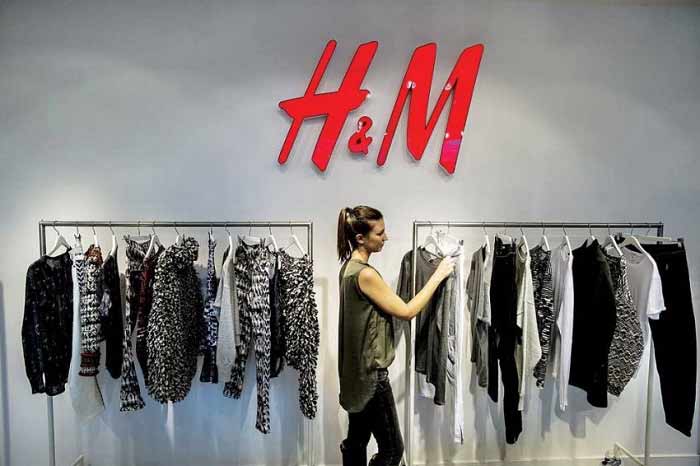 operates 500 stores besides and e-commerce channel,
However, it did expect a post-lockdown surge in sales to endure as last week full price sales in the 13 weeks to May 1 fell 1.5 percent compared with the same period two years ago. The group assumes its first-quarter sales would tumble 10 percent from the same period in fiscal 2019-20. The group has not raise its sales guidance for the rest of the year, which it kept at up 3 percent versus two years ago. However, it has raised its 2021-22 pretax profit estimate to £720 million pounds.
In future, investors may look to see how much business its stores are able to generate apart from online operations, says Steve Clayton, Analyst, Hargreaves Lansdown.
Boohoo addresses supply chain issues
Benefitting from growing trend of online shopping, British online retailer Boohoo posted a 37 per cent jump in annual core earnings, It’s adjusted earnings before interest, tax, depreciation and amortisation (EBITDA) beat analyst forecasts to reach £173.6 million pounds. However, the retailer faced some labor and supply chains pitfalls as an independent review discovered many shortcomings in its supply chain in England. The retailer was also accused of labor abuse in its Leicester factories. It launched an ‘Agenda for Change’ program to fix these issues which strengthened its British suppliers’ list.
WGSN names Digital Lavender as the Color of the Year for 2023
Trend forecasting firm WGSN and color specialist Coloro named Digital Lavender the Color of the Year for 2023. The gender-inclusive color represents a heightened awareness of wellness and virtual escapism, bridging both the digital and physical world, says a Sourcing Journal report.
Digital Lavender is already established in the youth and activewear markets—the color featured in Cardi B’s collaboration with Reebok, as well as in loungewear collections by Lululemon and Pangaia—and WGSN anticipates it will broaden into all fashion products. Though vibrant shades of Pink and renewing hues of green were featured prominently in collections, this shift to lavender was evident in Fall/Winter 21-22 collections. Designers like Salvatore Ferragamo, Blumarine, St. John and Susan Fang used the hue for ethereal dresses and cozy knits.
The color’s digital aspectcame to life in F/W 21-22 collections by MSGM, Dion Lee, Charles Jeffrey Loverboy and Feng Chen Wang. MSGM applied the color to unisex garments with glossy, cracked and high-pile textures. Dion Lee and Feng Chen Wang mixed the color with denim, while Charles Jeffrey Loverboy featured the color in boxy suiting, printed leggings and trench coats.
The color’s sensorial qualitymakes it ideal for self-care rituals, healing practices and wellness products. WGSN expects the color to converge across virtual and physical worlds, making it a key hue for consumer electronics, digitized wellness, mood-boosting lighting and homewares.











