FW
India: GI filed for Arunachal Pradesh’s Apatani products

The company Zeet Zeero has filed an application seeking Geographical Indication (GI) tag for Arunachal Pradesh’s textile product Apatani. The weave comes from the Apatani tribe of Arunachal Pradesh. This woven fabric is known for its geometric and zigzag patterns and also for its angular designs. The Apatani community weaves its own textiles for various occasions, including rituals and cultural festivals. The tribe predominantly weaves shawls known as jig-jiro and jilan and jackets called supuntarii. The people here use different leaves and plant resources for organically dyeing the cotton yarns in their traditional ways. And only women folk are engaged in weaving. The traditional handloom of this tribe is a type of loin loom, which is called Chichin, and is similar to the traditional handloom of the Nyishi tribe. It is portable, easy to install and operated by a single weaver, especially the female member of the community.
Getting a GI tag for a product indicates that it originates from a particular territory in India and has unique characteristics or quality. Having a GI tag for a product prevents unauthorised use of a registered Geographical Indication by others, boosts exports of Indian Geographical Indications by providing legal protection and also enables seeking legal protection in other WTO member countries.
US: Investments, production, communication to boost cotton sustainability
 Kater Hake, Vice President-Agricultural and Environmental Research Cotton Incorporated, defines a sustainable cotton as a type of cotton that meets the current needs of human being without compromising on the wants of the future generation. Speaking at the 78th International Cotton Advisory Committee meet, had said, cotton growers across West Texas and South Africa are adopting various sustainable practices such as no or reduced till, reduced fertilizer inputs while growing cotton.
A system with 3Es
According to Hake, sustainability is a system with 3Es: Environmental, Energy and Economical. Sustainable cotton gives opportunities to farmers in developing countries by providing jobs to those who own less than one hectare of land, he adds. Though the cost of sustainable cotton may be high compared to other types of cotton, overtime costs get absorbed into the lifecycle of products.
Increase production to curb price rise
Currently, cotton prices in the US are riding $1 per pound. In such a scenario, it would be advisable to increase global production to curb this price rise, adds Professor Mohammad Negum, Chairman, International Cotton Advisory Committee. Global cotton production should be increased to 35 million metric ton per year from the current 25 million metric ton per year.
David Rousse, President, Association of Non-Woven Fabrics Industry (INDA), notes a greater push towards introducing plastic-free wipes substrate by 2025. He believes, climate change issue is compelling all sectors to incorporate sustainability in their operations. Hence, all sectors need to improve their communication strategies with stakeholders and consumers, he adds.
More investments from sectors
Sectors also need to attract more investments from both private and public entities, adds Hake. He opines, such investments would bring in great benefits for the cotton sector like increasing fiber strength, leading to a reduction in the weight of cotton garments and the amount of fiber needed to make durable products.
Plastic pollution in small water systems and large marine environments is already driving the sustainable development of biodegradable products, he adds.
Revenge spending to drive India’s luxe sales till international travel opens
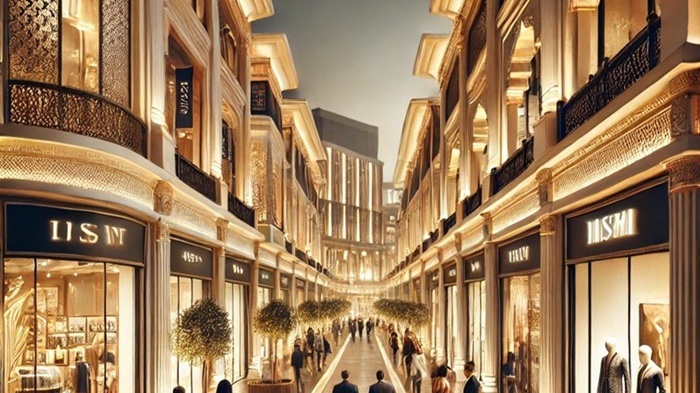
 The luxury market in India is on a roll with revenge spending by the rich driving sales recovery to pre-pandemic levels. Curbs on international travel are driving up spending by affluent consumers on luxury brands leading to a spike in sales for some of the top international luxury labels in the country. A Live Mint report says, the Collective & International Brands division at Madura Fashion & Lifestyle grew 150 per cent this year as all its brands performed well, informs Amit Pande, Brand Head. Demand for their products was spread across India and from all channels. Brands like Karl Lagerfeld saw great growth, adds Pande.
International brand sales grow
Some of the top selling international brands are seeing almost 150 per cent higher sales than pre-COVID levels,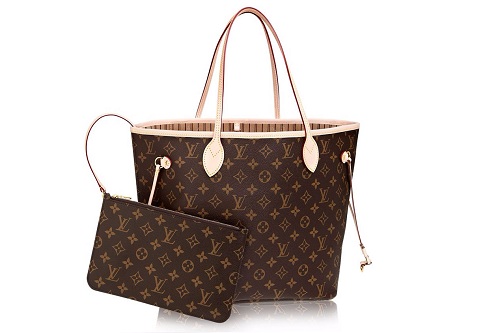 says Pushpa Bector, Executive Director, DLF Retail which also runs two luxury malls, Emporio and The Chanakya in Delhi. Revenues of Christian Dior Trading India increased to Rs 87.15 crore in FY20-21 from Rs 57.10 crore in FY19-20. The company recorded a net profit of Rs 3.24 crore during the year against a net loss of Rs15.92 crore in FY19-20. It has three stores in India and primarily retails luxury clothes, bags and accessories.
Similarly, revenues of Louis Vuitton India increased to Rs 318.58 crore from Rs 286.26 crore in 2019-20, estimates business intelligence platform Tofler. The company’s profit after tax doubled to Rs 51.50 crore during the period attributed to reduced employee expenses and changes in inventories of finished goods, work-in-progress and stock-in-trade.
As per Safir Anand, Leading IPR Lawyer & Brand Evangelist, Anand & Anand, this type of revenge spending indicates the willingness to spend on luxuries given an opportunity. It either denotes their optimism about the end of pandemic or fear of an impending lockdown, he adds.
Chanel to see higher footfalls, double digit growth
This June, French company Chanel announced it expected sales to grow in double digits in 2021 vis-a-vis a 18 per cent decline in 2020 where it saw an 18 per cent decline. Competitor Louis Vuitton Moët Hennessy (LVMH) recorded a 46 per cent increase in revenue to $$51 billion in the first nine months 2021.
However, Rahul Prasad, Managing Director, Pike Preston Partners (Asia), refuses to attribute the sales uptick to pent-up demand. He believes, several elements contributed to the company’s enhanced performance including high traffic and footfalls into malls after the pandemic restrictions lifted and better conversion rates on ‘big ticket’ items.
Consumption shifts to local market
Sales uptick can also be attributed to the shift in domestic buying, says Bector. Consumption has now become more local with many new brands entering the market, she adds. Many marquee international luxury companies are recognizing India as a big market with nearly 50 per cent of the country's luxury consumption happening at two of its DLF’s malls, she adds.
However, Anand does not expect this trend to last long as it may persist only till international travel opens up, he adds.
A new year’s gift to the industry as government defers GST hike on textiles
 Smiles are back on the faces of textile industry leaders as the GST Council has unanimously deferred its proposed hike to GST rates on textiles. The GST rate hike on textiles from 5 to 12 per cent was to come into effect from January 1. The decision to defer the hike was made at the 46th meeting of the GST Council chaired by Nirmala Sitharaman, Finance Minister, citing higher compliance costs, particularly for the Micro, Small & Medium Industries, which may make common man’s clothing costlier.
A timely move
The pre-budget meeting was attended by representatives from states like Gujarat, West Bengal, Delhi, Rajasthan and Tamil Nadu, who unanimously opposed the hike. “The move comes as a big relief for the industry and enables it to enter 2022 with great optimism,” says Sanjay K Jain, Chairman, ICC National Textiles Committee and Past CITI Chairman. “The announcement has come in a nick of time as we had lost hope three days ago when the hike in GST rates was announced,” he adds.
In its decision made on November 18, the Central Board of Indirect Taxes had announced a hike in GST rates from the current 5 to 12 per cent. As a result, the rate on apparel costing Rs 1,000 was hiked from 5 per cent to 12 per cent. Rates on textiles, including woven fabrics, synthetic yarn, blankets, tents as well as accessories such as tablecloths or serviettes, were also increased from 5 per cent to 12 per cent.
Pressure on raw material prices
The move had met with opposition from all industry associations. Clothing Manufacturers Association of India (CMAI) condemned the move saying, it would impact the industry heavily by adding inflationary pressures on raw material prices, especially yarn, packaging materials prices, and freight costs. Heading to industry’s demand, the GST Council finally rolled back its decision today. It will review its deferment in the council’s next meeting in February.
Two New York shows canceled due to rising Covid numbers
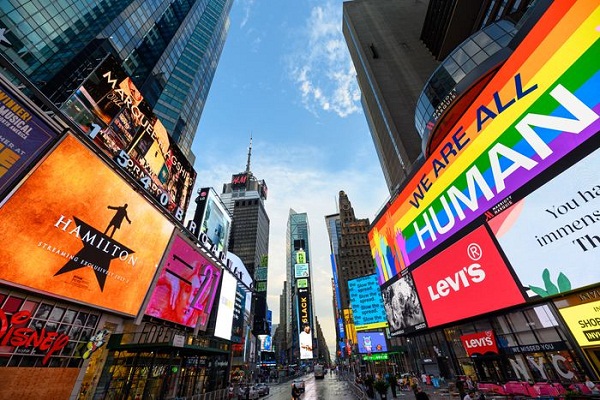
The winter 2022 editions of Texworld New York City and Apparel Sourcing New York City have been canceled due to rising number of Covid cases and a significant deterioration in the general conditions for holding the in-person shows. Both shows will continue virtually and can be accessed live during January 25 to 27, 2022. The virtual platform will open with similar features found on the trade show floor. Attendees will be able to take advantage of the AI-powered matchmaking capabilities of recommended textile suppliers, video meetings, and more. In addition, the educational program scheduled for January’s in-person show will also continue virtually. Dates and times remain unchanged. The summer editions of Texworld and Apparel Sourcing New York City are scheduled for July 19 to 21, 2022, New York City.
Messe Frankfurt, the organizer of the shows, intends to continue to create opportunities to support the textile and apparel community as well as serve as a place for inspiration for designers, buyers, and industry professionals. Germany-based Messe Frankfurt is the third largest trade fair company in the world with operations in over 50 countries and is the leader, globally, in textile fairs. It organises over 134 trade fairs around the world with over 90,000 exhibitors and roughly 3.5 million visitors.
PLI incentives guidelines out, its payable for only five years
The incentive under the Production Linked Incentive scheme will be payable for a period of only five years. The outlay of the scheme for the textile sector is Rs 10,683 crores. It will be in operation from September 24, 2021, to March 31, 2030. Any company or firm or trust willing to create a separate manufacturing firm under the Companies Act, 2013, and invest a minimum of Rs 300 crores, excluding land and administrative building cost, to manufacture notified products will be eligible to get the incentive when they achieve a minimum of Rs 600 crore turnover by the first performance year. Under the scheme, fiscal year 2024 to 2025 will be considered as the first performance year with a minimum prescribed turnover of Rs 600 crores.
Also any company or firm or trust willing to create a separate manufacturing company under the Companies Act, 2013, and invest a minimum of Rs 100 crores, excluding land and administrative building cost, to manufacture notified products will be eligible to get the incentive when they achieve a minimum of Rs 200 crore turnover by the first performance year. Changes may be made to the modalities of the scheme and issues related to genuine hardship that may arise during the course of implementation will be addressed.
H&M Foundation, Fotografiska partner to develop inclusive socities

Sweden’s non-profit H&M Foundation and prominent photography museum Fotografiska have entered into a two-year collaboration to accelerate the development of inclusive societies.
Fotografiska's visitors will be taken on a journey to picture a world where garments can grow directly on human skin through an array of imaginative notions. To further raise awareness about how innovation can drive transformation, seven examples of planet positive solutions that can shift the fashion industry are introduced in a 3D inspiration room. This online tour makes it possible for anyone to learn more about these ideas in the comfort of their own home.
The aim is to create awareness of the powerful impact sustainable fashion innovation can achieve if given the opportunity to scale. The innovation space conjures a T-shirt made of trapped carbon dioxide from the air or shoes crafted from wine-making leftovers and lab-grown cotton. One of the innovations could save 80,000 million liters of water, which is the same amount 115 million people drink during a year. Another solution can reduce 7,20,000 metric tons of Co2 emissions annually, comparable to the total life-cycle emissions of 120 million polyester T-shirts. These solutions are presented as existing and giving back instead of taking from the planet.
Huntsman may sell Singapore-based Textile Effects division
Huntsman is thinking of selling its Textile Effects division. Sale of the Singapore-based division will generate close to $100 million of adjusted ebitda in 2021, recovering much of what was lost due to Covid. While the division’s value-added portfolio of sustainable products is consistent with Huntsman’s strategic direction, the company feels an external party may recognize the value of these assets and be a better owner for them.
Huntsman Textile Effects is the leading global provider of high-quality dyes, chemicals and digital inks to the textile and related industries. Its wash fast disperse dye is designed to meet all major requirements for high performance sportswear and athleisure wear and leads to savings of water, energy and costs for mills. This dye is not sensitive to reduction.
This leads to higher reproducibility, right first-time results and operational excellence. With cutting-edge disperse dye technology at its heart, the dye has been developed by Huntsman Textile Effects to provide the leading solution for meeting the industry’s wash fastness requirements. It offers an attractive shade and a high build-up for deep blues, which stay vibrant, and raises the benchmark of wash fastness in the industry, helping mills overcome the challenges of dyeing polyester and its blends, while achieving production efficiency and sustainability.
With Adidas launching NFTs, top sportswear giants tap metaverse
 As a part of its venture into the metaverse, German sportswear giant Adidas plans to release its first non-fungible tokens that will give eager buyers an opportunity to access Adidas Originals experiences and products. Buyers will get access to all the new products of the brand’s collection featuring virtual wearables for blockchain-based gaming world The Sandbox and other platforms, plus physical products to match.
Opportunities to build new partnerships
NFTs will enable holders to engage with the adidas brand. They will help the brand shape the products and experiences that Adidas launches in the metaverse in the future. Also, they will allow it to build an online community of brand enthusiasts including sportswear entities and luxury goods purveyors into the metaverse. As per Adidas, the newly-announced NFTs will be priced at 0.2 Ether (approximately $800). They will offer new creative opportunities to the company to build new partnerships besides helping it engage through digital tools, says Scott Zalaznik, Chief Digital Officer, adidas.
Other sportswear giants venturing into metaverse
Close rival Nike also launched its latest endeavor in metaverse. The brand’s acquisition follows from the Beaverton, Oregon-based sportswear titan’s filing of trade applications in the US and beyond for the use of some of its most famous trademarks on various virtual goods/services. Converse, a footwear company owned by Nike has also filed a number of trade applications for its word mark, its circular Chuck Taylor All Star logo, and its arrow and star logo for use on the very same types of goods and services as Nike.
Baltimore-based sportswear company Under Armor has filed a trademark application for registration for a logo associated with affiliated NBA star Steph Curry on December 10 for use on ‘Downloadable virtual goods.’ Similarly, sustainable sneaker company Allbirds filed an intent-to-use application for the registration for its word mark for use on “Downloadable virtual goods” and “non-downloadable virtual footwear.
Recent Global Industry Analysts reports say, the global market for social gaming is projected to reach nearly $40 billion in value by 2026. Meanwhile, others expect the market to grow to $1 trillion with brands benefitting from the rise of new revenue streams for virtual goods and services.
Festivals driven Indian ethnic wear market to touch $30 bn by 2025: Study
 Festivals are an intrinsic part of Indian culture, are known to inspire the clothing choices of Indian consumers. Indians usually prefer to wear ethnic outfits during festivals. As per a Textile Value Chain report, these garments make individuals feel beautiful and stylish. They also inspire respect for old traditions and allow them to express love, respect and admiration for one other.
Evolution of comfortable ethic wear Festivals also play an important role in the evolution of fashion trends. Most fashion brands launch new collections during festivals as this is the time when most Indians dress in latest styles. Festivals like Baisakhi, Durga Puja, Diwali, Pongal, Eid among others offer consumers an opportunity to try new styles and trends. They allow them to experiment with their clothing choices.
Hence, the demand for ethnic clothes rises dramatically during festivals. This is a boom time for designers who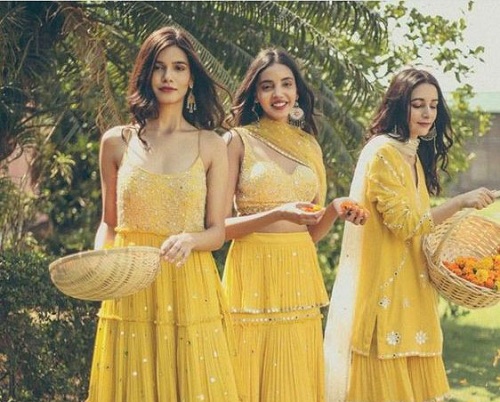 can experiment with new colors, jewelry, and ethnic options during festiviies. However, over the last few years, consumers have moved away from traditional outfits and opting for comfortable ethnic attire such as salwar kameez, kurtas, palazzos, dhoti pants, and sharara suits. Most of these outfits are available in-store and on online portals.
Festivals are a time when fashion designers can showcase their creativity through their collections. Most designers emphasize on making fashionable and comfortable clothes during this time. Their collections are launched in either fashion shows, exhibitions or shops set up during the festival season. Brands and designers also hold small events to promote latest collections in the weeks leading up to Diwali and Durga Puja. They introduce unique discount schemes and promotion offers to boost revenue. Festive fashion is thus an important revenue source for Indian designers. It not only reshapes customers’ purchasing patterns but also their buying strategies and design concepts. .
An opportunity to invest in the market
Customers also look at festivals as an opportunity to invest in the booming textile market. This leads to higher sales for the fashion industry during this period. Internet also plays a significant in influencing consumers’ buying patterns during festivals and drives them to make more purchases during this time, driving the growth of the ethnic wear market. Indian Fashion Market’s June 2020 report forecasts, the ethnic wear market to grow by 7.8 per cent, to reach $30 billion in FY 2025 from $20.6 billion in FY 2020.