


FW
33rd SITRA conference urges textile industry to grow beyond established strengths
The 33rd Technological Conference held by the South India Textile Research Association (SITRA) in Coimbatore, emphasized on the need to grow the textile industry beyond its established strengths such as spinning and knitting.
Dr. Sanjay Jayavarthanavelu, Chairman, Council of Administration of SITRA urged the industry to actively participate in the research institute’s project. He called for collaborative efforts in all areas of textiles such as home textiles, made-up garments, etc.
Excellence in cotton R & D has to be translated into value-added textiles, added Dr S. K. Sundararaman, Vice-Chairman, SIMA.
Dr. PrakashVasudevan, Director, SITRA urged for greater interaction of industry personnel with other institutes to translate technologies to commercial scale.
Industry-academia participation is vital in moving the textiles sector to the next level. In this aspect, a collaboration between this scribe and Aruppukottai-based Jayalakshmi Textiles, 73,000 spindles cotton spinning mill has resulted in a sustainable industrial textile product. Texas Tech University has been collaborating with this textile mill in developing value-added cotton products that have applications beyond the regular fiber to fashion supply chair. Translation of research to reality is need of the hour. Such technological conferences provide much needed support to grow the industry.
Cegid Retail to step-up the Aquazzura’s digital transformation
Italian luxury footwear brand Aquazzura, has selected the Cegid Retail unified commerce and point-of-sale platform to manage its stores in Italy and worldwide.
To support the business as it continues to grow internationally, Aquazzura will arm sales associates with mobile devices to help customers find the most suitable products and benefit from technology that personalizes service and ranges appropriate for each store, region and country. As part of its digital transformation, stores will also add more omnichannel services such as “Click & Collect”, “Ship from Store”, “Click & Reserve” and “Return in-store”.
The company t chose Cegid because of its international credentials and expertise in luxury retail, as well as the need for regulatory and tax compliance for operating in different countries. Aquazzura is available at over 300 luxury retailers in 58 countries and has own-brand boutiques in Florence, London, New York, Miami, Doha, Dubai, Milan, Rome, São Paulo, Capri and soon in Venice. It preferred the flexibility of a SaaS (Software-as-a-Service) cloud-based retail solution with the option of adding multiple features in the future.
Remove trade barriers in Japan, demands BGMEA
Faruque Hassan, President, Bangladesh Garment Manufacturers and Exporters Association, has demanded removal of trade barriers in Japan to boost apparel shipments to the East Asian nation.
He expressed willingness to initiate communication between businessmen in Bangladesh and Japan, particularly those who are involved in the fashion industry.
Hassan also sought cooperation from the Japan’s envoy to increase garment exports to the nation. He urged ITO Naoki, Japanese Ambassador to Bangladesh to encourage Japanese businessmen to make investments in potential sectors in Bangladesh, especially in the non-cotton textile sector.
The Japanese envoy hinted at extending incentive facility to apparel factories inside export processing zones against their exports to new markets.
He also urged Bangladesh to work more for ease of doing of business to attract Japanese investment.
Hassan hoped, Japan would continue providing its cooperation to Bangladesh in its march towards more prosperity.
LPP collaborates with Cotton made in Africa
Polish fashion company LPP has collaborated with Cotton made in Africa (CmiA), launching yet another year of growth for the internationally respected standard for sustainable cotton. By joining CmiA, LPP—whose brands include Reserved, Cropp. House, Mohito and Sinsay—is making a clear commitment to sustainable cotton cultivation and people in cotton-growing countries. Its first CmiA-labelled products will come to market before the end of 2022.
With this new partnership, the Polish fashion company LPP is making a valuable contribution to environmental protection and is supporting African small-scale farmers and their families. The globally active fashion company’s contractually agreed purchase volume of up to 60 million items per year supports its strategic sustainability goals, which include significantly increasing the percentage of more environmentally friendly products and implementing good production standards for a sustainable textile industry.
For each CmiA-labelled textile item, LPP pays a licensing fee to the Aid by Trade Foundation, Cotton made in Africa’s parent organisation. Licensing revenue is then reinvested in CmiA’s activities in Africa, which focus on providing small-scale farmers with training in sustainable cultivation methods and in business fundamentals, ultimately enabling them to maintain soil fertility and to protect their plants with natural materials. In addition, the CmiA standard prohibits the use of genetically modified seeds as well as the logging of primary forests. Only rainwater is used for irrigation. According to the latest study results, CmiA cotton has a significantly smaller ecological footprint while also helping to improve living conditions for small-scale farming families through training provided by CmiA. There are currently around one million small-scale farmers growing CmiA-verified cotton in ten countries in Sub-Saharan Africa, making up around 30 percent of African cotton production. Consumers can identify these products by means of a Cotton made in Africa label. The products will come to market this summer
Burberry launches Autumn/Winter 2022 pre-collection
Burberry has launched its Autumn/Winter 2022 pre-collection, designed by Chief Creative Officer Riccardo Tisci.
The collection celebrates style and identity, togetherness and freedom, nature and the outdoors. It gives a modern twist on the house codes that have made Burberry the brand it is today. An eclectic British style melded with exploration and the ability to go beyond. Themes surrounding adventure and discovery, both in the physical world and on a personal level – removing the boundaries to creativity and self-expression.
The Autumn/Winter 2022 Pre-Collection is the first in the new creative series, Friends and Family. Riccardo Tisci will be partnering with inspiring creatives from unexpected backgrounds for each Pre-Collection. In a true celebration of togetherness, style and family, the creative partner will interpret the Burberry identity established since Tisci joined the house, styling the collection and bringing a personal creative identity to each show. For this collection, Riccardo partnered with Lea T who is a long-standing collaborator and a part of the Burberry family. She has featured as a model in Burberry campaigns and walked the Spring/Summer 2021 runway show.
The collection delves into the outdoors. Signature outerwear is refreshed in new oversized silhouettes with reconstructed details – inspired by a youthful and fresh interpretation of classic
Coats Digital’s FastReactPlan gives Azim Group faster turnaround in order confirmation
Coats Digital has announced that following the implementation of its FastReactPlan solution, pioneering Bangladesh garment manufacturer, Azim Group, has realised a 15 per cent improvement in planning efficiencies and a 97 per cent faster turnaround in order confirmation – with orders being confirmed in just 30 minutes instead of two days.
Established in 1975, Azim Group produces garments for leading brands in the United States, Europe, Asia and South America. Its clients include CK Jeans, Berksha, Walmart, Kohl’s, Perry Ellis, Elcorte Ingles, Land’s End and Falabella.
Prior to implementing FastReactPlan, capacity management and line planning teams lacked the pinpoint accuracy required to respond to the buyer’s latest changes. As a result, additional effort and regular reviews were needed with merchandising to ensure all teams had a unified approach to delivery. With important information siloed in multiple sources across email, Excel spreadsheets and over phone conversations, manual planning processes proved time-consuming and inefficient. Based on insufficient data, capacity was often overbooked or under-booked, causing late deliveries and unnecessary rejection of new orders.
Focus on priority sectors can help Nepal achieve LDC targets
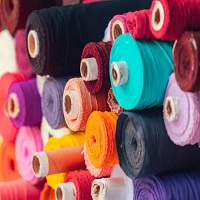 Despite being confronted by unfavorable conditions, Nepal, has made significant socio-economic progress in the last few years. However, it has demonstrated an absurd growth curve where below average economic growth is being supported by a sharp reduction in poverty. As per a report by Himalaya Times, in the last few years, Nepal has managed to meet its Millennium Development Goals (MDG). As per review by the United Nations Committee for Development, it met two of the three criteria for graduation from the group of least developed countries (LDCs) for the second consecutive time in 2018.
Need for consistency in growth
Yet, the Committee refrained from recommending the graduation of Nepal from the list of least development country until the 2021 triennial review due to the instability of its progress achieved.
To graduate from the Least Developed Country status, Nepal needs to consistently meet development goals under at least two of the three predefined criteria. A country can also graduate from LDC status under the 'income-only' graduation rule according to which it is considered eligible for graduation if its three-year average per capita national income has risen to a level at least double the graduation threshold.
Landlocked countries can boost their national income by trading with their other adjacent countries. In Nepal’s case, it is mainly dependent on India for its exports. Around 58 per cent of its exports are directed to India followed by 11 per cent to the United States, 4 per cent each to Turkey and Germany, 3 per cent to the United Kingdom and 2 per cent each to China and Singapore.
Currently, Nepal's export market concentration is estimated to be higher than Afghanistan and Lao People's Democratic Republic, while its export market penetration rate is lower at 2.4 percent. However, in recent decades, it has managed to make remarkable progress under the criteria of Human Asset Index (HAI) and the Economic Vulnerability Index (EVI).
This is quite surprising for a country that had a per capita income of $745 in 2018, as low as just 60 per cent of the graduation threshold level of per capita income of 1,230. Nepal is the only country that secured graduation requirements without fulfilling the per capita GNI threshold criterion.
Focus on priority sectors
To graduate from a LDC, a country needs to meet export targets despite facing high tariffs. However, 2026 exports of Nepal are likely to decline as around 22 per cent of its exports will face higher tariffs. The sectors that will be most affected include textile and clothing, especially, apparels, synthetic textile fabrics and carpets. Their exports to the European Union, Turkey and China will decline.
With several development challenges, Nepal’s graduation from LDC is likely to be difficult. To smoothen this transition, it needs introduce policies that boost growth in certain priority sectors like textiles and apparels.
Digitization in focus, demand for exclusive products to rise in 2022: Report

This year, more fashion brands will focus on digitization of operations, with NFTs gaining prominence. Digital-first creatives will be the new influencers with more brands adopting the metaverse and digital-first designs, says a new Vogue Business report.
Already, Tommy Hilfiger has tapped eight native Robtox designers to create digital designs for new collection. Similarly, Forever 21 has collaborated with a metaverse creation agency Virtual Brand Group to open a Shop City, for Roblox influencers to set up own stores. The brand will provide all available merchandize physically in its virtual shop.
The new membership badges will be profile pictures, or PFPs. Brands will dress PFPs or create their own. Inclusivity and diversity will be top focus for brands as they will aim for a purpose human experience, says Tamara Hoogeweegen, Strategist, Future Laboratory.
Eyewear retailers adopting augmented reality
To increase its use in fashion and retail, eyewear retailers Meta and Snap Inc are investing in augmented reality. Through this investment, these brands aim to make their smart glasses, called Ray Ban Stories and Spectacles, a must have hardware and software. Meta is also paving the way for future partnerships with additional luxury fashion eyewear brands by partnering with Ray-Ban owner EssilorLuxxotica on smart glasses.
Customized fashion to be back in demand
Customized garments took backseat this year with demand for more accessible options rising. In future, however, the demand for personalized products will resurge with brands and retailers embracing 3D and digital twins to create new products, says Goncalo Cruz, Co-Founder and CEO, PlatformE. According to him, tech and operational are getting more sophisticated and facilitating pilots, tests and first runs.
Stores to be more digitized
Stores will add more digital features as digital holdout get converted into online sales, predicts Forrester. They are already becoming more personalized with new features like an access to real-time reviews, AR try-on, etc being adopted, it adds.
Demand for NFTs to persist
NFTs will persist during the year thanks to the long-term loyalty or membership cards offering exclusive perks to customers. Both physical and digital purchases will increase with customers opting for unconventional brands, alternative ways to buy, and innovative systems of value like NFTs, adds Forrester.
Heeding to the legal and ethical issues, brands need to form metaverse teams to address trademark and copyright concerns, and future projects. This will also affect brand’s marketing strategies as they are still adapting from the iOS update that made Facebook and Instagram spend less successful.
This year, the access to both online and offline events will be limited with visitors granted NFTs or other tokens to participate. Luxury brands will need to redefine their offerings to fulfill customers’ desires for exclusivity.
Low-skilled workers, infrastructural facilities plague Bangladesh sweater makers
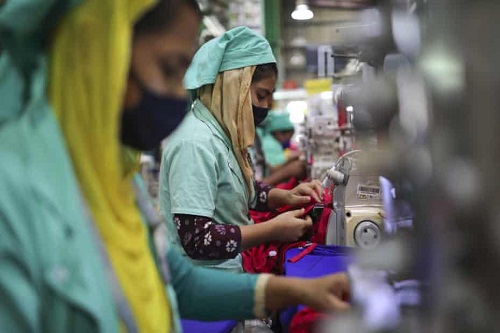
Growing from $3 million to more than $4 billion over time, Bangladesh sweater exports have expanded with the country gaining more access to international markets. Bangladesh currently has 400 automated sweater factories that have replaced its manual hand knitting devices with automated Jacquard machines. As per a Business Standard report, these factories have recorded over a 27 per cent growth in their sweaters in the past six year. Bangladesh Garment Manufacturers and Exporters Association (BGMEA) estimates, growth in this area is relatively higher compared to other items.
Sweater makers in Bangladesh are eying new investments and expansions in 2021 as factories have shaken off the COVID-19 fear and opened with full operations. In 2021, several sweater manufacturers expanded operations while five of them made fresh investments in production units, says Shahidullah Azim, Vice President, BGMEA.
Two other entrepreneurs including Shahidullah Azim and Mostafa Golam Quddus, Former President, BGMEA, plan more investments in their production units in the next two years. Quddus believes, training local workforce will help in boosting his Bangladesh business. He launched Dragon Sweater, knitting and spinning project in 1993 after training the local workforce.
China’s exit provides expansion opportunity
Worth around $104 billion, the international sweater market is currently dominated by China, Cambodia, Turkey and Myanmar. However, China plans to exit the market due to rise in production costs and sweaters being a basic export item. China’s exit will benefit Bangladeshi entrepreneurs like Rafiqul Islam, Owner, Designtex Knitwear, who will increase his investment in sweater unit by 2022-end.
Local manufacturers make only low-cost sweaters and export them for around $4-$6 per piece. They can boost exports by making high-value items like ‘cashmere wool sweaters’ for $100-$150 apiece. The raw materials for these items can be availed from India, China, and Mongolia.
Lack of infrastructure hampers growth
Currently, around 25 factories in Bangladesh make sweaters from acrylic fiber and other fashionable accessories. However, most of these factories lack in skilled workers, innovation and design centres and a strong backward linkage. Activities in these factories are also hampered due to complications related to the harmonized system code. This causes a struggle amongst sweater-makers to bag orders from big brands.
These factories also have low capital for investment. Setting up a small factory with 200 machines needs $1.6 million for machines alone, adds Romel. This makes investments difficult to get, he adds. Also finding workers has become difficult in the country, which is hampering production, he adds further.
Direct mills to bring down yarn prices: AEPC
The Apparel Export Promotion Council has requested the Ministry of Textiles to suggest the mills to bring down the yarn price by Rs 40 per kilogram. According to the Council, the increase of Rs 7,000 in the price of the cotton has caused yarn prices to reach Rs 401 in place of Rs 359
In its letter to the ministry, the council says, the cotton price per candy in October 2021 was Rs 67,000 and yarn price Rs 331. The cotton price was increased to Rs 74,000 this January -- a hike of ₹7,000, with the yarn price set at Rs 401 -- an increase of Rs 70.
The rise in the prices is not according to the formula adopted by the industry. According to its price increasing formula, for every Rs 1,000 increase in the cotton price, the yarn price will also be increased between Rs 3.50 and Rs 4. But now, with an increase of Rs 7,000 in the price of the cotton, the yarn price reached Rs, 401, says A Sakthivel, Chairman, AEPC.
The council has requested the ministry to suggest the mills to bring down the yarn price by ₹40 per kilogram.
LalitThukral, President, Noida Apparel Export Cluster (NAEC) and an executive member of AEPC, adds the total export value of the apparel sector in India is Rs 130,000 crore, of which Rs 40,000 crore revenues are generated in Uttar Pradesh alone.
Now, as the mills have been increasing the prices frequently and arbitrarily, the buyers or importers are not willing to increase the prices as well, he adds.











