


FW
Tom Doerr named Kontoor Brands’ new Executive VP, General Counsel and Corporate Secretary
Global lifestyle apparel company with a portfolio led by iconic consumer brands, Wrangler® and Lee®, Kontoor Brands Inc. has appointed Tom Doerr as Executive Vice President, General Counsel & Corporate Secretary with effect from June 6, 2022. As per a Textile World report, Doerr will ensure upholding of the highest standards of integrity, ethics and behavior consistent with the organization’s values and mission at Kontoor Brands. He will also oversee fundamental legal and business functions such as compliance, legal strategy, issues identification, crisis management and global trademarks and intellectual property oversight.
Doerr will also serve as counsel to the Board of Directors. As a member of the company’s Executive Leadership Team, Doerr will report to Scott Baxter, Chairman, CEO and President, Kontoor Brands. Armed with 20 years of impressive professional experience, Doerr offers an invaluable global perspective to Kontoor’s growth, says Baxter. He has a vivid experience in compliance, litigation, risk management and other corporate matters for publicly-traded companies.
Doerr joins Kontoor from The Manitowoc Company Inc. where he served as the Executive Vice President, General Counsel and Secretary since November 2020 and Senior Vice President, General Counsel and Secretary since November 2017. Prior to that, he was Vice President, General Counsel & Secretary, Jason Industries Inc. and Associate General Counsel, The Manitowoc Company Inc.
H&M to collaborate with TextileGenesis for a traceability program
Swedish fast-fashion giant H&M plans to collaborate with blockchain –based platform TextileGenesis to expand its traceability program by including all man-made cellulosics and recycled polyester. As per a Business of Fashion report, the initiative will help H&M trace almost 20 per cent of its material base by volume, with the brand planning to increase this figure further. H&M also plans to continue testing ways to scale its traceability efforts.
Fashion companies are rarely able to trace the origins of the raw materials they use to make their clothing. This makes it difficult for brands to know their full environmental impact and raises risks of using materials produced by forced labor. Recipient of H&M’s ‘Global Change Award in 2020, TextileGenesis uses blockchain to bring visibility to the supply chain. Using a token called a ‘Fibercoin,’ the company is able to track materials as they progress from fibre to finished product.
J Crew extends Liberty of London partnership into home products
Having collaborated with Liberty of London on clothing lines for over 10 years, J Crew now plans to extend the partnership into home products. As per a Textile Value Chain report, J Crew’s association with Liberty of London incorporates decorative liners, placemats and napkins. It focuses on innovative prints that would be extended to the home furnishings, assortment, says Olympia Gayot, Head-Women’s Department. The prices of these assortments start at $29.50 for a rest veil and maximize at $258 for an all-cotton jumbo sheet set.
This is J.Crew’s first involvement in home furnishings while the Liberty of London had earlier teamed up with Target Stores in 2010. A four-day special spring up shop set up by the two companies in mid-town Manhattan was picked clean of product in only two days and needed to close its entryways.
In 2017, the UK brand associated with Anthropologie for a 40+-piece assortment that included shower, bedding, tabletop, equipment, home stylistic theme, home aromas, kitchen cloths, writing material and furniture.
Global cotton industry posts major gains in 2021/22
The global cotton industry posted gains in major categories in the 2021/22 season with an increase in area under cotton cultivation, production and consumption as against the previous year 2020/21. However, global cotton trade declined due to disruptions across the supply chain caused by transportation and logistics challenges
As per an ICAC report, global demand for cotton remained high all year, However, exporters faced challenges in getting the fibre from one sector of the supply chain to the next, and ultimately onto store shelves and into consumers' hands. While strong US export numbers are an encouraging sign, the backlogs have not been cleared yet through the intricate shipping and transport system and could take many months to fully normalize.
After declining by 22 per cent, area under cotton cultivation in West African countries increased by 44 per cent in 2021/22. This increase was driven by the recovery of area in Mali.
The Secretariat forecasts, current season-average A index for 2021/22 ranges from 109 cents to 129 cents, with a midpoint at 115 cents per pound.
With multiple benefits, viscose rayon fabrics to lead future fashion industry
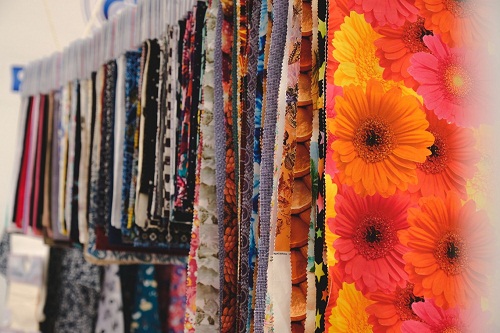
In an alarming fact, consumers will throw away over 134 million tons of textiles each year by 2030. With outfits designed to be worn just a few times, most of this unrecyclable fashion waste is likely to end up in landfills and remain there for centuries.
Benefits of viscose rayon fabrics
Consumers are looking for more sustainable fabric options, and brands are complying to their demands by opting for more nature-based fabrics, such as viscose rayon. These fibers are mostly biodegradable, says as Textile Today report. Mostly produced from trees grown on PEFC-certified plantations, these fibers have minimal impact on the environment. On being discarded, they break down naturally in the soil.
Separating fiber blends
It is important for the fashion industry to control waste from accumulating in the landfills. This can be achieved by recycling fabrics discarded during production and also used garments. For this, the industry needs to separate fibers blended with other materials and remove all zippers and buttons on the garment. It also needs to extract dyes used in the garment.
New partnerships to encourage viscose fabrics use
Asia’s first certified viscose rayon producer, Indonesia-based Asia Pacific Rayon (APR) produces naturally biodegradable viscose that helps reduce the growing volume of fashion waste in landfills. In its viscose staple fiber production, APR uses 20 per cent recycled textile content. The company plans to make $200 million investment through its parent company RGE for encouraging use of recycled textiles in the industry.
To make the fashion industry more sustainable, industry leaders need to focus on raw materials, fabric and garment production, and creating more jobs in the supply chain. APR has already partnered traditional batik cloth producers in Riau – Indonesia, to encourage use of sustainable viscose and natural dyes in their production. The viscose fabric is thus likely to play an important role in the development of a sustainable fashion industry. However, to achieve this, producers need to step up their efforts.
Shoppers Stop reports Rs 15.85 crore net loss in Q4 FY22
Department store chain Shoppers Stop reported a net consolidated loss of Rs 15.85 crore in the fourth quarter ended March 31, 2022 as against the loss of Rs 23.71 crore in the corresponding quarter in the previous fiscal.
Total income of the company in the fourth quarter of FY 2021-22 stood at Rs 734.73 crore as compared to Rs 704.70 in the corresponding quarter in FY 2020-21.
The company reported a net consolidated loss of Rs 47 crore in the financial year ended March 31, 2022 as against the loss of Rs 267.16 crore in the previous fiscal, according to the regulatory filing.
Its total income increased to Rs 2,686.51 crore in FY2022 as against Rs 1,973.20 in FY2021.
Spread across 88 department stores in 46 Cities, Shoppers Stop also operates 11 premium home concept stores, 136 Specialty Beauty stores of M.A.C, Estée Lauder, Bobbi Brown, Clinique, Jo Malone, Too Faced, SS Beauty and 24 Airport doors, occupying an area of 4.47 million sq. ft.
Fabricoz builds niche in ethnic wear market
To serve the needs of this global Indian fashion trend, e-commerce brand Fabricoz hasbuilt an unmatched niche in the large market of ethnic Indian dresses for women around the globe. In the last few years of its operations, Fabricoz has captured the largest consumer base of Indians in the United States, Canada, and Australia.
During the lockdown, the brand doubled its operations team and marketing initiatives. It empowered the users with the ability to customize their Indian outfits from the comfort of their homes, through e-commerce technology, and provide an unmatched personalized experience. Its online store can be accessed through a browser on a smartphone or computer. It has also released an Android app on Play Store and iPhoneapp on Apple App Store for their US and Australian online stores.
Fabricoz also improved the already fast delivery standards to ensure the products are delivered in a very short time.In the past few years,it has developed a reputation for offering consumers exclusive designs of high-qualitybrand products.
VDMA plans technology Webtalks at Techtextil
VDMA plans to hold a series of technology Webtalks as well Spotlight Talks during the upcoming Techtexil show in Frankfurt to be held in June-end . Recently, nine exhibiting VDMA member companies presented their highlights for technical textiles market at a virtual VDMA kick-off event themed ‘Sustainable technologies for technical textiles.’ Dr. Janpeter Horn, Chairman, VDMA Textile Machinery Association and Managing Director, August Herzog Maschinenfabrik inaugurated the program.
Boris Abadjieff, VDMA Textile Machinery, introduced virtual offerings around Techtexil. A series of established ‘Textile Machinery Webtalks’ via the newsroom IndustryArena will focus on Techtextil in the run-up to the fair. During the fair, VDMA member companies will present their solutions live in Spotlight Talks that will be streamed.
VDMA represents more than 3,400 German and European companies involved in mechanical engineering. The industry stands for innovation, export orientation and medium-sized businesses. The companies employ around four million people in Europe, more than one million of them in Germany. Mechanical and plant engineering represents a European turnover volume of around €800 billion. With a net value added of around €270 billion, it contributes the highest share of the entire manufacturing sector to the European gross domestic product. The association was founded in 1892.
Indonesia: Surge in cloth imports prompts KPPI to investigate safety measures
The recent surge in cloth imports has prompted the Indonesian Trade Security Committee (KPPI) to launch an investigation into extension of safety measures, says Mardjoko, Chairman, KPPI. The request for the investigation was submitted by the Indonesian Textile Association (API), as per an Indo Textiles report. The investigation was launched into import of fabrics including 107 8-digit Harmonized System (HS) numbers, according to the 2017 Indonesian Customs Tariff Book (BTKI).
The 107 HS numbers fabrics were divided into five segment, namely: woven fabrics from cotton, woven fabrics of synthetic and artificial staple fibres, woven fabrics of synthetic and artificial filament yarns, special woven and embroidered fabrics and knitted fabrics.
Mardjoko added, the performance of domestic industry which deteriorated during the 2019-21 period due to the continuous financial losses caused by declining domestic production and sales volumes; an increase in ending inventory due to an increase in the number of unsold goods; decreased productivity; decreased capacity used; reduced number of workers; as well as the declining market share of applicants in the domestic market.
Data from the Central Statistics Agency shows, during 2019-2021, fabric products imports declined by 21.56 percent. In 2019-20, these imports declined 42.58 per cent. However, in 2020-21, they increased 7.16 per cent. Most of Indonesia's cloth imports come from China, South Korea, Vietnam, Hong Kong, Taiwan, and Malaysia.
The largest number of cloth imports was from China with a share of 48.87 per cent in 2021, followed by South Korea 12.99 per cent, Vietnam 9.98 per cent, Hong Kong 9.45 per cent, Taiwan 7.03 per cent, and Malaysia 5.58 per cent.
G-III to acquire remaining 81 per cent stake in Karl Lagerfeld
Global fashion leader with expertise in design, sourcing, and manufacturing, GII Apparel Group has entered an agreement to purchase remaining 81 per cent stake in famed fashion brand Karl Lagerfeld for €200 million ($210 million, subject to adjustments and customary closing conditions. G-III will purchase the remaining stake of Karl Lagerfeld in cash, subject to certain adjustments and customary closing conditions. G-III currently owns 19 per cent of the brand and, through this transaction, will become the sole owner of the brand.
The acquisition includes Karl Lagerfeld’s existing 10 per cent stake in its established joint venture in China. G-III believes that the acquisition enhances the Company’s overall economic value and is expected to drive improved long-term shareholder value.
The acquisition will add approximately $200 million in initial annual sales. Combined with G-III’s revenues of $175 million in its fiscal 2022 year ended January 31, 2022, from its existing Karl Lagerfeld business in North America, this acquisition will result in a business expected to generate an initial annual revenue base of approximately $375 million. G-III believes the acquisition will expand its global presence.
The transaction is expected to close in the second or third quarter of fiscal year 2023, subject to certain adjustments and customary closing conditions, including the receipt of required regulatory approvals.











