


FW
Copenhagen Fashion Summit to return as a physical event
Formerly known as the Copenhagen Fashion Summit, the Global Fashion Summit will return as a physical event at the Royal Opera House in Copenhagen, Denmark on June 7 and 8, 2022. To be organized by the Global Fashion Agenda, the international forum for sustainability in the fashion industry organizes discussions focusing on environmental issues, human rights and the consequences of textile pollution since 2009. The summit will include an innovation forum and plenary sessions. It will allow participants to expand their network of contacts. Students benefit from a reduced rate of €350.
The forum will begin with an opening speech by Crown Princess of Denmark, Mary Donaldson. Fatima-Zohra Alaoui, Director General, AMITH (Moroccan Association of Textile and Clothing Industries), will speak about sustainability at the first conference. The conference will also include a debate on the role of fashion in times of crisis, led by Achim Berg, Partner, McKinsey & Company. It will also address topics like circularity and sourcing materials. In addition to Copenhagen edition, Global Fashion Summit will also be held in several major cities in future.
Sustainable Apparel Forum focuses on sustainability in Bangladesh industry
Held in Dhaka, the 3rd edition of the Sustainable Apparel Forum focused on accelerating the momentum of sustainability in the Bangladesh apparel industry. Attended by over 50 speakers and 20 green growth exhibitors from over 20 countries, the forum was organized by Bangladesh Apparel Exchange (BAE) partnering with Bangladesh Garment Manufacturers & Exporters Association (BGMEA).
It included five plenary sessions on topics such as ‘Demystifying Climate Action’, ‘Purchasing Practice’, ‘ESG (Environmental, Social & Governance) & Green Finance’, ‘Closing the Loop: Circular Economy in the Fashion Industry’, and ‘Due Diligence and Legislation’ along with an opening plenary and a closing plenary.
Speakers included: Tipu Munshi, Commerce Minister, Bangladesh; Md. Atiqul Islam, Mayor, Dhaka North City Corporation and Former President, BGMEA; Charles Whiteley, Ambassador & Head-European Union delegation to Bangladesh; Anne Van Leeuwen, Ambassador, Kingdom of the Netherlands to Bangladesh; M Riaz Hamidullah, Ambassador, Bangladesh to the Kingdom of the Netherlands; Faruque Hassan, President, Bangladesh Garment Manufacturers & Exporters Association (BGMEA); Mohammad Hatem, Executive President, BKMEA; Anna Athanasopoulou, Head - Social Economy & Creative Industries, European Commission, etc.
Founder and CEO of Bangladesh Apparel Exchange (BAE) Mostafiz Uddin said: “At this year’s SAF we have brought all the fashion stakeholders under one roof to accelerate the momentum of sustainability in Bangladesh apparel industry, especially after the Covid-19 pandemic which has had immense impact on global apparel supply chain. This is high-level networking where it has been discussed how we can turn the needle so that the lofty sustainability goals our industry so often talks about are translated into meaningful, practical actions?”
BGMEA president Faruque Hassan said: “Today our clothing factories are not only safer, but also have become more dynamic, modern, energy-efficient and environment-friendly. Bangladesh has by far the highest number of green garment factories in the world. US Green Building Council (USGBC) certified a total of 160 Bangladeshi factories as LEED (Leadership in Energy and Environmental Design), among them 48 are LEED platinum-rated. 40 out of the world’s top 100 garment factories are in Bangladesh. Moreover, 500 more factories are in the pipeline for certification.” BGMEA joined the UN Fashion Industry Charter (UNFCCC) with an ambition to reduce GHG emission by 30 per cent till 2030.
Levi Strauss deploys new size finding widget, MySize ID
To help find the ideal garment size for each customer and sell its fashion products, denim leader, Levi Strauss has deployed the MySize ID size-finding widget. Developed by Israeli company My Size, led by Ronen Luzon, the MySize ID widget was first tested by Levi’s in the Turkish Market. The widget helped the company reduce clothing returns by 47 per cent.
Levi's has opted for a simple version of the widget that can be installed on a computer and through a mobile app that, once the customer has indicated their size and weight, advises them on the ideal product. These criteria can be fine-tuned based on individual customers’ requirements, emphasize the founders of the wideget
Levi’s has decided to deploy the solution in Europe. It is currently deployed in France, Spain, Germany, the UK, the Netherlands and Italy, and will be available as a mobile app on the US market in June. The widget will be promoted online by pictures of people wearing Levi's clothes that match their morphologies.
Study highlights use of toxic PFA chemicals in 60% kids’ clothing
As study published in the journal ‘Environmental Science and Technology’, says around 60 per cent of children's clothing, including fabrics used in pillows, bedding and furniture, often with green certification, contain toxic PFA substances that remain forever in the environment. Many children’s products, including those labeled as ‘waterproof’ and ‘stain-resistant’ or ‘environment-friendly,’ contain harmful chemicals although not mentioned on their labels.
Recent tests by a team led by Laurel Schaider, Senior Scientist, Silent Spring Institute, on 93 different products often used by children and adolescents detected PFAs in 54 of the 93 products, including 21 with labels such as ‘eco’, ‘green’ or ‘non-toxic.’ The chemicals were most widely used in products labeled ‘water-‘or ‘stain-‘resistant.’
These products should not contain PFAs as they are handled by children everyday and over a long period of time, says Kathryn Rodgers, Co-author and Doctorate Student, Boston University School of Public Health. She recommends Green certifiers to include PFAs in their criteria and conduct a more thorough review of the products they certify.
India: Government to address rising cotton price issues
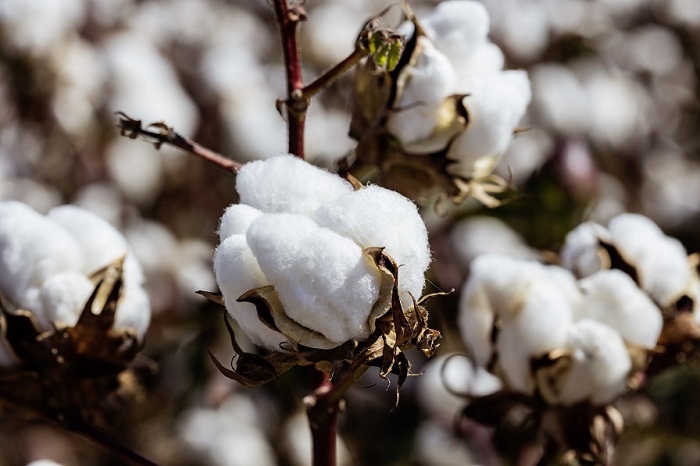
Piyush Goyal, Union Minister of Commerce & Industry and Textiles has called a meeting of all stakeholders to look into possible solutions for rising cotton prices. Upendra Prasad Singh, Textile Secretary believes government intervention is necessary to curb rising cotton prices. However, the intervention should be done in a manner that does not adversely affect any one segment of the value chain, he warns.
Cotton prices have almost doubled from Rs 55,000 since the beginning of the current season seven months ago to about Rs 1 lakh per candy, points out Sanjay Jain, Managing Director, TT Ltd. The extraordinary rise has destroyed demand for cotton-based textiles in India, threatening livelihoods of thousands of MSMEs, he opines. The removal of 11 per cent import duty on cotton in mid-April fuelled cotton prices another Rs 40 per kg across categories earlier this month. This resulted in Tiruppur garments units observing a six-day strike from May 16. The current rise in cotton prices can be attributed to high global prices and additional freight and handling charges for imported cotton, says Singh. Problems such as port congestions and container availability also fuelled prices in India, he adds.
Exporters seek short-term ban
Garment export organizations like the Apparel Export Promotion Council (AEPC) are seeking government intervention to curb rising prices. They are demanding a short-term ban on cotton yarn export to stabilize the market. In a recent representation, the AEPC has urged the government for export of value-added products like apparel instead of raw materials like cotton and cotton yarn. Rise in raw material prices has severely impacted Indian apparel value chain, explains Narendra Goenka, Chairman, AEPC. Rising garment prices are making it difficult for exporters to achieve their target of $20 billion in exports for FY23, he adds.
Varying demand from exporters
Meanwhile, Tiruppur Exporters’ Association has urged the government to ban cotton yarn exports till prices stabilize. However, industry demands vary from one another, says Singh. While some demand a ban on raw cotton exports, others are seeking a ban on exports of yarn. A few are also calling for quantitative restrictions on exports while others are urging for an export duty on raw cotton and cotton yarn. Assuring stakeholders, Singh says, the government will either extend import duty ban beyond September 30 or apply the deadline to loading of consignment into the ship instead of when the ship arrives at the port .
India: SIMA urges stakeholders to resolve cotton crisis collectively
Cotton demand that remained dormant during the second pandemic wave is now being released with consumption rising to 360 lakh against normal levels of 290 to 320 lakh bales. The US sanction on cotton imports from Xinjiang province and attractive cotton futures trading are also fuelling cotton prices to record high levels in a short period.
Price rise is also being triggered by a drop in cotton production from 360 to 330 lakh bales, and 11 per cent import duty levied on cotton till April 13, 2022. Benefitting from these, cotton farmers, ginners and traders have started hoarding seed and lint cotton, leading to further rise in prices. Traders are also using the MCX and NCDEX platforms to adopt import parity pricing policy, leading to further 10 per cent rise in cotton prices. Looking at growing demand for cotton, the government abolished import duty on cotton from April 14 to September 30, 2022. Union Minister of Textiles and Secretary, Ministry of Textiles has scheduled May 17, 2022 to review the situation.
Ravi Sam, Chairman, The Southern India Mills’ Association (SIMA) has urged all stakeholders to stop demanding a ban on cotton or yarn exports that tarnishes the country’s image as a reliable supplier in global market, and instead resolve the crisis collectively. The Association has already urged spinning sector to shoulder the rise in cotton prices to maximum possible extent.
Cotton prices to soften on new arrivals
Sam said cotton prices in India might start softening once imported cotton as well as the summer cotton from states like Tamil Nadu arrives in the mills. He noted, that 40 lakh bales contracted by Indian spinners after April 14, 2022 is expected to reach the mills only by the end of June, leading to a considerable drop in cotton consumption.
Sam opines, short-sighted policies by the government might damage the capital-intensive spinning sector in India that currently operates with 15-year-old machines. He urged the government to collect the online statistical returns data to provide details of production, consumption, and stock across the value chain, and take appropriate policy decisions. Sam also appealed to all stakeholders to file the Returns to the Office of the Textile Commissioner.
New cotton scheme may benefit 65 lakh farmers
Sam also underlined the need to launch the Technology Mission on Cotton 2.0 on war footing to restrict the drop in cotton productivity levels from 565 kg per hectare to 460 kg per hectare, and a drop in production from 398 lakh bales to 330 lakh bales.
He believes the scheme would help protect the livelihoods of 65 lakh farmers and over three crore people directly employed in the cotton textile value chain. Absence of latest technologies including high-density planting, drought tolerant, weedicide etc, poor agronomy research and practices, and poor handling of cotton is impacting the entire crop value chain including farmers, he adds.
Urging stakeholders to avoid demanding anything that might benefit one segment but affect another, Sam asked them to come together and work collectively in this moment of crisis. He urged the government to launch TMC 2.0 with adequate funds to resolve the raw material crisis permanently. He said, the industry plans to appeal to the government to extend import duty removal beyond September 30, 2022, to tide over the crisis. This would help the industry change market sentiments without affecting cotton farmers.
Welspun India’s Q4 net profit declines by 61.85%
Home textiles major Welspun India reported a 61.85 per cent decline in consolidated net profit at Rs 51.25 crore in the fourth quarter ended March. The company had posted a consolidated net profit of Rs 134.34 crore in the same quarter of previous fiscal.
Consolidated total income during the quarter under review stood at Rs 2,247.06 crore as compared to Rs 2,173.56 crore in the year-ago period.
Total expenses in the fourth quarter stood at Rs 2,138.37 crore as against Rs 1,993.84 crore in the corresponding period of previous fiscal.
For the fiscal ended March 31, 2022, consolidated net profit was at Rs 606.71 crore as against Rs 550.79 crore in the previous fiscal.
In FY22, total income stood at Rs 9,377.31 crore as compared to Rs 7,407.96 crore in FY21.Total expenses in 2021-22 stood at Rs 8,504.47 crore.
Gas Jeans escapes bankruptcy, sells assets to Milano 1984 SpA
Italian denim brand Gas Jeans has managed to escape bankruptcy by selling its assets to new buyer in Milano 1984 SpA.
As per an Apparel Resources report, Grotto SpA, the parent firm of Gas Jeans, faces €80 million losses, leading to the firm being subsequently taken over by Milano 1984 SpA.
Following the acquisition, Grotto SpA’s property assets, the Gas Jeans label as well as 140 employees at Grotto will operate under the the formal jurisdiction of Milano 1984.
Reportedly, the offer was consistent with the initial tender. Notably, Grotto was valued €17.5 million, including €2.5 million for its subsidiaries Esagon, which owns the outlet stores of Gas Jeans.
Founded in 1984 by Claudio Grotto, Gas Jeans initially established itself in Europe, America and Asia, but lost all its momentum in last 10 years. It generated revenue of €55 million in 2019.
Officina39 to participate in Bangladesh Denim Expo after 2 years
Italy-based leader in the ecological innovation of chemical application in the textile sectorOfficina39 will be present at the Bangladesh Denim Expo in Dhaka on May 10-11, 2022 after a two-year break. The company will focus on sustainability and its central theme ‘Beyond Business.’
Officina39 has been committed for years to the reconversion of the sector’s technologies to an environmental point of view. The company’s new Trustainable™ collection FW 23, reflects this attitude. The collection is based on the approach of honesty, transparency and social responsibility that have always driven the company. This collection offers a new approach to denim and colored surfaces, explains Juan Manuel Gomez, Officina39 Creative Leader. It is made possible by rethinking the conventional path for washing and dyeing using low-impact techniques and alternative looks with Aqualess Mission and Recycrom™ – the one-of-a-kind dyestuffs range patented by Officina39 which employs recycled used clothing, fibrous material and textile scraps, etc
Delay in GSP implementation will be disastrous for South Asian apparel industry, warn experts
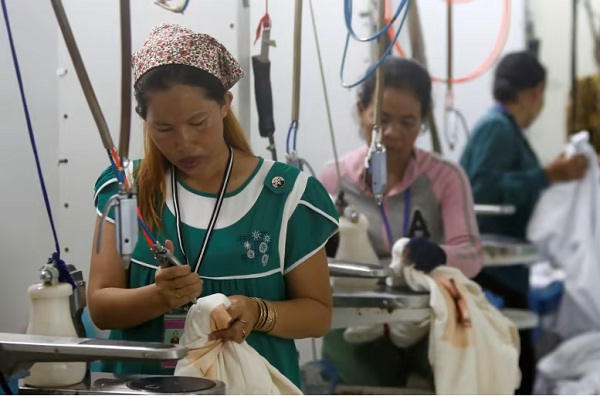
Since the 1970s, the General System of Preferences (GSP) has been a boon for top five global manufacturers including Thailand, Indonesia, Cambodia and the Philippines. Now, the proposed reforms to this largest and longest-running trade preference programs threaten to deprive these Southeast Asian countries of the tariff reductions provided on almost 5,000 products from bags to jewelry; mattresses and car parts.
Inactive since 2020-end, the GSP scheme needs to be renewed with reauthorization by the US Congress. Until now, the scheme covering 119 countries has been renewed 14 times. Of this, 10 renewals were made at varying intervals and the importers were reimbursed each time for the extra tariffs levied on their products
New eligibility laws for tariff reduction
The current renewal comes after a delay of 18 months, resulting in $1.4 billion in extra taxes for companies. The latest revision introduces new eligibility laws for tariff reduction besides earlier provisions that focused on labor rights. It bans countries violating human rights or failing to enforce environmental laws.
Further, the law takes into consideration, a country’s initiatives on poverty reduction and corruption. It upholds their progress on women’s empowerment and threatens to undermine its importance by threatening to disqualify a large number of companies. Critics therefore, urge the program to recognize the efforts of beneficiaries in identifying discrepancies in law.
Edward Gresser, Vice President and Director-Trade and Global Markets, Progressive Policy Institute, warns, introducing too many eligibility requirements would make the GSP impractical and unenforceable. It would debar almost all low-income countries due to lack of government capacity. Currently, the final decision on GSP renewal remains uncertain though it is mandated in the bipartisan innovation and competition legislative package dubbed H.R. 4521.
Balance eligibility with product expansion
Josh Teitelbaum, Senior Counsel, Akin Gump Strauss Hauer & Feld believes, the law is not likely to be passed until mid-November. He advises the government to balance eligibility changes made to the GSP by expanding product eligibility to include things like apparel, he adds. Teitelbaurm believes, this would enable Southeast Asian countries to comply with the program.
The Congress also aims to make the ‘Competitive Need Limitation’ rules more flexible to enable countries to increase exports to the US. However, lapse in GSP implementation may create disastrous situation for the industry, opines Piet Holten, President, Paetics, a Cambodia-based manufacturer.











