


FW
Impending recession calls for inventory saving measures by apparel brands

As a looming economic downturn threatens consumer spending on fashion, apparel retailers are distressing over rising inventory levels. Manufacturers like FutureStitch are reducing the volume of their apparel production to cut stocks. Along with partners like Everlane and Crocs, Futurestich expects stocks across three manufacturing facilities to decline soon due to a drop in orders by a third.
Piling inventory a concern for brands
Over the last two years, measurements of success have changed for garment manufacturers, says Taylor Shupe, Co-founder Stance and Owner, FutureStitch. Earlier, a manufacturers’ success used to be measured by its gross margins, now it is measured by the inventory he holds.
On the other hand, brand partners measure a company’s success by the profitability of each product it holds in inventory. Reducing inventory has become extremely crucial for brands as seen from tumbling of Target’s shares after it slashed prices to clear unsold inventory in early June. Even Walmart plans to slash inventory that rose by 33 per cent last year.
However, not all brands are decreasing their orders volumes. A few continue to place large orders amid tight supply chains and delayed shipments.
Innovative ways to manage inventory
Matt Field, Founder, MakerSights opines, the best way to deal with an unpredictable inventory situation is to follow the 80/20 rule. His partners are cutting back on the number of Stock Keeping Units (SKUs) manufactured and making up for the fewer options with cost benefits.
Michelle Cordeiro Grant, Founder, Lively, an intimates brand adds, she has been focusing on SKU rationalization in anticipation of a recession. Around 85 per cent of her sales currently are coming from just 20 per cent of the assortment, she affirms.
Grant has been protecting her top-selling products while placing lesser emphasis on the low-selling assortment event though it’s causing her to lose out on the novelty factor. She has been using two materials to manufacture each of her products. Currently, each of her products is being made from a combination of nylon and spandex.
Expanding into new categories and new materials and increasing product portfolio are strategies useful in a booming market. A recessionary market, on the other hand, calls for a little saving on the available resources.
ICRA revises long-term rating for V-Mart Retail
Rating agency ICRA has revised the long-term rating for V-Mart Retail at [ICRA]AA- and short-term rating at [ICRA]A1+ for the captioned line of credit.
The Outlook on the long-term rating has been revised as Positive from Stable.
The rating agency has reviewed total bank facilities worth Rs195 crore. This includes Long-term facilities worth Rs132.43 crore, short-term facilities worth Rs16.57 crore, and unallocated facilities worth Rs46 crore.
The revision in the outlook on V-Mart Retail long-term rating takes into account ICRA's expectation of healthy growth in turnover and sustained improvement in profitability, driven by continued network expansion, recovery in sales per square foot from the pandemic impact, and profitable ramp-up in operations of the 'Unlimited' stores acquired in FY22.
This, along with calibrated expansions and low reliance on debt, is expected to keep the company's financial risk profile strong, with a conservative capital structure, strong liquidity profile, and robust debt coverage metrics.
IshaAmbani named Chairman, Reliance Retail
MukeshAmbani’s daughter IshaAmbani has been named as the Chairman of Reliance Retail as the company pushes ahead with a plan for succession in one of Asia’s richest families.
IshaAmbani’s promotion follows that of her twin brother, AkashAmbani, who was appointed as chairman of the telecom unit, Reliance JioInfocomm. Both Ambani brother and sister have been part of teams that negotiated Meta Platforms Inc.’s investment in the group.
Isha, 30, is an alumnus of Yale University. The twins have a younger brother, Anant, 27.
Reliance Retail and Reliance Jio are subsidiaries of the family’s oil-to-telecom conglomerate, of which the $217 billion Reliance Industries is the flagship firm. MukeshAmbani is chairman and managing director of Reliance Industries
Operating profitability of home textile companies stabilizes to 13%
The operating profitability of home textile companies is stabilizing by 150-200 basis points to 13 per cent due to a decline in export demand and increase in raw material and transportation costs, says Credit Agency Crisil Ratings. The agency analyzed 60 companies accounting for 60 per cent of the sector’s revenue. It predicts, credit outlook for the sector will remain stable.
The companies’ balance sheets, strengthened by healthy cash accrual and debt reduction over the past two fiscals, will lend support to exports, says the agency. India’s home textile exports account for 60-70 per cent of revenues. Most of these exports are directed to the US which accounts for 58 per cent of these exports.
Global demand for home textiles is likely to decline due to inflationary pressures with big retailers cutting inventory and consumers curbing discretionary spends. India’s home textile exports declined 5-6 per cent from January-April 2022 owing to a slowdown in sales of key US retailers in the past 3-6 months. The increase in raw cotton prices impacted exports further.
H&M to restructure company’s capital through shares buyback program
Hennes & Mauritz (H&M) AB has decided to acquire the company’s own B shares worth SEK 3 billion in order to transfer capital to the shareholders and adjust the company’s capital structure. The brand will execute the buyback program in accordance with the EU Market Abuse Regulation (MAR) and Commission Delegated Regulation. It will hire a management firm or credit insituutio to manage this share acquisitions.
The share buyback will be executed on Nasdaq Stockholm in accordance with its Rule Book for Issuers, MAR and the Safe Harbour Regulation. The shares shall be purchased at a per-share price within the price range (spread) on Nasdaq Stockholm applicable from time to time, meaning the spread between the highest purchase price and the lowest selling price prevailing and disseminated by Nasdaq Stockholm from time to time.
The program began on June 29, 2022 and will conclude on November 30, 2022. Payment for the shares will be made in cash.
India lifts anti-dumping duty on import of textile chemicals from Bangladesh
The anti-dumping duty on import of textile chemicals from Bangladesh has been lifted. Anti-dumping duty of $27.81-$91.47 per tons on the import of hydrogen peroxide was withdrawn after the lobbying of Bangladesh government and local companies.
Mohammad Akramuzzaman, Chief Financial Officer, Samuda Chemical Complex says the removal of duty will enable his company to export the chemical to India. It will also give boost to chemical’s export from Bangladesh to India, says Tapan Kanti Ghosh, Senior Secretary, Commerce Ministry. Before duty imposition, exporters shipped 3,000 tons of the chemical a month to India.
Anti-dumping duty is imposed by a government on imported items to ensure fair price in the market. Many countries impose such duties on the products they believe are being dumped in their markets in order to protect local industries.
Garment Show of India postponed to July 27-29, 2022
The upcoming edition of The Garment Show of India has been postponed, and the show will now be held from July 27-29 at the Noida Expo Centre in Sector 62. The show organized by Saina Events and Trade India in its sixth edition will feature manufacturers from garmenting hubs including Noida, Gurgaon, Ahmadabad, Jaipur, Kolkata, Punjab, Kanpur, Tirupur, Indore, and Meerut, etc.
It will feature runway shows and seminars and offer networking opportunities by organizing a fashion forum to discuss industry trends. A Khadi Pavilion will promote handloom, sustainable weaves as a versatile fabric for brands to use and showcase a range of examples.
Large-scale retailers including Shoppers Stop, Reliance Retail, Aditya Birla Group and Central will participate. It will feature apparel product categories like ethnic and western wear, eco-friendly clothing, maternity wear, sportswear, fabric and trims, handbags, leather goods, and retail technology, etc.
Cone Denim highlights use of regenerative cotton in premium denim range
Global leader in denim authenticity and sustainable innovation for over 130 years, Cone Denim is expanding its sustainability commitment by highlighting the use of regenerative cotton in its premium denim lines. As per a Textile Today report, Cone Denim is executing the project in collaboration with international regenerative agriculture initiative Regenagri. The project aims to increase access to sustainably sourced cotton grown using regenerative agricultural practices besides working on various programs to help customers and brands achieve key sustainability actions.
Cone fully supports the Regenagri® initiatives that help businesses move to holistic farming by prioritizing soil health and biodiversity, lowering greenhouse gas (GHG) emissions, and sequestering CO2. Meanwhile, along with its parent company Elevate Textiles, Cone Denim has pledged to the UN’s Sustainable Development Goals and committed to source 80 per cent verifiably sustainable cotton by 2025.
The brand offers a variety of responsibly sourced cotton including recycled cotton, organic cotton, and Better Cotton Initiative (BCI) cotton, and continuously invests in supporting new initiatives.
Rising inflation indicates a negative outlook for Asia’s textile and apparel exports in 2022
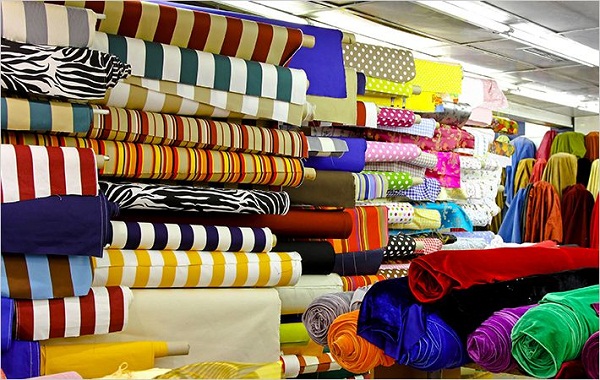
Recently released statistics by the CCF Group indicate, textile and apparel shipments of Southeast Asian countries rose in value and volume on a year-on-year basis while they declined on a month-on-month basis in May 2022. Ttextile and apparel exports from Bangladesh and India fell by over 10 per cent while exports from Pakistan declined only 5 to 6 per cent. Vietnam was the only country that witnessed both a year-on-year increase in textile and apparel exports. Its exports increased 23.2 per cent Y-o-Y and 3.3 per cent M-o-M to $3,171 million.
Export value drops 10.3% M-o-M
The total export value of the four countries dropped 10.3 per cent M-o-M while it increased 27.9 per cent Y-o-Y in May 2022. Between Jan-May’22, total export value of these four countries increased 33 per cent. Bangladesh, Pakistan and Vietnam recorded their first month-on-month textile and apparel exports decline in May 2022. Exports from Bangladesh declined 19.7 per cent; Pakistan declined 5.5 per cent; India’s exports declined for two months in a row. In April it fell 9.5 per cent and 13.6 per cent in May compared to the same period last year.
China, US witness major drop in sales
Inflationary pressures bothered many countries in 2022, especially textile importers. The retail data from major apparel consumer countries show, the European Union and Japan did not witness a significant drop in sales due to rising inflation while sales in China and the US dropped to a large extent. China’s apparel exports grew only 1.4 per cent in April due to stringent epidemic controls in the country. In May, exports grew 20.2 per cent Y-o-Y. The combined exports of all the five countries grew 13.4 per cent M-o-M in May, Hence, the M-o-M decline in combined exports of all countries can be attributed to the returns of orders to China.
US’ price index rises to a 40-year high
As per the recently released inflation data by various countries, consumer price index (CPI) in the US reached 40-year high in May 2022 and rose 8.6 per cent Y-o-Y while the CPI of the European Union rose 8.1 per cent Y-o-Y. Japan’s CPI is predicted to have increased to its highest level in seven years at around 2.5 per cent. For the first time in five months, US’s retail sales declined in May this year as prices increased, indicating a fall in consumer spending due to rising inflation. Interest rates hiked in the second half of 2022. This along with a sluggish consumption and a rising risk of economic recessions indicates a pessimistic outlook for Asian textile and apparel exports in 2022.
India needs TMC 2.0 to regain lost glory in cotton production
India’s cotton consumption is likely to exceed its current crop this season. Consumption is likely to reach 360 lakhs bales while production will reach only 350 lakh bales. Of the total cotton produced, exports will be around 45 lakh bales. This will create a shortage of 55 lakh bales this year, which needs to be imported. By 2025, India’s consumption is likely to reach 500 lakh bales; exports will be 75 lakh bales. This will help the textile industry grow to $350 billion and exports touch $150 billion.
TMC 1.0 boosts cotton production and productivity
Currently, Indian grows 448 kg per hectare (kg/H)of cotton compared to China’s 1,850 kg/H and Brazil’s 1,800 kg/H. It may be recalled, in 1999, former Prime Minister Atal Bihari Vajpayee had introduced the Technology Mission on Cotton 1.0 (TMC 1.0), to improve production and productivity with internationally competitive fibre quality. The scheme was implemented in February 2000 with three mini missions.
Successful implementation of TMC 1.0 helped India improve production, productivity, quality, marketing infrastructure and ginning capabilities. Cotton production increased from 178 lakh bales to 398 lakh bales during 2013-14. India’s total area under cotton cultivation also increased from 92 million hectare to 128 million hectare during the period of TMC 1.0, making it the largest cotton producer in the world and a net exporter. However, now, India is losing its dominance in exports mainly due to the expiry of the BT technology license and no development in seeds, analyses Ripple Patel, Managing Director Fiotex Cotspin in Textile Value Chain.
Patel says, to regain its position, India needs to develop cotton with more GOT (Ginning Out Turn) rather than net weight of cotton ball. India has always focused on developing hybrid varieties of cotton. In 1970, India produced the Shankar Variety that gave better yield but the cost of production was high. It required more inputs, including fertilizers and water. The government should, incentivize production of this variety of cotton to bring down production costs and introduce integrated crop management for better yield. There is need to focus on the development of cotton hybrids that mature within 150 days, have high GOT and yield better fibers.
However, hybrid production is expensive compared to the pure in line varieties. Their recurring costs are high which ultimately increases farmers’ costs. To avoid this, India should produce more pure in line varieties. This will enable the country to grow 100,000 cotton plants per hectare.
Encourage public private partnerships and fertilizer use
Patel suggests, the government should encourage more public private partnerships between Indian seed companies and SAUs and ICAR to develop superior varieties of cotton. It should focus on developing agronomic packages using growth regulators. This will help increase to 35,000-40,000 cotton crops in Phase I and 55,000-60,000 cotton crops in Phase II.
Promote the use of micro, bio and specialty variety of fertilizers and ban unauthorized sale of fertilizers, seeds and pesticides. Encourage use of mechanized agriculture inputs like pheromone traps, lures, etc, to prevent pest attacks. Promote mechanized farming techniques and adopt a scientific approach to agriculture. Diversify Indian germplasm lines with new sources of ClCv disease tolerance to combat new more virulent recombinant strains of ClCv virus.
Make regulatory changes
Patel opines, certain regulatory changes including altering the Seeds Control Order 1983, Cotton Seeds Price (Control) Order, 2015, Essential Commodities Act, 1955, Seeds Act, 1966 are needed. Increase the limit per acre for Kisan credit card through E-rupi voucher. It should promote aerial mapping from various agencies to ensure sowing of crops. Productivity can be improved through detailed guidelines from National Cotton Committee. Trials can be done on 1,000 hectare to draw conclusions.
Align universities with textile ministry
The government should upgrade state agriculture and national agricultural universities and align them with the Ministry of Textiles instead of Minister of Agriculture. Also, establish a Cotton Excellence Centre governed by Ministry of Textiles in Gujarat and Maharashtra. Finally, Patel suggests India needs to introduce TMC 2.0 with the objectives of developing and transferring cotton technologies and developing new varieties of cotton lint.











