FW
Bangladesh apparel exports up 15 per cent
For the first six months of the 2022-23 fiscal, Bangladesh’s apparel exports grew by 15 per cent yearonyear.
Knitwear exports had a 13 per cent share and woven garment exports had a 18 per cent share. The country’s apparel exports grew by 15 per cent in December 2022.
Considering the data of the calendar year, Bangladesh marked a new milestone in readymade garment exports in 2022 amid geopolitical tension, global economic turmoil, and natural disasters. In 2022 Bangladesh’s readymade garment exports grew by 27 per cent compared to 2021. In 2022 Bangladesh’s export earnings from knitwear grew by 26 per cent and earnings from woven exports grew by 29 per cent.
The readymade garment and textile sector of Bangladesh will see a year of possibilities in 2023. Buyers from western countries, especially from the US, have started to shift their orders from China as part of reducing dependency on China for geopolitical reasons.This trend is expected to continue in the upcoming year. In this case, Bangladesh can be a good alternative for western buyers. Western countries may also move out orders from Vietnam and Bangladesh will have a chance to grab them too. Especially in the last few months Bangladesh has received orders from the United States at a higher rate compared to two major suppliers-- China and Vietnam.
India gains in order shifts
India has gained an advantage over China and Vietnam in overall textile exports to the US because of lower power and water costs.
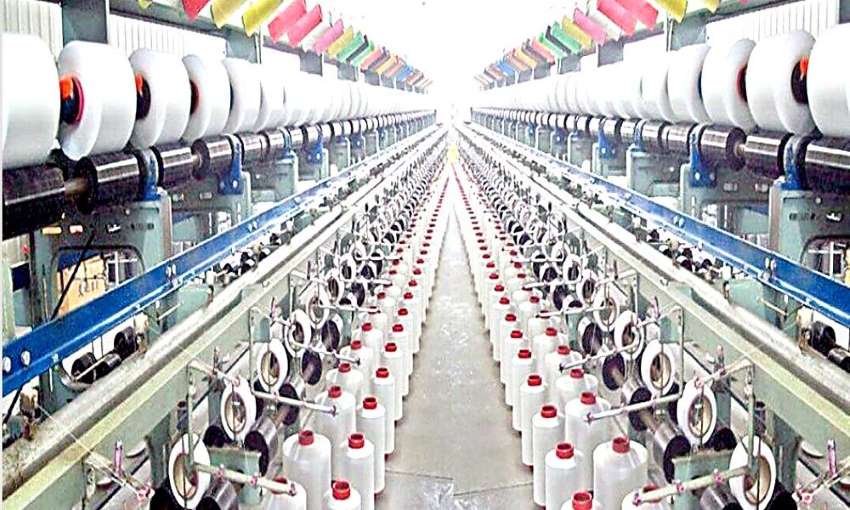
Moreover, orders for spindles are shifting from China to other countries, especially India, after the US banned imports from the Chinese manufacturing hub of Xinjiang because the products were produced with forced labour.
The year 2022 was an eventful year for the Indian textile sector. Under the National Technical Textile Mission (NTTM), 74 research proposals were approved in the category of specialty fiber and technical textiles. Seven PM Mega Integrated Textile Region and Apparel (PM MITRA) parks have been approved to develop world-class infrastructure including plug-and-play facilities with an outlay of Rs 4445 crores for a period up to 2027-28. The guidelines in respect of the scheme have been published. Proposals from 13 states have been received. A total of Rs 621.41 crores in subsidy were released in 3159 cases under the Amended Technology Upgradation Fund Scheme and special campaigns were organized at major clusters for settling backlog cases. A total of 73919 persons have been provided training of which 38823 persons were provided placement under the Samarth scheme for capacity building in the textile sector.
Burberry celebrates year of the rabbit
Burberry’s new collection is inspired by the rabbit. The year 2023 is observed as the year of the rabbit. So the rabbit is a key motif running throughout the collection, including cartoon-inspired iterations, some positioned back-to-back so that the ears meet to form a heart shape while others sit atop the Burberry logo.
The exclusive collection features the Thomas Burberry monogram playfully reimagined with rabbit ears. This is adorned on women’swear, men’swear and children’swear, the signature Lola bag, accessories, cashmere and silk scarves.
Burberry plans to increase sales in a big way. The plan is to double sales of leather goods, shoes and women’s clothing and expand outerwear sales by 50 per cent in the next threeor five years.Longer term, the aim is to increase accessories from 36 per cent of sales to over 50 per cent. Leather goods are the profit drivers of the industry, with successful handbags generating gross margins of over 80 per cent so if the company can sell more It bags, that goal looks realistic.
Focusing on Burberry’s heritage and made-in-Britain status should give the fashion house more of a coherent identity.Burberry has been pursuing a fusion between social media celebrities and the blockchain, including the launch of NFTs in the gaming world.
Cambodia apparel exports down nine per cent
Cambodia’s exports of apparel and clothing accessories (knitted) fell by nine percent during November 2022 as compared to November 2021.
However, the shipment of non-knitted apparel grew by 14 percent during the same period. From January 2022 to November 2022 Cambodia’s apparel exports increased by 16 percent year on year.
The decline in exports in the latter half of 2022 was caused by a slowdown in global demand coupled with inflationary pressures across the world. The downward trend of the second half of 2022 is expected to continue into the first semester of 2023. The sector, however, is hopeful of a rebound in global demand in the second half of this year.
Apparel exports were 40 percent of Cambodia’s total export income during January 2022 to November 2022. The country’s knitted or crocheted fabric imports during January 2022 to November 2022 were 1.5 percent higher than imports in the same period last year.
Manmade fiber imports grew by ten percent as compared to January 2021 to November 2021. But cotton imports slipped four percent during the period under review compared to the same period of 2021. Meanwhile, China was the leading source of foreign investment in Cambodia’s garments, footwear and travel goods sector, accounting for 66 percent of approved new investments in 2021.
Second-hand premium segment sales on-trend as its popularity grows worldwide

Old is gold is what luxury brand retailers are realizing today as they focus on extending the lifetime of pre-used luxury products through second-hand sales. In fact, it is a new and profitable channel within the larger luxury market. Global second-hand luxury goods market is expected to grow at CAGR of 9.4 per cent from 2022-27 as customers prefer high-end fashion apparel and accessories at lower prices. Focus on sustainability and the second-hand market’s capacity to give premium brands a new lease of life within the tighter purse strings of young customers has led to its popularity.
Women buyers drive market
An IMARC study indicates the global second-hand luxury goods market reached $28.3 billion in 2021 and is expected to touch $47.1 billion by 2027. With the consumer base of luxury market having around 400 million consumers in 2022 and expected to expand to 500 million by 2030, many premium branded products will find their way into the second-hand market as customers become more choosy and knowledgeable at each income level.
The outbreak pandemic completely changed global economic and social dynamics and led to increasing demand for various online reliable platforms to buy and re-sell luxury goods of premium brands. This portfolio of pre-loved and pre-owned luxury items include handbags, jewellery, watches, clothing, small leather goods, footwear, accessories, and many others with handbags exhibiting a clear dominance in the market.
And it is out and out women buyers who dominate the global pre-loved luxury goods market as they want to be on-trend whenever and wherever without burning a hole in their pockets.
Most luxury brands offer goods that have an extended warranty period, which makes them suitable for the resale market. Re-selling of these items instead of discarding them after using them a few times is beneficial to both the seller and the new buyer. The pre-used premium goods are also useful in minimizing the dependence on high-quality raw materials for manufacturing new products and reducing waste production levels.
Offline through versatile outlets lead sales
The old-fashioned stigma of wearing and re-use pre-owned apparel and accessories has dissipated as being seen as on-trend and chic at affordable prices has parachuted the sales figures in this market. With younger consumers spearheading this niche segment, both online and offline are doing well. In the online segment, many web resale sites are entering into strategic partnerships and alliances with luxury brands for improving the image of second-hand luxury products by promoting them as pre-loved products ready to be used again by a new buyer.
The rising popularity of limited-edition collections and fashion drops has also created a scarcity of certain premium items in the online markets and boosted sales. Currently, offline channel accounts for the majority of total market share as these products are easily found in pop-up stores, markets, bazaar-style fundraisers, privately-owned consignment shops, auctions, charity events, garage sales, and exhibitions among others.
Although the second-hand market still cannot hold a torch to the premium luxury segment, the opportunities are huge. At the regional level, the market has been classified into North America, Europe, Asia Pacific, Middle East and Africa, and Latin America, where Europe dominates.
The global second-hand market has some big players which include: the Fashionphile Group, Fendi, Garderobe, Inseller, Luxepolis, Luxury Closet, Inc., So Chic Boutique, The Closet, TheRealReal, Timepiece360 and Vestiaire Collective among others.
Second-hand is just another choice for the luxury apparel segment as it ticks all the right boxes for sustainability at affordable prices and that’s the way to go for the aspirational middle-class in India and around the globe.
India’s upcoming Union Budget to relieve textile sector’s stress

Being competitive in global economy is the only way for $200 billion apparel and textile sector to survive. With the first flush of post-pandemic consumerism on the wane with the Ukraine-Russia war proving to be a huge roadblock to Western economies, India’s major export markets are no longer yielding the profits of past. The government is aware that textile manufacturers across major national hubs have been going through a downturn as pricey cotton forced them cut their production days, affecting cost efficiencies drastically.
In this light, there are positive indications that much-awaited Union Budget 2023-24 will bring a relief to the beleaguered textile sector. The government is expected to improve the textile and apparel sector’s competitiveness for a more restrained Western customer who is now feeling a hard pinch of inflation and recession. As per government reports textile duty adjustments will help make Indian sellers competitive in the Western markets.
Cotton roadblock
From a domestic textile manufacturer’s point of view, expensive Indian cotton is a big cost issue and has affected production lines. Since February 2021, the Indian government had imposed a duty of 11 per cent on imported cotton, which added to the already “too expensive cotton” woes for the textile manufacturers who relied on imports as cheaper alternatives. This financial year experienced peak prices of Rs 1,00,000.00 per candy. This left local manufacturers seek importing cotton despite the 11 per cent duties and imports of ‘Cotton Raw & Waste’ jumped 260 per cent to $1.3 billion between April and November 2022, compared to $361.83 million during the comparable period a year ago.
Atul S Ganatra, President of the Cotton Association of India, in a recent interview with a leading Indian business daily said the government’s 11 per cent import duty on cotton from 2 February 2021 has drastically eroded the competitiveness of value-added products in the international markets, and the Indian textile industry, which is the second largest employment provider in the country, is now constrained to work with only 50 per cent of its installed capacity. The silver lining for India is the projected increase in cotton production locally in the new cotton season in the first quarter of 2023 which will see prices of raw cotton falling to what is considered a more acceptable price.
On the other hand, export of raw cotton material by India may register a decrease due to global demand for the same weakening. The senior government official quoted earlier also opined that “Our thinking is to avoid inverted duty structure in trade and to make sure that if it is necessary to import raw material, the price should not be excessive, which will make our final product uncompetitive." The official also added in his statement to the business daily that “We are also taking steps to boost the production of cotton by implementing newer techniques for efficient farming. Branding activity of Indian varieties of cotton, such as ‘Kasturi cotton’ is also taken up in collaboration with the industry, which will have a long-term positive impact on the industry. Free trade agreements, especially with the EU, UK and Australia, will open up large markets for Indian textile products."
Expectations from the government
Several institutions and associations of the Indian textile sector have made recommendations earlier for discussion during the period of pre-budget decision making. One of the most important decisions is for the government to actively promote the production of extra-long-staple cotton (ELS) as currently India imports between 5,00,000 and 6,00,000 bales of 170 kilo bales of ELS, paying an 11 per cent duty.
B’desh garment workers demand pay hike
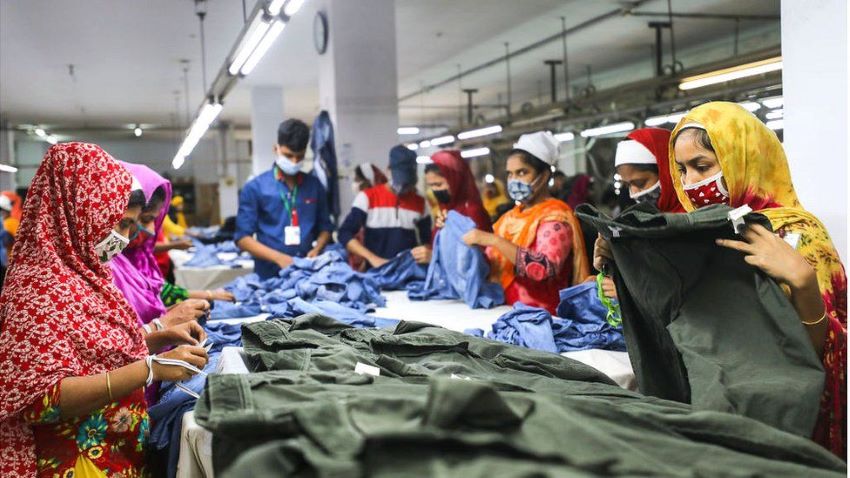
The monthly minimum wage of garment workers in Bangladesh should be hiked. So says the Bangladesh Garments Workers Unity Council (BGWUC).
The rise in the minimum wage for garment workers is felt to be needed because of the abnormal rise in the cost of living fuelled by the spiralling inflation and house rents. The council has also asked for a 65 per cent rise in the minimum wage based on the basic salary of seventh-grade workers, which was fixed in 2006.The seventh grade is the lowest grade in the wage structure of the country’s garment workers.After 2006, four more wage structures were declared where the basic salary was actually decreased every time in the name of giving other allowances. As a result, says BGWUC, garment workers do not get dues properly when they leave the job or are terminated by the management.
The demand for wage revision comes at a time when the country is about to graduate out of the least developed country (LDC) category. As a LDC, Bangladesh now enjoys duty-free access to the EU, where about 60 per cent of Bangladesh apparel is sent. After the graduation, Bangladesh would no longer be able to avail of duty-free access to the EU.
Sewing machine Singer partners with streetwear brand
Singer has produced a sewing machine in partnership with Supreme. Singer is the world’s largest consumer sewing machine company. Supreme is a streetwear label.
Dubbed the Singer SP68, the sewing machine combines performance with a new consumer experience highlighted by the American streetwear brand’s logo and bright red signature color.
In particular, it offers 548 stitch applications with 300 individual stitch options for basic, stretch, and decorative stitches, including two lettering fonts. The machine is complete with an LCD screen and a thread cutter button which saves time by trimming the top and bottom threads. Likewise, a speed control option allows sewists to go at their own speed.
Supreme designs and manufactures clothes and accessories in addition to skateboards. It was established in 1994 and will allow Singer to reach millennials and younger generations. The increasing popularity of the do-it-yourself culture is an important factor contributing to the growth of the sewing machine market. People in order to give a personalized touch to their garments are increasingly practicing home arts such as sewing and knitting. Moreover, sewing machines have witnessed significant advancements in recent years. These advancements are focused upon efficiency and precision. Another prominent factor aiding the sewing machine market growth can be attributed to the declining cost of electronic sewing machines.
Bangladesh encourages manmade fiber garments
Bangladesh’s garment exporters may get cash incentives for making goods out of manmade fibers.
Currently the country has no special cash incentive for manmade fiber-based garment items. Development of a manmade fiber-based garment industry is important for three important reasons -- tackling the graduation challenges, the pandemic's fallouts and grabbing a bigger global market share.
Once Bangladesh graduates from an underdeveloped to a developing country in 2026, exporters may face the associated challenges. Garment exporters have demanded the incentive citing the severe fallouts of the pandemic. And the country can grab a bigger share of the global market since prices of garment items made from manmade fibers are higher than those made from cotton. Global demand for manmade fiber-based garments is higher than that for cotton-based ones. Of garment items produced in the world, 78 per cent are made from manmade fibers and the rest from cotton.In Bangladesh, the picture is the opposite.Of garment items shipped from Bangladesh, 74 per cent is made from cotton fibers and the rest is manufactured from non-cotton fibers.
Since China and Vietnam have been increasing their share of the global manmade fiber apparel markets, Bangladesh feels it’s time to grab a bigger market share.
Custom T-shirts printing market gets a boost from growing need for brand visibility
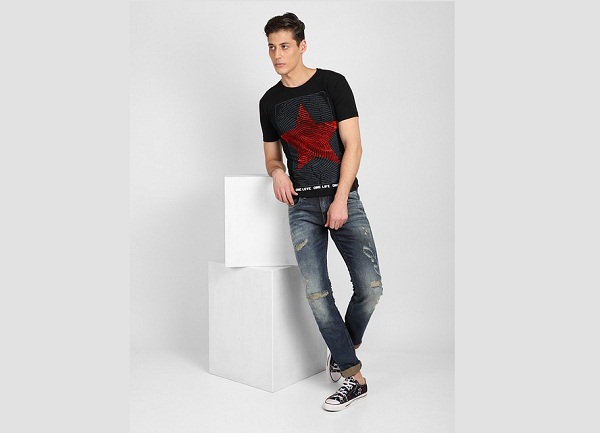
As per the Grand View Research Report indicated global custom T-shirt printing market was valued at $3.9 billion in 2021 and is expected to expand at a compound annual growth rate (CAGR) of 9.9 per cent from 2022 to 2030. Custom-designed T-shirts are increasingly being used by companies as a modern branding strategy to brand their company, products, or offerings. Companies use this technique, especially start-ups, to increase brand visibility and grab the attention of prospective customers. Therefore, the growing use of customized T-shirts as a branding tool is expected to be a major contributor to market growth over the forecast period.
Customized tees for branding
The fashion industry is witnessing a shift toward wearing customized clothing. Also, the increasing disposable income of consumers is enabling them to spend on customized clothes. As a result, people prefer wearing customized t-shirts with specific logos or slogans printed on them. The entertainment industry is contributing to market growth with a large number of people, especially movie fanatics, buying apparel with slogans or logos printed on them. For instance, TV series such as Game of Thrones and Big Bang Theory have a huge fan base. Fans willingly spend a good amount on buying T-shirts or other apparel with their favorite dialogues or slogan printed on t-shirts. This trend is expected to majorly contribute to the custom T-shirts printing industry's growth in the forthcoming years.
There is an increase in the use of custom printed T-shirts to create social awareness, raise a voice, and support a cause. However, specific designs and slogans printed on the T-shirts related to sensitive issues, such as diseases, gender, crime, and politics, are subject to criticism and legal actions. Further, customers from various industries, including hospitality, logistics, construction, industrial, and medical are increasingly providing custom printed T-shirts to their employees and customers which is used as a marketing technique.
Companies all over the globe are using it as an off-the-clock advertising tool. This advertising strategy has been observed to involve less investment as compared to other forms of advertising such as hoardings or TV. Therefore, companies are providing customized T-shirts to increase their brand identity as well as customer loyalty. Additionally, providing t-shirts with good quality material increases their shelf life, thereby helping the companies to gain visibility for a longer period, which in turn is anticipated to boost the market growth during the forecast period.
Demand growth fuelled by sports clubs
Sports teams and clubs of almost all sports have started to design and wear custom-designed t-shirts and jerseys with their unique logo and design. Various sporting clubs are following this trend to increase the visibility of their teams and to provide a unique appearance to their team players. Sporting activities across countries such as China, India, and Germany are witnessing considerable growth with increasing investments by governments of these nations in sports-related activities. As a result, demand for customized T-shirts is expected to increase in the years to come.
With recent COVID-19 outbreak, there has been a significant disturbance in most industries across the globe. While few industries experienced a contraction in their productions and businesses, others faced severe outcomes such as the shutdown of businesses and movement restrictions. For instance, the travel, entertainment, and hospitality industries had the most retrenchments, and on the other hand, healthcare, technology e-commerce businesses had an upsurge in demand. However, during the pandemic, the fashion industry experienced both a surge and decline all at once.
While various outlets and large brand stores experienced a drop in footfalls and clothing demand, there was an increase in demand for custom T-shirts from the e-commerce industry. Moreover, custom T-shirts printing business also witnessed several new entrants
during the pandemic.