FW
80 units in Sircilia Textile Park shut shop
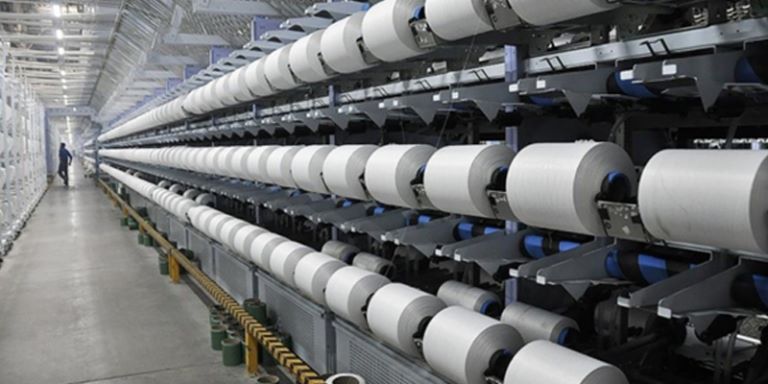
Poor marketing facilities and steep hike in yarn prices have forced 80 units in Sircilla Textile Park to shut shop. The park opened in 2002-2003 with an investment of Rs 7.73 crore. It had 237 plots in it and was expected to provide direct employment to 7,000 workers.
As per the Indian Express, the park is home to nearly 25,495 of the total 35,588 weavers in the State For the last two months, no trader has shown any interest in the 1.56 crore meters of cloth which remains piled up in the units. The value of the cloth is about Rs 2 crore.The cost of the production has shot up with polyester yarn rice increasing to Rs 270 from Rs 170 per kg a few months ago. Similarly polyester cotton yarn prices have increased from Rs 175 to Rs 270 per kg.
Annaldas Anil, President, Textile Park Units Association says, even paying salaries to the workers is becoming difficult for themFor the last two months several units have shut shop.”The other factor that had seen the Textile Park go out of business is the power bills which broke the back of the unit owners. Power in the Sircilla Textile Park costs Rs 7 per unit. Because of these factors, factors owners are unable to compete with producers from other states.
Euratex urges for a Pact for Skills

Addressing European Commissioners Thierry Breton and Nicolas Schmit during a high level roundtable conference for textile, clothing, leather and footwear sectors, Alberto Paccanelli, President, Euratex insisted on the need to address skills challenges to make a successful transition of the industry. These challenges relate to the ageing workforce and difficulties to attract young talents, and the need for new skills – related to digitalization and sustainable production. He asked support to the European Commission to increase already existing up/reskilling activities, and in attracting younger generations to work in the sector.
In recent years, digitalization, sustainability and other trends emerged, requiring new skills to be developed and integrated in the companies. The sector also suffers from an ageing workforce – 35 per cent of current workers in the textile and clothing industry are over 50 years old –, decreasing number of younger employees and lack of attractiveness. The COVID-19 pandemic significantly accelerated these trends and created new challenges.
These issues were presented yesterday to European Commissioners Nicolas Schmit and Thierry Breton during the “Pact for Skills roundtable”. Several representatives from the industry and related stakeholders explained that these trends not only affect the workforce of EU companies, but more broadly the competitiveness of the industry.
A recent TCLF survey among 150 companies, launched by Euratex, CEC and Cotance, confirmed these challenges:
• Only 57 per cent of respondents implement currently up/reskilling activities to meet digital skills needs, 85% foresee them as important or very important in the next 5 years.
• 1 in 3 companies implements up/reskilling activities to meet green skills needs, and around 60% see them as very important in the next 5 years.
• Up/reskilling activities, focused on process and production skills characteristic for the textile and clothing industries, will remain important in the future. 9 out of 10 companies foresee needs for this type of skills in coming years.
• Up/reskilling initiatives in companies are constricted by time and financial constraints, as well as lack of knowledge about existing offer. That's why only 15% of companies admitted that they often or always use external financial support in up/reskilling. Collaboration structures between education stakeholders and policy makers - on national and regional levels - are considered ineffective.
The Pact for Skills initiative can be the ideal solution for these problems. EURATEX highlighted some actions that could be a part of the Pact for Skills:
• Support SMEs in their digital transformation with financial aid or programs. In the survey, companies stated that direct funding is the only way to meet this transformation.
• Improve the skillsets of existing workforce, by supporting companies in their efforts to upskill and reskill their workforce through training, apprenticeship and mentorship programmes.
• Minimize skills gaps and mismatches in the areas of sustainability, digitalization, process innovation and new business models.
• Attract well-qualified young workers and professionals.
• Supporting the modernization of the sectors’ VET and training infrastructure through improved education-industry collaboration.
“The Pact for Skills initiative can be the driver for change in a sector which is going through a substantial transformation” said Alberto Paccanelli. “But it should be implemented quickly, offer tangible results, and be part of the wider EU Textiles Strategy. EURATEX is ready to support the European Commission in running the process and connect all the different actors”.
Amazon becomes US’ top apparel retailer: CNBC
As per CNBC reports, Amazon has surpassed Walmart to become US’ top apparel retailer.
In 2020, Amazan sold around $41 billion apparels and footwears, representing 11-12 per cent of all clothes sold in the US, says a Wells Fargo analyst.
Amazon’s apparel sales during the year increased by 20 per cent than that of Walmart, and the online retailer is expected to sell over $45 billion worth of apparels and footwears this year.
Amazon posted its highest e-commerce growth in three years during the COVID-19 pandemic, when many Americans avoided shopping indoors. The company's web services generated huge growth last year as well due to companies transitioning to work-from-home models.
On the other hand, Walmart has introduced new clothing brands and partnered with fashion designers in recent years to boost sales. The retailer recently added a whole selection of sports apparel, and partnered with a fashion designer who dressed Michelle Obama.
TAITRA webinar to focus on integrated digital solutions for textile industry
A webinar, to be organized by the Taiwan External Trade Development Council (TAITRA) will focus on themes like integrated digital solutions for textile needs, smart manufacturing systems and green manufacturing. As per the Indian Textile Magazine, the webinar will be held on April 29 and is titled ‘Taiwan Excellence Textile Manufacturing Solution Webinar’.
EshaniGhosh, Trade Promotion Specialist, Taipei World Trade Centre, says, aiming to familiarize global buyers with Taiwanese textile machinery, the webinar will be represented by four Taiwanese companies: Logic Art Automation, Pailung Machinery Mill, Acme Machinery Industry and Hsing Cheng Machinery. It will bring together potential buyers in countries such as India. The proceedings will be broadcast live and will help participants understand the benefits of Taiwan’s textile machinery; especially those that use cloud platforms.
The companies that would be participating include leading players like Logic Art Automation, the only integrated enterprise that provides dye house total solution for the textile dyeing industry. It undertakes and integrates the process of a dyeing house such as dyestuff storage, lab for color management, and central control for stenter and dyeing machines. Another participant, Pailung Machinery Mill has been focusing on smart knitting projects for several years.It has launched a Manufacturing Execution System (MES) and Pailung Online Monitoring System (POMS) to respond to the varying market and complicated data management. The company’s smart knitting machine provides various services including optimizing the time of machine adjustment and accuracy, upgrading the management efficacy of stocks and machine maintenance, speeding up the response from manufacturing to the market, enhancing product repeatability from production, etc.
The third company, Acme Machinery Industry, offers new generation, eco-friendly intelligent conveyer drive dyeing machine.This is equipped with a conveyor to drive the fabrics instead of liquor floating and is able to save more than 65 per cent of water, steam, electricity and auxiliaries and reduce 65 per cent of wastewater and CO2 emission. The machine has obtained worldwide more than 20 invention patents with a total of over 200 PCS patent certificates.
Karl Mayer to showcase enhanced digital solutions at ITMA ASIA+CITME
Karl Mayer will showcase its textile innovations focusing on digitalization at ITMA ASIA + CITME from June, 12-16, 2021
All the three brands in the group including Karl Mayer, KM.ON and Stoll will focus on new digital trendsetting offers. Karl Mayer will exhibitmachines with the highest market relevance for both warp knitting and flat knitting. Visitors from both the warp knitting and flat knitting sectors, as well as from the warp preparation and technical textiles sectors, will be able to find out all about the opportunities for new business, stronger market positions and optimized production processes,said Arno Gärtner, CEO, Karl Mayer Group.
On show will be an HKS, two machines from the ADF family and a new flat knitting machine for the volume market. The digital features of these models enable them to offer unique possibilities in modern production processes. Karl Mayer will also exhibit the Isodirect beam warping machine with an excellent price-performance ratio.
Karl Mayer founded KM.ON to develop pioneering digital products. The company’s own software start-up made its first major market appearance at ITMA ASIA + CTME in 2018. This year, the company will showcase new and enhanced digital solutions that are highly effective in helping customers do business.
Bring yarn under Essential Commodities Act, urges SIMA
C Easwaran, President, South India Hosiery Manufacturers Association (SIHMA) has urged the Central Government to ban yarn and fabric exports and bring yarn under the Essential Commodities Act.
Earlier, the Tiruppur exporters forum called for a one-day strike in the garment industry against the hike in yarn prices and the non-availability of raw materials. The strike was supported by 30 industrial associations of Tiruppur and eight trade unions.
As per Raja M Shanmugham, President, Tiruppur Exporters Association, the strike highlighted the plight of the industry to the authorities.
The high yarn prices coupled with non-delivery of the raw material on time is affecting our garment industry and there is nothing exporters can do other than shutting down the companies, he said
Major international brands are outsourcing their work to the Tiruppur garment industry and the non-delivery of the finished materials in time will lead to loss of major orders, thus affecting the garment industry, he added.
The Tiruppur Garment Industry employs over 10,000 workers and allied staff, If the yarn prices are increased, the industry will be shut down and workers will lose their jobs, warned Shanmugham.
MIT researchers develop new textile to reduce industry’s carbon footprint
Researchers from the Massachusetts Institute of Technology believe that the new textile produced by them that can significantly reduce the carbon footprint of the fashion industry and global plastic waste. As per a report by the Chemistry World, produced from polyethylene, the textile has better cooling properties than cotton or linen, is more stain resistant than polyester, is easily recyclable and can potentially be made from recycled materials.
The textile industry has a huge carbon footprint and is responsible for 5–10 per cent of the world’s greenhouse gas emissions. The industry once depended entirely on natural fibers such as cotton, linen and wool, but in the past century synthetic polymers such as polyester and nylon have become increasingly widespread.
Polyethylene, however, has been largely overlooked. Svetlana Boriskina, Materials Engineer,Massachusetts Institute of Technology says Polyethylene can be .used as protection against rain and in garments that prevents moisture from entering the body.
Moreover, the structural simplicity of polyethylene gives the textiles much higher infrared transparency than fabrics woven from more complex polymers, allowing for better radiative cooling.
Boroskina says, the textile industry is increasingly moving away from the traditional wet-dyeing process, which creates a real risk to the environment’. Instead, colorants are incorporated into molten materials before they are spun into fibers. The dye-resistance of the fibers even had the advantage of making their textile more stain-resistant than cotton, linen or polyester, allowing it to be washed more economically at lower temperatures.
The team is now working towards the commercialization of polymer – which could be produced from recycled polyethylene.
Retail experts confident of bright future despite drop in February sales
As per Craig Johnson, President, Customer Growth Partners, though retail sales lost momentum last month, the market seems to be turning around.
In February this year, sales at department stores fell by a seasonally adjusted 8.4 per cent from January and by 14.5 percent from a year ago, reports Sourcing Journal. Sales at apparel and accessories specialty stores slipped by 2.8 percent between February and January and were down by 11.3 percent from a year earlier.
Sales of non-store retailers plunged by 5.4 percent from January, but increased by 25.9 percent from a year earlier.
Overall retail and food service sales decreased by 3 percent from a month earlier, worse than the 0.7 percent drop economists projected.
Despite this, optimism prevailed in the market as consumers started to make up for the lost. Their efforts were boosted by the government’s promise of stimulus checks and hopes that vaccines will bring life back to normal. Compared to a year earlier,retail and food service sales increased by 6.3 percent in February.
Johnson had previously predicted annual apparel sales would fall by 9 percent this year. However now, he plans to revise his predictions favorably if the recent trend continues.
2021 might be as challenging as 2020, full recovery by 2023: McKinsey Report
 Fashion executives looking for some relief from COVID-19 led disruptions in 2021 may be disappointed as the current year might prove to just as challenging as the previous year, says a new report by McKinsey and Company.
The report indicates, prospects of lockdowns continuing until Easter on April 4, are likely to worsen fashion retail scenario in Europe which plunged by 20 per cent in 2020
Germany, France emerge winners in Europe
Of all European countries, Germany and France performed the best as sales in these markets declined by only 16-18 percent while sales in Spain, Italy, and some eastern European countries contracted by almost 30 percent.
Fashion sales in the United States plunged by 23 percent year on year while those in China declined to only 7 percent year on year, returning to growth trajectory in August 2020.
Fashion’s capacity to rebound was seen through the strong market performance by the Europe and United States during the summer months. Shoppers in both regions regained normalcy as stores reopened. Germany’s third-quarter fashion revenues declined by only 13 per cent during the period compared to its 2019 levels. The country’s investments in building digital muscle paid off as E-commerce giant Zalando added 3 million new shoppers in the third quarter of 2020 alone, driving 30 percent year on year growth of its gross merchandise value (GMV).
Pandemic uncertainty may push recovery to 2023
Markets with a high e-commerce penetration, including the United States and the United Kingdom grew between 45 and 50 percent in e commerce in 2020, while southern Europe markets increased by 25 percent.
. The year 2020 provided the European fashion industry with an opportunity to engage consumers through online shopping. The industry expects the growth in e-commerce to continue in 2021. However, it fears the continuation of lockdowns until Easter to set fashion sales back to 2020 levels.
Even if lockdowns are avoided during the fourth quarter, the industry remains uncertain of consumers’ sentiments. It will have to comply with public health rules such as the mandatory use of masks, etc. And if consumption remains moderate during summer and the pandemic is not contained by the next winter season, the industry may not recover till 2023.
Fashion sales across US, China to improve
Fashion sales across the United States are expected to improve in 2021. Growth in online sales by upto 40 per cent will restrict the decline in fashion sales between 6 and 16 percent. However, health and safety restrictions and limits on the number of people allowed in stores will continue to impact brick and mortar sales.
Chinese luxury brands have been capitalizing on the opportunities in the domestic market by creating shopping attractions, entertainment and special events. Luxury consumers in the country are expected to increase theirspending in the domestic market by as much as 50 percent this year. However, this will compensate for just half of its sales lost overseas and in Hong Kong.
Stamina and perseverance would be the key for future planning for the industry. Fashion executives need to remain alert to the key demand predictors during the year besides building their online channels and building agile supply chains.
Growing consumer awareness demands sustainability initiatives from fast fashion retailers
 The COVID-19 pandemic has intensified consumers’ approach to eco-friendly shopping. As per 2020 GlobalData report, around 37.3 per cent of UK consumers now opt for sustainable brands. In such a scenario, fast fashion retailers, not usually considered as being eco-friendlyrisk losing relevancy if they do not invest in digitization and transparency.
Rukmini Durge, Retail Analyst, Global Data believes, in order to survive fast fashion retailers need to ensure transparency in their supply chains and manufacturing besides introducing new recycling initiatives.
Low prices, influencers fuelling fast fashion popularity
Argoi Rashid, Senior Lecturer, Nottingham Business School, agrees consumers are becoming more aware of sustainability and corporate social responsibility though theirhabit of purchasing cheaper products persists. These habits have been instilled by lower price products, desire for new clothing product, unstable market demand, fashion bloggers influence, and passion for quick and convenient service, she adds. Rashid also attributes the growing popularity of fast fashion to the growing influence of fashion bloggers influence, especially during the current lockdown when consumers can’t do much apart from watching fashion blogs and shopping online.
Retailersgreenwashto appear ethical
However, Claire Heathcote, Co-Founder, Loop Cashmere, warns, fast fashion retailers usually muddle with buzzwords like sustainability, eco shopping, and conscious shopping to attract shoppers. To appear to be ethical, many of them also retort to green washing. They also launch sustainable products to distract consumers from their non-sustainable practices, adds Scott Joseph, Founder, Fashion Without a Face.
Joss Ford, Founder, Enviral, says, retailers’ transparency starts with their efforts to communicate their purpose to its employees. This helps employees prepare a sustainability report showing the targets they’ve met even before a public campaign is launched.
Though it has widely disrupted the industry, fast fashion has also made the retail market more simple, convenient, accessible and affordable. However, fast fashion retailers need to accelerate their sustainability initiatives as consumers are becoming more aware of their buying decisions.