FW
CCCvA demands increase in duties on Asian imports
Camilo Rodriguez, President, Colombia’s Apparel And Related Products Chamber (CCCyA) is demanding an increase in duties on sub-valued imports from Asian countries. As per Sourcing Journal, Rodriguez believes, these goods are threatening Sri Lanka with job losses in the domestic market.
Bowing to industry pressure, Bogota recently slapped a 40 percent duty on clothing priced under $10 and a 15 percent plus $1.50 per kilogram tax for all apparel fetching over $10 when arriving at the country’s ports.
The CCCyA urged the government to expand this duty to cover clothing priced under $15 not $10. For apparel arriving at over $10 apiece, the tax should be 10 percent plus $3 per kilogram, said Rodriguez.
Colombia, a leading exporter of lingerie and beachwear products, is choking under sub-valued Asian merchandise, mainly T-shirts, pants and blouses which typically come in valued well below their production cost, Rodriguez claimed.
Last year, the country imported $2 billion of apparel products, compared with $574 million in exports. In 2019, that deficit stood at $2.4 billion for imports versus $734 million for exports. Clothing production, meanwhile, declined 21 percent to $4.13 billion as retail sales fell 21.7 percent.
Guillermo Criado, Commercial Manager, PatPrimo and a founding CCCyA member, said only 2 percent of Colombian imports fall under Bogota’s 40 percent duty, making it virtually worthless and requiring a more aggressive alternative.
Philippines needs to upgrade domestic, export markets before joining CPTPP
 Though the Comprehensive and Progressive Agreement for a Trans-Pacific Partnership (CPTPP), may boost Philippines’ garment sector, it may eventually drive investors away from the country, believes Robert Young, President, Foreign Buyers Association of the Philippines (FOBAP) As per a Phil Star Global report, from $1.09 billion in 2016, Philippines’ garment exports slipped y on an average 12.6 cent to $642.67 million in 2020 due to lack of backup industries in the country.
Philippines imports all raw materials including textile and buttons from abroad. Its fabrics are imported from South Korea, China, Vietnam. Young says, this increases its cost of garment-making which is 20 per cent more expensive than in Vietnam.
Consider local limitations
In such a situation, if Philippines is forced to sign the CPTPP, it may face direct competition from Vietnam, forcing investors to relocate to other countries, says Young. The country first needs to consider the limitations of local manufacturers who are yet to move beyond fast fashion to cater to the demands of international buyers, he adds.
The government also needs to focus on reviving the $1 billion garment exports to traditional markets such as United States, Japan and South Korea, Young adds.
Focus on export quality
Rene Ofreneo, Professor-Labor and Industrial Relations, University of the Philippines, urges the government to improve the quality of exports. This will help local players capture more orders for high value apparels, he adds. They should also aim to develop a niche product to capture the global apparel market.
Though Philippines invested nearly $35 million or P1.7 billion to transform facilities to PPE making during the pandemic, it received only 14 per cent or less than P700 million, of the P4.8 billion contracts placed by the government. The government therefore, needs to boost domestic as well as export markets before entering new trade agreements.
Egypt to set up world’s largest spinning and weaving factory
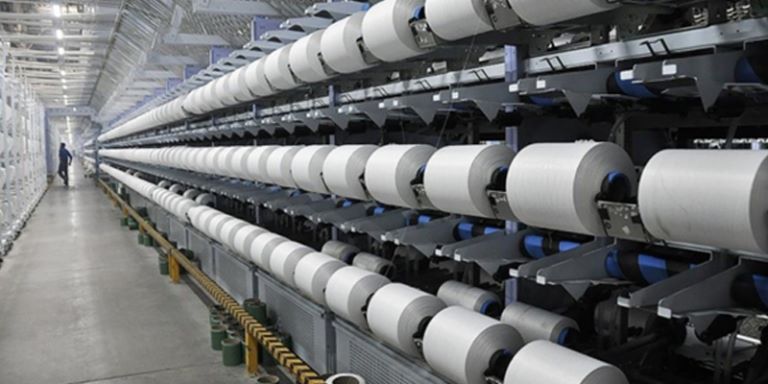
Egypt plans to set up the world’s largest spinning and weaving factory in Mahalla al-Kubra, at a cost of about LE900 million.
As per reports, the factory is scheduled to be completed by the end of this year, after construction work was delayed as a result of the coronavirus pandemic.
According to the Holding Company for Cotton, Spinning, Weaving, and Clothes, this factory will contribute to a major shift for this industry in Egypt. It marks the first step forward towards the development and modernization of the textile industry, through the government’s plan to develop it at a cost of more than LE21 billion over two years.
The plan includes great focus on increasing exports and improving the quality of production by importing the latest machinery from Italy and Switzerland.
Planned on about 62,500 square meters, the factory accommodates over 182,000 yarn materials with an average production capacity of 30 tonne of yarn a day.
Egypt also aims to develop similar factories in Cairo, Kafr al-Dawar and the Delta region to convert the losses of public textile companies – approximately LE three billion – annually into profits.
Scotch & Soda launches store expansion program
Scotch & Soda has launched a new store expansion program. As per Fashion Network, the company plans to l open 15 new standalone locations over the next six months, as well as 12 concessions.
The company has also unveiled a new brand logo that reflects the brand’s design ethos of connecting the expected with the unexpected, celebrating the power of self-expression and liberal thinking of Amsterdam, the city where the brand was born.
Designed in collaboration with A Studio in New York, the new identity was revealed on the brand’s social media channels, website and dedicated app, as well as in several new stores, before launching on collections in November with the SS22 offer.
The store opening plan started with Utrecht in the Netherlands and will be followed by Westfield’s Mall of the Netherlands in Leidschendam on March 18, as well as the brand’s largest flagship worldwide opening in ‘s-Hertogenbosch. It will also open two stores in Germany, while a store in Ukraine will open in May.
Further the company will open two stores in Poland by October. It will open a store in the US in September, while a store in Israel will debut next month followed by Qatar, UAE and Kuwait. In Asia-Pacific, a new franchise will open in April in Mumbai, India, as well as in October in Perth, Australia.
The brand is also adding new showrooms and offices in Shanghai and Milan this spring.
The new stores will have strong sustainability features and the company will increase the responsible standard of materials used in its collections to a minimum of 50 per cent of these materials.
Sateri to expand lyocell production capacity by 2025
A major producer of viscose fiber, Sateri plans to expand its lyocell production in in China to 500,000 tonne by 2025.
As per Sourcing Journal, the company kicked off the first phase of this expansion with groundbreaking on a new 100,000-tonne facility in Changzhou, Jiangsu province. It plans to build another 100,000-tonne plant in Nantong, Jiangsu province, later this year. The Changzhou facility is expected to commence production in the third quarter of 2022 and will create more than 800 jobs, the company noted.
Sateri forayed into China’s lyocell market last May when its 20,000-tonne lyocell production line in Rizhao, Shandong province, commenced production. The same site houses a 5,000-tonne lyocell pilot production line dedicated to the development of lyocell technology.
A natural and biodegradable fiber, Sateri’slyocell is made from wood pulp sourced from certified and sustainable plantations. It is manufactured using closed-loop technology, requiring minimal chemical input during the production process and utilizing an organic solvent that can be almost fully recovered and recycled.
The LYCRA Company completes self-assessment at six manufacturing sites
Global leader in sustainable fiber solutions for the apparel industry, the LYCRA Company, has completed the self-assessment at all six of its fiber manufacturing sites by using the Higg Facility Environmental Module (FEM). As per Business Wire, the module reviews environmental management systems, energy use, emissions, water usage, wastewater, and waste and chemical management at the facility level. It also helps manufacturing locations establish an environmental baseline to pursue continuous improvement.
The module was introduced at LYCRA Company’s Maydown site, in the North West of Northern Ireland, more than a year ago. Based on initial learnings, the remaining five production facilities completed self-assessments simultaneously. These modules were posted to the Higg portal in December 2020 and can now be shared securely with customers upon request through the Higg platform.
The Higg Index suite of tools was developed by The Sustainable Apparel Coalition (SAC). The Higg FEM gives manufacturers, brands and retailers a clear, holistic picture of facility-specific environmental performance and impacts. Assessments help identify and scale opportunities for sustainability improvements that protect the well-being of factory workers, local communities and the environment. The LYCRA Company, the only spandex (elastane) producer member of the SAC, plays an active role on several sub-committees of the coalition.
JEKA Studio upgrades KornitStorm HD6 system
Slovakia-based JEKA Studio has upgraded the single step, digital, direct-to-garment, production on demand technology of its Kornit Storm HD6 system, JEKA Studio produces a variety of production services for agencies, e-commerce businesses, and end consumers, spanning various quantities. In addition to digital DTG production, they offer offset printing, large-format digital printing, screen printing, sublimation, embroidery, and other services.
The studio installed the Kornit Storm HD6 system with scentless fixation and eco-friendly NeoPigment inks to produce garments at a 30 per cent faster rate, while higher-quality impressions have delivered an increase in orders.
It offers the best digital print technology in the market, with its increased color gamut and retail quality helping the company grow its customer base and accelerate future expansion plans.
As per Chris Govier, Managing Director,Kornit Digital, JEKA Studio demonstrates how Kornit’s customers continue to grow and expand their capabilities as the company continuously develops its systems, and continues to meet the demands of today’s web-driven, see-now-buy-now consumer mentality.
Homtex receives FDA approval for making level 1 surgical masks
An Alabama-based textile manufacturer HomTex, has received FDA Emergency Use Authorization to make level 1 surgical masks, greenlighting its entry into the US government and medical Personal Protective Equipment (PPE) markets.
The company manufactures 3-ply disposable masks and reusable cloth masks and plans to soon produce NIOSH N-95 masks in a new plant in Selma, Alabama. HomTex has the largest capacity in the US to produce 100 percent made-in-America masks with facilities in Cullman and Mobile, Alabama; Tennessee; South Carolina; and North Carolina.
While hospitals and governments have been struggling to provide safe PPE for Americans, defective and fraudulent masks, often made in China, have flooded the US market. According to the Associated Press, federal law enforcement has seized 10 million counterfeit N95 masks alone, and the US Customs and Border Patrol announced in June 2020 that it seized 750,000 counterfeit face masks in 86 incidents. Due to emergency procurement rules put in place during the pandemic, China and other bad actors have access to the US market that otherwise would be banned. By selling defective and counterfeit masks at rock-bottom prices, fraudsters are exploiting US buyers with unsafe PPE and undermining US-made manufacturing.
Parliamentary panel urges for acceleration of mega textile parks’ project
A Parliamentary panel has urged the textile ministry to accelerate formalities to set up the proposed seven mega textile parks within a definite time frame. As per Outlook India, the project is currently awaiting cabinet approval.
The government had announced the MITRA (Mega Integrated Textile Region and Apparel Parks) scheme in this year’s budget to attract an investment of Rs 10,000 crore and generate 150,000 jobs in the sector.
Expressing concern that during 2020-21, only Rs 24 crore could be disbursed as MUDRA loan to 4,278 sanctioned loans, the panel urged the ministry to take up the matter at appropriate levels so that appreciable disbursements are made under the scheme for the benefit of handloom weavers.
The Standing Committee on Labor also urged the textiles ministry to make the census process of handloom weavers more robust and foolproof to ensure genuine identification of weavers and actual dissemination of resources to them. It also urged the ministry to enhance cotton exports and reduce imports.
It also said the ministry should earmark a part of the Budget allocated under ATUFS (Amended Technology Upgradation Fund Scheme) for research development on upgradation/modernization of the textile industry so that the import of high quality machinery can be decreased gradually.
Further, it urged the ministry to abolish anti-dumping duty, differential tariff rates, high labor and power costs, and improve logistic arrangements.
China’s T&A exports grow by 40% in 2021
According to the data released by the General Administration of Customs of China, the country’s apparel and textile exports grew by over 40 per cent in the first two months of this year, due to the low base effect caused by the pandemic.
As per a China Textile report, the total value of China’s imports and exports in the first two months of 2021 increased by 32.2 per cent to 5.44 trillion yuan. Of this, exports increased by 50.1 per cent to 3.05 trillion yuan while imports increased by 14.5 per cent to 2.38 trillion yuan.
In the first two months of 2021, the total value of imports and exports in goods trade reached USD 834.49 billion, up 41.2 percent over the same period last year, of which exports reached USD 468.87 billion, up 60.6 percent, and imports reached USD 365.62 billion, up 22.2 percent.
In dollar terms, the accumulative exports of textile and apparel during the first two months of 2021 increased by 55 per cent to reach $46.18 billion. Of this, textile exports increased by 60.8 per cent to $22.13 billion while apparel exports increased by 50 per cent to $24.05 billion.