FW
Munich Fabric Start in January
Munich Fabric Start will be held in Germany, January 24 to 26, 2023.
This fabric trade show is the leading platform for future-relevant textile innovations in the fashion sector. The show manages to strike a balance between euphoria for new things and critical debate. Among the zones are the integrated international denim trade show Bluezone or Fabrics and Additionals with new materials for all apparel segments, ReSource and Sustainable Innovations for sustainable approaches, Design Studios with fabric designs and new developments for prints, the innovation hub Keyhouse and the new sourcing area The Source for international, vertical integration.
Visitors will encounter innovations in all areas of Munich Fabric Start and across all steps of the value chain. Many innovative raw materials will be on show that are either recycled, recyclable or biodegradable. Examples of highly efficient innovations to be discovered range from waterless dyeing to oxygen-based finishing to AI-driven processes. In addition, fully digital dressing and design options will play an increasingly important role.
This is one of the most important European fabric shows and leading business platforms for the fashion and denim industry and has a positive, motivated and ambitious mood with inspiring new products, innovative contents and future-oriented themes.
FTA can encourage exports to Australia
The free trade agreement with Australia will benefit Indian garment and home textile exporters. So says India Ratings and Research.
Australia’s zero import duty access to India, which was earlier five per cent, will provide a level-playing field with exports from China, Vietnam and Bangladesh. The FTA with Australia eliminates the import duty on textile exports from India, bringing them at par with exports from China, Vietnam and Bangladesh. India’s exports to Australia contribute five per cent to six per cent to the total Australian requirement and they remain at hardly one or two per cent of total textile exports from India.
The volume of exports from India to Australia may gradually increase in 2023 and thereafter may increase further based on producer capacities. The removal of tariff barriers can increase the incentive to create value addition within the country and increase the proportion of such products in the overall export basket.
Given the economic challenges being faced by some exporting nations and the increasing need to diversify supply chains, Indian home textile/garment producers are likely to benefit. Given the slowdown being experienced by the US and Europe, this could provide partial relief along with other FTAs likely to be signed with UAE, UK, Canada and Israel.
Texworld Paris in February
Texworld Evolution will be held in Paris, France, February 6 to 8, 2023.
The February edition of Texworld Evolution is expected to approach the pre-crisis levels. Overall bookings have reached 70 per cent of the pre -pandemic level of February 2019.
The show is expected to welcome around 450 exhibitors from 14 countries at the beginning of the year, including nearly 250 Chinese companies and 50 Indian companies. Indian embroiderers and weavers will also have a strong presence. Turkish manufacturers will demonstrate to buyers the alternative they represent to Asian sourcing. With nearly 750 companies from some twenty countries, these three days will be an opportunity for visitors to renew their acquaintance, after three years of instability, with the offer of the great Asian weavers, embroiderers, and garment makers in particular.
Texworld brings together fabric manufacturers (knits embroidery, jacquard, cotton etc). A denim area will exhibit everything from raw material to finished product. Several key exhibitors in this market, such as Atlas Denim (Turkey), Mekotex (Pakistan), and NZ Denim (Bangladesh), will be present. There will also be a Trend Forum especially dedicated to this industry. The Elite area will bring together some 20 companies that combine production capacity, quality, and responsiveness.
EU bans import of forest products
The European Union plans to ban the import of products linked to deforestation.
Strict checks will be implemented to ensure forests weren't damaged to create goods and fines will be imposed on those who cannot prove their products are not linked to deforestation.
The new law is expected to help stop a significant share of global deforestation and forest degradation, in turn reducing greenhouse gas emissions and biodiversity loss. For placing the relevant products on the EU market or exporting them, operators and traders will have to prove that the products are both deforestation-free (produced on land that was not subject to deforestation after December 31, 2020) and legal (compliant with all relevant applicable laws in force in the country of production).
Companies will also be required to collect precise geographical information on the farmland where the commodities that they source have been grown, so that these commodities can be checked for compliance. Member states will be asked to make sure that not complying with the rules leads to effective and dissuasive penalties.
About 420 million hectares of forest — an area larger than the European Union — were lost to deforestation between 1990 and 2020. Scientists and environmentalists have long linked forest degradation to climate change and biodiversity loss.
Bruckner partners with Sonoviato reduce textile pollution
Bruckner Textile has partnered with Sonoviato develop a textile finishing machine that uses sound waves to infuse desired properties into fabrics without polluting materials and adhesives.
Bruckner is a textile machinery brand based in Germany which supplies a quarter of the world’s fabric finishing machines. Sonovia is a technology company based in Israel. The technology uses much less water and energy than traditional processes, significantly reducing polluting emissions.
The Sonovia-treated fabric is more sustainable because it holds up better after repeated washings, further reducing pollution caused by discarded textiles. Since the textile industry is looking for technological solutions that will allow even partial reduction of pollution while maintaining the same product quality Sonovia’s technology allows achieving the same quality and even better with a dramatic reduction in pollution.
Europe is getting tough on the highly polluting fashion industry. Within a few years, every garment imported to Europe will need a digital identity card stating its carbon and water footprints, the presence of dangerous chemicals, and materials used in production.This is expected to introduce transparency to the textile industry. Fabric finishing, the last stage in textile production, is where the fabric is dyed and/or coated with antibacterial, odor-repellent, water-repellent, UV-blocking or other substances. This is the most polluting step in textile production.
Bamboo apparel market grows at six per cent
The bamboo apparel market is growing at six per cent a year.
Manufacturers’ green approach in product processing and manufacturing is paving the way for market growth. China and India are the biggest manufacturers of bamboo apparel and the biggest importers to the US.
The bamboo apparel market is gaining popularity due to eco-friendly sustainable production which is trending in many countries. Bamboo fiber has tinier pores and gaps than any other material, allowing for improved ventilation and moisture absorption. Apparel made of bamboo is entirely natural, silk-soft and biodegradable. Bamboo clothing is made from bamboo pulp, which is incredibly soft. Bamboo is an excellent fabric for clothing because of its great breathing qualities provided by its hollow fibers.After that, mechanical combs are used to separate natural fibers into yarn. Such transparency into the manufacturing processes is generating a loyalty factor among consumers toward manufacturers and increasing the product demand.Fashion designers are increasingly choosing bamboo textiles.
Well-known fashion designers frequently use bamboo materials in their collections. Use of blended fabric is the highest among different fabrics in the bamboo apparel market with a revenue share of around 62 per cent. In India, Tirupur garment manufacturers are now finding a wider use of natural products like banana fiber, hemp, bamboo, and coconut fiber
Global luxury segment thriving despite odds
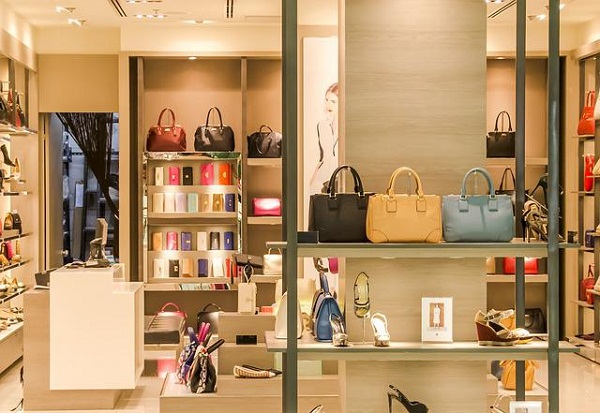
The luxury market segment is like a pendulum swinging to and fro from a sea of sameness to something extremely different and value-creating that identifies a person. The segment is all about delivering on a promise of emotion and about the client only but it’s now in a turmoil as it focuses on the Gen Z-influenced world that lives in the now and is focused on what’s in it for them. Without clarity about the emotion and experience it can offer, many market analysts feel that over 50 per cent of luxury brands will disappear soon.
Global personal luxury goods sale to increase by 22%
However, opinions differ. Many feel spending on luxury goods is growing faster than ever before on the back of post-pandemic splurges and shifting demographics as happening customers buy on-trend tiny handbags instead of large ones and streetwear style trends. Items like outerwear and handbags command higher prices due to their intricate construction and expensive textiles, including fur and exotic skins.
Global sales of personal luxury goods including leather accessories, clothes, footwear, jewellery and watches are expected to grow by 22 per cent this year, to around $367 billion from $290 billion in 2021, says a Bain Consultancy study commissioned by Altagamma Association the Italian luxury brands committee composed of companies in the fields of design and fashion of high-end producers. “Consumption is back at pre-crisis levels, but it is also a rebirth, since there is a new consumer base that is younger, and some pockets of consumers that have been unlocked during COVID are here to stay and growing, like subcultures and ethnic groups in the US,'' said Bain partner Claudia D'Arpizio, Co-author.
This tremendous growth is a result of a sharp 2021 recovery from global pandemic lockdowns which has created a strong trajectory despite an expected recession in 2023 due to higher raw material and energy prices. Bain predicts the segment will expand to between €550- 570 billion in the next five years.
Rising prices makes segment uncertain
The rise of demand in the luxury segment is also co-related with EDITED Global data and analytics company, which says the global average luxury prices in 2022 are at a four-year high, which is 7 per cent above 2020 and 25 per cent more expensive than in 2019. But that is not deterring consumers in the ultra-luxury bracket of Louis Vuitton, Balenciaga's City, Fendi and Prada among others. Even the prices of items which represent an accessible buy into designer brands have seen a significant upsurge proving that luxury fashion has become even more exclusive after Covid times.
T-shirts for men are 55 per cent more expensive than in 2019 and 15 per cent more for women. While four years ago, a cotton jersey tee with a logo at Prada was once $740 online, now it retails at $924, a 25 per cent increase, and yes, people are still buying. However, all is not well as lockdowns in China have halted spending, oil prices rising and store closures and embargoes in Russia and Ukraine and other war-ravaged zones have upset the apple cart globally.
Prices have not yet stopped rising as global markets are expected to experience continued economic fallout through the next few years of the post-pandemic situation and Ukraine war backlashes. Retailers can't keep passing these high costs on to well-heeled customers and the luxury segment has to become more inclusive to maintain itself. Style may be a way to say who you are without speaking, but luxury brands still have to re-invent themselves in a changed world.
Yarn duty alarms Pakistan exporters
Traders in Pakistan are against the imposition of regulatory duty on yarn and thread. They say, yarn and thread are the raw materials of the textile sector and duty on them is not acceptable as the imposition of duty will adversely affect textile exports and throw people in the textile sector out of employment.
Since the textile sector is the backbone of the country’s exports, and most of the export earnings come from this sector, the imposition of duty on this sector would cause the sector to suffer from a severe financial crisis which will directly harm the economy.
Pakistan is an importer of polyester filament yarn which is the main raw material in textiles because yarn is not a finished product. Cotton has been replaced by yarn and the textile industry in Pakistan is largely dependent on imported yarn. Pakistan has a 17 per cent general sales tax on textile exports. To improve the liquidity position of exporters and competitiveness in the global market, and to prevent fraud and smuggling, the textile industry wants zero rating to be brought back. Due to the ongoing economic crisis in Pakistan, a shortage of gas and expensive electricity, the cost of production is already at high levels and due to the financial crisis most of the textile mills have closed down and more are on the verge of closing down.
Victoria’s Secret drops cashmere from its products
Victoria’s Secret will not use cashmere any more in its products. The brand joins dozens of other companies that have banned cashmere. China and Mongolia are responsible for 90 per cent of the world’s cashmere but the goats in cashmere farms are subject to unethical treatment. Terrified goats are pinned to the ground while workers rip out their hair with sharp metal combs so violently that the animals scream in pain and sustain bloody cuts. The negative environmental impact of cashmere production is greater than that of any other animal-derived material.
The industry is a significant contributor to soil degradation, which turns grasslands into deserts, including in Mongolia, where 90 per cent of the land is in danger of desertification. Alternatives to animal-derived materials exist in the form of vegan fabrics including soy cashmere, recycled polyester, organic and sustainably farmed hemp, bamboo as well as modal, Tencel and viscose made from sustainably harvested wood.
Victoria’s Secret owns the brands Victoria’s Secret and Pink. After nearly a year and a half as an independent, publicly-traded company, the company continues to make significant progress in its transformation and mission to celebrate and champion all women. It has created a solid financial platform with a new, more agile operating structure.
Andrea Guerra is Prada’s new CEO
Andrea Guerra will be the next CEO of fashion house Prada. Guerra, 57, is one of Italy’s high profile executives, serving as the long-time CEO of Luxottica, the world’s largest eyewear company, followed by a stint at the Eataly global chain of eateries and marketplace for Italian-produced specialties.
Most recently, he was in executive positions at the French conglomerate LVMH. Prada is aiming at a 40 per cent revenue growth. The Italian luxury group will do this by boosting its online business and the profitability of physical stores. The family-owned group targets an operating profit of 20 per cent of total sales, more than twice the 2019 level. It also aims to double the proportion of online sales to 15 per cent of retail revenues over that timeframe.
The group's strategy focuses on direct distribution to increase store productivity and online penetration. Last year, due to store closures and lack of tourism, Prada’s sales fell to €2.4 billion. The global health emergency interrupted two years of sales recovery at Prada, the result of a revamp plan focused on boosting e-commerce and sticking to full-price sales. Like the rest of the luxury sector, the group started to see the first signs of a rebound last summer. Besides the Prada and Miu Miu fashion houses, the Prada group also includes the footwear companies Church's and Car Shoe, as well as the pastry shop Marchese with 627 stores in 70 countries.