FW
Vietnam faces falling orders
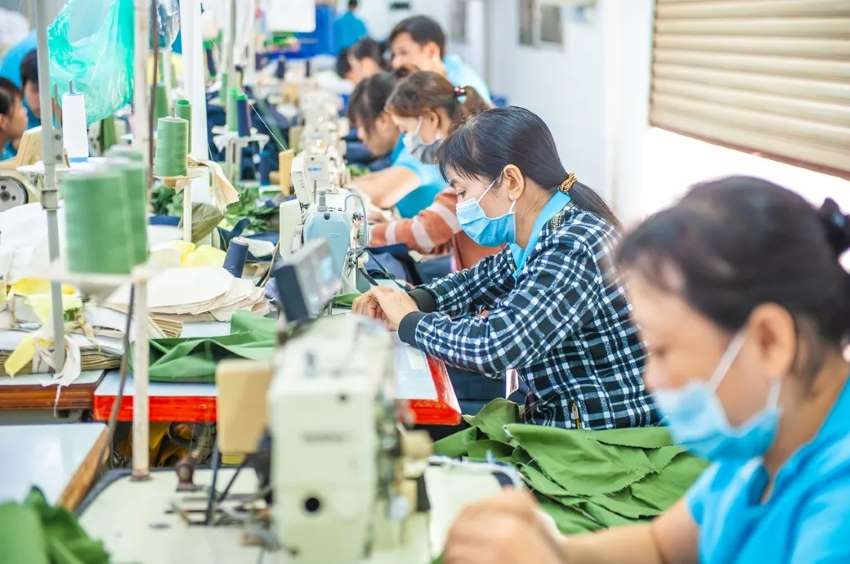
Vietnam is facing a reduction in export orders. This applies especially to the textile, garment and footwear industries. Orders are waning in key markets.
They are down some 60 per cent in Europe and 30 per cent to 40 per cent in the US market. Though orders are coming in from Canada and Australia, they have not been able to offset the decline from the US and European markets.
This trend is likely to continue, with orders likely to decline further in the coming months. Many businesses have had to reduce the number of workers and production has been scaled down in the last months of 2022.
Enterprises are diversifying markets in the context of shrinking export markets and falling demand. Businesses are improving their competitiveness to take full use of the advantages brought about by free trade agreements. So the textile and footwear industries have to develop appropriate production and business development plans in the coming time.
Vietnam’s exports to China, South Korea, Japan, the US, and Europe have showed a steep drop because of weaker purchasing power due to rising inflation and uncertainties especially the Russia-Ukraine conflict and material price fluctuations. The exchange rate is expected to continue to drop in the second half of 2022, negatively affecting businesses, particularly those with high expenses calculated in dollars.
Turkey Viptex in February
Viptex will be held in Turkey, February 13 to 17, 2023. This is a trade fair that connects Turkey’s best fabric and accessories manufacturers with international buyers.
The event is aimed at enhancing and promoting the premium end of Turkish textiles, which is recognized worldwide and is now more than ever a privileged reference for all European and international brands. Turkey’s top fabric and accessories manufacturers will present their spring/summer 2024 collections.
Started in 2017 with 15 exhibitors and 60 visitors, Viptex will host about 180 companies and more than a thousand visitors from all over the world including large retail chains, brands and fashion ateliers and designers. Viptex is a boutique fair, in a luxury location, hosting the main fashion reference sectors: from shirts to fancy, from accessories to sports fabrics. The show will highlight the creativity, innovation, reliability, sustainability and the excellent technical level of Turkish companies.
Turkey is the world’s fifth largest textile exporter. The country enjoys a competitive advantage due to its geographic location, integrated production structure and short turnaround times. In addition, the region boasts easy access to raw materials, an advanced textile finishing industry and can provide production flexibility for small orders.
Turkey is known for the quality of its products, its unique blend of a traditional and aspirational aesthetic, as well as its ability to produce at volume.
Vietnam export earnings up 18 per cent
Vietnam’s earnings from exporting textiles and garments in the first 11 months of 2022 were up 18 percent from the same period last year. In November 2022 alone, however, Vietnam’s textile and garment export earnings decreased eight percent year on year.
Inflation, currency devaluation and decrease in purchasing power of major countries are among the risks for Vietnam’s textile and garment sector. These factors have forced Vietnamese textile and garment enterprises to seek and diversify export markets. Despite difficulties, many businesses are still growing in production. The country’s textile and garment industry is hopeful of meeting its export targets this year. In 2021, Vietnam’s export turnover from textile and garment products was up nine percent from 2020.
Vietnam’s largest export markets include China, Japan, the European Union, South Korea, and the United States. Vietnam’s textile and garment exports rose by 21 per cent during January 2022 to October 2022.The exchange rate is expected to continue to drop in the second half of 2022, negatively affecting businesses, particularly those with high expenses calculated in dollars. As of now Vietnamese enterprises are seeking ways to diversify material supply sources as well as export markets. In 2021 Vietnam’s textile and garment exports grew by nine per cent while yarn exports grew by 50 per cent.
PVH extends license with G--III
American clothing company PVH has extended most of its license agreements with G-III Apparel. The arrangement will allow for a smooth transition of core product categories back to PVH at the end of the extended terms.
PVH intends to work in close partnership with G-III over the next several years to ensure an uninterrupted and responsible transition for consumers and wholesale partners for both brands. PVH’s multi-year strategic growth plan is to unlock the full potential of its two iconic brands, Calvin Klein and Tommy Hilfiger, in the North American market. By bringing these core product categories in-house over time, the company will be able to draw on the power and expertise of its global brand teams and have them fully connected to the demand driven supply chain PVH is developing.
The multi-year transition period will enable PVH to bring these core product categories, which represented about one-third of its global licensing revenue, and less than ten per cent of consolidated ebit in 2021, back in-house in a disciplined and methodical way. G-III will continue to be a key partner as both work together over the next few years to internalise the direct operations of these businesses.
Both the Calvin Klein and Tommy Hilfiger agreements will now have staggered expirations from 2025 through 2027.
Igatex completes 20 years
Igatex was held in Pakistan, December 1 to 4, 2022. This edition of Igatex completed 20 years, making it an increasingly significant garment and textile event with its scale setting records every year.
The show introduced Denim World Pakistan and digital textile printing for the first time this year.Also, for the very first time in an exhibition in Pakistan, a sustainability pavilion was dedicated for leading national university students to showcase their sustainable fashion projects, based on the concept of recycling, upcycling, downcycling in shape of a display and fashion show in the presence of textile professionals.
The four day exhibition received an overwhelming response. More than 500 top notch companies from 30 countries including Austria, Belgium, China, France, Germany, Italy, Japan, Korea, Spain, Switzerland, Taiwan, Turkey, UK, USA etc. participated and displayed a wide and exquisite range of the latest technologies and solutions for the textile and garment industry. Igatex brought together a range of textile businesses from around the world. This garment and textile machinery and accessories exhibition gave exhibitors and visitors an opportunity to see the latest innovations taking place in the textile sector.Companies exhibited their latest machinery and technology used in spinning, finishing, weaving, dyeing and garments.The event introduced businesses to the latest expertise.
Burberry celebrates community with Leeds
Burberry and Leeds will celebrate a year of culture and community. Burberry is a British luxury brand that aims at strengthening the connection with British design, craft and culture.
Leeds is a city in England. Burberry is intrinsically linked to the textile and manufacturing heritage of Leeds. Leeds 2023 will spotlight how creativity and greater access to cultural experiences can open opportunities for all. The landmark year will be punctuated by twelve major signature projects and include hundreds of events and activities where communities, companies and a host of volunteers will come together in an inclusive city-wide celebration.
As part of the partnership, Burberry will support a number of creative learning initiatives. Supporting creative education is a natural continuation of the brand’s ongoing partnership with schools aimed at empowering young people to immerse themselves in the arts and uncover their creative potential and help inspire a new generation of home-grown creative thinkers and engineers.
Supported by more than forty Burberry volunteers, Part One of the Leeds 2023 program will begin with an event called The Awakening on January 7. It will feature renowned acts from the world of music, poetry, dance, comedy and more.
Bangladesh exports to EU up 45 per cent
Bangladesh’s apparel exports to the European Union rose 45 per cent year on year during January 2022 to August 2022.
Bangladesh has a 23 per cent share in the EU’s apparel imports. The EU has played a massive role in Bangladesh’s becoming the second largest garment exporter in the world over the past four-and-a-half decades.
Just after gaining independence in 1971, Bangladesh started enjoying trade benefits under the EU's Everything but Arms initiative, which eventually elevated the country to its current position.So, suppliers are still upbeat about their potential exports once the country loses much of these benefits following its graduation from the UN's grouping of least developed countries in 2026.
Bangladesh’s garment exporters are hopeful they will perform even better after the country’s graduation.The competitive price, quality and recent developments in safety and compliance have brightened the sector's image. Besides, Bangladesh is now a global champion in the green garment category. The country is capable of catering to large quantities of goods as investors have poured a lot of money into the sector over the years. A lot of work orders are shifting to Bangladesh from China because of the recent trade war between China and the US. This includes an embargo by western clothing retailers and brands on using Chinese cotton for their products.
Bangladesh November exports up 26 per cent
Bangladesh’s garment exports in November 2022 rose by 26 percent year on year. This is commendable in view of the ongoing economic slowdown and has come in the wake of rising raw material prices, highend apparel production and increased exports to new markets such as Korea, the Middle East and India.
Exports from Bangladesh’s chief competitors China, Myanmar and Vietnam have lagged in the last five months due to the changing global situation. As a result, some buyers from these countries have recently turned to Bangladesh.In recent months, Bangladesh’s exporters faced a huge drop in output due to gas and electricity disruptions. The Ukraine-Russia war also dragged down purchase orders from Europe and America, the largest market for the country’s garment exports, amid growing fears of an economic recession.
During September 2022 and October 2022 export revenues dropped by six percent and eight percent. But November 2022 was a turn-up for the books as export receipts exceeded the target for the month by 17 percent.Garments fuelled the turnaround, accounting for almost 83 percent of the total exports from July 2022 to November 2022. Exports have grown ten percent in the first five months of fiscal year 2023.
Chanel takes over long time supplier
Luxury house Chanel has decided to take over Fashion Art. For the past fifteen years, Chanel has had its denim pieces made by this manufacturer. It was in 2007 that Chanel first hired Fashion Art to design a pair of denim pants evoking the colors of the morning English fog for the 2007-08 Paris-London Métiers d'art collection.
Fashion Art was born with this first piece washed out with cloudy brushstrokes done by hand. Fashion Art specializes in the manufacture of jeans and high-end denim garments as well as fabrics for bags and shoes.
Founded in 2008, Fashion Art employs 38 people and collaborates with 15 highly qualified partners located within its geographical perimeter, who manage the production of the garments, while it handles the entire development cycle in-house, including the preparation of patterns or the grading and sewing of prototypes, having two buildings of 2,500 square meters.
Recognized for its expertise in denim, Fashion Art has invested heavily in technological research and sustainable development. It is GOTS (Global Organic Textile Standard) certified, as is its entire external production chain. Rather than the traditional method of starting with the printing of the fabric, Fashion Art's artisans first make the garment. It is then cut up, and depending on the desired effects it is then passed through powder-based abrasion, laser cutting, 3D printing of patterns, working with jacquard, adding embroidery or a tweed yoke. The last step consists of meticulously reassembling the garment to its original form.
Dior and Denim Tears launch collection
Dior has launched a collection in partnership with the brand Denim Tears. The line celebrates the inventiveness of the house of Dior and the strength of its creative dialogues and pays homage to Black artists like James Baldwin and Miles Davis.
Denim Tears is no stranger to collaborations. Most recently, the brand linked up with Levis to launch a collection that explores America’s harrowed history against racial injustice and persecution, all while creating an artistic framework of African-American conceptual conceptualism.
Likewise, Denim Tears collaborated with guest designer Eli Russell Linnetz of the Californian-based brand ERL. Their capsule was presented back in May 2022 as part of the 2023 resort collection launch.Denim Tears also linked with Readymade for its latest collaborative project. The Denim Tears and Readymade collaboration materializes as a collection of apparel and accessories riffed with Readymade's signature upcycled garments and Denim Tears' famed Cotton Wreath motif. Hoodies, semi-flared sweatpants, and shorts lead the collection. Wrapping up the offering is a shoulder bag with straps comprising pearls and knit recreations of raw cotton.
Fashion house Dior was founded in 1946. Today, from dresses to accessories, from fragrances to lipstick, to the most expert skincare, the house of Dior enhances the beauty of women, bringing radiance and modernity.