FW
Lenzing aims at circular economy
Austrian fiber firm Lenzing is steering the industry toward a circular economy and carbon neutrality.
Lenzing’s flagship brand Tencel is a consumer-facing fiber brand known for its branded lyocell and modal fibers and is produced by environmentally responsible processes. Tencel’s collaborations across denim, ready-to-wear and intimates seek to further Lenzing’s circular economy vision.
Lenzing created the Tencel Limited Edition initiative in 2021 to explore the use of alternative raw materials, such as hemp or orange pulp, in textile production. The aim is to push the traditional boundaries of fiber production by leveraging natural resources. Lenzing sees scope to expand the use of TencelLuxe branded lyocell filament yarns in the high-fashion and premium segment. Already in motion is a push toward textile and fabric applications with carbon-zero Tencel branded lyocell fibers, in furtherance of Tencel’s mission to deliver True Carbon Zero.
As more brands and retailers see fit to green up their value chains, they have selected carbon-zero Tencel lyocell fibers to do so. Circularity and closed-loop systems have been recognized as the most important lever fashion can leverage to address its environmental impact. Fashion executives have already invested in or plan to invest in closed loop recycling this year.
India: Surat to host Sitex
Sitex will be held in Surat, January 7 to 9, 2023. This will showcase spinning, texturing, weaving, knitting, embroidery, dyeing, braiding, and garment making machinery.
Exhibitors will showcase specialised textile equipment and machinery based on the latest technology including waterjet machines, rapier machines, airjet machines, high speed warping machines, needle loom machines, circular knitting machines, warp knitting machines, web formation machines, bonding and finishing machines, nonwoven andfelting machines and other tools and accessories.
The seventh edition of the event is aimed at entrepreneurs, industrialists and all other stakeholders and at supporting medium and small scale units. Sitex provides an excellent opportunity to textile manufacturers, dealers and suppliers to discuss the latest market innovations. Sitex is committed towards showcasing the Indian textile and textile machinery industry and provides an opportunity to stakeholders of the textile industry to showcase their wide range of products and services related to the textile industry and industry experts to discuss the latest market innovations.
Industrialists of Surat are known for quick adaptation to the latest trends and changes. Sitex is one of the most successful textile expos in India and Sitex 2023 aims at being a step higher in terms of lucrative business and upcoming visitors to the expo.
Global downsizing of cotton requirement, impacts exporting countries

Cotton had enjoyed significant growth and prices for a while but the current status is that its consumption worldwide is on the downslide with China, India and Pakistan, the three of cotton’s largest customers, slow down on cotton requirement. As per recently released US Department of Agriculture (USDA) figures, China being the largest customer and importer is the industry barometer on the direction in which cotton heads and statistics reveal in China, consumption projected down one million bales this month to 35.5 million, marginally above the previous year but more than five million below two years prior. USDA cites many reasons such as declining supplies, downsizing of orders for yarn from fabric and apparel companies, lower profit margins for spinning mills and the overall higher inflation across the board.
China impacts the sector
Cotton-yarn imports into China plunged this year to its lowest level in a decade, sending exporting countries such as India on a hunt for alternative destinations. China is the world’s largest importer of cotton yarn from countries like India, Vietnam, Pakistan and Uzbekistan, as its own spinning mills do not produce enough to feed its apparel and textile industry. However, the value of China’s cotton-yarn imports declined 33.2 per cent in the first nine months of this year to $2.8 billion, from $4.3 billion in the same period last year, indicates the country’s customs data. The world’s second-largest economy accounts for more than 30 per cent of global apparel exports, and its major buyers are the European Union, US, Japan and Association of Southeast Asian Nations countries.
However, with Russia’s invasion of Ukraine, fuel and raw material prices have increased substantially. Annual inflation in the European Union was at 10.9 per cent in September and as costs for garment manufacturers and retailers have increased, consumers are spending less and retail sales have declined across Europe. China’s domestic apparel sales and cotton-product exports each fell by 5 per cent from January to September, reflecting the declining demand for the country’s apparel.
India experiences domestic downturn
As per Cotton Association of India (CAI) estimates, India’s domestic cotton demand for the 2022-23 season up to September is estimated to be lower by about 18 lakh bales (170 kg each) at 300 lakh bales or nearly 6 per cent less than last year’s 318 lakh bales. The association’s Cotton Crop Committee meeting attributed the decline in domestic consumption to a reduction in operations of mills due to slack demand for yarn and cloth. The cotton trade body said spinning mills operated at 40-60 per cent capacity in the first quarter, which may cause cotton consumption to drop in India for the year. India’s domestic cotton demand for the 2022-23 season up to September is estimated to be lower by about 18 lakh bales (170 kg each) at 300 lakh bales or nearly 6 percent less than last year’s 318 lakh bales.
Pakistan’s cotton crisis
In Pakistan, demand for cotton has dropped by 20 per cent to 12 million bales this year, compared to 15 million bales last year. The 40-year high inflation in the West, and a fear of recession, resulted in demand for Pakistan-made textiles dropping with textile manufacturers reporting a drop in exports. Without continuous availability of electricity and the inability to import cotton due to foreign currency crisis has led to a sizeable number of mills shutting down, thereby lowering consumption. As per experts, cotton will remain down in 2023 but not completely out as 2024 may see a new situation.
Modest fashion faces growing prospects
The Islamic clothing also known as Modest Fashion market is growing at five per cent a year. Modest Fashion is basically the type of clothing which is worn by Islamic people and is interpreted as being in accordance with the teachings of Islam.
The different types of Islamic clothing are abayas and hijabs, prayer outfits, burkha and naqaab, thobes and jubbas, sportswear and other. These clothings are generally worn by Islamic men and women.
The surging expenditure by the Islamic population on lifestyle and apparels are the major factors fostering the growth of the market. The growing popularity of Modest Fashion in the sports industry on account of favorable changes in regulations of international games and rising consumer investments in online retail distribution are also projected to bolster the market’s growth.
Additionally, the preference for modest fashion wear coupled with the increasing Islamic population also accelerates the demand for Islamic clothing. The extensive growth of the Islamic clothing market is commanding attention and attracting huge investments generating growth opportunities in the long run.
Based on product, the Modest Fashion market is segmented into ethnic wear, sustainable fashion and sportswear. Challenges such as maintaining a balance between changing fashion trends and upholding core Islamic principles pose a challenge for the market.
Denim fabric market growth highest in India
The global denim fabrics market size is growing at four per cent a year. India is likely to witness the highest growth followed by China and Latin America, while the US will be the largest market.
The market was 3,299.36 million meters in 2016. It grew to 3,429.93 million meters in 2017, 3,576.68 million meters in 2018, 3,737.21 million meters in 2019, 3,914.09 million meters in 2020 and 4,105.64 million meters in 2021. It is expected that the market will reach 4,313.56 million meters in 2022 and 4,541.05 million meters in 2023.
India’s market is smaller than that of China, Latin America, and the US but it is likely to have the highest growth up 2023. India’s market is expected to reach 419.26 million meters in 2023 from 228.39 million meters in 2016. The market’s size was estimated at 349.51 million meters in 2021 and 319.99 million meters in 2020. The US will remain the largest market in the world, but its average growth will be lower than the global average. It may grow by two per cent to reach 876.76 million meters by the end of 2023. Latin America and China may see an average growth of 7.31 per cent and 7.34 per cent respectively.
Cordura celebrates 55 years
Cordura Advanced Fabrics have helped shape the world of military, workwear and outdoor products and gear. This brand owned by Invista celebrates 55 years.
Its portfolio now consists of over 15 different performance technologies, with over 2,500 certified Cordura fabrics available through a worldwide partner network. Since commercialisation of the fabric in 1967, the Cordura brand has worked hand-in-hand with its mill and supply chain partners to break moulds and blaze new trails. Cordura’s continuous evolution of end-use apparel continues to generate demand for ingredient brands to diversify possible applications in end use products. By collaborating to innovate, Cordura works more closely with brands and mill partners to maximise strengths and develop the next generation of sustainable solutions. Cordura Advanced Fabrics stands behind the importance of products powered by performance-driven, built-to-last fabrics.
The brand has 55 years of delivering durable, reliable, and trusted solutions and puts fabrics through rigorous laboratory testing and certification screenings. The extensive Cordura Advanced Fabrics portfolio is designed to challenge the throwaway mentality within the textile industry.
Cordura re/cor recycled nylon 6.6 (RN66) is a 100 per cent pre-consumer nylon 6.6 material that is GRS certified.In terms of quantifiable benefits compared to virgin nylon 6.6, its production creates 83 per cent fewer greenhouse gas emissions, uses 82 per cent less energy and uses 57 per cent less water.
Oerlikon takes over Riri
Oerlikon has acquired Riri. Oerlikon is a global innovation powerhouse for surface engineering, polymer processing and additive manufacturing. Riri based in Switzerland is a provider of coated metal accessories and supplies global leading brands in the luxury fashion industry and has a strong foothold in the Italian luxury market.
This transaction marks a milestone in Oerlikon’s growth strategy and will reinforce its fashion jewelry and metallic components for leather goods. It is expected to make Oerlikon a market leader and an integrated provider with a complete offering of coated luxury metalware for high-end fashion brands. The acquisition is expected to drive cross-selling and strengthen Oerlikon’s footprint in the global luxury metalware market.
Riri’s portfolio, particularly in zippers and buttons, is an excellent fit to Oerlikon’s strengths in coated metal-based fashion components. Together, they are ideally positioned in Italy and France – the two major European fashion hubs – and can provide a complete offering to fashion customers.
Joining Oerlikon will allow Riri to accelerate the luxury goods industry’s sustainability transition to greener technology by applying technologies such as Oerlikon’s PVD or physical vapor deposition. This is a thin-film coating solution that is more environmental-friendly than traditional processes such as chrome plating.
Indian textile companies likely to have better turnover in ‘23
Indian textile companies may have a healthy growth in turnover in fiscal year 2023. So says ICRA.
Macro headwinds had impacted the performance of textile players across segments in the second quarter of 2022-2023. Revenue and margins dipped for Indian spinners while for the apparel segment revenue and margins remained flat, with recessionary conditions in key markets. Inventory levels fell for most textile players in the second quarter after cotton stocks from the previous harvest season started to reduce and cotton prices saw a sharp volatility, resulting in players becoming cautious on buying.
Revenue of spinners declined by four per cent on a year on year basis while margins were moderated by 950 bps.With pressure on the profitability of companies across different scales, the interest cover also moderated during this period. The impact was steeper for smaller players since large scale companies benefited from cost savings on bulk purchases of raw materials. For the first half of the fiscal year, inventory levels for most players have come down with cotton stocks from the previous harvest season getting extinguished and a sharp volatility in cotton prices affecting the buying power of spinners.
Unlike Indian cotton spinners, revenue of apparel exporters improved by 4.5 per cent year on year.
10th Intex India concludes successfully in Delhi, business worth over $650 expected

The 10th edition of Intex India concluded successfully at Pragati Maidan, New Delhi with textile manufacturers and suppliers from over eight countries showcasing innovative, fashionable and sustainable textiles. Traders and buyers from over 22 countries visited the show looking to source a wide variety of textiles from India and international markets. The three-day sourcing event took place from December 8 to 10 December.
A busy show that generated good business
Buyers’ delegations from over 22 countries including Italy, Spain, US, Canada, Russia among others attended the show. Over 4,252 trade buyers from across India and the world were present. More than 150 companies from over eight countries exhibited and with business over $650 million business expected to have been generated. As Arti Bhagat, Executive Director, Worldex India and organiser of Intex India said, “We are pleased to launch Intex in India and to see the participation of many high-calibre exhibitors and large numbers of international buyers here. There were a number of fruitful business meetings organised and many business deals closed successfully creating a positive atmosphere all round at Intex India. The exchanges at the fair have once again made it clear that there is a strong need for an international platform like Intex to showcase and promote strengths and opportunities in the textile and apparel industry of India.”
India today is as a world leader in textiles, a key element of the global value chain being the world’s fifth-largest exporter for apparel, home, and technical textile products. Over the last few years, Indian industry has dramatically increased production to fulfil increasing demands of domestic as well as export markets. India is targeting growth at 8 per cent CAGR reaching $100 billion by 2030. This target would help India double its share of the global textile and apparel trade from the current level of 5per cent.
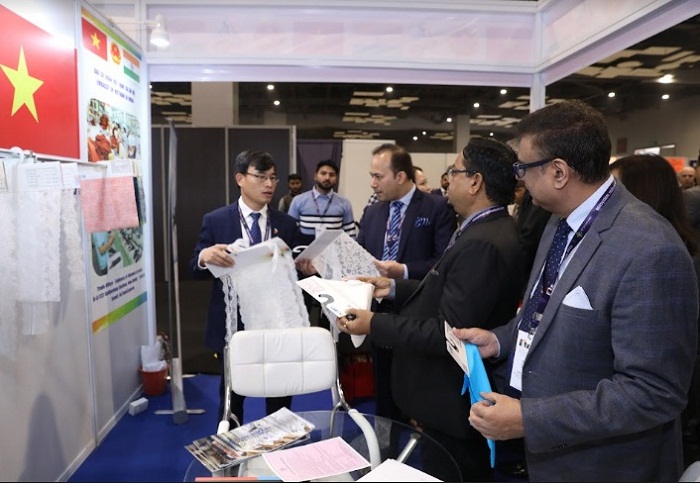
Aims to accelerate growth
With growing demand for man-made fibre (MMF) textiles as a substitute for cotton amid changes in global fashion trends, Intex India exhibition offered international manufacturers and suppliers opportunities to explore new business and investment avenues in India under this sector and increase their supply-chain to fulfil the demand for sourcing innovative, eco-friendly and functional textiles which is much needed by the Indian apparel and fashion industry. Further, to increase its global market share, Indian manufacturers are producing a value-added range of garments and fashion accessories for the global buyers to increase their sourcing from India and reduce their dependency from China.
Also, Intex platform assists domestic apparel industry to offer high-value and sustainable garments to the fashion conscious and high-spending Gen Z and millennials consumers. Intex India is organised with the purpose of accelerating this growth by supporting it through a strong business platform. The show saw the presence of international suppliers from China, Korea, Thailand, Belarus, Italy, US, Vietnam, Uzbekistan, Sri Lanka, Bangladesh among others.
Buyer-seller meets a high point
The 10th edition was jointly organized by Federation of Indian Chambers of Commerce and Industry (FICCI) under the aegis of the Department of Commerce, Ministry of Commerce along with Worldex India Exhibition and Promotion. A ‘Reverse Buyer Seller Meet’ (RBSM) was jointly organized offering Indian exhibitors a platform to promote latest collections and connect with global buyers. It empowered Indian textile players to scout for new business in developed and emerging markets, forge international connections, explore new markets opportunities, learn about buyers’ requirements and stay up-to-date with industry developments.
Over 500 B2B meetings were organized between the international buyers and Indian exhibitors over three days. These will gave a boost to India’s textile exports by $650 million in coming years; increasing our export base and creating employment opportunities by supporting the ‘Make in India’ program.
In order to boost to micro and small entrepreneurs’ in the textile sector, Ministry of Micro, Small and Medium Enterprises (MSME) extended their support to qualified MSMEs at Intex India. More than 48 exhibitors joined the show to promote their textile and apparel strengths and expand their domestic and international presence through.
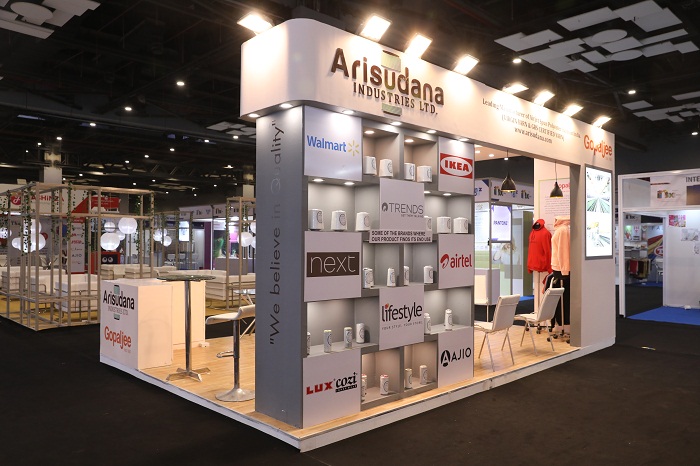
Participants at the MSME Pavilion were overwhelmed with the sale enquiries they received from international and domestic buyers. Some leading Indian exhibitors were: Reid & Taylor, Alok Industries, Luckshmi Yarn Impex, Sky Textiles, Ginza Industries, Texperts India, Fashinza, Gini Filaments amongst others. ReshaMandi was the official online sourcing partner of Intex India 2022.
Over 85 per cent participating exhibitors were satisfied with buyers’ footfalls – both domestic and international they connected with during the show; more than 90 per cent buyers’ were able to find textile companies matching their requirements and were satisfied with the diverse product range showcased at Intex India.
Some Leading international buyers that attended the show included KOMAR Brands from the US, TWO MAD from Switzerland, Sewkit from Russia, NUNINE from France, Hela Clothing from Sri Lanka), TESCO Sourcing (Sri Lanka), and more.
B2B meetings, trends and knowledge sessions were organised at the Interactive Business Forum (IBF) Seminar Series and ‘Trendz Now’ – the colour, fabric and fashion forecast showcase. Presentations were made by Italtex (Italy), Pantone (USA) and Orsha Linen Mills (Belarus) that offered the attendees valuable insights from the industry experts on 2023-24 fabric and fashion trends, colour trends and working of Pantone Connect as well as new market opportunities in India for sustainable textiles, thus, creating a premium and complete B2B international textile trade & sourcing platform.
Intex South Asia is now well established as the region’s premier international textiles sourcing platform, which is successfully held in key markets of South Asia like Bangladesh, Sri Lanka and India and would become the annual calendar event for South Asia’s textile and apparel industry. The 2023 edition will be Intex South Asia in Bangladesh, Sri Lanka and India.
Swiss startup joins ITMF
Dimpora has joined ITMF as corporate member. Based in Switzerland, Dimpora is an award-winning materials start-up that reconciles performance clothing and sustainability by developing non-toxic, waterproof and highly breathable membranes.
Its patented technology platform relies on scientific expertise and continuous innovation to empower people to enjoy nature without leaving a trace. Since it is important for start-ups and scale-ups to be affiliated with organisations whose members are serving international markets and have an excellent knowledge of the global market structures and the potential regional and global demand, Dimpora felt ITMF would be an attractive platform to be an active part of and at the same time could help Dimpora connect with mature companies that know the markets very well. And from ITMF’s point of view start-ups bring a new perspective to existing challenges and offer new solutions applying new technologies. This interaction would be beneficial for everyone involved and help the textile industry to identify new technologies that can help overcome challenges.
Founded in 1904, ITMF (International Textile Manufacturers Federation) is the international forum of the global textile value chain for producers of fiber to finished products. Its members are from textile and apparel-producing countries representing approximately 90 per cent of global production.In addition, ITMF offers its members information that helps better understand the dynamics of the industry.