FW
Wrangler wins trademark appeal
The Trademark Trial and Appeal Board (TTAB) sided with Wrangler’s opposition against another denim company that wants to use the letter W in their trademark.
Turkish company Denimci Dis Ticaret Pazarlama Anonim Sirketi’s efforts to register W Denim for denim fabric, jeans, dungarees, and other goods conflicted with Wrangler’s W registrations for similar products.Two of the three examples Wrangler provided were stitched Ws, such as the ones seen on the back pockets of its jeans. The third was a solid W. The board found consumers were likely to be confused by the mark and therefore sustained Wrangler’s opposition.
Denimci DisTicaret Pazarlama Anonim Sirketi filed for the trademark in 2019. In its registration mark request, the company described the illustration as a stylized W above the word Denim.The W mimics the appearance of folded jeans, while Denim is used as a generic or descriptive word.
However, TTAB said Denim does not distinguish the marks.The color blue was also claimed as a feature of Denimci DisTicaret Pazarlama Anonim Sirketi’s mark. Though color is not part of Wrangler’s marks, TTAB found the marks visually and phonetically similar because they consist of or prominently feature the stylized letter W and added that Wrangler’s marks could appear in the same color.
Indonesian textile sector resorts to mass layoffs
There has been a wave of layoffs in the Indonesian textile industry. This has been due to a decrease in demand, both domestic and foreign demand. Several sectors have been negatively affected.
Almost 150 out of 233 textile companies have reduced the number of employees. In the digital industry, the wave of layoffs occurred due to a decrease in people's consumption patterns that had occurred since economic activity returned to normal.These are cyclical challenges. Even though the economy is growing fast, there are some that are experiencing a slowdown.
The storm of layoffs, especially in technology companies, has not subsided.Throughout 2022, there have been some 20 technology companies in Indonesia that have streamlined their employees with mass layoffs. Most recently, an e-commerce platform laid off 200 of its employees on the pretext of responding to global economic challenges and the rapid changes in digital business. A giant technology company has laid off 12 percent of its total employees or as many as 1,300 people.
The global crisis as a result of the impact of the Russian-Ukrainian war is being felt by the textile industry in Indonesia.Indonesia’s textile exports have dropped dramatically after the Russia-Ukraine war. The loss of this export market has made textile companies in Indonesia overstock.
Tirupur in India faces dwindling orders
Tirupur faces dwindling orders from foreign customers. The spending power of the developed countries has eroded because of the pandemic and the war. Food, power, and equal monthly installments have become the top priorities for people in these countries while clothing is no more a priority as it used to be.
Clients in Europe and the US have cancelled their orders for non-formal wear. Customers in Europe used to buy clothes which they would wear till the fifth washing. After the fifth washing, they would dump the clothes and shop for new ones. Not anymore. Now they want clothes that last for 30 washes. This is because their purchasing power has gone down.
Tirupur is the knitwear capital of India as it produces 55 per cent of the ready-to-wear outfits manufactured in the country. The district, which has more than 1,200 knitwear factories, accounts for 13 per cent of the country’s exports in this sector. The demand for new clothes in western nations pick up between October to January but now Tirupur is facing a 64 percent fall in sales. Added to that, the surge in power and water tariffs has broken the backbone of the textile industry.
JD Sports sells brands to Frasers
Frasers Group has acquired JD Sports Fashion’s interests in a raft of fashion brands.
The brands include Base Childrenswear, Choice, Clothingsites (including Brown Bag Clothing), Cricket, Giulio, Kids Cavern, Missy Empire, Nicholas Deakins, Pretty Green, Prevu Studio, Rascal Clothing, Tessuti (including Xile), Scotts, Watch Shop and Topgrade Sportswear (including Get The Label).
Completion of the acquisition of eight of the businesses and the debt took place on exchange, with completion of the remainder expected to take place in early 2023.The purchases, by way of the acquisition of shares held by JD and the transfer of all the debt owed to JD by the businesses, will be funded from Frasers Group's existing cash resources.
Frasers Group is the company behind Sports Direct and House of Fraser. The non-core divestments would enable JD Sports to focus on opportunities for the group’s global sports fashion businesses. The move is expected to significantly simplify JD Sports’ branded fashion offer. JD is recognised for its laser focus on the customer and is convinced that the most significant opportunities lie in the continued international development of the group's global sports fashion businesses. So it agreed to the sale of these attractive, but non-core, brands.
Burmese workers file case against Tesco
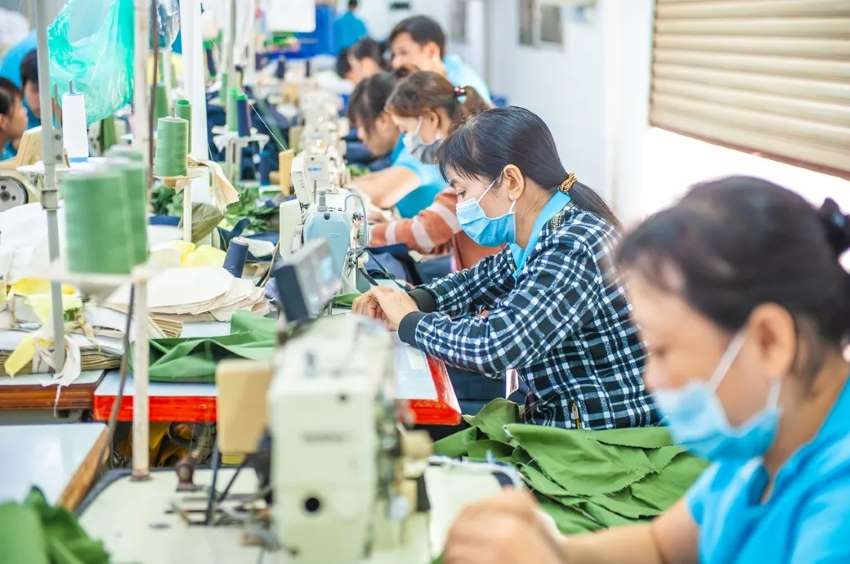
Burmese migrants were made to work up to 99 hours a week on unlawful wages and in forced labour conditions at a Tesco Thai factory.
The workers, who are all Burmese migrants who had fled war or left Myanmar in the hope of finding safety and work in Thailand, worked at a garments factory between 2017 and 2020 in various roles including cutting, tailoring, and packing.
The workers are bringing a legal claim against Tesco. The impoverished migrants worked seven days a week, trapped in a cycle of forced labour and debt bondage at a factory. Bosses housed them in unfit and overcrowded conditions where they slept on cement floors with little or no privacy, no locks, walls or ceilings. Pressure to fulfil large orders for Tesco was so intense that workers were often unable to take breaks to eat, drink or go to the toilet, sometimes working through the night in conditions that were hazardous, unventilated and overcrowded. They were given one day off a month, with no holidays. They worked in high temperatures without ventilation, PPE, training, or clean water. There was poor lighting and exposed electrical wiring. Many of the workers suffered personal injuries as a result of these alleged unlawful working conditions and practices.
Aubade and Elie Saab launch nightwear
Aubade and Elie Saab have collaborated on lingerie and nightwear collections.
Aubade is a French lingerie brand. Elie Saab is a luxury fashion house, which has diversified into other products like watches, home collections and jewellery.
Launching in July 2023, the collaboration will include the My Desire lingerie collection and the Whimsical Affair nightwear range that plays on the seductive ambience of Elie Saab combined with the feminine signature of Aubade.
The collections will be infused with shimmering golden lurex embroidery and sheer tulle and deep black silk satin for the nightwear. The line will also be available in two colour palettes, naughty black, with deep black and golden accents, and love affair, an elegant nude rose to evoke a naked lingerie effect. The Elie Saab plus Aubade collection will include a wireless triangle bralette, underwired triangle bra, a balconette bra, a plunging padded bra, a corset, and matching bottoms. In addition, the collection will feature suspenders and two bodies, as well as a nightwear collection with a camisole, a negligee, shorties, long silk pants and a kimono.
The Elie Saab plus Aubade collaboration will be available at Aubade’s boutiques and online, as well as at selected multi-brand stores, from July 2023.
India: Apparel exports a growing concern as stats reveal a declining trend

As 2022 winds down to its last fortnight with festivities in the air, the India’s apparel exports sector can’t participate in the joy. A justifiable concern is spreading across the industry as the EU continues to grapple with the Russo-Ukraine war theatrics and the US displaying caution in its non-essential spending – the scene is set for plunging business in retail. The continually shrinking exports figures is the cause for many a headache as the near future doesn’t hold much promise.
Declining figures cause concern
October 2022 saw India’s goods export contract 16.5 per cent, a first in 19 months. October saw some serious decline - readymade garment exports fell to its 28-month low of $988.7 million. Cotton yarn exports took the biggest hit with a decline of 46 per cent to $ 719 million. Tiruppur, India’s largest knitwear export hub recorded a 39.8 per cent drop, whereas in August and September it fared slightly better with 17.4 and 33.1 per cent contractions respectively. Textile and readymade garment export as a whole saw a contraction of 8.5 per cent to $18.3 billion in the first half of fiscal year 23, way below the 17.8 per cent growth in overall merchandising exports.
Another sector that faces damaging exports decline is gems and jewellery. Actually, the fall of textile and readymade garments and gems and jewellery exports had begun months ago and affected lives of these labour-intensive industries. These statistics are telling about India’s exports in the near future as India has been eroding its competitiveness particularly in the textile and readymade garments in the last few years. At the moment, the ambitious target of increasing shipment to $100 billion in the next five years may just turn out to be a dream.
As a member of the Textile Export Promotion Council declared, the current fiscal year has been the worst experience for the country’s textile value chain and that the record high prices of domestic cotton made it worse. Apparently, India, for the first time in history, has had to import cotton yarn in the months of June and July.
Cotton a bigger challenge
The situation for India’s cotton yarn can best be described as an unpleasant roller-coaster ride. Although domestic price may have fallen in October, the all-time high prices in previous months have had a deep impact in spinning. Moreover, the step down in prices has not been that significant between Rs 68,000 to 70,000 per candy is still high. The secretary of the Gujarat Spinners Association stated that spinning mills in the state are losing Rs 15-20 per kilo of yarn and are running below 60 per cent capacity. This situation has brought a tight situation for the 600-odd spinning mills in Gujarat where over 60 per cent of the total production is for exporting.
Alongside cotton yarn woes, the knitwear sector is suffering hard as well. Tiruppur, one of the largest Asian exporting hubs, is witnessing the impact of slowdown in the US and the EU which accounted for 70 per cent of its exports. From $0.329 billion in August, the fall in October stood at $0.264 billion. New orders have ceased and current pending orders have been withdrawn as the buyers claim unsold stocks. Tirupur prayed that Thanksgiving and the upcoming Christmas will see movement of unsold stocks in the US and the EU, opening up the possibility of fresh orders.
Seven cellulosic-fibre producers feature in the first CanopyStyle Audits

Canopy, the global not-for-profit environmental protection forum in association with independent third-party auditors Preferred by Nature and SCS Global Services publicly released the first CanopyStyle Audits featuring man-made cellulosic fibre producers and a dissolving pulp supplier. Canopy, dedicated to protecting forests, species, and climate, has collaborated with over 900 companies to develop cutting-edge environmental policies that transform unsustainable supply chains, spark innovative solutions, and protect the planet’s remaining ‘Ancient and Endangered Forests’. “Canopy is very pleased to see more and more producers join the CanopyStyle initiative and follow through to get audited,” said Amanda Carr, Director of Strategic Initiatives at Canopy. “Canopy’s doors are wide open to all global producers of man-made cellulosic fibre who want to collaborate to forward Ancient and Endangered Forest conservation, as well as the scaling up of low-impact Next Generation fibre solutions.”
The extensive audits spanned the global manufacturing of man-made fibres sourced from ancient and endangered forest and other controversial sources. The audited companies were found to be low risk
Participating cellulosic-fibre producers
Jilin Chemical Fiber Stock is a holding subsidiary of Jilin Chemical Fiber Stock. Founded in 1960 and put into operation on August 1, 1964, the listed company specializes in viscose fibre. Its main products are viscose filament and viscose staple yarn. The designed production capacity for filament fibre is 80,000 tons and for the staple fibre is 125,000 tons. The company is one of the top 10 enterprises in China's chemical fibre industry.
Xinxiang Chemical Fiber was established in March 1993 in China and is a subsidiary of the Xinxiang Bailu Investment Group. The company has two mills with 200,000 tons of production capacity, 80,000 tons of which is man-made cellulosic fibre (MMCF) and the rest spandex.
Kara Fiber is a new lyocell production facility based in Gaziantep, Turkey and part of Kara Holding, which focuses on production of nonwoven textiles, yarn, plastics, and man-made cellulosic fibre. Kara Fiber started production of Lyocell (brand name Ecocell) in October 2021 and is still in the testing phase while already selling Lyocell fibre.
ENKA manufactures endless viscose yarns (multi-filament yarns) from pure cellulose under the trademark ENKA® Viscose. Located in Industriecenter, Obernburg, Germany since 1924, it’s the largest chemical fibre manufacturing site in Western Europe. An additional textile treatment plant is located in Gorzow, Poland.
PT. Rayon Utama Makmur also known as RUM Indonesia is a rayon or viscose staple fibre manufacturer. It produces viscose staple fibre (VSF) for the textile industry by using dissolving pulp as input material and has 80,000 tons capacity in a year.
Kelheim Fibres GmbH, headquartered in Kelheim, Germany, is a producer of viscose specialty fibres. Its fibres under GALAXY®, DANUFIL®, VISETA® and VILOFT® trademarks, are used to produce textiles, hygiene, and medical products, specialty papers as well as technical and household products.
Cosmo is an affiliate of The Gores Group and was established to restore, restart and operate the former Weyerhaeuser Specialty Cellulose Mill. Cosmo Specialty Fibers produces lyocell, viscose, acetate, ethers, MCC, and nitrocellulose dissolving pulp. Products are made from Pacific Northwest USA softwoods, primarily Douglas Fir and western hemlock.
India: Tirupur apparel exports up ten per cent
Tirupur’s apparel exports grew ten per cent in November 2022. This follows a fall in exports in August 2022, September 2022 and October 2022 of 14 per cent, 24 per cent and 34 per cent.
So the positive growth in November is quite encouraging and further growth is expected due to the Economic Cooperation and Trade Agreement entered into with Australia and the free trade agreement with the UK. Tirupur’s exports of knitwear and garments to the United Kingdom are growing by 20 per cent year on year.About 20 per cent of the knitwear hub’s annual exports of knitwear and garments go to the United Kingdom. And with the India-United Kingdom free trade agreement in the offing, exports from Tirupur could see a ten per cent growth.
Indian firms employ more than 1.1 lakh people in the UK. Britain is trying to continue its hold on Indian businesses post-Brexit by wooing them with technological partnerships in high-tech areas such as low-carbon automobile engines, graphene engineering and aerospace. Britain is interested in expanding its footprint in the financial sector in India and in projecting London as the first choice for Indian companies raising global finance, so a deal involving financial markets is important for Britain.
Moda to feature footwear awards
Moda will feature a competition for footwear design students. The project brief is based on the Quagga, a cross between a horse and a zebra that was native to South Africa and is now extinct.
The Quaggahad adapted its size, camouflage and natural survival capability with its surroundings. The Quagga evolved through specific conditions, so students have been tasked to create footwear that also evolves through certain conditions.
The concept allows students to push their design boundaries and explore niche footwear theories and innovations. All 16 of the students have been invited to display their innovative designs at Moda and from nine finalists the winner will be announced at an awards ceremony. Visitors to the show will also be given the opportunity to vote for their favourite design and the design with the most votes will receive the Buyer’s Choice Award.The initiative is aimed at showcasing young talent and the future of footwear design.
Talented designers will get the opportunity to show their work to a global audience. Fashion footwear trade show Moda will be held in the UK, February 5 to 8, 2023. Moda will present the industry’s most sought-after brands including Fly London, XTi, Refresh, Carmela, Chatham, Mustang, Alpe, Thomas Blunt, Lunar, Laurence Llewelyn-Bowen, and many more.