FW
YKK's Furusato-no-Mori Designated as Nature Coexistence Site
YKK Corporation's Furusato-no-Mori (Hometown Forest) within the Kurobe Manufacturing Center (Kurobe City, Toyama Prefecture) has been designated a Nature Coexistence Site1 by Japan's Ministry of the Environment. Two sites in Toyama Prefecture, including Furusato-no-Mori, were certified out of the 122 sites (in 35 prefectures) certified for the first half of FY2023, the first year of the program.
This designation aligns with the "YKK Group Environmental Vision 2050" to promote coexistence with nature. The goal is to create a "factory in a forest" by planting 20,000 saplings of 20 species native to Kurobe City and restoring the forests and waterside areas on the Kurobe River alluvial fan by the company's 100th anniversary in 2034.
Factors contributing to the designation include:
Conservation efforts informed by local topography and river environment
Measures against non-native species and genetic makeup of the area
Independent and regular monitoring efforts through biological and tree surveys
Utilization as a site for environmental education
Jeanologia Revolutionizes Denim Design with eDesigner
Jeanologia, a leading Spanish company in eco-efficient technologies, has unveiled the latest version of its groundbreaking jean-design software, eDesigner. This innovative tool transforms the virtual creation of garments, reducing samples by 80% and ensuring perfect reproducibility of production designs.
The new eDesigner boasts an intuitive interface, enhanced hyperrealism, and access to Jeanologia's expertise. The software also features the "Trace" tool, which utilizes AI to generate hyper-realistic designs, and the Lightbrary, a comprehensive gallery of inspiring designs.
eDesigner takes digitization to the next level by enabling the digital creation of patterns and garments, significantly reducing the need for physical samples. This innovation not only conserves resources but also minimizes the carbon footprint associated with sample production.
Acting as a fluid communication channel, eDesigner connects designers, wash developers, brands, and manufacturers, streamlining the design validation process and accelerating production. Carmen Silla, Jeanologia's Marketing Director, highlights the tool's impact on efficiency, time-to-market, and sustainability, positioning eDesigner as a transformative and eco-efficient digital tool for the textile industry.
Sharp drop in US apparel imports worries Asian garment exporters

Asian garment exporters are in a tizzy because of sharp drop in US apparel imports almost 25.35 per cent on a year-on-year basis in the last eight months, after having remained almost constant for the last decade. Although the slight drop from 74.2 per cent in 2020 to 72.8 per cent in 2021 from the ASEAN countries was attributed to the pandemic but is worrying is that the figure is increasing and there is not much change.
Worrying trade stats
During the first 8-month of 2023 from January to August, the US imported apparel worth $15.98 billion, falling massively by around 25.35 per cent on a year-on-year, reveals US trade department Office of Textiles and Apparel (OTEXA) stats. This translates to a value loss of around $5.43 billion in imports in just one year and greatly affects the post-Covid business momentum of 2022 that was picking up. In this $15.98 billion segment, the share of cotton apparels was $6.77 billion of total imported value which dropped 29.51 per cent, while man-made fiber (MMF) apparels saw a 23.41 per cent drop to $8.58 billion during this period.
In August, US textile and apparel imports were around 8.62 billion sq. mt. down 5.7 per cent year-on-year and 4.8 per cent month-on-month. Import value stood at $10.09 billion which is 23.4 per cent year-on-year but still up 0.6 when calculated month-on-month in this review period. However, the accumulated import value was 62.55 billion sq. mt. a cumulative decrease of 17.8 per cent, which was far more than the usual over the last decade.
Reasons for decline
A study on the patterns of US apparel imports by Sheng Lu, Associate Professor, Department of Fashion & Apparel Studies at the University of Delawar identifies, many reasons for the decline. First, is while US apparel imports has gradually recovered, the overall import demand remained weak, with trade volume still experiencing a decrease of approximately 17-18 per cent as compared to 2022. Although the price of US apparel imports is more stabilized, inflation issues still rule the US economy.
Second, due to its seasonal pattern, the market share of some countries has been higher since June. China, ASEAN countries and Bangladesh have over 64 per cent of total US apparel imports in July 2023 which is a notable increase from earlier. The US fashion companies are currently concentrating on expanding their sourcing base to reduce supply chain risks and geopolitical tensions.
Sheng Lu in his analysis says, the third factor for the recent decline is that in spite of an apparent rebound in exports to the US, China has continued to experience a decline in market share mainly due to the adverse business environment which was 3 per cent lower at 24.1 per cent in July this year as compared to 27.2 per cent in July 2022. Fourth reason is, the US apparel imports from CAFTA-DR members of the free trade agreement between the US and a group of smaller developing economies has remained stagnant or worsened with US apparel imports from CAFTA-DR in 2023 being about 20 per cent lower than that of 2022.
However with the Christmas and New Year festivities around the corner, ASEAN garment exporters remain hopeful the recent fall in US textile and apparel imports will smoothen out and the usual trade figures will be back on track again.
African apparel industry ready to increase its global footprint

The African fashion industry is currently booming as demand increases from a rapidly expanding middle class in the urban domestic segment as well as from global consumers who are showing more interest in the high quality of craftsmanship in Africa’s cultural tradition garments. Vibrant hues and colorful fabrics, such as wax and printed-dyed cotton are extremely popular around the world.
An inaugural report by UNESCO has estimated the annual African textile, clothing and footwear exports at around $15.5 billion. Although the textiles and garments segment may be the second largest sector with agriculture as the primary segment, Africa’s full potential is yet to be realized. African designers are constrained by poor infrastructure, sparse investment, limited intellectual property protection as well as difficulties accessing new markets and sourcing quality materials.
UNESCO has estimated the deficit in Africa’s textile, clothing, and footwear trade is around $7.6 billion which is a result of stifled local production that has led to the arrival of cheap or free second-hand clothing from abroad.
Re-authorization of AGOA will help garment segment
The earnings from the continent's fashion industry, currently valued at $15.5 billion in exports annually could triple over the next decade with suitable investments and infrastructure, says UNESCO. To help Africa progress faster, US officials will be visiting South Africa in November to meet African trade ministers who will face calls to re-authorize the African Growth and Opportunity Act (AGOA) which expires in 2025. Apparel trade has always been the story of AGOA, which was set up in 2000 to help develop African economies. African apparel exports have reached nearly $1.4 billion last year, which is double the amount pre-AGOA.
Analysts are optimistic as US companies reduce their dependence on China, there is more opportunity for African garment manufacturers to take that place. However, if the AGOA is not renewed soon with proper clarity, capturing a part of China market could be difficult for Africa, as the lack of renewal laws is hitting new investments from abroad. Many US companies are now planning to cut investments or bypass Africa by June 2024, if there is no clarity on the trade laws.
While deepening global polarization Moscow, Beijing and other Western countries are all leveraging trade and economic ties as they increase efforts to court African governments. Many US senators are now pushing for quick AGOA renewal to counter influences from these countries. Even the African governments are wanting a similar re-authorization of the 10-year AGOA extension that was approved by Congress in 2015 with bipartisan support, ideally before an expected US election year pause on new trade legislation, although that looks extremely unlikely..
Fashion weeks and social media propel segment growth
However, in the middle of this economic and political turbulence, Africa’s fashion industry is growing rapidly to meet local and international demand, and fashion events such as the Lagos Fashion Week continue successfully. This annual event features a mix of designers of Nigerian and African fashion and provides a market for local brands to showcase their vast portfolio of apparel and footwear.
The fashion segment continues in social media as well as in movies, films, and fashion shows, in the form of trendy and traditional wearable garments, textiles, accessories and handicrafts in the international markets. With growth in e-commerce and Africa’s young population of 1.3 billion people which is set to double by 2050, the fashion industry in local and global settings will soon be ready to take on the world.
Texworld Evolution Paris 2024: Unveiling sustainability in global textile industry
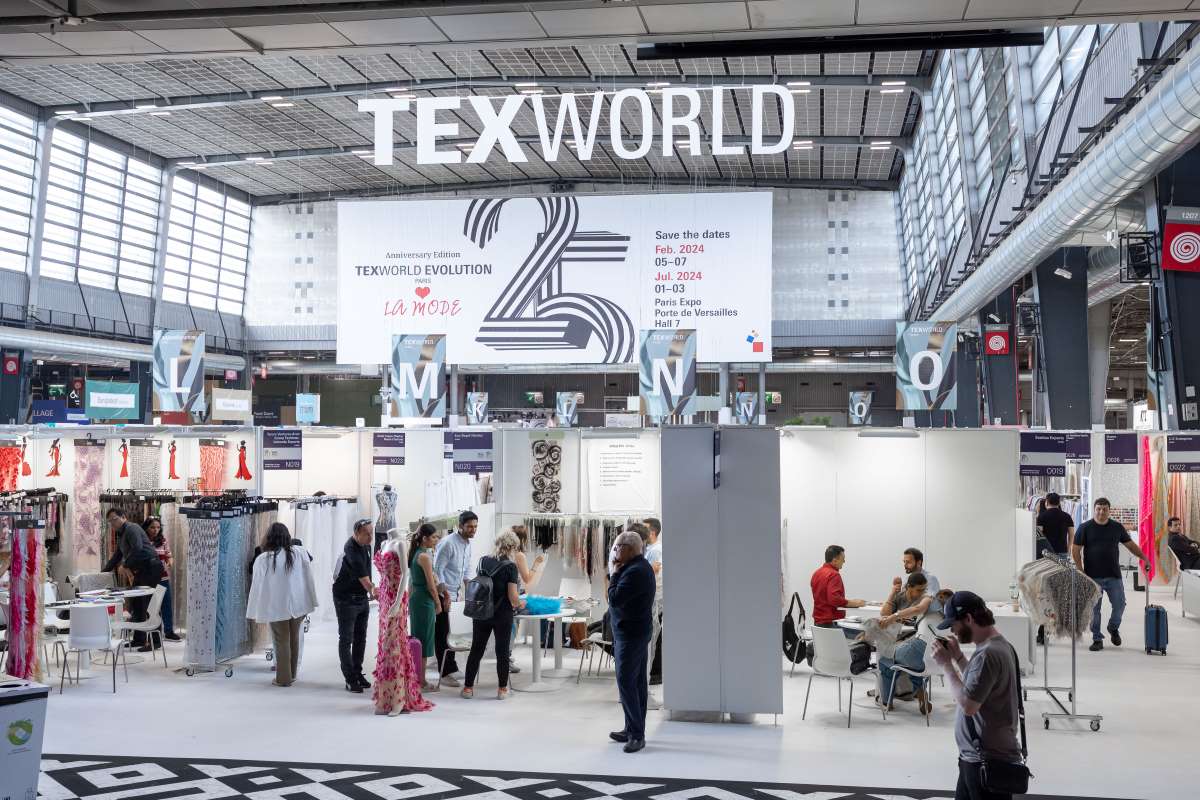
Texworld Evolution Paris is poised to make a triumphant return to the Paris Expo Porte de Versailles from February 5th to 7th, 2024, with a resounding 75% of exhibition space already booked by September. This remarkable response underscores the event's international appeal and the burgeoning interest of the Asian textile industry in strengthening ties with European markets.
For fashion buyers, this edition holds strategic importance, serving as a vital platform for connecting with international suppliers of fabrics, materials, and finished products. This interaction plays a pivotal role in shaping the Spring-Summer 2025 collections. The event's trends presentation and international conference program enhance the experience.
Leading fashion-sourcing nations, including China, India, Türkiye, Korea, Indonesia, Pakistan, and Thailand, will participate, with major national pavilions further enriching the event. A notable surge in knitwear and activewear performance textiles reflects evolving fashion trends.
A new feature of the 2024 session is the consolidation of both fairs in Hall 7 at Paris Expo Porte de Versailles, making it more convenient for visitors to locate specific expertise and products. Sustainable development takes center stage, with the introduction of Econogy, a fusion of ecology and economic development, guiding Texworld Evolution Paris toward a more sustainable future.
Visitors can use the Econogy Finder to access an online directory of sustainable textile suppliers, and exhibitor stands meeting these criteria will be marked with visible Econogy symbols. The event will also feature conferences on sustainability, featuring certifiers, industry experts, and NGOs, highlighting the industry's commitment to eco-friendly practices and innovative experiences in production and distribution. Texworld Evolution Paris 2024 promises a vibrant and eco-conscious future for the global textile industry.
MAS Holdings marks 20 years of empowering women
MAS Holdings, a global apparel manufacturing leader, is commemorating 20 years of its Women Go Beyond (WGB) initiative, a testament to its unwavering commitment to gender equality.
Established in 2003, WGB has played a pivotal role in empowering women within MAS and its global communities. It has addressed pressing issues like gender-based violence, sexual and reproductive health and rights, and economic empowerment, challenging stereotypes that hinder women's progress.
The initiative, under the leadership of Thanuja Jayawardena, has transformed from a movement into a way of life, influencing every aspect of a woman's journey. MAS Holdings aims to empower 100% of women on the factory floors through education, health services, skill development, and combatting gender-based violence. By 2025, their target is to have 30% women in management.
WGB stands out for its seamless integration into MAS's organizational culture, fostering inclusivity and respect. It has brought about a significant shift in mindset, with leadership actively promoting gender equality.
As MAS Holdings embarks on the next decade of its journey, the Women Go Beyond initiative continues to inspire change-makers and advocates worldwide, reflecting a legacy of progress and hope for a more equitable future.
ACIMIT reports 20% drop in textile machinery orders in Q3 2023
The latest data from the Association of Italian Textile Machinery Manufacturers (ACIMIT) reveals a significant drop in textile machinery orders during the third quarter of 2023.
The index, processed by the Economics Department of ACIMIT, plummeted by 20% compared to the same period in 2022, with the index standing at 84.2 points, indicating a worrying trend in the industry.
The decline in orders was primarily driven by a 45% reduction in domestic orders within Italy, while foreign markets experienced a comparatively milder 13% decrease. The absolute values of the index abroad and in Italy were 80.5 and 119.4 points, respectively.
The situation has raised concerns among industry leaders, including ACIMIT President Marco Salvadè.
Salvadè emphasized the urgency for the Italian government to take measures to enhance the competitiveness of Italian manufacturers. The persistent decline in the domestic market over seven consecutive quarters is particularly alarming.
On the international front, the orders index reflects a weakened global demand for textile machinery, linked to reduced purchasing power among consumers and slower investments in the textile sector.
ACIMIT is now looking to the upcoming ITMA ASIA + CITME event in Shanghai, where approximately 60 Italian textile machinery manufacturers will participate, hoping to gain insights into the industry's condition within one of the key strategic markets for textile machinery.
Renewable Carbon Initiative Makes Progress at Annual General Meeting
The Renewable Carbon Initiative (RCI), a global network of over 60 companies from the chemical and materials sectors, held its annual general meeting in Cologne, Germany from September 25th to 26th. The two-day event brought together over 50 representatives from member companies for a productive exchange of ideas and updates on the RCI's mission.
In addition to reviewing the accomplishments of the past year and discussing long-term strategy for 2024 and beyond, attendees also voted on potential new activities for the RCI to address in the coming year. The meeting concluded with a series of presentations from member companies and valuable networking opportunities.
The RCI also announced the release of an updated version of its key publication, "Renewable Carbon as a Guiding Principle for Sustainable Carbon Cycles." Originally published in February 2022, the publication has been revised to incorporate new climate change data from the Intergovernmental Panel on Climate Change (IPCC) and reflect the RCI's advocacy efforts over the past 18 months.
The updated publication serves as a comprehensive resource that clarifies the concept of renewable carbon and emphasizes its essential role as a guiding principle for policy. It highlights how the transition from fossil carbon to renewable carbon in the chemical and derived materials industry can be facilitated, leading to a defossilised future that enables net-zero targets and circularity of carbon.
"As the world continues to grapple with the pressing challenges of climate change, our annual General Meeting and the updated publication of our core report underscore the RCI's commitment to advancing sustainable carbon cycles and fostering collaboration within the industry," said Michael Carus, one of the two Executive Managers of the Renewable Carbon Initiative. "We believe that by promoting the use of renewable carbon as a guiding principle, we can drive substantial change and support the defossilisation of our sector."
MAS Holdings Celebrates 20 Years of Empowering Women Through Women Go Beyond
MAS Holdings, a global leader in apparel manufacturing, is celebrating the 20th anniversary of its Women Go Beyond (WGB) initiative, a groundbreaking program that empowers women within the company and its communities worldwide.
Established in 2003, WGB has challenged conventions and championed resilient women, making a profound impact on thousands of lives globally. The program addresses critical issues such as gender-based violence (GBV), sexual and reproductive health and rights (SRHR), and economic empowerment, working to change the mindset and infrastructure that prevents women from competing on an equal platform.
“MAS has always recognized the need to address the challenges and stereotypes holding women back from leading our businesses and our communities,” said Thanuja Jayawardena, Head of Women Go Beyond. “The Women Go Beyond Program was developed with a solid structure and a vision to work towards gender parity and has continued to redefine itself, to recognize the needs of women and men in a more equitable world.”
WGB has evolved into a way of life at MAS, impacting every facet of a woman’s journey. With efforts spanning all levels of the organization, MAS’ goals are ambitious: empower 100% of women on the factory floors, through education and opportunities provided on women’s health and SRHR, skill development, combatting gender-based violence, and promoting career advancement.
By 2025, MAS Holdings’ aims to achieve a target of 30% women in management, where they advocate for a world where women compete on equal footing, make choices freely, and actively participate in decision-making.
Renewable Carbon Initiative Makes Progress at Annual General Meeting
The Renewable Carbon Initiative (RCI), a global network of over 60 companies from the chemical and materials sectors, held its annual general meeting in Cologne, Germany from September 25th to 26th. The two-day event brought together over 50 representatives from member companies for a productive exchange of ideas and updates on the RCI's mission.
In addition to reviewing the accomplishments of the past year and discussing long-term strategy for 2024 and beyond, attendees also voted on potential new activities for the RCI to address in the coming year. The meeting concluded with a series of presentations from member companies and valuable networking opportunities.
The RCI also announced the release of an updated version of its key publication, "Renewable Carbon as a Guiding Principle for Sustainable Carbon Cycles." Originally published in February 2022, the publication has been revised to incorporate new climate change data from the Intergovernmental Panel on Climate Change (IPCC) and reflect the RCI's advocacy efforts over the past 18 months.
The updated publication serves as a comprehensive resource that clarifies the concept of renewable carbon and emphasizes its essential role as a guiding principle for policy. It highlights how the transition from fossil carbon to renewable carbon in the chemical and derived materials industry can be facilitated, leading to a defossilised future that enables net-zero targets and circularity of carbon.
"As the world continues to grapple with the pressing challenges of climate change, our annual General Meeting and the updated publication of our core report underscore the RCI's commitment to advancing sustainable carbon cycles and fostering collaboration within the industry," said Michael Carus, one of the two Executive Managers of the Renewable Carbon Initiative. "We believe that by promoting the use of renewable carbon as a guiding principle, we can drive substantial change and support the defossilisation of our sector."