


FW
British Wool's strategic initiatives drive market growth and efficiency
British Wool has unveiled a series of strategic initiatives aimed at fortifying its position in the market, with a strong focus on maximizing prices, enhancing member engagement, and achieving organizational efficiency.
Andrew Hogley, CEO of British Wool, emphasized the commitment to driving demand for British wool to ensure long-term returns for its members. The initiatives include a structured marketing approach, a competitive online auction system, and operational enhancements to strengthen member engagement.
Notably, the marketing team has successfully developed the British Wool brand identity, emphasizing animal welfare, environmental standards, and quality grading. This strategic shift has led to a remarkable 30% increase in businesses specifying British wool in their products over the past year. The competitive online auction, a crucial component in maximizing wool value, has been revamped to include new buyers, fostering a more balanced competition.
Operationally, the implementation of a new IT system in depots provides full traceability for every wool bale sold, significantly boosting efficiency. Despite recent improvements in auction prices, Hogley reassured members that British Wool remains dedicated to further growing demand for their wool and simultaneously enhancing service quality and operational efficiency. The organization's multifaceted approach underscores its commitment to sustainability, quality, and market competitiveness.
Better Cotton revolutionizes sustainable farming in West Africa
Better Cotton, the world's leading cotton sustainability initiative, is launching a groundbreaking program in Côte d'Ivoire, signaling a commitment to uplift 200,000 local cotton farmers over the next five years. The initiative aims to equip farming communities with training and resources, laying the foundation for the production of more sustainable cotton.
The Professional Association of Cotton Companies of Côte d'Ivoire (APROCOT-CI) will play a pivotal role as Better Cotton's Strategic Partner, overseeing efforts to enhance climate resilience and economic prospects for local farming communities. APROCOT-CI, representing the interests of key cotton companies in the country, will collaborate with six member organizations, including CIDT, Ivoire Coton, Global Cotton SA, CO.I.C-SA, SICOSA 2.0, and Seco SA, to serve as Better Cotton Programme Partners. Together, they will provide essential training and resources to cotton communities, fostering social and environmental improvements.
Jean François Toure, President of APROCOT-CI, emphasized the shared commitment to making a positive impact in the cotton industry, focusing on improving the lives of smallholder cotton farmers. The collaboration integrates Better Cotton's sustainable farming practices with APROCOT-CI's local expertise to boost cotton yields, reduce environmental impact, and enhance social and economic outcomes for farmers.
This strategic partnership emerged after APROCOT-CI expressed national interest in a Better Cotton program, and a multistakeholder event in Abidjan in March solidified the potential impact. Alan McClay, CEO at Better Cotton, highlighted the significance of expanding into Côte d'Ivoire, expressing gratitude for APROCOT-CI's support in advancing sustainable cotton production. Better Cotton's move aligns with its broader goal of building a strong presence in Africa, empowering smallholder farmers to address climate change through continuous improvements in sustainable agricultural practices.
Monforts' innovative stenter line boosts efficiency at Curt Bauer's Aue plant
Monforts, the textile machinery builder, recently showcased its ingenuity in meeting unique specifications for a Montex 8500 stenter line at Curt Bauer's Aue plant in Germany. With 150 years of tradition, Curt Bauer specializes in home textiles, West African damask fabrics, and technical textiles. The company's technical textiles branch produces innovative fabrics for automotive brands and refrigerator counter roller blinds.
In response to the need for increased productivity and reduced energy consumption, Curt Bauer opted for a new Montex 8500 line with a 3.2-meter working width and MonforClean heat recovery technology. This system utilizes waste heat from the drying process, resulting in up to 40% energy savings compared to conventional stenters.
The challenge of fitting the larger machine into the limited space was met with a multi-level configuration, utilizing scaffolding platforms to maximize floor space. The intricate assembly process, dubbed the "shoehorn method" by Monforts, required millimeter precision.
Gert Bauer, joint managing director of Curt Bauer, expressed satisfaction with the new line's performance, noting lower gas consumption and improved drainage of polyester fabrics. The collaboration between Curt Bauer and Monforts successfully navigated the complexities of customization and spatial constraints, showcasing the companies' expertise in adapting to evolving industry needs.
Textiles not the culprit for Bed Bug resurgence
While bed bugs have become a global issue, they are not the result of textiles. Instead, globalization and increased travel are the primary factors driving their spread.
Despite the misleading name, bedspreads and other textiles are not responsible for the resurgence of bed bugs. These pests hitchhike on luggage, clothing, and other items, and they are attracted to carbon dioxide, which humans exhale.
Experts recommend using proper pest management techniques, isolating infested items, and washing and drying them at high temperatures to control bed bug infestations.
The textiles industry need not worry about the bed bug issue, as textiles are not the cause. Globe trotters and sports fans can safely travel to Paris for the 2024 Summer Olympics without fear of bed bugs.
Italian Textile Machinery Manufacturers to Showcase at ITME Africa
A delegation of 12 Italian textile machinery manufacturers will be exhibiting at the upcoming ITME Africa trade show in Nairobi, Kenya, from November 30th to December 2nd, 2023. The Italian companies will showcase their latest innovations at the Italian Pavilion, organized by ACIMIT, the Association of Italian Textile Machinery Manufacturers, and the Italian Trade Agency.
Kenya's textile and garments industry is a significant contributor to the country's economy, ranking among the leading revenue sources. The government's focus on sustaining growth through targeted programs and international agreements, such as the Economic Partnership Agreement (EPA) between the European Union and Kenya, has created a favorable environment for the textile sector.
In 2022, Kenya's total imports of textile machinery reached Euros 24 million, with Italian imports accounting for approximately 4% of the total, valued at around Euros 900,000. The future demand from Kenyan textile companies is expected to focus on high-end and medium to high-end technology, presenting an opportunity for Italian manufacturers to strengthen their market share.
The participation of Italian textile machinery manufacturers at ITME Africa is a testament to their commitment to the Kenyan market and their recognition of its growth potential. The exhibition will provide a platform for Italian companies to showcase their expertise and establish strong business partnerships with Kenyan textile producers.
INTERNATIONAL COTTON MARKET UPDATE
As per Cotton Market Bulletin l
Cotton Futures
Most cotton futures contracts closed higher on November 13, 2023.
The December 2023 contract closed up 16 points at 77.48 cents per pound.
The March 2024 contract closed down 3 points at 79.47 cents per pound.
The May 2024 contract closed up 13 points at 80.41 cents per pound.
Pakistan
The Spot Rate Committee of the Karachi Cotton Association (KCA) decreased the spot rate by Rs 2,00 per maund to Rs 17,500 per maund.
The cotton market remained bearish with low trading volume.
Australia
Cotton Australia is launching an information and advertising campaign to tackle spray drift risks for growers.
The campaign will include radio ads, media releases, and collaboration with enforcement agencies.
The goal is to ensure that growers and contractors spray in compliance with regulations to protect themselves and their neighbors.
Overall, the cotton market is mixed with some contracts up and others down. Pakistan is experiencing bearish market conditions with low trading volume. Australia is taking proactive steps to address spray drift risks.
Nike's fashion dominance unchallenged: Study
The World’s Fashion Leader According to a recent study by ThreadSpy, an online retailer of high-end menswear, Nike is the most valuable fashion brand in the world.
The study used Google search volume and social media metrics to calculate the market value of various brands. Nike scored 9.87 out of 10 and had a market value of £30.5 billion, making it the clear winner. Some Highlights Nike is the undisputed champion of the fashion industry, with a huge lead over other brands.
Zara is the runner-up, followed by Louis Vuitton in third place. The top 10 list also features Prada, Adidas, Burberry, and more. The study shows the diversity and dynamism of the fashion industry, with brands from different segments competing for the top spots.
São Paulo Fashion Week 2023: 8 -12 Nov, 2023
São Paulo, Brazil hosts the São Paulo Fashion Week twice a year, showcasing a variety of clothing styles. It is the most prominent fashion event in Latin America and one of the emerging fashion weeks in the world, apart from the Big Four of New York, London, Paris, and Milan, which have dominated the fashion scene since the 1990s.
Türkiye’s textile sector experiences downturn and bankruptcy
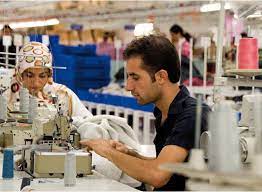
Türkiye is the second largest textile producer in the EU and fifth globally. The country is the world's largest producer of denim, fourth largest supplier of home textiles, fabrics and denim fabrics, and the fifth largest producer of yarns. Textile is the second largest industry in Türkiye in terms of production with total production value of $82.4 billion, including the apparel sector.
However, the country’s large textile industry is struggling with multiple challenges, including weak demand from its main export markets, lower capacity usage and loss of competitiveness, with sector representatives calling for government action. Employment in the sector is declining, while capacity utilization rate across the industry has fallen to 70 per cent.
A struggling industry
Ahmet Öksüz, President of the Istanbul Textile and Raw Materials Exporters Association (İTHİB) stated the industry posted a trade deficit last year. It was the net importer in 2022. Öksüz says, contraction in the main export markets is causing serious problems for local textile companies, Öksüz says, dumped imports of textile products are eroding local competitiveness. Turkish products are high quality and therefore, cannot compete with cheap products from countries like Uzbekistan. The government needs to provide the sector with some protective measures to prevent job losses and rendering billions of US dollars-worth of investments idle.
Big manufacturers go bust
The first time the writing appeared on the wall for the textile sector was during the global financial crash of 2008. Established manufacturers were queued up by banks for closure as surmounting debts rendered them un-payable. In recent years, important manufacturers such as Emek Kumaş, Kale İplik and Üçyıldız Tekstil have been foreclosed by banks.
One after the other, well-established companies are announcing their bankruptcies. These include those operating for many years. In 2008, during the global crisis, many textile enterprises were closed the companies were seized by banks in return for their debts. Experts explain a similar situation will not occur in the coming period but businesses that fail to overcome their problems will continue to close down. For example, Emek Global Tekstil Sanayi ve Ticaret Limited Şirketi, Emek Kumaş Dış Ticaret İnşaat ve Sanayi A.Ş. and Emekteks Dış Ticaret Limited Şirketi under Emek Group, whose foundation dates back to 1957, have requested concordat. Tekirdağ Commercial Court of First Instance granted three-month temporary respite for the companies and appointed a commissioner for the supervision of company activities.
Türkiye textile industry, which is among the world’s largest textile exporters, experienced a 13.6 per cent decrease in the first half of the year. In the January-June period of 2023, Turkish textile and raw materials sector exports, which were valued at $5.9 billion, decreased 22.1 per cent to $ 953 million in June 2023 and declined 6.9 per cent compared to the previous month and by 22.1 per cent compared to June 2022.
EU countries maintained their first place in the exports of textile and raw materials in the January-June period of 2023. In this period, exports to 27 EU countries decreased by 22.5 per cent compared to the same period in 2022 and amounted to $2.4 billion. The second country group with the highest exports of textile and raw materials was African countries. Exports to African countries declined by 18.9 per cent in this period and were recorded at $ 622 million.
Lenzing Group Secures Long-Term Wind Power Supply with WLK energy
In a significant move towards climate protection and energy security, the Lenzing Group has signed a 15-year supply contract with Austrian electricity producer WLK energy for the purchase of around 13 megawatts of wind power. This deal will commence in the first quarter of 2025, upon completion of the Engelhartstetten wind farm, a joint project involving several partners, including WLK energy.
With a total output of 45 megawatts, the Engelhartstetten wind farm will generate enough electricity to power approximately 10,000 households in Austria annually. Lenzing's share of 13 megawatts will directly cater to the energy needs of its Upper Austria site. The groundbreaking ceremony for the wind farm is scheduled for November 9, 2023.
This wind power supply agreement aligns with Lenzing's commitment to sustainability and long-term energy stability. "The generation of renewable electrical energy from wind and solar power and from biomass is a cornerstone of our corporate strategy and the basis for long-term commercial success," stated Christian Skilich, member of the Management Board of the Lenzing Group.
Lenzing has been actively pursuing carbon reduction goals. In 2019, the company pledged to cut its CO2 emissions by 50% by 2030 and achieve carbon neutrality by 2050. This commitment has been validated by the Science Based Targets Initiative.
In 2022, Lenzing collaborated with Verbund to establish Upper Austria's largest open-space photovoltaic plant and signed an additional electricity supply contract for photovoltaic energy with green electricity producers Enery and Energie Steiermark.
Lenzing's partnership with WLK energy demonstrates the company's dedication to environmental responsibility and its determination to secure a sustainable energy future.











