


FW
Eeken by Paragon Launches New Campaign to Inspire Gen Z to Live Every Day Like a Weekend
Eeken by Paragon, a footwear brand targeted towards India's 18-25-year-olds, has launched its latest campaign conceptualised by Makani Creatives. The campaign, titled "Weekend Everyday," embodies the brand's philosophy of empowering young people to live their lives to the fullest and embrace every day like it's a weekend.
The film showcases Eeken as an agent of transformation, taking the wearer from the humdrum of everyday life to a weekend state of mind. Once they wear Eeken, the customers step into their day with a pep in their step and a song in their heart. The film depicts a dramatic transformation in the protagonists as they encounter Eeken, reveling in their new avatar.
Prasad Rao, Executive Creative Director at Makani Creatives, said, "'Weekend Everyday' speaks to the youth of today. They are free-spirited, agile, and bindass. This film is an attempt to talk to this audience and to strike a chord with them and their culture. Eeken footwear is driven by design and is at par with any big brand. The intent here was to showcase the flexibility, comfort, and usage of the products through a narrative that stays true to the vibe, the style, and the culture of the brand and its audience."
"Eeken is our gateway to connect with the younger population of the country," said Sachin Joseph, Executive VP at Paragon Footwear. "We draw inspiration from the psychographic of our target audience and strive to deliver what they desire. This reflects across our product design as well as our communication."
SaXcell and Birla Cellulose Sign MoU to Expand Production of Recycled Man-Made Cellulosic Fibers
Textile recycling innovator SaXcell and Aditya Birla Group’s Birla Cellulose, one of the world’s largest manufacturers of man-made cellulosic fiber, have signed a Memorandum of Understanding (MoU) to expand production of recycled man-made cellulosic fibers.
The MoU paves the way for the two companies to collaborate on a commercial scale, combining SaXcell's textile waste pulping technology with Birla's advanced wet spinning expertise to produce high-quality sustainable "SaXcell" recycled fibers.
Commenting on the development, SaXcell CEO Erik van der Weerd highlighted the importance of global collaboration in addressing the social and environmental challenges of the textile industry. He said the combined innovation force and production power of SaXcell and Birla offer a great opportunity to create real impact.
Birla Cellulose Chief Technology Officer Dr. Aspi Patel said the company is strongly committed to supporting innovators and expanding circular fiber offerings in the textile and non-woven value chain. He said the collaboration with SaXcell is an example of how Birla Cellulose is exploring innovative business models and partnerships to accelerate circularity in the global textile value chain.
SaXcell B.V. is an innovative technology development company that recycles used textiles into feedstock for making new and sustainable man-made cellulosic fibers. Creating the new fibers requires less water, land, and chemicals.
Birla Cellulose is the pulp and fibre business of the Aditya Birla Group and a leading sustainability-focused Man-Made Cellulosic Fibres (MMCF) producer. Birla Cellulose operates 12 sites for pulp and fibre manufacturing that apply environmentally efficient processes, including recycled materials and closed-loop technologies to enhance the conservation of natural resources.
The collaboration between SaXcell and Birla Cellulose is a significant step forward in the development of a more circular textile industry. By combining their expertise and resources, the two companies can help to reduce the environmental impact of textile production and make sustainable fashion more accessible to consumers.
Karl Mayer revolutionizes tricot industry
In the ever-evolving world of tricot machines, Karl Mayer is taking off with renewed vigor and innovation. As the tricot industry faces numerous challenges, the Karl Mayer Group is set to introduce groundbreaking technologies at the ITMA ASIA exhibition in Changzhou City, from November 19 to 23, 2023.
The news angle here is that Karl Mayer is addressing the evolving market demands with a focus on sustainability, new business opportunities, flexibility, and productivity. The company is launching two performance-optimized mid-range machines, underlining their commitment to innovation. These machines cater to diverse applications, from upholstery and sportswear to automotive interiors and apparel, meeting the demands of a wide range of customers.
Notably, the TM 4 EL, featuring CFRP technology, is up to 30% faster than its predecessor, setting new standards for speed in the four-bar machine segment. The three-bar tricot machine HKS 3-M ON comes with an energy-saving feature and real-time energy monitoring, optimizing efficiency and reducing costs. Karl Mayer also introduces the TM 2-NET, designed for demanding net applications, and the HKS 2-SE, a bestseller for elastic fabric production.
In addition to these high-tech machines, Karl Mayer's digital company, KM.ON, will showcase Digital Production Management (DPM) and CORE, enabling real-time monitoring and efficient production management. Furthermore, Karl Mayer enhances customer support with a new customer portal, myKM.ON, providing easy access to essential solutions and services.
Karl Mayer's comprehensive approach highlights its commitment to empowering the tricot industry with advanced technologies and support solutions, ensuring a brighter future in the face of evolving market dynamics.
ITMF 2023 Awards unveiled at Keqiao's Annual Conference
The ITMF Annual Conference 2023, co-hosted by the China National Textile and Apparel Council (CNTAC) and the Shaoxing Municipal People’s Government, took place in Keqiao, China from November 4-6. The conference spotlighted two significant categories: "Sustainability & Innovation" and "International Cooperation," acknowledging groundbreaking contributions in the textile industry.
The ITMF Sustainability & Innovation Award celebrates pioneering endeavors in textiles that prioritize sustainability and environmental integrity. Recognizing innovation, design, development, and production executed under stringent sustainability standards, this award emphasizes the industry's commitment to eco-conscious practices.
The ITMF International Cooperation Award seeks to honor international collaborations aligning with the 17 Sustainable Development Goals (SDGs) of the 2030 Agenda. It exemplifies how cross-border cooperation generates mutually beneficial outcomes.
The ITMF Awards 2023 winners, selected by an international panel, are:
ITMF Sustainability & Innovation Award 2023
Qingdao Jifa Group (China) for their project on Supercritical CO2 Assisted Dyeing of Polyester.
Qingdao University (China) for their project on Marine Bio-Based Fibres.
Universitat Politechnica de Catalonia (Spain) for their project on Upcycling Fibres of Clothing & Textile Waste to Building Materials.
UPM Biorefining (Germany) for their project on The Future of Fabrics with Renewable Materials in collaboration with VAUDE.
Winner Medical (China) for their project on Biodegradable Nanofiber Masks.
ITMF International Cooperation Award 2023
Kelheim Fibres (Germany) & Santoni (Italy) for their project on Advanced Machine Technology Meets Performance Viscose Fibres.
Lenzing (Austria) & Södra (Sweden) for their project on Enabling the Circular Textile Industry Together.
Magnolab (Italy) for their project on Setting up a Textile Innovation District.
Satori (Germany) for their project on B2B E-commerce - Accelerating International Growth for Fabric Mills.
Sustainable Terms of Trade Initiative (STAR Network Asia) for their project on Improving Purchasing Practices.
The awards emphasize the global textile industry's commitment to sustainable and collaborative initiatives, underscoring the drive to transform the sector into a more environmentally friendly and cooperative one.
Innovative textile Start-ups shine at ITMF Conference 2023
At the ITMF Annual Conference 2023 in Keqiao, China, co-hosted by the China National Textile and Apparel Council (CNTAC) and Shaoxing Municipal People's Government, the ITMF Start-up Awards marked their second successful edition. This event bridges the gap between pioneering startups with groundbreaking product and service innovations and well-established companies within the textile industry.
The 2023 ITMF Start-up Awards recognized six outstanding startups, evaluated by an international expert jury. Their criteria included business propositions, sustainability, recyclability, digitalization, and qualitative efficiency. During a dedicated "Start-up Session" at the conference, the winning startups had the opportunity to present their innovative ideas to a captivated audience.
The recipients of the ITMF Start-up Award 2023, hailing from various countries, unveiled their remarkable contributions to the textile world. These include CarboScreen (Germany) for online carbon fiber monitoring, Cebiotex S.L. (Spain) for biocompatible and biodegradable implants, Colorifix (UK) for eco-friendly dyeing methods, Rheiazymes AG (Switzerland) for molecular bio-recycling of high-value polymers, Shaoxing Qian Yong Textile Co. (China) for SME exploration in textile digital printing, and TreeToTextile AB (Sweden) for a low climate impact biobased fiber.
Jeanologia's eDesigner software revolutionizes eco-friendly denim design
Spanish eco-technology leader, Jeanologia, is spearheading the digitalization of eco-design with its latest version of eDesigner software. Launched in 2020, eDesigner has become a creative and eco-efficient alternative to traditional denim design, promising a greener future for garment finishing.
The upgraded eDesigner boasts a more user-friendly interface and tailor-made tools for denim design, including the remarkable "Trace" feature, which employs artificial intelligence to generate hyper-realistic designs from a single image. Additionally, the software allows designers to work with digitized fabrics, ensuring high-definition renders mirror the final product.
An extensive Lightbrary offers a wealth of inspiration, offering laser designs, vintage concepts, wash effects, textures, and more. Designers can create from scratch or build upon existing designs, fueling innovation.
This version elevates digitalization by significantly reducing physical samples, cutting costs, and lowering the carbon footprint associated with sample transportation. With the ability to create digital cufflinks and analyze wash applications, the eDesigner streamlines the development process, shortening product development timelines and fostering efficient communication among stakeholders.
Carmen Silla, Jeanologia's Marketing Director, highlights that eDesigner empowers "infinite iterations at zero cost and impact" while improving production processes and accelerating time-to-market. Beyond software, eDesigner is a transformative tool driving the textile industry towards a more competitive, productive, and sustainable future.
38th IAF World Fashion Convention spurs global apparel industry reforms

The 38th IAF World Fashion Convention recently concluded, uniting nearly 200 delegates from over 20 countries worldwide. The convention tackled pressing global issues within the apparel industry, emphasizing the necessity of transitioning towards a more robust, intelligent, and sustainable sector.
A significant shift emerged during the sessions, with a clear call for enhanced supply chain collaboration over transactional practices. Notably, discussions highlighted the need to divert attention from a sole focus on price in sourcing to fostering supply chain investments that reduce fashion risk, lower inventory costs, and increase capital productivity. Key industry figures like John Thorbeck, Brad Ballentine, and Scott Walton underscored the importance of productivity, extending beyond garment production to encompass the entire supply-demand process.
The convention also shed light on sustainability, with Inditex's Chief Sustainability Officer, Javier Losada, stressing the imperative of transitioning towards sustainability. Keynote speaker Tom Glaser urged supply chains to prioritize security and trust, moving away from efficiency and short-term gains.
Global harmonization emerged as a critical theme, particularly in the realm of corporate sustainability due diligence requirements. Speakers advocated for global standards, and the potential of better contracts to foster fair and productive supply chain relationships was discussed.
The geographical perspective of this year's convention, centered in the US, explored shifts in US sourcing away from China and the rise of production opportunities in Africa, Türkiye, and Central America. The convention also highlighted the unique conditions for garment production in the US.
Emphasizing the holistic approach, the convention conveyed the interdependence of sustainability, sourcing models, and technology. IAF President Cem Altan reiterated the necessity of addressing structural issues and moving beyond price-driven sales.
Above all, the convention reinforced the central role of people in the apparel industry. Investments in workers, managers, owners, and communities were emphasized as essential for the industry's improvement, underlining its global and people-centric nature.
China’s strangle-hold over global garment exports frustrates many brands
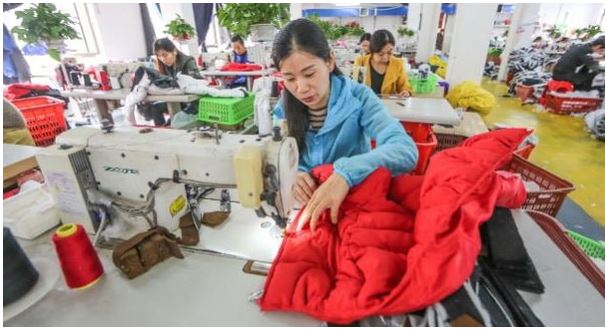
Since 2016, China has been seeing a slow but steady downgrading of its status as the world’s number one exporter of consumer goods as its share declines. One reason could be increasing labour costs are pushing Western importers to look at more lucrative manufacturing hubs, particularly in textiles and apparel. For decades, China has been the world's factory, churning out cheap products for the masses. However, the tide is turning, as many companies are looking to shift their manufacturing operations away from China.
China has already lost ground in key consumer categories, including clothing and accessories, footwear, furniture, and travel goods, while also seeing a decline in its share of exports from minerals, hardware to office technology. However, in reality the geo-political tensions that have driven a growing wedge between the US and its Western allies against China is the main reason. Coupled with this the disruptive supply chain experience buyers faced when the Chinese government imposed a severe pandemic lockdown.
The painful breaking away journey
While the breakaway from China was on a big high from 2020 as the Chinese forced a nation-wide pandemic lockdown and the Biden administration kept issuing warnings about sourcing from the country, the reality is it has been an arduous journey for many brands. Brands are questioning their decision to have left and many are hoping to renegotiate and return their manufacturing to China. Speaking to a reputable online business platform, Laura Magill, Global Head of sustainability at footwear brand Bata Group, explained she couldn’t think of another place that can do the quality, quantity and price as well as China. The mature Chinese ecosystem, established over decades of hard work, not only ensures competitive price points but also delivers stable quality at mass production that’s hard to copy.
So where does that leave the likes of Adidas AG and Nike Inc. as garment and footwear manufacturers have been relocating their supply chains away from China, driven by geopolitical concerns and drawn by reduced production costs? Will they find their new hub up to their satisfaction?
New Asian manufacturing hubs continue to rely on China
Vietnam is a classic case in point. While it has gained considerable ground in terms of upping its garment export game at the expense of China, it is still not entirely independent of Asia’s biggest economy. Vietnam’s clothing industry still relies mostly on Chinese materials such as buttons, thread, labels and packaging with only about 30 to 40 per cent of the materials made locally, points out Duong Thi Ngoc Dung, Vice Chairwoman, Vietnam’s Textile & Apparel Association. Dung however explains, Vietnam is still targeting apparel exports worth $40 billion this year, as some Western clients are emphasizing their decoupling with China under political pressure from the US. This has led to a significant gain for the Vietnamese apparel exports that touched $18.6 billion in the first half of 2023, contributing about 11 per cent to Vietnam’s overall exports.
However, Vietnam still finds itself in a bind – it has tried investing in and creating textiles that meet the sustainability benchmarks for the EU but the same EU customers are demanding the products be priced as cheap as the Chinese variant which is not possible due to economies of scale the bigger manufacturing hub enjoys. A Vietnamese mill-owner in Laskau put it succinctly that Western brands not only have a much higher comfort level working with Chinese manufacturers but also don’t have the intent of investing in developing alternative manufacturing hubs.
Certification: A game-changer for accountability in fashion’s evolution
Recent research reveals a potential shift in consumer behaviour, with sustainability poised to influence over 50 per cent of purchasing decisions, marking a significant increase from the current 15 per cent. Where sustainability is taking centre stage, it has emerged as a pivotal metric for evaluating corporate conduct, shaping governance and policy frameworks, and even informing financial strategies. There’s no doubt that companies that embrace sustainability as an integral part of their business model are winning the public sentiment.
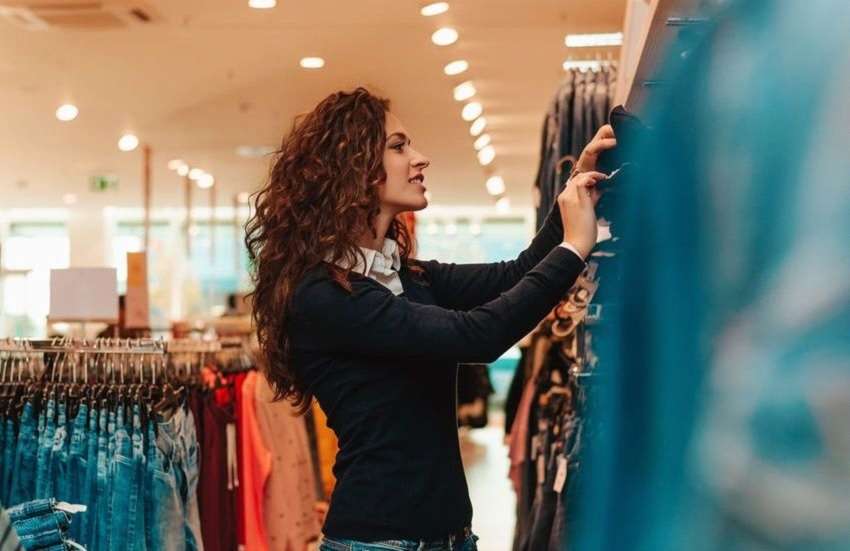
One part of the industry that is a particular focus for transformation is the use of materials sourced from forests through the manufacturing process. Forest-based products include: natural rubber for shoe soles, paper and packaging, garment tags, retail paper bags, and even the fibre used to make clothes -- Man-Made Cellulosic Fibres (MMCF) in particular. With consumers increasingly shying away from synthetic blends, MMCFs have the third largest share in global fibre production after polyester and cotton. In 2021, MMCFs accounted for 6.4 per cent of the total fibre market, produced primarily from wood transformed into dissolving wood pulp (DWP) before being processed into various types of MMCF, such as viscose, modal, lyocell, or acetate.
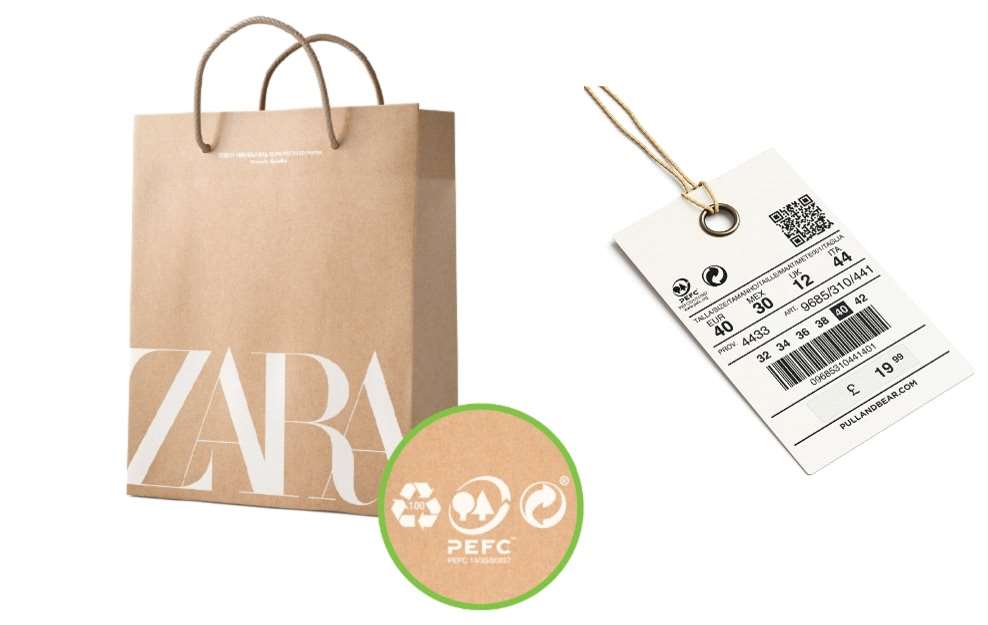
Since sustainable production of MMCFs begins in the forest, it is crucial for brands to understand the potential risks to forests and take proactive measures to manage and mitigate these risks. However, mapping and monitoring the sourcing choices of suppliers can be a complex and resource-intensive task leading to a fundamental question for retailers: How to guarantee their raw materials are procured in an environmentally responsible manner?
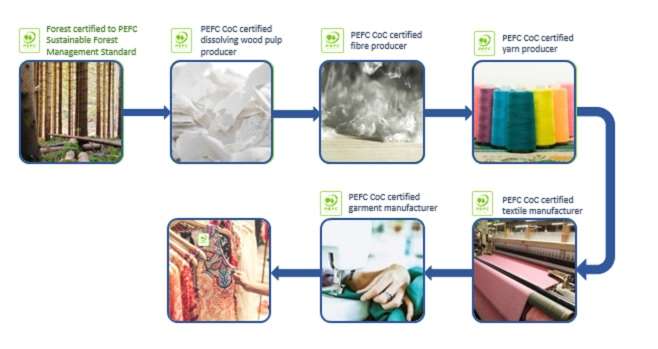
At the forefront of forest materials certification, PEFC (Programme for the Endorsement of Forest Certification) offers industry-leading insights and guidance for retailers. Grounded in the mission to guarantee that products entering the marketplace have been sourced from sustainably managed forests, PEFC provides a strategic and actionable roadmap covering seven essential steps:
⦁ Commit to Sourcing Certification: Embed MMCF sourcing certification into corporate policies to signal taking sustainability seriously to inspire suppliers to prevent greenwashing.
⦁ Require Certified MMCF: Uphold your dedication to sustainable sourcing by requesting certified MMCF materials, particularly from Tier I suppliers providing solid evidence to substantiate product claims.
⦁ Prioritise Traceability: Consider the chain of custody certification bolstering transparency and accountability across the supply chain.
⦁ Transparent Communication: Clearly communicate sustainability objectives and timelines to create alignment between your suppliers and sustainability goals, resulting in shared expectations.
⦁ Support Suppliers to Transition: Provide their suppliers with resources, insights and guidance throughout the certification process.
⦁ Leverage API Technology: Streamline the certification process by implementing an API for real-time updates and database integration, enhancing efficiency and accuracy.
⦁ Go Public with Commitments: Openly showcase the work you’re doing demonstrating an authentic commitment that will resonate with customers and stakeholders alike.
Spotlight on sustainable fashion
“The connection between our clothes and our impact on the environment doesn’t immediately come to mind. If a jacket or a skirt or a dress looks good, and we can afford it, we buy it. But the environment pays the price.”
Michelle Yeoh, Actor and UNDP Goodwill Ambassador highlighted the role that clothing manufacture and consumer fashion can have for a better planet in a video called ‘Made in Forest” presented at the High-level Political Forum in New York (2018).
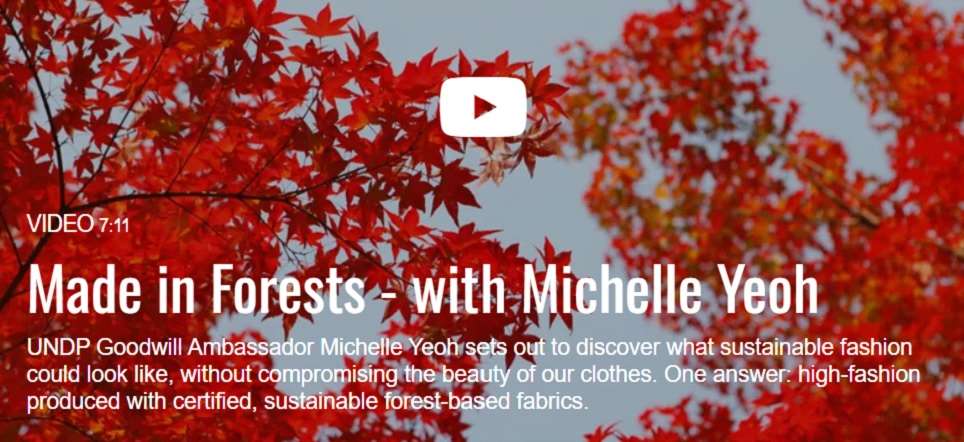
(https://www.youtube.com/watch?v=SPEjQUAw0ic)
In a sign of progress, Mango, one of Europe’s leading fashion groups, has launched a new road map called ‘Sustainable Vision 2030’, to reduce environmental and social impact.
Currently, 75 per cent of Mango garments have sustainable properties and the brand has made progress by incorporating of alternative fibres with a lower environmental impact within its collection. At present 90 per cent of the cotton is more sustainable, 29 per cent of the polyester used is now recycled and 63 per cent of the cellulose fibres are of controlled origin.
Spanish fashion designer María Lafuente has developed a capsule collection of six dresses made entirely from PEFC-certified Tencel fabrics, supplied by Textil, the first producer of cellulose fabrics worldwide to obtain PEFC chain of custody certification.

Credit Marie Lafuente
“It is our responsibility to promote fashion that respects life so we can contribute to a harmonious and sustainable society,” explains María Lafuente. “We create, work and produce ethically and sustainably, always selecting environmentally friendly materials,” she says.
Entering into the sustainable fashion foray, Salvatore Ferragamo, the Italian luxury goods company, has developed the ‘Earth Top Handle Bag’, a re-interpretation of the iconic Top Handle bag that obtained the ISO 14067 - Product Carbon Footprint certification. To ensure carbon neutrality of the project, Ferragamo has committed to protecting 1,200 ha of PEFC-certified cork forest in Tuscany. Managed by Rete Clima, the absorption of CO2 produced by this local action is equivalent to the amount of greenhouse gas emissions generated from the production of 500 pieces of the Earth Top Handle bag.

An opportunity for fashion brands
There is an incredible opportunity for fashion brands to shape both the way the industry functions and how consumers make value-based purchases. Though the task may seem complex, the PEFC sustainable policy guide can aid brands and retailers in easing into this process.
The PEFC also offers a line-up of events where brands can witness first-hand the forests of Europe and Asia. Initial signups are now open for 2023 and 2024 forest field trips offering an incredible opportunity to connect with nature and witness sustainable forest management in action.
The tide is turning. By prioritising sustainability and instilling responsible practices at the source, fashion brands can not only achieve their sustainability goals but also contribute to a brighter future for our planet. In doing so, they set a powerful example, reinforcing the idea that doing what's right is not just a choice; it's the epitome of style and responsibility.

Images credit; María Lafuente
PaCT Program: A Significant Contribution to Improving Environmental Performance of Bangladesh Textile Industry
The Partnership for Cleaner Textile (PaCT) program, launched in 2013 by the International Finance Corporation (IFC) and various partners, aims to improve resource efficiency, reduce environmental impact, and promote sustainable practices in the textile industry.
Focusing on water, energy, and chemicals, the program has helped more than 338 factories reduce freshwater consumption by 25 million m3/year, wastewater discharge by 21.08 million m3/year, energy consumption by 2.5 million MWh/year, and greenhouse gas emissions by up to 489,796 tons/year of CO2.
BGMEA, as an implementing partner, has played a crucial role in steering and implementing the PaCT program, providing technical assistance and promoting cleaner production practices. The program's success is evident in its significant contribution to improving the environmental performance of the Bangladesh textile industry.











