FW
Bangladesh RMG industry to continue sustainability efforts: BGMEA
The Bangladesh RMG industry aims to continue its efforts on sustainability to be known as sustainable sourcing destination globally, said Faruque Hassan, President, Bangladesh Garment Manufacturers and Exporters Association (BGMEA). The industry is aligning itself with changing business landscape to remain competitive and minimize adverse production effects on the environment, he added.
Certified after May 2019, around 75 LEED projects were accorded appreciation while a special acknowledgment was provided to around 30 LEED Platinum-certified projects during the event. Hassan said Bangladesh is proud to have the highest number of green garment factories in the world with 160 LEED certified by USGBC, of which 48 are platinum, 98 are gold. The number of green garment factories in Bangladesh is on the rise.
Being green makes it easier for these factories to comply with many strategic priorities of brands to reduce the negative impacts of manufacturing on the environment, he added. A green factory also provides a good working environment with desired thermal comfort for workers’ hygiene, mental peace, and well-being, he remarked.
Global denimwear market grows at six per cent
The global denim market is growing at six per cent. The rise in disposable income levels is aiding the growth of the denim market. Other factors are the rise in urbanization and the trend of denim shirts. Further, the growing popularity of stretchable denim jeans by blending cotton with synthetic material is further anticipated to propel the growth of the denim market.
Moreover, initiatives to improve product manufacturing are estimated to cushion the growth of the denim market. In addition, the easy accessibility of raw material will further provide potential opportunities for the growth of the denim market.
On the basis of product, the denim market is segmented into jeans, jacketsand shirts, trousers, dresses, shorts and track pants, jumpsuits, dungarees and others.On the basis of consumer type, the denim market is segmented into men, women and children.On the basis of distribution channel, the denim market is segmented into specialty stores, department stores, online, hypermarket and supermarket and exclusive stores.On the basis of type, the denim market is divided into light denim, medium denim and heavy denim.
North America dominates the denim market. Asia-Pacific is projected to observe a significant amount of growth in the denim market due to the occurrence of major key players.
From Future forays into the denim with a new sustainable collection
Known for its affordable cashmere, French apparel brand From Future has stepped into the denim space with a new collection made with sustainable materials. As per a Sourcing Journal report, the collection uses fabrics made of 74 per cent cotton, 25 per cent recycled cotton from fabric scraps and 1 per cent elastane, and dyes using a water and energy saving process that also requires fewer chemicals.
The women’s denims Ihis collection span the Joseph straight fit, Johnny slim fit and Jude bootcut. They are available in sizes 34-42 in light, medium and black denim, with a white denim option offered in the straight fit. The men’s denims span Joey straight fit, Josh loose fit, Jacob slim fit and Jack denim shorts in sizes 27-35. They are available in light, medium, dark and black denim washes.
The brand has introduced a Sizefox powered fit tool on its website’ to assist customers in choosing the correct size based on a short questionnaire. From Future’s denim collection is being sold in stores and online from €110 ($119) for women’s jeans and €120 ($130) for men’s jeans. The brand plans to introduce more denim styles soon. It plans to launch denim jackets, skirts and denim in a variety of fun colors like neon yellow, lilac and bubblegum pink.
Besides cashmere, the brand also offers an assortment of high-quality, color-saturated fabrics such as silk sourced from China, ‘ice wool,’ an extra-fine Australian Merino wool fiber, and 100 percent cotton, pima cotton and Supima cotton.
From Future’s foray into denim follows the recent entry of brands into the category. Last Month, Emma Mutholand in Holiday, the five-year-old Australian label best known for its cheerful, vacation-inspired style launched a capsule collection offering two unisex jeans styles. Prior to that, UK-based brand Rixo had launched a range of sustainable denim dresses and separates, followed by contemporary women’s brand Ulla Johnson, which ventured into denim after showcasing several jeans and a denim jacket at its F/W 22-23 presentation during New York Fashion Week.
As per a recent report by Research and Markets, the denim market will reach $76.1 billion by 2026, up from $57.3 billion in 2020. Its anticipated success can be attributed to the infiltration of the casualization movement into the workplaces, as well as younger professionals opting for more casual office attire.
Telangana textile minister blames Centre for policy inefficiency in the state
In a letter to Sanjay Bandi, President, BJP Telangana, KT Rama Rao, Working President, TRS and State Textiles Minister criticized the Central government for introducing inefficient policies that have pushed weavers and textiles sector into a crisis. Rao urged the BJP President to remove GST on textiles to provide much-needed support to the weavers’ community.
The textiles minister also accused the Centre of removing all insurance schemes provided to weavers by the previous governments. The Telangana government is not only providing insurance coverage to the weavers but also supporting them by extending a scheme called Nethanna ku Cheyutha to these weavers and also them with subsidized yarn and other raw materials under Chenetha Mithra scheme. Rao also accused the Centre of not responding to the state’s request for establishment of a mega powerloom cluster, a national textile research institute and an Indian Institute of Handloom Technology in the state.
Alternative plan may help Future Retail lenders recover dues, minimize damage

Debt-ridden Future Group faces an uncertain future as three of its companies, Future Retail, Future Lifestyle Fashions and Future Supply Chain Solutions, stand on the brink of insolvency. All three companies have a total outstanding debt of Rs 6,474.98 crore. Of this, the total debt of Future Retail stands at Rs 4,876.88 crore, Future Lifestyle Fashions’ debt totals Rs 1,181.98 crore and FSCS’ debts amounts to Rs 416.12 crore.
Amazon terms Future-Reliance deal ‘unethical;
As per media reports, in 2020, the Future Group had signed Rs 24,713 crore deal with Reliance Retail, a subsidiary of Reliance Industries. The deal entail Reliance Retail would buy out the wholesale, retail and logistics businesses of Future Group. However, the deal was opposed by US e-commerce company Amazon as it violated a 2019 agreement signed with the company. In mid-2019, Amazon had acquired 49 per cent stake in Future Coupons, giving it an indirect 4.81 per cent holding in Future Retail Ltd (FRL).
Impending bankruptcy threatens Future’s future deals
Last week, RIL refused to takeover Future Group’s businesses, as FRL’s secured creditors voted against the scheme. Bank of India also filed a bankruptcy petition against FRL before the National Company Law Tribunal (NCLT) that would come up for hearing for admission on May 12.
A bankruptcy trial before National Company Law Tribunal (NCLT), threatens Future Group’s future deals. Group stakeholders in the group are not sure of recovering the $4-billion debt from the company. The recent acquisition of important FRL stores by Reliance also thwarts Amazon’s ambitions to become a key player in India’s retail market.
Meanwhile Amazon has asked the RBI to undertake a forensic audit against Future Retail for the past three financial years to investigate alleged fraud by the company. Amazon said that Future Retail, its promotors and directors have defrauded by alienating over 945 store premises to Reliance Retail. It has also alleged that Reliance Industries has committed fraud while the lenders have failed to take cognizance of it.
“It is incumbent upon RBI to conduct a thorough investigation into the fraud committed by FRL, its promoters, directors and key managerial personnel (KMPs). Accordingly, it is requested that a forensic audit be conducted for FRL for the past 3 financial years as the RBI is empowered to inter alia under the RBI Fraud Circular, financial documents, and framework agreement,” Amazon has said. Amazon has also alleged Future Retail has been making contrary statements in its annual reports, and in the courts on whether it was facing a liquidity crisis or not. Amazon alleged that in its Annual Report for the financial year 2020-21, Future Retail stated that it did not face any liquidity crisis.
Liquidation may erode banks’ share in the company
Vivek Parti, Professional, Insolvency Resolution notes, with public sector banks rejecting the scheme of arrangement proposed by Reliance, Future Retail now faces liquidation under the Insolvency and Bankruptcy code. As per a Business Today report, to recover their dues, banks will have to fight it out or else they may get less than expected as the case moves to the IBC, opines Mahesh Singhi, Founder & Managing Director, Singhi Advisors, an M&A advisory firm.
Singhi advises lenders to have an alternative plan to recover their dues. Being a perishable industry, retail is an extremely challenging business to run, he says. The company has lost most of its employee and inventory. Besides, it does not own the property it operates on, he adds. Its insolvency may be just nine to 12 month away, he adds. As shareholders values continue to erode at break-neck speeds, banks will have to find a solution to minimize the extent of damage caused to them, opines Singhi.
Spinners in India sign new deals to add 40 lakh cotton bales this season
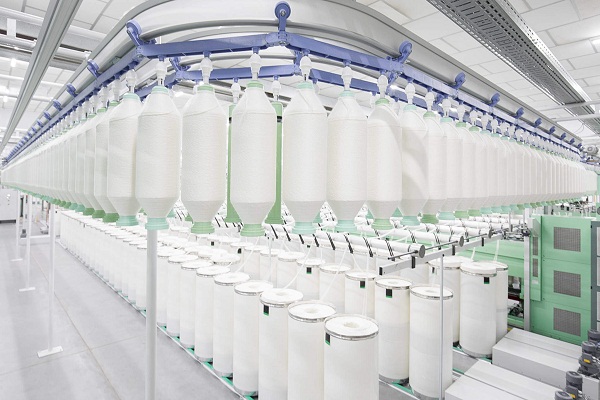
The government’s decision to allow duty-free cotton imports till September has led to the signing of many new deals across South India. Prabhu Dhamodharan, Convenor, Indiian Texpreneurs Federation notes, several mills in Tamil Nadu have started placing orders for imported cotton. They are placing orders for 30-40 days of production to balance imports with domestic production, Dhamodharan explains.
Spinners in South India are signing deals to import at least 100 bales (170 kg each) of cotton everyday, pointes out, Anand Poppat, a Rajkot-based trader in raw cotton, yarn and cotton waste. The Centre’s decision to allow duty-free import of cotton for a limited period was driven by rising domestic prices that surged past Rs 90,000 a candy (356 kg). Also spinning mills had slowed production as they were unable to get quality cotton.
With duty-free imports, the textile industry aims to add at least 40 lakh cotton bales to current stock to tide over the shortage. Besides the availability of quality cotton, the industry also fears production will be lower than the revised estimates of the Committee on Cotton Production and Consumption (CCPC) — a body of all cotton textile industry stakeholders.
Lower cotton outlook for current season
CCPC has lowered estimates for cotton production in India to 340.62 lakh bales for the current season ending September as against 352.48 lakh bales in previous season. It also expects closing stock to reach a three-year-low of 45.46 lakh bales.
According to Poppat, Spinning mills are signing deals to import cotton at Rs 95,000 and Rs 103,000 a candy. Prices of the most exported variety of cotton Shankar-6 are currently hovering at Rs 93,200-93,800 a candy. Benchmark cotton futures are trading at 142.30 US cents a pound (Rs 88,425 a candy) on the Intercontinental Exchange, New York. Ronak Chiripal, Promoter, Chiripal Group, believes the Centre’s decision has helped control rising domestic prices to certain extent. However, textile producers continue to face inventory issues
Better realization from imported cotton
Imported cotton give mills better realizations upto 4-5 per cent due to the low quality levels of current domestic cotton, says Dhamodharan. Indian cotton suffers from contamination, resulting in a drop in mill’s realization to 68.5 per cent. On the other hand, realization from imported cotton could be 75 per cent, Poppat says.
Spinners are likely to import from Brazil, the US, Africa and even Australia. They continue to rely on local ginners for cotton against the bookings they have made in the past 3-4 months, adds Poppat.
Cotton shipments to drop
A drop in China’s domestic cotton prices has lowered scope for export of Indian cotton, says Poppat. Mills have so far exported 37.50 lakh bales of cotton from October 1 to April 23. CCPC estimates, cotton shipments from the country may drop to 40 lakh bales this season from 77.59 lakh bales last season.
Demand from across the world has dropped, says Chiripal. Shipping remains a big issue with lockdowns in certain Chinese cities worsening the situation. This has put a brake on rising cotton prices for now, affirms Chirpal.
India’s apparel & textile exports can benefit from Sri Lankan crisis and China Plus Strategy
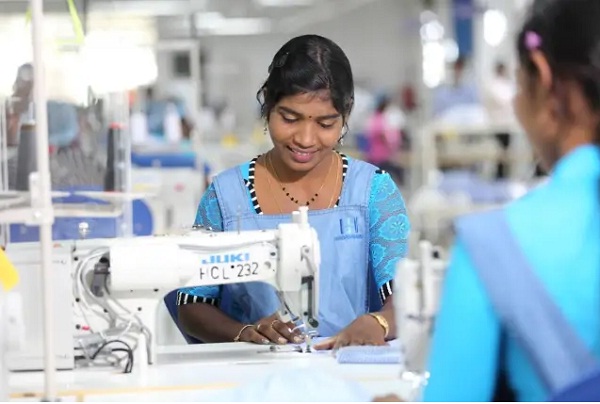
Indian apparel makers revenues have been growing 16-18 per cent on account of Sri Lanka-China crisis and a robust domestic demand. In 2021-22 fiscal, India’s apparel exports grew over 30 per cent while ready-made garment (RMG) shipments totaled $16018.3 million. India exported most of its textiles and apparels to the US, the European Union, parts of Asia and Middle East. Amongst these markets, the US held the maximum share of 26.3 per cent for knitted garments, followed by UAE 14.5 per cent and UK 9.6 per cent.
Of the total global MMF and madeup export market worth $200 billion, India’s share was $1.6 billion, accounting for only 0.8 per cent of the total global market for MMF, says recent Apparel Export Promotion Council stats.
Rupee depreciation and incentive schemes to drive exports
As per an analysis based on 140 RMG makers by CRISIL Ratings, factors like the rupee depreciation and continuation of export-linked incentive schemes are likely to drive India’s exports, leading to a revenue growth of around Rs 20,000 crore. India’s MMF exports are expected to grow 12-15 per cent, despite the higher base of last fiscal, says Anuj Sethi, Senior Director, CRISIL Ratings.
Disruptions in factory operations long with port congestion will dampen China’s export growth in dollar terms. However, domestic MMF demand is expected to grow over 20 per cent.
RMG operating margins to improve to 8.0 per cent
In fiscal 2022-23, the operating margins of RMG makers are expected to improve by 75-100 basis points year-on-year to 7.5-8.0 per cent though they will continue to be lower than pre-pandemic levels of 8-9 per cent. With prices of key raw materials such as cotton yarn and man-made fibre rising 15-20 per cent, RMG makers will be able to partially pass on input price hikes to customers as demand rebounds and operating margins improve.
The largest availability of raw materials alongwith world’s second largest spinning and weaving capacity enabled the India to grow domestic exports by 95 per cent from January-September 2021, says Narendra Goenka, Chairman AEPC.
Fall in cotton import duty to boost apparel exports
India’s apparel exports are expected to rise further as import duty on raw cotton reduces from the current10 per cent, opines A Sakthivel, President, Federation of Indian Exporters’ Organization. Prices of yarn and fabrics will soften, he adds. Moreover, signing of CEPA with UAE and Australia will also accelerate India’s share in apparel exports in the US and many countries. India’s textile and apparel exports to Australia have grown by 2 per cent over the last five years and reached $6.3 billion in 2020. India’s share in Australia’s total textile and apparel imports is likely to rise further with the signing of Economic Co-operation and Trade Agreement (ECTA) between India and Australia.
Leveraging the China Plus One strategy
India’s textile industry has been growing on rising home textile exports and favorable geopolitical undercurrents encouraging countries to adopt the China Plus One sourcing strategy. Recent geopolitical developments such as COVID-19 have intensified the need for global diversification for these countries, as per a CII-Kearney study. To benefit from growing development, India needs to grow exports by $16 billion, urges the study.
MarciasTextil to launch more sustainable solutions
A part of the Texbrasil, brand MarciasTextil plans to launch more sustainable solutions.
According to Heitor Macias, Industrial Director, the brand works with a line made with recycled yarn from PET bottles. The line includes five products: Mac Sport Light, woven in canvas with 44 per cent recycled yarns; New Mac High, twill fabric with 53 per cent recycled yarn; Carmel PET, ripstop fabric with a waterproof finish and 60 per cent recycled yarn; Mac EcoBag, canvas fabric with 39 per ent recycled yarn and Canberra PET, twill and pelleted fabric, with 53 per cent recycled yarn.
Besides being available in Brazil, these fabrics are also sold in Paraguay, Argentina and Peru.MarcusTextil aims to widen up the sustainable production in the next years. By 2024, the brand aims to exchange all polyester raw material for recycled polyester”, Heitor explains.
For this, the brand has a partnership with Repreve, a global brand specialized in recycled fibers production. Being a worldwide brand, Repreve provides its own tag, that allow Macias’ clients to ratify their products and also receive tags that indicate the sustainable origin of the parts.
Besides the plans to expand production with sustainable polyester, Macias still intends to take up the Bio-D line, made with Amni Soul eco yarn. According to Heitor, the line development had to be paused during the pandemic, but the company intends to start using the thread again, which has rapid decomposition after disposal, in the second half of this year.
India plans ban on cotton exports
India may ban cotton exports as cotton prices have reached newer highs in the Indian markets at around Rs 46,000 per candy. Cotton prices in India have doubled in the past year.
On a month-on-month basis, cotton prices have risen by 12 percent. This year, there has been a 35 percent a jump and in the past 12 months, prices have appreciated by about 75 percent.
The global production of cotton for 2021-2022 was around 26.52 million bales, but the global consumption was nearly 27 million-plus bales. So, there has been a bit of a deficit.
India, in the recent few days, has waived off the 10 percent import duty until September, which is when new cotton crop starts coming into the market. There is a bit of a concern with new cotton crop harvest because of the heatwave and declining yields in cotton that has also added to the premiumisation in the prices.
Bestseller uses certified cotton from Pakistan
Bestseller along with its brand Jack & Jones and Artistic Milliners is making history by using certified cotton from Pakistan.
The Milliner Organic Project is now using the first crops from the organic farms of Kohlu, Balochistan, in Pakistan. It has at the same time reached a significant milestone: passing the stringent requirements set by the Control Union to be certified as in-conversion cotton.
Bestseller has been providing funding for the initiative. In return, the fashion retailer’s brand Jack & Jones will get access to a share of its cotton.
Artistic Milliners – one of the fashion industry’s most visionary suppliers – is the first private sector investor in organic cotton cultivation in Pakistan. Today, more than 2,000 farmers and nearly 9,300 acres of land are already under the umbrella of this project.
The in-conversion cotton from this harvest will be included in JACK & JONES’ denim collection for December 2022.