FW
New investments, laws to help sustain Bangladesh’s home textile export growth

Home textile has gradually become the second most export earning sector for Bangladesh after readymade garments. A recently report from Export Promotion Bureau shows, Bangladesh’s home textiles grew 41.3 per cent to $1.46 billion during July-May 2021-2022. In fiscal 2021-22, Bangladesh’s home textile exports grew by 43.28 per cent to $1.62 billion while Export Promotion Bureau pegs the earnings from the sector in the last fiscal year to $1.13 billion.
Export earnings from the sector also grew by 18.39 per cent to $1.37 billion from the proposed export target set for the FY22, says the EPB data. As per experts, , home textile is one of the first-line export sectors in Bangladesh with the ability to produce bulk products. Bangladesh exports products like bed linen, bed sheets and other bedroom textiles, bath linen, carpets and rugs, blankets, kitchen linen, under the home textiles sector.
Fewer factories despite export growth
Bangladesh’s success in home textiles can be attributed to various factors like investments in research, quality products, innovation and latest technology, sustainable growth, and government support. Yet, the country has fewer home textiles factories compared to woven or knit garments, though Zaber & Zubair Fabrics, Towel Tex, Mosharraf Group, Saad Musa Group, Alltex, ACS Textile, Apex Weaving, Regent, JK Group, Classical Home etc, have established themselves as strong exporters, explains Shahdat Hussain, President, Bangladesh Terry Towel Manufacturers and Exporters Association.
Technavio pegs, the global home textiles trade is expected to grow at 3.5 per cent CAGR during 2018-2025 to reach $170-$180 billion by the end of 2025. Experts believe, the lockdowns in 2020 caused global demand for home textiles to increase significantly. Yet, Bangladesh’s share in global home textile export remains only 7 per cent as the country fails to ensure fair prices for exports.
Market suffers from rising prices, disurptions
Momin Miah, Managing Director, Momin Tex says, despite recovering from the pandemic, the market continues to suffer from supply chain disruptions, rising raw material prices and the ongoing Ukraine-Russia war. The hike in raw material prices and transportation disruptions have compelled many home textile factories to either shut down or reduce their production by 30 per cent-50 per cent, he adds. The hike in gas prices has suffered worsened the situation, he rues
The sound political stability of Bangladesh is instrumental in driving Bangladesh’s industrial growth, avers Hossain. The country is also ably supported by the government that addresses issues like corruption and abolishes NBR and custom-related harassing law that prevent apparel businesses from growing, he adds.
Increase cash incentives
Md Shofiqur Rahman, Senior General Manager, Zaber & Zubair Fabrics says, Bangladesh home textile exports grew in a robust manner during the last financial year. However, sustaining this trend would be challenge with the world returning to normalcy, he adds. Industry experts recommend increasing the cash incentive for exports to 10 per cent from the current 4 per cent and providing seamless service at ports. They urged entrepreneurs to negotiate for better prices to ensure ethical manufacturing,
Bangladesh needs to make more investments in research, quality products, innovation and latest technology, sustainable growth, and government support, he adds. The government also needs to introduce new initiatives to address the corruption, and abolish NBR and custom-related issues that prevent business from flouring.
Upcoming festive season will boost apparel sales in India, hope retailers
Retailers in India, especially shopping malls, hope, the upcoming festival season will boost sales after the pandemic-induced slump. The festive season in India starts from July 28 with festivals like Nagara Panchami, Raksha Bandhan, and Varamahalakshmi in August. The season continues till January, covering bigger festivals like Ganesh Chaturthi, Dusherra, Diwali, Christmas, New Year, and Makar Sankranti.
No restrictions to boost growth
This year’s festive season is expected to be different from the last two years as there are no COVID-19 restrictions and footfalls at both standalone retail outlets and shopping malls are expected to increase steadily. Having recorded 26 per cent growth in April and 24 per cent in May, India’s retail sector growth dwindled to 14 per cent in June-July because of the inauspicious month of ashada, month, says Kumar Rajagopalan, CEO, Retailers Association of India. The sector is expected to grow on a robust manner in the remaining period with the long festival season giving it a huge fillip, he adds.
Consumption resilience will drive growth despite a rise in commodity prices on an average 10 per cent, observes C Shika, Commissioner, Commercial Taxes. Consumption buoyancy has also led to revenues from commercial taxes increasing to Rs 28,456 crore in the first quarter against a target of Rs 19,118 crore. The growth in tax revenues is expected to get stronger in the festival season.
Malls’ footfalls to increase
Adding to the delight of both traders and public, there are expected to be no further waves of COVID-19 and infections are likely to remain endemic with fewer hospitalizations. This will prevent traders from suffering from any further lockdowns and curfews. The rapid rise in vaccination has placed the Indian retail industry in a better position compared to last two year, opines M K Sudarshan, Chairman, COVID-19 Technical Advisory Committee. Retailers can look forward to a good festive season this year by adhering to all COVID-19 related norms, he adds.
With no drastic curbs required, shopping malls can anticipate big crowds during the upcoming season, says Uday Garudachar, Owner, Garuda Mall. Footfalls at the mall have already reached 80 per cent of pre-COVID levels and may exceed it in the next few months, he adds. In August first week, the retailer aims to relaunch events held during festivals before the pandemic.
Hike in minimum wages plays havoc in Los Angeles apparel manufacturing industry
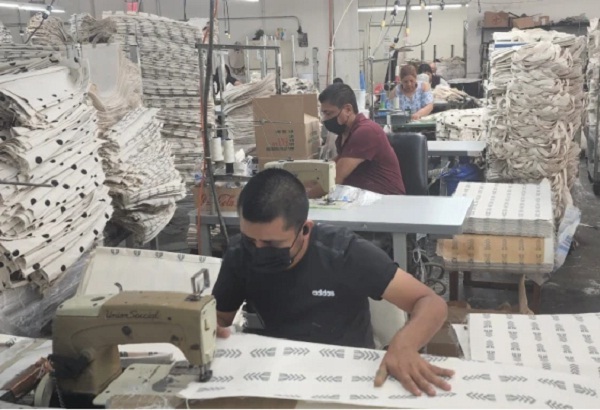
The 7 per cent hike in the minimum wages of workers in Los Angeles is impacting apparel makers in the city. The hike is leading to an additional $60,000 a week in wages for workers in the city. According to Dov Charney, Founder, Los Angeles Apparel, it forces the domestic manufacturer to be more efficient. He advocates manufacturing clothes domestically despite obstacles. The minimum wage may not kill local apparel manufacturing but still will act as one more hurdle for manufacturers. However, it will also give customers $40 more a week to spend on apparel shopping, he points out.
Hub of US apparel manufacturing, Los Angeles is known to house more apparel producers than New York City. The city earlier housed 56 per cent of US clothing manufacturers. This has plummeted to 3 per cent, according to the American Apparel & Footwear Association.
Growing competition leads to factory closures
Every year, Los Angeles closes more apparel factories due to growing competition from overseas manufacturers, state regulations and companies moving to nearby states such as Nevada, Arizona and Texas, where wages and regulations are less stringent.
In 1998, the Los Angeles apparel industry employed 98,400 people which declined to 45,700 people in 2012 and further dipped to to 21,100, according to the California Employment Development Department. For Martin Barrack, President, Dynamic Denim, the spike in minimum wages will compel customers to pay 10 per cent more for their denim pants and canvas bags that his 80 workers sew at the South Los Angeles factory. Barrack opines it has become increasingly difficult to operate an apparel company in Los Angeles as most of brands he worked with have shifted their production to Mexico because of lower production costs.
Stiffer regulations impacting manufacturers
Besides minimum wages, stiff state regulations are also affecting apparel manufacturers in Los Angeles. That city had passed the Senate Bill 62, which went into effect on January 1, 2022. The bill holds brands or companies contracting with an apparel manufacturer responsible for all unpaid employee wages in that facility and directs them to pay hour wages to factory workers. Many apparel factories were paying workers for the number of items they sewed instead of a fixed hourly rate. The bill is playing havoc in the industry, says Scott Wilson, Partner, Jin Clothing and Vertical Apparel — with a combined 95-person workforce. He is also expects more factories move out of state.
Last year, two major LA apparel factories with hundreds of employees moved to Mesa, Ariz, notes Ilse Metchek, President, California Fashion Association, a Los Angeles organization that advocates for the local apparel industry and shares business information.
According to Metchek, states like Arizona have fewer environmental regulations and cheaper costs. On the other hand, Los Angeles keeps people from growing due to the large number of restrictions on their activities, she adds.
Greater transparency can help address fashion industry issues: Report
The latest Fashion Transparency Index by Fashion Revolution says, world's largest fashion brands and retailers will have to increase transparency to tackle the climate crisis and social inequality. Ranking 250 of the world’s largest fashion brands and retailers for their public disclosure of human rights and environmental policies, the seventh edition of the index shows, around 85 per cent brands are not honest in disclosing their annual production volumes despite mounting evidence of clothing waste around the world, and around 96 per cent brands and retailers do not reveal the number of workers in their supply chain paid a living wage.
Further, the Fashion Transparency Index shows, only 37 per cent brands define a sustainable material despite almost 45 per cent publishing targets on the same. Only 24 per cent of major brands disclose their initiatives to minimize microfibers while 94 per cent of them are not honest about the number of workers in their supply chains who are paying recruitment fees.
Transparency grows despite disappointing results
Despite these disappointing results, Fashion Revolution says, transparency amongst brands is growing, primarily amongst first-tier manufacturers. According to the Index, Italian brand OVS is the most transparent with a score of 78 per cent alongwith with Kmart Australia and Target Australia, whose score increased by 22 percentage points compared to 2021.
This is followed by H&M, The North Face and Timberland who scored 66 per cent. The biggest increases in scores were noted by Calzedonia Group brands whose scores increased from 11 per cent to 54 per cent.
Underperforming brands
Around 73 brands scored in the 0-10 per cent range. The lowest scoring brands with a dismal 0 per cent rating included: Jil Sander, Fashion Nova, New Yorker, Max Mara, Semir, Tom Ford, Helian Home, Belle, Big Bazaar, Elie Tahari, Justfab, K-Way, Koovs, Metersbonwe, Mexx, Splash and Youngor.
Further, the index showed, around 85 per cent of major brands are not transparent about their annual production volumes while 28 per cent of brands disclose more information about the circular solutions they are developing than on the actual volumes of pre- and post-production waste they produce.
Reluctance to disclose purchasing practices
Just 11 per cent of brands publish a responsible purchasing code of conduct indicating that most are still reluctant to disclose how their purchasing practices could be affecting suppliers and workers.
Despite the urgency of the climate crisis, less than 30 per cent of major brands disclose a decarbonization target covering their entire supply chain which is verified by the Science-Based Targets Initiative. Only 11 per cent of brands publish their supplier wastewater test results, despite the textile industry being a leading contributor to water pollution. Around 96 per cent of major brands and retailers do not publish the number of workers in their supply chain paid a living wage nor do they disclose if they isolate labour costs
Failure to pay minimum wages
Most brands fail to ensure that the workers in their supply chain are paid enough to cover their basic needs and put aside some discretionary income. Just 27 per cent of brands are open about their approach to achieving living wages for supply chain workers and number of workers in their supply chain paid a living wage. Liv Simplliciano, Policy and Research Manager, Fashion Revolution says, only greater transparency can help address the fashion’s social and environmental issues.
Indonesia’s textile industry grows by 12.5% in Q1FY’22
Based on data from the Ministry of Industry (Kemenperin), Indonesia’s textile industry grew 12.5 per cent in the first quarter of 2022. This achievement is quite significant as in 2020 and 2021, the industry grew 13 per cent and 8 per cent respectively, says Dody Widodo, Secretary General, Ministry of Industry. The textile industry is still making a big contribution to the Indonesian economy and can even be called the pillar of the Indonesian economy, he adds. The Indonesian textile industry is currently facing many challenges including growing competition from neighboring countries. Moreover, products from abroad have begun to flood the domestic market with lower prices.
Widodo therefore urges education and industry players to develop their facilities to answer these challenges. Elis Masitoh, Director, Textile, Leather and Footwear Industry, Ministry of Industry, adds the industry has boosted the gross domestic product (GDP) of Indonesia to 6.35 per cent. In nominal terms, the export value of the textile industry is equivalent to $13 billion with a total workforce of approximately 3.56 million people in all industries. Hopefully in 2030 the export value can increase to 20 billion US dollars and even $30 billion, says Elis.
In addition, the Ministry of Industry targets that there are 5 to 6 million workers that can be absorbed by the textile industry. However, it requires cooperation from policy makers from the community, educational institutions, to the research and development sector.
USFIA joins other industry groups to voice concerns over 301 tariffs
The US Fashion Industry Association (USFIA) has joined other retail and fashion industry groups in voicing its concerns over the pernicious impact of the Section 301 tariffs on both the American fashion industry and American consumers. In a statement the USFIA highlights, these tariffs have negatively impacted the American jobs created by American brands and retailers. They have discouraged America’s most innovative and iconic brands from hiring due to the increased sourcing and production costs. These tariffs have also not encouraged a large-scale shift out of China as companies diversify their sourcing base.
The statement also rebuts the claims that removing these tariffs will hurt U.S. workers and do nothing to fight inflation. It agrees with Janet Yellen, US Treasury Secretary that they will increase domestic prices and raise costs to consumers and businesses due to higher cost inputs.
The US Congressional Budget Office, estimates that the tariffs would cost the average American household nearly $1,300 in 2020 alone. A recent study from the Peterson Institute for International Economics, finds, cutting the Section 301 tariffs would also reduce consumer price index.
Indo Count Industries joins SBTi’s global campaign on climate action
India-based end-to-end bedding solutions company, Indo Count has aligned its journey for climate action by joining the global campaign led by SBTi (Science Based Target Initiatives). As per a Textile Value Chain report, Science-based targets specify how much and how quickly companies need to reduce their greenhouse gas emissions. The Science Based Targets initiative supports the setting up of science-based targets to boost companies’ competitive advantage in the transition to the low-carbon economy. The initiative is a collaboration between CDP, World Resources Institute (WRI), the World Wide Fund for Nature (WWF), and the United Nations Global Compact (UNGC).
Indo Count Industries has set a target for GHG emission reduction as per SBTi methodology to meet the goals of the Paris Agreement in the category of limiting global warming to well below 2°C. Approved by SBTi, these goals will help Indo Count reduce emissions by following sustainable practices across the supply chain and all manufacturing units across the company aligned with the SBTi guidelines.
A pioneer in spearheading sustainability, Indo Count Industries is highly focused on its ESG activities and has been working on integrating UNGC’s Principles of Sustainable Development Goal (SDG) into the organizational culture and ensuring the building of a greener sustainable future.
Karl Mayer launches HKS 3-M ON model
Karl Mayer has launched the new HKS 3-M ON, model to initiate the changeover of high-performance tricot machines to the digital generation. The machine works with lapping data that can be purchased online via Karl Mayer’s webshop spare parts and loaded immediately. The new model does not need any pattern discs, but achieves the high working speeds typical of mechanical guide bar drives.
Karl Mayer’s developers first produced conventional basic articles, such as marquisette and flag fabric. They used the standard repeat length of up to 36 stitch courses. All patterns were produced with maximum efficiency and quality and changed quickly without any technical effort.
Subsequent trials produced patterns with repeats of more than 36 stitch courses by using the web-based software k.innovation Core from KM.ON. Karl Mayer’s textile specialists opted for variants with sophisticated crinkle looks. Articles with the crepe-like surfaces were successfully produced on HKS 3-M ON in E 32, In GB 1 and GB 2, a wrapping yarn made of polyamide with elastane in the core was processed. When relaxed, the two-component material gives rise to distinct plastic surface structures. GB 3 produced the fabric ground and alternated between polyamide and polyester feed. When polyester was used, targeted cross-dyeing resulted in sophisticated two-tone coloration of the three-dimensional goods. The relief effects are strongly pronounced due to the use of two ground guide bars.
In addition to the look, the performance of the items is right with the concise crinkle design. In clothing, they offer freedom of movement and a good fit due to their high elasticity. The three-dimensional structure also creates distances to the skin, which ensures a high climatic wearing comfort.
Cotton exports from Brazil to reach 1.74 million tons next cycle
In the next cotton cycle, shipments from Brazil are expected to reach 1.74 million tons. From August 2021 to April 2022, the country exported 1.58 million tons of cotton. To increase its cotton production capacity, Brazil has launched Cotton Brazil, an international market development program to promote agricultural sustainability.
The program has striven to develop appropriate agricultural practices through research and innovation over the past two decades and ensuring sustainable cotton cultivation, says Marcelo Duarte, Director - International Relations, The Brazilian Cotton Growers Association (ABRAPA). The Indonesian textile industry, which imports 41 per cent cotton from Brazil, is seen to have positive growth potential. This will be improved in the future by utilizing sustainable raw materials.
Especially for Indonesia, Cotton Brazil plans to launch a Seller Mission in the fourth quarter, which will allow it to forge stronger partnerships with companies across the industry value chain, explains Marcelo.
A strong differentiation strategy can boost resale companies’ businesses, say experts
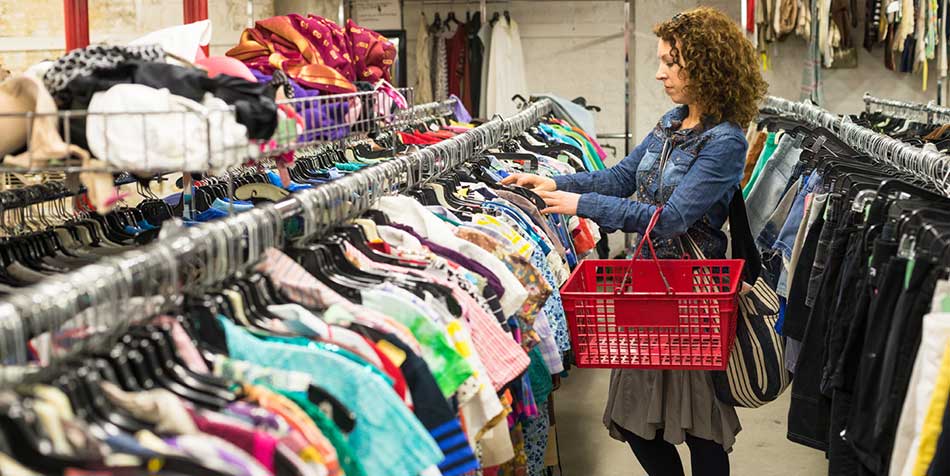
The pandemic has fuelled US consumers’ love for pre-owned fashion. A report by resale clothing website ThredUp, shows, in 2020, the pandemic year, around thirty-three million consumers in the country bought secondhand apparel for the first time. Around 76 per cent of these first-time buyers plan to increase their spending on secondhand clothing in the next five years. The secondhand apparel market in the US is projected to double to $77 billion in the next five years. Analytics company GlobalData, also pegs the growth of clothing resale market to be 11 times faster than the broader retail clothing sector through 2025. Mapped by online resale pioneer eBay, Tirath Kamdar, General Manager-Luxury, opines, growth has accelerated as more consumers are becoming eco-conscious. It is also being driven by the increase in luxury shoppers, he adds.
Thrift modernization boosts resale market
Consumers’ attitudes towards secondhand shopping are changing swiftly, adds Erin Wallace, Vice President- Integrated Marketing, ThredUp. This is attributed to the rise of online resale and the associated modernization of thrift. Also, lack of stigma attached to thrift shopping by the younger generation further fuels this transformation, he adds.
Sarah Davis, Founder, CCO, and President, Fashionphile, asserts, as against earlier, buying resale has now become a bragging right. With the resale market heating up, battle for buyers and sellers is also ensuing. Alongwith markplaces like Poshmark, eBay and consignment sites like the RealReal, global fashion brands brands Levi’s and Coach have also joined the race to grab a share of the online resale market.
In March, consignment site Vestaire Collective bought Tradesy for an undisclosed sum. Etsy purchased its competitor Depop in 2021 for $1.6 billion. Poshmark plans to venture into international markets including Canada, Australia, and India as part of its growth strategy while ebay is adding new features to attract buyers and sellers:
Online resellers plan physical expansion
Meanwhile, online resellers are also setting up brick-and-mortar presence to boost sales. Fashionphile has set up 10 store-in-stores with Neiman Marcus to sell luxury items directly to customers. ThredUp, is offering its Resale-as-a-Service (RaaS) to Walmart, Adidas, Target etc, to engage in resale on their own sites.
Owned by URBN, the parent to Urban Outfitters, Nuuly, is helping customers extend the lifestyle of their garments, adds Kim Gallagher, Director - Marketing and Customer Success.
Resale brands struggle with dwindling bottomline
Having ignored fashion resale initially, many brands are digging their heels into it. An example is accessories brand Dagne Dover, which launched its resale website Almost Vintage in mid-2021. Though currently a small part of its overall business, the platform looks to soon onboard bigger brands, says Deepa Gandhi, Co-Founder and COO. It also plans to become an unofficial requirement for brands ESG, she claims.
However, despite a growing number of companies foraying into this space, it is becoming extremely difficult for companies to scale up resale businesses. RealReal registered a $236 net loss in 2021. The company does not hope to make profits till 2024. ThredUp also reported a net loss of $63.2 million just as Poshmark which showed a loss in recent quarter. To be successful in the long run, these companies will need to formulate a strong differentiation strategy, asserts Tim Ceci, Principal Consultant-Retail and Consumer, Point B.