FW
Bangladesh apparel exporters in a fix as top US retailers cancel orders
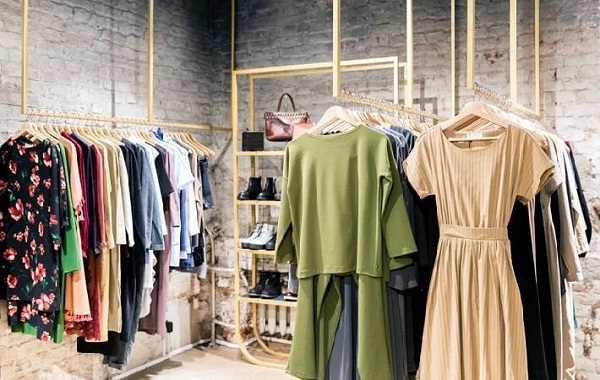
Falling demand in home country is leading to US clothing retailers including Walmart, Target, The Children’s Place, Costco, TJX and Kohl’s cancelling orders placed with apparel manufacturers in Bangladesh. Few buyers are also deferring shipments with most planning to reduce dependence on the US and the EU markets, says Shahidullah Azim, Vice President, BGMEA. Most exporters are now looking at other Asian countries like India, Japan and Korea as alternatives to the Bangladesh market, adds Azim. Now, BGMEA plans to arrange a single-country expo to add new buyers, he adds further.
Reducing dependence on US and EU
Fazlul Hoque, Managing Director, Plummy Fashions opines, Bangladesh manufacturers need to reduce dependence on two large markets to ensure their survival. The company has already acquired a new buyer in Brazil. It plans to strengthen its hold on the South America market, informs Hoque, a former president of Bangladesh Knitwear Manufacturers and Exporters Association (BKMEA). High global inflation is worsening the entire situation with buyers unwilling to place new orders, notes Mohammad Hatem, Executive President, BKMEA. However, business may revive post-Christmas as demand for knitwear might grow, he adds.
Developing low-cost fabrics
Kutubuddin Ahmed, Chairman, Envoy Textiles the world's first LEED platinum certified denim textile facility advises the industry to wait and watch how the situation evolves. He also recommends more investments in research and development of low-cost fabric as people’s purchasing capacity has declined post pandemic and raw materials prices have grown 30 per cent in the last one year. Ahmed also, a former president of BGMEA believes, the ongoing downturn will continue for another six months with the Christmas sales in December helping retailers clear inventories.
Sales of most US retailers decline
Bangladesh’s apparel exports to the US crossed $10 billion value for the first time in FY22. Of this, $9 billion came from RMG exports, reveals Export Promotion Bureau statistics.
US retailer Target sold its unwanted inventory during the year, which deeply impacted quarterly profits that declined nearly 90 per cent from a year ago, indicates a report by CNBC. Major US buyer Walmart also announced plans to procure 30 per cent less for spring season as it has huge unsold inventory. The retailer cancelled orders worth billions of dollars to align inventory levels and cater to the demand of budget-conscious consumers. The US retailer cleared out most of its summer collection ahead of back-to-school season.
In its second quarter fiscal 2023 results, TJX bottom lines defeated Zacks Consensus Estimate. The company’s net sales declined 2 per cent to $11,843 million while its comparable-store sales declined 5 per cent Q2 FY’23 as against 21 per cent rise in the US open-only comparable stores sales in Q2 last year. The top line of the company missed the consensus mark leading to lowering of full-year adjusted margins and US comp store sales guidance range.
China slips in cotton rankings
China’s position as the top global cotton importer is weakening.
Cotton shipments are flowing into flourishing textile industries in competing countries.
Soon after China joined the World Trade Organization in 2001, its textile manufacturers became the world’s leading importers of cotton. However, following years of rising production costs, volatility from government intervention in the market, and government caps on the volume of imports, China’s cotton imports dropped from their peak of 24.5 million bales in 2011 to 4.4 million bales in 2015, although they rebounded to 9.5 million bales in 2021.
Over the same period, competing countries such as Vietnam, Pakistan, Indonesia, Bangladesh, and Turkey have expanded their textile industries and boosted cotton imports, which combined now exceed those of China. In fact, cotton imports into these countries are expected to rise by 8.1 million bales from 2021 to 2030 while China’s imports will rise by 3.5 million bales. By 2030 these five destinations are projected to account for 47 percent of world cotton imports while China accounts for just 24 percent.
This increasing geographic diversification of global cotton demand has helped US cotton exports remain relatively robust, and those exports are projected to rise by about 1.4 million bales between 2021 and 2030.
Bangladesh denim garment exports to US go up
In the first half of 2022 Bangladesh’s denim exports grew by 57 per cent.
Bangladesh continues to persist as the top denim exporter to the USA. American denim imports from Bangladesh grew by 42 per cent in the first half. Mexico’s denim exports to the US grew by 26 percent. Pakistan’s denim exports to the US grew by 60 percent. Vietnam’s denim exports to the US grew by 44 per cent and China recorded a 26 per cent growth.
The apparel industry of Bangladesh despite numerous challenges, including reduced consumer demand and reported cancellation of some work orders by global buyers, managed to put up a decent performance in terms of apparel shipments in August 2022.
Bangladesh garment sector grew 446 per cent year-on-year in a single day during the period even if on the other end it also witnessed a negative growth of 54 per cent in a day. The hope is that August will end with positive growth though September and October are expected to see a negative trend.Plummeting sales in the West amid rising inflation driven by the Russia-Ukraine war is the big cloud on the horizon for the apparel industry of Bangladesh which is already taking a hit.
Chinese lockdowns hit production
China’s mega-cities have again introduced new lockdowns. This could however lead to potential production stoppages, something thatis a cause for concern among international buyers.
Tianjin, the port city catering to Beijing, has made testing mandatory for 13 million people. The restrictions are compelling non-essential staff to work from home, while manufacturing companies have to reduce the number of employees active on their production sites. The situation is being closely monitored by western importers, still affected by the congestion in Chinese ports caused in part by the spring lockdowns.
Chengdu, one of central China’s biggest mega-cities, is meanwhile faced with lockdown measures affecting 21.2 million people. Here again Beijing is prioritising its zero Covid policy at the risk of slowing down the local economy, which has already been put to the test by the spring lockdown restrictions, as well as the energy shortages that punctuated the autumn and winter 2021-22.
China reported 1,717 Covid infections on August 29, including 349 symptomatic and 1,368 asymptomatic cases. In Hong Kong, the number of cases is on the rise, and there are expectations the number of infections will reach 10,000 per day this week, prompting fears that restrictions in this strategic city for the maritime export trade, which were recently relaxed, will be tightened again.
EU plans major textile reforms by 2030
Strategy for Sustainable and Circular Textiles outlines the EU’s vision for the future of the fashion industry and the major reforms that will affect the sector in the coming years.
The EU’s overarching goal is to make textile products on the EU market long-lived and recyclable, made as much as possible of recycled fibers, free of hazardous substances and produced in respect of social rights and the environment by 2030.
New rules will be introduced to extend the life of textile products and foster new circular business models. The EU plans to introduce new binding ecodesign requirements for textiles to increase their durability, reusability, repairability, fiber-to-fiber recyclability and mandatory recycled fiber content. Furthermore, hazardous chemicals in textile products will be subject to new rules requiring producers to minimize or even substitute them in clothes and footwear.In addition, the EU plans to boost new circular business models, such as reuse, renting, repair, product-as-a-service, take-back services and second-hand retail.
The work to develop new EU-wide ecodesign requirements will start in 2022. At the moment, the focus seems to be on personal and household textiles, but the plan is to launch a public consultation by the end of the year that could identify further priorities.
Rise in Y-o-Y and M-o-M in Japanese T&A imports
Japan’s textile and apparel imports were up six per cent year-on-year in July and one per cent month-on-month.
Of these imports from China moved up nine per cent from the same period last year and two per cent compared to last month. Japan’s textile and apparel imports in January to July were up two per cent from the same period last year and two per cent compared with the same period in 2019. Among Japan’s textile and apparel imports, apparel imports had a growth rate of over 40 per cent.Japan’s textile and apparel imports maintained high growth in July. The growth rate exceeded 30 per cent for three consecutive months given the low basis of apparel imports in the second quarter and July of 2021.
In recent years, the proportion of import volume and value of Japan's textile and apparel imported from China in total imports had a certain seasonal rule, accounting for the largest share in September or October every year, then gradually falling back to a relatively low level in April or May of the next year, and then fluctuating. Japan's textile and apparel imports growth hit a new-2022 high because of the low base in the same period of 2020.
Supplychain manufacturers see good business in Bangladesh
International suppliers of yarn, fabric, dye chemicals and machinery are eying to grab the growing apparel sector of Bangladesh by increasing their supplies.
Cedaar Textiles, a Bangalore, India-based company, produces around $30 million worth of manmade fibers and its fabrics annually and exports 60 per cent of them to Bangladesh. Cedaar Textiles has been doing business with Bangladesh since 2002.
Hebei Linen Home Textile, a Chinese home textile fabrics manufacturer, produces fabrics in 280 sets wide rapier loom, mainly grey fabric for pure hemp and cotton linen and Tencel linen grey fabric. Since Bangladesh is doing well in exporting home textiles, Hebei wants to further expand its market in Bangladesh, which is also the second largest apparel exporter.
Dodhia Synthetics, a Mumbai-based company, produces petropoly dyed, fancy, and recycled yarns from PET bottles. Since the apparel sector is moving towards sustainability and circularity, Dodhia produces petropoly, a planet-friendly yarn that reduces dependency on non-renewable natural resources and helps the environment by keeping bottles and plastic out of landfills.
MYD, a Turkish textile chemical manufacturer, produces pre-treatment, dyeing, finishing, printing auxiliaries and optical brighteners and wants to export all kinds of chemicals to Bangladesh here. MYD produces chemicals for the textile and leather sectors and Bangladesh is a good market for both.
Reforms can yield Pakistan benefits
Pakistan’s textile industry is faced with countless opportunities to capture a greater market share, but state reforms in energy, technological upgradation, diversification and value addition will be necessary in order to enhance the potential of the sector and facilitate economic growth.
Pakistan’s exporters handled disruptions such as the Covid pandemic very well especially in comparison to regional competitor Bangladesh.To maintain the current momentum, the textile sector has committed to unprecedented value addition by committing to setting up 1000 garment plants. Each plant will consist of 500 stitching machines able to produce garments for exports of $20 million per annum while generating employment for 700 workers.
In order to grow at scale and achieve its target of $50 billion in exports over the next four years, the textile sector requires an adequate supply of energy at regionally competitive tariffs, availability of working capital, 500 new entrepreneurs and a debt-equity ratio of 80:20 which includes building and infrastructure as 50 per cent of the cost of garment factories is on these.
The readymade garment industry has emerged as one of the most important small-scale industries in Pakistan, with sizeable demand both at home and abroad. Pakistan is the fourth largest producer and the third largest consumer of cotton worldwide.
Uniqlo set for first profit in US
Japan’s Uniqlo is set for its best year ever in North America.
The flagship brand of Fast Retailing is poised to book its first annual profit in North America - after 17 years of trying - aided by a revamp of its logistics and pricing strategy, introduced during the pandemic, and essentially halting discounting.
Uniqlo used the pandemic as a chance to scratch everything and start over in North America. Critically, Uniqlo stopped almost all discounting, essentially retraining its customers to get used to flat pricing.Instead, the company has put renewed focus on basic clothing items like loungewear and lean inventory management, setting up an automated warehousing system that linked inventory at its physical stores and e-commerce shops.
Uniqlo has also increased use of more expensive air freight to cut lead times for popular items and avoid logistics snarls caused by the pandemic. The attempt is to get products into the warehouse in the shortest possible time, even if it’s by air.
Away from the warehouse, the company’s stores are looking brighter and more attuned to American tastes than before. Uniqlo, best known for fleeces and inexpensive basics, first entered North American in 2005 and now plans to open 30 stores a year until it reaches 200 in the next five years.
Wool textile faces slowdown
The wool textile industry experienced a slowdown in the second quarter this year.
Production of wool yarn and wool fabric saw an increase of three per cent and 46 per cent respectively. The demand for wool fabric has increased rapidly since the beginning of this year. Cumulative production from January to May exceeded production during the same period pre-pandemic, showing a significant year on year increase.
Total Chinese exports of raw wool materials and wool products increased 21 per cent year on year (excluding chemical fiber carpets). The total value of products of all categories enjoyed year on year growth; in terms of export volume, most categories saw growth, excluding wool yarn and wool knitwear. Among them, wool fabric showed a strong rebound from the shrinkage in the previous two years.
Given the growth trend of overall consumption, the consumption of wool products in the key markets has also perked up. From January to May, total imports of the US market increased by 51 per cent year on year. The wool apparel market in the US grew faster than expected and showed high growth for two years.
The overall situation in China is improving and the domestic textile and apparel market trade and consumption are expected to improve.