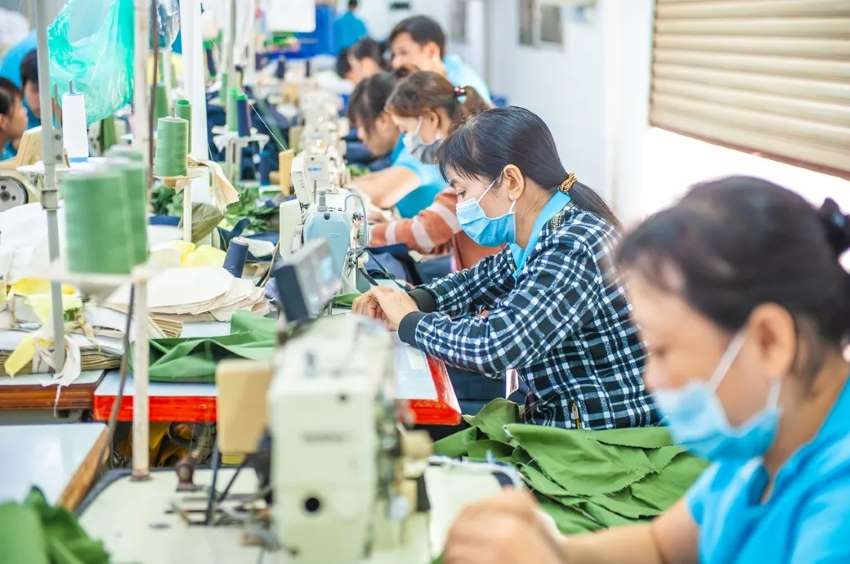
China’s position as the top global cotton importer is weakening.
Cotton shipments are flowing into flourishing textile industries in competing countries.
Soon after China joined the World Trade Organization in 2001, its textile manufacturers became the world’s leading importers of cotton. However, following years of rising production costs, volatility from government intervention in the market, and government caps on the volume of imports, China’s cotton imports dropped from their peak of 24.5 million bales in 2011 to 4.4 million bales in 2015, although they rebounded to 9.5 million bales in 2021.
Over the same period, competing countries such as Vietnam, Pakistan, Indonesia, Bangladesh, and Turkey have expanded their textile industries and boosted cotton imports, which combined now exceed those of China. In fact, cotton imports into these countries are expected to rise by 8.1 million bales from 2021 to 2030 while China’s imports will rise by 3.5 million bales. By 2030 these five destinations are projected to account for 47 percent of world cotton imports while China accounts for just 24 percent.
This increasing geographic diversification of global cotton demand has helped US cotton exports remain relatively robust, and those exports are projected to rise by about 1.4 million bales between 2021 and 2030.