FW
Netherlands emerges third-largest export destination for India

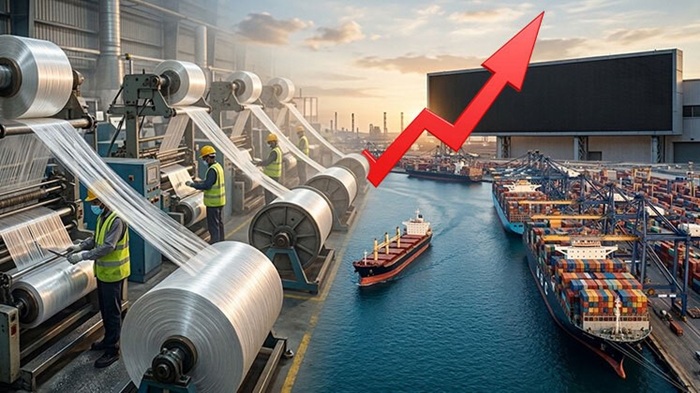
The export chain of India to other countries is now undergoing a metamorphosis in post-pandemic years. India’s merchandise exports to all destinations grew 19.5 per cent in the first five months of this fiscal to $196.5 billion, and a handful of countries have had a major role to play in this. The Netherlands may be a small country but it is mighty in the export chain as it has emerged as India’s third-largest export destination after having jumped two ranks ahead of China and Bangladesh, in the list of India’s top 10 export destinations since the financial year having seen a 106 per cent increase in dispatches until August FY22 compared to 2021.
A good year so far for Indian exports
This sudden change was mainly because India’s exports to the Netherlands were steered by an almost 238 per cent jump in dispatches of oil products until August this fiscal year amounting to $3.67 billion. Along with this, the export supplies of chemicals at $513 million and pharmaceuticals at 219 million remained substantial. Reports suggest, garment exports from India to the Netherlands are too will see good growth in the current year. In the first half of 2022, exports increased to $352.153 million, compared to $264.219 million in H2, 2021 and $227.767 million of H1, 2021. What’s more, in Netherland’s apparel imports, India moved up from tenth to sixth position in the first half of 2022.
Meanwhile, the US and the UAE continue to be the largest and second-largest overall export destinations for India, respectively, for India and are expected to be that way for quite some more years. The exports to the US increased to 18.3 per cent until August to $35.2 billion, while those to the UAE shot up 27.3 per cent to $13.8 billion in the same period.
The second surprise element in the export chain is that of Brazil, the world’s fifth largest country size-wise, which earlier occupied the 21st spot in FY22, but has now leapt to becoming India’s 8th biggest export market. Export shipment to Brazil sprung to 70.9 per cent in the first five months of this fiscal year amounting to $4.7 billion.
The going has been good so far for India exports around the globe. Exports to Indonesia also increased by 43 per cent to $4.8 billion.
China’s export lapses, wellness tourism to be cashed upon
China is one of the only countries to which exports dropped from India. It fell almost 35.6 per cent until August this fiscal to $6.8 billion. This was mainly due to China’s pandemic worsening with new variants and local outbreaks spreading and major port cities going under quarantine. For India, now is the time to act to make a windfall while China’s stakes are down.
India’s export-to-GDP ratio has grown quickly since the early 1990s and is now almost the same as China, a country that is regarded as the world’s number one exporter of goods, despite being a poor country a decade ago. More than the supply of goods and commodities, it is the supply of business services exports that has been stellar.
India’s share of global services trade has almost quadrupled from 0.5 per cent in 1995 to 3.5 per cent in 2018 and growth is still increasing. India is now considered to be a business brain centre of the world. Along with the ICT sector, the pharmaceuticals, medical and wellness tourism segments are doing well and patients seeking high-quality medical treatment at reasonable prices from Asian countries like Bangladesh are giving making medical tourism a new high.
To understand its true potential, India needs to modernise labor and land regulations, address infrastructure bottlenecks and improve its services sector to trade and investment, which will help it to become a super=power in the near future.
exEurope’s recession clouds over South East Asian apparel exports

Pandemic induced lockdown, immediately followed by the war in Ukraine and EU’s sanctions against Russia has led to dark clouds of recession over Europe. A visible economic slowdown that threatens to get worse and an ever-rising inflation and energy costs, the picture is far from pretty. European consumers are not only feeling the pinch but are concerned about the affordability of energy bills as autumn will quickly turn to winter. This is leading to Europeans cutting down on all non-essential costs and garments are one of them.
An International Monetary Fund report earlier in October predicting the Euro zone will grow 3.1 per cent in 2022 and slide down to a mere 0.5 per cent in 2023. A worrying time does seem to lie ahead for South and South East Asian garment exporters and Bangladesh in particular. In fact, they are already weighed in by the economic crisis, and this has been red flagged by other garment exporting nations as well.
South East Asia faces the repercussion
In Bangladesh, things have taken a turn for the worse for RMG exports since last September. The sector posted a 7.5 per cent negative growth last month compared to the same month last year. Media reports indicate, the sector earned $1.77 billion, 19 per cent lower than the same period in 2021. Experts say negative growth is likely to continue for the next few months. At a time when the economy is already battling with a downward inflow of remittances through formal channels and increasing forex payments for fossil fuel imports, a fall in exports spells trouble for the economy at large. As per BGMEA, most factories are operating at 30 per cent capacity compared to the preceding quarter. The unavailability of gas and erratic power supply has also not helped matters.
Brian Lee Shun Rong, an economist at Malaysia’s largest financial services group, Maybank has warned that South East Asia will continue to feel the effect of declining exports as EU enters recession as it continues to face supply and cost of living shocks from the Russia-Ukraine war. Indeed, 2023 will prove to be a challenging year for the textile and RMG sectors in Asia.
A fledgling economy with the status of an underdeveloped one, Cambodia is a case in point. Its textile and RMG goods contribute well over 50 per cent to its exports and in January 2022, registered a good 37 per cent growth. By July, growth figures had dropped by nearly half as it stood at 19.7 per cent and fell into a trench in August at 2.7 per cent. Cambodia’s overall exports fell by 7.5% in September as per the Cambodian General Department of Customs and Excise report. This steady decline has already affected foreign currency reserves, textile and garment factories and employment in the country. Ken Loo, secretary-general of the Garment Manufacturers Association in Cambodia, an industry body, points out Cambodia’s exports to European markets will continue to decline in the fourth quarter of this year and into 2023.
Neighbor Vietnam is in a similar situation. Last year, Vietnam scored big as exports to the EU soared 14.8 per cent to $63.6 billion only to register a sharp decline of 14 per cent in August and September this year. Like Cambodia, Vietnam’s manufacturers are suspending operations in their factories and letting workers go. The Asian Development Bank reviewed and changed its forecasts for developing Asia, which includes much of Southeast Asia, from 5.2 per cent to 4.6 per cent for 2022, and from 5.3 per cent to 5.2 per cent for 2023. As per ADB’s senior economist James Villafuerte, the impact of EU facing an impending recession would vary country wise. The worst hit would be Cambodia and Vietnam whereas Malaysia and Indonesia would not be so affected.
Domestic markets to the rescue
Whilst naysayers predict impending gloom, the domestic markets of the South East Asian collective have opened up well after the lockdown and are slowly turning towards the pre-pandemic robustness. This will open up domestic consumption that will augur well for the local manufacturing sector although it will have to come up with more cost efficient ways to cater to a willing consumer segment with less spending power than their Europoean counterparts.
India sees reversal of yarn business with Vietnam
Vietnam has become a yarn supplier to India. While India’s yarn exports showed a downward trend this year, its imports from Vietnam have jumped.The far-eastern country was earlier one of the major markets for Indian cotton yarn. The scarcity of cotton along with a comparatively higher price in India has resulted in a shift in its trade dynamics with Vietnam.
Cotton prices in India are still ruling higher than those in the international market.India’s yarn exports to Vietnam dropped to $6.485 million in July 2022 from $18.084 million in February 2022. Monthly exports were at $17.130 million in March 2022, $12.715 million in April 2022, $10.435 million in May 2022 and $9.828 million in June 2022.India’s yarn exports to Vietnam had registered growth during the preceding years. Exports increased in 2020 to $169.087 million from $131.540 million in 2019. They further rose to $220.579 million in 2021.
On the other hand, India’s imports of yarn from Vietnam increased drastically to $24.875 million in July 2022 from $4.521 million in March 2022. India had imported yarn worth $6.612 million in April 2022, $7.733 million in May 2022 and $7.714 million in June 2022. Annually, imports recovered to $60.155 million from $37.530 million in 2020.
Zegna Q3 revenue up 27 per cent
For the third quarter Ermenegildo Zegna’s revenues rose 27 per cent. For the Thom Browne segment revenues for the quarter were up 29 percent. Zegna branded products revenues grew 18 per cent for the quarter. This is a result of the continued success of the Zegna One Brand strategy.
The focus on luxury leisurewear continued to prove successful, with steady growth in that line, particularly in knitwear, while the growth in shoes remained robust. The tailoring and made-to-measure lines saw a strong rebound this quarter; particularly in the US.Textile revenues for the quarter were up 33 per cent with growth across Lanificio Ermenegildo Zegna, Bonotto, and Dondi.
Third-Party Brands revenues grew 64 per cent for the quarter thanks to strong contributions from Tom Ford and Gucci, the latter having more than doubled in comparison to the third quarter of 2021.
The group continues to see significant growth across all geographies. The Greater China region returned to growth for the quarter. Revenues in the Greater China region were up three per cent for the quarter. Growth for all of APAC was at 13 per cent for the quarter. The EMEA region exhibited the strongest growth for the quarter, at 42 per cent. The UK also continued to grow, with revenues for the quarter growing 61 per cent.
USFIA to host event in November
The US Fashion Industry Association (USFIA) will host a trade and transport conference on November 10, 2022.
One of the industry’s most important transportation and logistics events, this brings together fashion brands, retailers, importers, and service providers working in compliance, logistics, sourcing, supply chain management, government relations, and corporate social responsibility to discuss the latest updates on trade policy, transportation, and compliance as well as other topics.Many discussions will focus on US trade policy, the continuing pandemic recovery, and the impact on companies’ supply chains.
The United States Fashion Industry Association (USFIA) represents the fashion industry-- textile and apparel brands, retailers, importers, and wholesalers based in the United States and doing business globally. Founded in 1989 as the United States Association of Importers of Textiles and Apparel with the goal of eliminating the global apparel quota system, USFIA now works to eliminate the tariff and non-tariff barriers that impede the industry’s ability to trade freely and create economic opportunities in the United States and abroad. Based in Washington, DC, USFIA is the most respected voice for the fashion industry in front of the US government as well as international governments and stakeholders. USFIA also connects with key stakeholders across the value chain including US and international service providers, suppliers, and industry groups.
Turkey apparel exports up 10%, imports up 55%
From January 2022 to September 2022, Turkey’s apparel exports increased by ten per cent. Earnings from exports of knitted and crocheted clothing and accessories grew by seven per cent during the same months of the previous year. Earnings from exports of non-knitted apparel and accessories grew by 14per cent compared to the same period of the previous year.
Meanwhile, Turkey’s imports of cotton, cotton yarn and cotton textiles increased by a sharp 55 per cent. In September 2022, Turkey’s exports of knitted and crocheted clothing and accessories were affected by recession and slower demand. Exports decreased by one per cent yearonyear. On the other hand, shipment of non-knitted apparel and accessories saw a mild growth of three cent the same month.
Turkey has a target of becoming one of the top three textile exporting countries in the world. The country is already one of the top five textile exporting countries and overtook countries like South Korea and Italy to claim the fifth spot.The industry has increased its share in global textile exports to an all-time-high of three percent. Turkish textile companies are exporting their products to more than 200 countries. Turkey is well known for near-shore manufacturing capabilities that are of high quality.
Experts at forum feel sustainability poses challenges, long way to go
Brands and experts deliberated at seminal two-day Venice Sustainable Fashion Forum discussed about the challenges faced for sustainability and the related scenario.
Sustainability in fashion has made leaps in recent years but has a long way to go. Its complexity and many aspects pose daily challenges, regulatory nightmares and cost the supply chain as a whole has yet to account for.
The shift toward responsibility is defined by six pillars.These include anticipating the market transition, the creation of multi stakeholder task forces, alliances among companies to spark change, the promotion of a positive cultural shift, stimulating a sustainability vanguard by luxury value chains, and the definition of an up-to-date measurement policy based on a few significant key performance indicators. Numbers define what products and processes are sustainable.
The global apparel market is poised to grow at a compound annual rate of six percent by 2026.Swirling forces in the industry are varied and include the increasing penetration pace of social commerce and fast fashion, still largely embraced by younger consumers, as well as a transition toward ultra-fast manufacturing cycles that are pressuring the supply chain.
Conversely, circular business models — resale, repair and rental — represent only three percent of the overall fashion market and only one third of consumers in the US and the UK are eager to spend more on their fashion purchases because of sustainable components.
Sri Lanka aims at FTAs
Sri Lanka is attempting to finalise free trade agreements with countries like China, India, Japan and Australia. These are expected to help boost exports and strengthen the industry’s resilience.
August 2022 saw a 20 per cent increase in export turnover generated by the apparel sector but at present Sri Lanka is not competing on a level playing field. Its main competitor countries like Bangladesh, Vietnam and some African nations have duty concessions in global markets, which it does not have.
Sri Lanka’s only concessions are for the UK and the EU markets, and those come coupled with a variety of strict conditions pertaining to the origin of raw materials which means that utilisation of these preferences remains around 50 per cent for apparel. The US, the EU and the UK comprise about 86 per cent of Sri Lanka’s total exports but Europe is riddled with geo-political tensions and economic volatility. So securing new free trade agreements can help reduce barriers for Sri Lankan apparel exporters and help them diversify. One priority is a free trade agreement with China. Further trade concessions can help better integrate Sri Lanka with regional markets. For example penetrating even ten per cent of the Indian market would be equivalent to reaching 100 million people.
Adidas drops deal for anti-semitism, Nike may benefit
Competitors stand to gain from Adidas’ severing ties with Kanye West. However Nike is likely to benefit the most.
If all of a sudden a customer who was buying a couple pairs of Adidas every year now finds themselves with some extra money in their budget every year, the most likely direction they’re going to go with that money is Nike. The dropped deal come in response to West’s controversial behavior, including making anti-semitic comments on Twitter and wearing a White Lives Matter tee to his fashion show. Adidas said it does not tolerate anti-semitism and any other sort of hate speech and that West’s comments and actions were unacceptable, hateful and dangerous as they violated the company's values of diversity and inclusion, mutual respect and fairness.
The termination of the partnership is expected to have a short-term negative impact of up to $246 million on the company's net income in 2022 given the high seasonality of the fourth quarter. Adidas decided to take the hit financially rather than the public relations hit feeling the public relations hit would have had a bigger impact long term on the brand.Adidas is still collaborating with artists like Beyonce and Bad Bunny.
Levi’s adopts innovative sustainable practices
Levi’s is innovating across its design and manufacturing platforms to become more sustainable. The brand launched the next iteration of its "Buy Better, Wear Longer" campaign.
The clothing brand is moving toward more circular products and practices across the board.Climate, consumption, and community are at the core of its approach to sustainability, and Levi’s is pursuing a variety of initiatives to support this vision by investing in materials such as organic cotton and performance eco cool with recycled polyester, which reduce water consumption.
Levi's has open-sourced its learnings and tools to affect broader change and works toward helping shift the industry to a more circular model. Levi’s Tailor shops have been set up in chosen Levi’s stores, where customers can avail of the following services — alterations, embroidery, and customizations such as paneling, stenciling, sewing of patches, studs and collectible pins. Denim and fashion enthusiasts can adopt the practice of rewearing and repurposing their Levi’s pieces. Levi’s Tailor Shop has a swap booth where they can barter their used denim pieces, a pop-up shop, a photo booth and a collab area.
As one of the pioneers in the apparel industry, Levi’s is about new industry practices that have a lasting impact on the environment. As part of Levi’s initiatives on caring for the planet, it has less water in its manufacturing process, better energy efficient factories and is campaigning to change consumption habits.