FW
Vietnam textile industry faces demand decline due to slowdown
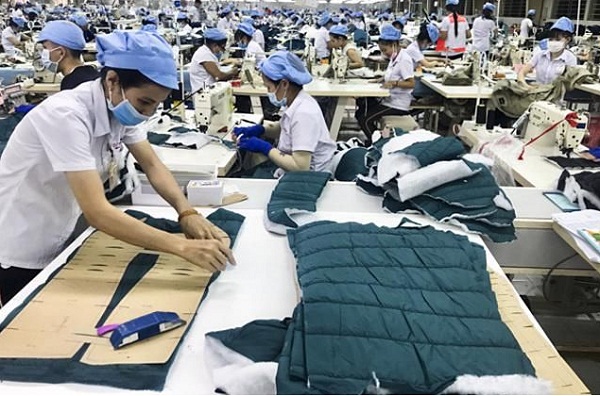
Vietnamese textile and garment factories are currently in muddy waters as they are facing lower-than-expected orders from key trading partners along with a decline in cotton and yarn, fabrics and textile exports over the last two months of September and October.
The fluctuations are however slight and analysts expect a better turn of events in the next quarter of the new year coming up soon. As per China-based CCF Group’s latest report, October 2022 stats point at Vietnam's cotton imports increasing 11.7 per cent year-on-year but there is a decline of 0.9 per cent month-on-month,. Fabric imports in Vietnam were lower by 3.3 per cent year-on-year and 5.8 per cent month-on-month. Vietnam's textiles and apparel exports increased 2.2 per cent year-on-year but dropped 0.8 per cent month-on-month.
“Uncertainties are running up to the end of the year, especially the Russia-Ukraine conflict and material price fluctuations. Enterprises are seeking ways to diversify material supply sources as well as export markets because when material sufficiency is ensured, they can boost shipments to many markets, thus helping guarantee production stability, supply chain, and sustainable exports,” Le Tien Truong, chairman of the Vietnam National Textile and Garment Group, according to Vietnamese media reports.
Factory workers bear the brunt
The main countries showing a steep drop in exports are China, South Korea, Japan, US and Europe. This is mainly due to rising inflation and other uncertainties. Rising inflation in the West and frugal Christmas celebrations over Covid years are driving orders down. The textile and garment makers in Vietnam have no control over this except reducing production costs by laying off some work-force. However, a devalued currency and cheap labour availability will enable global investors to snap up some bargains. Meanwhile, Vietnamese textile manufacturers remain in hope for the tide to turn as the European Central Bank forecasts the current inflation of 8.1 per cent will decrease to 5.5 per cent next year and a further drop to 2.3 per cent in 2024. Indeed, the worst affected are factory workers because with a slowdown in orders, many workers have had their hours and pay reduced or have lost their jobs. With already low salaries of around VND 8 million ($321) per month, as per recent numbers from the General Statistics Office of Vietnam, the slowdown will further increase poverty levels.
Bumper sales of the last quarter affected
Less work and lower pay will translate into Vietnamese making fewer purchases and this could impact importers revenues as well. The sale of luxury goods and garments had seen a huge growth in Vietnam earlier but is facing difficulties in the last quarter of this year and more is expected in the first quarter of 2023 due to the impacts of global weakening demand.
It is a matter of concern that the entire garment and textile sector has seen a huge decline as Vietnam is known globally to be the second-large exporter of ready-made garments with the sector employing around 2.5 million workers. The bumper sales in fourth quarter of the year with the onset of winter and the Christmas season have always seen the textile industry through leaner times. However, manufacturers remain in hope that the first quarter of 2023 will be a beacon of light with the global apparel industry finally recovering from the tighter consumer purse strings of Covid times.
Synthetics would help Bangladesh upscale
Bangladesh needs to go for synthetic raw material production as the country is already strong in cotton fiber-made garments.
Bangladesh has already achieved a lot in the garment trade as the country is the second largest supplier of apparels worldwide after China.
Now the time has come to make the achievement sustainable with innovation and bringing variation in products and quality of goods.Setting up of green garment factories would continue as the country is the champion of green units worldwide.
Bangladesh is already in a very good position regarding innovation but needs to improve in online trading and establishing strong collaborations between retailers and suppliers. International clothing retailers and brands have asked for innovation, improvement of efficiency and use of synthetic raw materials so that they can source garment items for a long term from Bangladesh.
Circularity is going to be a new innovative idea in productivity for the sector to save on water consumption. Diversity has to be brought into products and efficiency in garment production has to be improved. The next ten years are important for the country's garment sector. The upskilling of labor is also important for the country for the sustainable supply of garments.
UK consumers cut spending on clothing, says McKinsey
Almost half of UK consumers are negative about the country’s economic perspective and as a result plan to cut clothing spend. So says McKinsey.
Consumers are changing retail stores in a general move to increase purchases from discounters. While spending on groceries increased in the last three months, spending across almost all other categories (bar pet food and supplies and gasoline) is expected to fall.
Consumers plan to spend less on footwear and clothing. In footwear, consumers would buy fewer items, a cheaper alternative, or a privatelabel and some will not buy footwear at all in the next three months. There have been marked shifts in activity, demand, channels and brands in search of value for money with most consumers having changed shopping behaviour in response to concerns and pressures faced.
Down trading is widespread and consumers are increasing purchases in discounters, drawn primarily by prices and promotions as well as value for money.Non-food retail sales in the UK fell 1.2 per cent in the three months to October, with clothing and footwear sales declining in particular. For many, Christmas will be more gloom than glitter as families focus on making ends meet with mortgage payment rises, and retail could be set for a bumpy ride ahead as a result.
Pakistan Q1 textile exports up 3%, knitwear exports up 15%
Pakistan’s exports of textile goods increased by three percent during the first quarter of the current fiscal year as compared to the corresponding period of last year.
Cotton cloth exports grew by four percent while exports of knitwear increased by 15 percent. Exports of tents, canvas and tarpaulin increased by 40 per cent, readymade garments by five percent, art, silk and synthetic textile by 0.35 percent.
Exports of raw cotton witnessed 100 percent growth. Exports of cotton yarn declined by 18 percent, exports of cotton (carded or combed) declined by 85 percent, yarn (other than cotton yarn) by four percent, bed-wear by two percent, towels by one percent, made-up articles (excluding towels, bedwear) by eight percent while exports of all other textile materials went down by one percent. Meanwhile, on a year on year basis, textile goods exports increased by two percent in September 2022 against exports in September 2021. On a month on month basis, textile goods exports declined by three percent in September 2022 when compared to exports in July 2022.
The overall trade deficit fell by 21 percent, with a considerable decline in imports and upward trend in exports, during the first quarter of the current fiscal year as compared to the corresponding period of last year.
PittiUomo to be held in January
PittiUomo will be held in Italy, January 10 to 13, 2023. The men’s wear show will have more exhibitors, square feet and likely more attendees. The trade fair already has 759 confirmed brands, 40 percent of which are hailing from abroad, versus 680 participating companies last June.
PittiUomo is known to wholesalers globally as a point of reference for their buying appointments. The Super Styling research-driven area will welcome 180 brands and an enhanced section dedicated to sustainable brands.
The Go Out section is dedicated to outerwear companies with a focus on performance- and sportswear.In addition to continuing its spotlight of North European brands PittiUomo will put an emphasis on Japan this season, including a display of six accessories labels. Mindful of evolving trends and business opportunities, PittiUomo is introducing for the first time two new sections, The Sign and Pittipets, dedicated to design objects and petwear respectively.
In the first seven months of 2022 Italian men’s wear exports rose six percent compared to the same period in 2021.The US largely contributed to the positive performance, with exports to the country skyrocketing 46 percent while China decreased its import of Italian men’s fashion goods by 12 percent. Though the sector is pressing on, the ongoing supply chain hiccups, increased energy costs and geopolitical instability are denting consumer confidence.
RCEP can raise Cambodian exports up by 18 per cent
The Regional Comprehensive Economic Partnership (RCEP) can raise Cambodia’s exports between nine percent and 18 percent annually. So says the Economic Research Institute for Asean and East Asia.
Progressive market-based reforms in Cambodia in both manufacturing and services have been successful in lifting the country closer to the next stage of growth. But the country has to maintain progressive market-based reforms in the post-pandemic recovery for deeper regional integration with the framework provided by RCEP.
The structural transformation of the Cambodian economy is critical to shift and position its manufacturing activities to higher value-added activities in the global production value-chain (GVC). Currently, the manufacturing sector is not diversified and concentrated on garment and textiles but the overall manufacturing activities are showing signs of shifting to higher value-added activities such as parts and components and transport. Shifting the labour-intensive activities from Phnom Penh to other competitive regions in Cambodia that can absorb such industries will increase the competitiveness of each province based on their respective comparative advantages. China, Korea, and Japan offer a larger opportunity for Cambodia’s exports. There is also a need to increase the competitiveness and linkages of Special Economic Zones to GVC activities to attract multinational activities in these industries.
New Delhi hosts Protech
A conference on Protech (Protective Textiles) was held in New Delhi, November 16, 2022.
There were panel discussions in the conclave covering the prospect of indigenisation of protective textile products in India, experience and expectations of consumers towards the adoption of protective textiles and market promotion and export opportunities of protective textiles in India.
Around 450 participants attended the conclave including officials and representatives from the central government, Indian forces, researchers, entrepreneurs and professionals related to technical textiles especially Protech. Protective textiles are not only used in fire scenarios, but have wider use in many hazardous prone activities related to energy transmission, radiation energy, among others.
There exists a huge potential for protective textiles in India given the increasing exposure to hazards and the presence of five crore people in the organized and an almost equal number in the unorganized sector. A mandate for the use of technical textiles by the user industry would significantly drive the growth of technical textiles in India.
Protective textiles are a segment of technical textiles. The conclave provided a platform for buyers and sellers to interact and come up with an action plan to benefit from the ongoing demand for protective textiles. The event provided an opportunity for manufacturers to showcase their developments and innovations.
Italy to host Pitti Bimbo
Pitti Bimbo will be held in Italy, January 18 to 20, 2023. The children’s wear event will showcase 250 exhibitors, 70 per cent of them from outside Italy.
The event has grown in size and will include various special projects alongside its traditional sections. It will focus once again on sustainability, and on junior street style as an emerging trend.
Many buyers, also from outside Italy, are set to attend, from Qatar, Saudi Arabia, the UAE, Belgium, Germany, the US, Austria, the UK, France, South Korea, Switzerland, Andorra and the Netherlands.
Rossignol will launch its junior lifestyle 2023-2024 collection, a combination of elegance and high-tech materials. Nanan will showcase its new apparel collection and launch a furniture line. And 100 percent Bimbo will offer an overview of the collections that express the multiple incarnations of children’swear, showcasing major labels and the industry’s iconic brands. The Kids’ Lab will focus on avant-garde children's fashion and lifestyle products, home to the most original, surprising collections, and sophisticated looks by pioneering new brands.Apartment is dedicated to high-end experimental labels, with refined lines and innovative materials. The Nest is a section for small emerging brands and their ground-breaking collections. I Want To Be Green is dedicated to the ethical, sustainable solutions to which fashion, and children’swear specifically, is increasingly committed.
Monforts offers efficient finishing technologies
Monforts offers an extensive range of finishing technologies. Econtrol is a pad-dry process employed in Monforts continuous dyeing. With reactive dyes for 100 per cent cotton, or the Econtrol T-CA solution of combined reactive and disperse dyes, in particular, the improvement in both dyed fabric quality and dye fixation is considerable, and with significant savings in energy and time due to the combined bleaching and padder fixation.
Monforts machines are known for their robustness and long service life, but the retrofitting of specific modules with new control and drive technology – going far beyond the basic replacement of spare parts – can also have a significant impact on the performance of an existing line. This is especially the case in achieving further energy savings.The company’s universal Energy Tower, for example – a flexible, free-standing air/air heat exchanger for recovering the heat from the exhaust air flow of thermal processes – can result in an up to 30 per cent reduction in the energy consumed by a line, depending on the controlled exhaust air volume and operating temperature.
The Monforts Eco Booster, which is completely integrated into the chamber design of the latest Montexstenter, is another retrofitting option. This single state-of-the-art heat recovery system with automatic cleaning can be added to existing ranges of up to eight chambers to achieve significant energy savings.
India’s October T&A exports down 34 per cent
India’s cumulative exports of textiles and apparel during October 2022 fell 34 per cent as compared to October 2021. Textile exports fell 41 per cent year on year in October 2022. Apparel exports declined by 21 per cent. During April 2022 to October 2022, textile exports fell by 20 per cent. However, apparel exports grew by six per cent during the same period.Cumulative exports of textiles and apparel during the first seven months of the current fiscal were down ten per cent.
The share of textiles and apparel in India’s total merchandise exports declined to seven per cent in October 2022 as compared to nine per cent in October 2021.Imports of cotton raw and waste increased by 351 per cent in October 2022 from the same period of last year. Inbound shipment of textile yarn, fabric and made-ups grew four per cent in the same period. During April 2022 to October 2022, imports of cotton raw and waste increased by 273 per cent over the same period of last year.
High inflation across the developed world has reduced consumers’ purchasing capacity, which is the main cause of slowdown in textiles and apparel exports. Developing countries including India are facing serious challenges in textiles exports.