FW
Metaverse emerging the new playground for fashion retail: McKinsey-BOF report

In 2014, when Mark Zukerberg acquired the virtual reality platform Oculus for Facebook, no one knew what would follow. Leap forward by seven years and October 28, 2021 saw Facebook Metaverse launched. This virtual platform was the opening up of Pandora’s Box, in a good way. The myriad possibilities of creativity that presented itself on this virtual world seemed to know no bounds.
Metaverse, new way forward for fashion
The avant-garde fashion retail leaders recognized the Metaverse for its worth. As Gucci’s executive vice president and chief marketing officer Robert Triefus states in the just released ‘The State of Fashion 2023’ McKinsey & Company and The Business of Fashion states there are more and more ‘second worlds’ where people can express themselves but brands have probably not yet understood the value attached to such individuals who want to express themselves outside the box. That’s where a virtual world with virtual products comes to play.
Triefus states, Gucci was quick on the uptake of Metaverse as a platform to engage with its customers – Gucci Garden was created within the Roblox gaming Metaverse and experience 19 million visitors. Other fashion retail marketers witnessed Gucci’s success story and are eyeing the $176 billion gaming industry with over three billion players worldwide as the perfect platform for building their communities and keeping them constantly engaged. The commitment to gaming by gamers is becoming increasingly their real world and the pandemic-lockdown was when this phenomenon surged right through the roof. American fashion retailer Ralph Lauren jumped in with South Korean social network app Zepeto and created a virtual fashion collection for users to dress their personal avatars in exclusive apparel and appearance altering skins.
Digital fashion retail just begins
For many fashionistas, digital fashion is just an organic extension of applying social media filters like they do on their Snapchat and Instagram accounts according to Simon Windsor, Cofounder and Joint Managing Director, Dimension Studio, an agency that worked with Balenciaga on its video game. Windsor reinforces with Metaverse, fashion retail is at its tipping point as it leads the way fashion will be interpreted and accepted. Fashion retail has understood just how big a game changer the Metaverse is going to be. AI and AR have already been used to showcase 360 degree views of products on many online sites of fashion retail brands to present their seasonal collections and avatars of models have strutted virtual catwalks in all 3D glory.
NFTs will become the ultimate bespoke item
Meanwhile, the McKinsey-BOF report also states Nonfungible tokens, popularly known as NFTs has seen a huge surge of interest, one of the most sought after virtual assets. These unique crypto assets are blockchain authenticated and verified before purchase. NFTs are bought, sold and exchanged on the Metaverse, and often with cryptocurrency.
Beeple, the digital artist on Metaverse (his real name is Mike Winklemann) sold an NFT at a Christie’s online auction for a record-breaking $69.3 million. Marketing experts feel that NFTs are revolutionary. Karinna Nobbs, Co-chief Executive and Chief Experience Officer of NFT marketplace The Dematerialised explains NFTs are bigger than the Internet. They will apparently change the way we view digital ownership, creative structures, creative economy and also how we view money. A bold statement indeed which fashion retail has heeded well. Fashion brands can create their NFTs that are not only authenticated but also serve as exclusive collectibles in their own right. For its 200th anniversary, Louis Vuitton roped in Beeple who designed Louis Vuitton collectible NFTs on a video gaming platform owned by the brand. As demand for NFTs grow, the world of fashion retail is plunging into the Metaverse to ride this wave of hype of digital ownership of exclusive pieces.
Social shopping gains traction in fashion retail, states McKisey-BOF report

Social shopping isn’t exactly new as an e-commerce technology which uses shared social network of friends and contacts. It replicates an individual’s shopping experience of being with friends or those who influence their choices – suggestions, recommendations, validations – all real world influences, now online. For fashion retail, this technology has been very empowering as these come with metrics required to capture impressions, engagements, reach and sale, all at a go. Facebook, TikTok, Instagram, Snapchat, Twitter, Pinterest among others continue to engage users with relatable content, making them spend hours scrolling through their feed. And as the just released ‘The State of Fashion 2023’ McKinsey & Company and The Business of Fashion report suggests, this network of social platforms is where fashion retail can directly engage on a personal way, even more than their physical stores. In a joint survey conducted by Magento and Hootsuite, almost 6 in 10 consumers claimed that one-quarter of their online shopping is influenced by Facebook and YouTube.
The report highlights, nearly 90 per cent of APAC’s population surfing through mobile commerce, brands and retailers jumped in to what is now called Social Commerce. According to eMarketer, the US social ecommerce market skyrocketed by almost 38 per cent to $26.77 billion in 2020 and is expected to surpass $50 billion annually by 2023. Fashion retail couldn’t have found a better platform.
Instagram emerges best social commerce platforms for fashion retail
Instagram is indeed the ideal platform for fashion retail’s social commerce. This visual-rich app ticks all the right visual boxes which is why 70 per cent of online shoppers globally rely on Instagram for product discovery and it helps that Instagram has over a billion active users. Instagram Live Shopping launched in 2020 leverages influencers recommending products live and in real time.
All-time favorite Facebook had 3.45 billion active monthly users as per statistics at the end of 2021. Launched in 2020, Facebook Shops actually helped small and medium size businesses to relocate from brick and mortar to online shop fronts for greater outreach and traffic. This fully-customizable feature has been a boon to many small fashion retailers.
Relatively new player Tik Tok was initially met with a certain amount of disdain from fashion retail, as they felt this was not their image platform. Well, that’s history now as more and more brands are jumping into the Tik Tik bandwagon. The catch phrase “Tik Tok made me buy it” sealed the deal for brands, particularly those of fashion retail. Tik Tok’s USP lies in making unknown entities that include brands go viral overnight. Quick to seize the day, Tik Tok started offering shoppable posts, livestream shopping capabilities and opportunities for influencer marketing. Brands also have the option to build a shoppable storefront within TikTok through the Shopping tab. TikTok users can now add the shopping tab to their business profiles, where they can sync their static product catalog and allow customers to make purchases straight from the app. Augmented-reality filters popularly known as catalogue-powered shopping lenses introduced by Snapchat makes for an extremely up close and personal shopping experience online.
Paradigm shift for fashion retail
Forget carefully designed physical stores with their real world limitations – fashion is now truly exploratory through the help of social commerce. In fact such is the power of social commerce that engagements with consumers and influencers are beginning to influence collections and trends for the next collections. What is revolutionizing about social commerce is its power to provide bespoke engagement, make shopping seamless and of course, loads of fun.
Devoid of business, Pak still awaits Christmas buyers
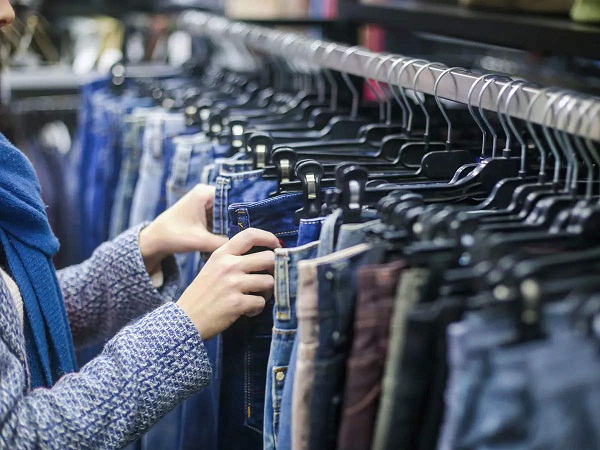
Textile exporters in Pakistan are still waiting for their Christmas orders. A buying freeze abroad has hit all segments, from apparel, denim and knits to home textiles.
As a rule of thumb, international markets move six months in advance. Hence, Christmas orders are placed in June-July and delivered three months before the start of the season. But demand has been slow due to the global economic environment this year.The recession has spread everywhere, from Europe and UK to Australia and South Africa, and warehouses, shelves and stockrooms are full of inventories enough to last till March 2023.
Because of excess stocks, the benefits of the rupee devaluation are not kicking in either. Since retailers do not want to purchase, the lower prices make no difference and there are no orders for the Christmas season. Mills have to work at half capacity as retailers abroad struggle to clear out shelves and are having sales.
Manufacturers in Pakistan are working at 50 per cent capacity and are hoping for some positive movement after March 2023. The American economy operates on credit and mortgages. As the Federal Reserve hikes up its rates, the cost of credit pinches the wallets of the average consumer in America, making him less likely to spend.During the pandemic, the economy had come to a standstill. The usual avenues of spending, such as leisure, travel and clubbing, were forbidden, so people spent money on decorating their houses, which also fed the super cycle success of Pakistan’s textile exports.Now, the reverse has happened. They have places to go, but less spending money, so Pakistan’s exports are taking the hit.
Pakistan opened up after the pandemic faster than did competitors such as Vietnam, Sri Lanka and India and as a result was bombarded with orders. Textile manufacturers in Pakistan enhanced capacities when orders were pouring in and so they are feeling the pinch strongly now. They hope that when the Christmas season is over, and the inventories have run out, textile orders will renew.
Pak, not the only one, other Asian countries to suffer
Pakistan is not alone in suffering from a loss in demand in the second half of 2022.
Vietnam’s textile and clothing exports dropped 32per cent year on year in September 2022 and garment manufacturers are working at not more than 70 per cent capacity. India is affected too. The United States is a major textile market for India, accounting for half of India’s home textile exports and 28per cent of apparel exports. In October 2022, India’s textile exports plummeted 41 per cent year on year.Sri Lanka’s textile exporters are facing a 30 per cent drop in orders in the coming months.
EU seeks thicker winter clothing to fight energy crisis
Due to the energy crisis in Europe it has been receiving requests for thicker winter clothing to cope with the cold since the use of in-house heaters has been reduced.
So that is a market in which Hayleys sees an opportunity. Hayleys Fabrics, based in Sri Lanka, produces around 17,326 metric tons of fabrics a year.
Europe is in an energy crisis with the reduction of gas supplies from Russia. Gas prices have skyrocketed in the EU, which has impacted the price of electricity produced in gas-fired power plants and affected electricity prices overall.Due to the energy crisis, the European Union has taken measures to reduce electricity use by ten per cent. With energy consumption being reduced, the EU has warned member countries to be prepared to withstand a harder winter season where the energy consumption usually goes high.
Hayleys is also focused on designing and manufacturing high tech sportswear, in particular, more water absorbing and heat resisting clothes.
Hayleys Fabrics commenced operations in 1993 and specialises in the synthetic range of knitted fabric suitable for active wear, lingerie and casual/lounge wear in addition to its regular cotton range. Rotary printing, sublimation printing, sueding and brushing fabric, and many chemical finishes are some of its value-added technical capabilities to ensure a complete range which is capable of meeting customer or brand requirements.
Eurojersey and Cifra offer hi-tech crochet
Eurojersey has partnered with Cifra in introducing a revolutionary new feature to the beachwear world. Hi-tech crochet combines the performance and uniqueness of WKS technology with the unmistakable style of Sensitive Fabrics. The swimwear has been designed on two layers, the first, soft and enveloping on the skin, thanks to the qualities of Sensitive Fabrics, the second, a seamless 3D jacquard fabric. This is a combination that gives depth and two-dimensionality to the garment, almost a work of art in perfect balance between solids and voids, between highlights and transparencies, between harmonies and contrasts.
Eurojersey, based in Italy, is in the field of warp-knitted technical fabrics and owns the Sensitive Fabrics patent. Sensitive Fabrics are endowed with excellent technical and aesthetic properties. Comfortable and perfectly smooth, thanks to an ultra-flat surface, resistant to frequent washing and endowed with a remarkable elastic memory, they provide the perfect fabric ground for the most innovative manufacturing technologies, by artfully combining functionality and tailoring.
Eurojersey reuses 30 million liters of water in its manufacturing process.The company has reduced its consumption of methane gas by 3,50,000 cubic meters. Cifra is a company in warp knit seamless technology.Cifra is accelerating on environmental best practices for advanced and sustainable sportswear. Every single process is certified in the entire value chain as well as the yarns used.
H&M cuts down on staff
H&M will cut some 1500 jobs. This has been made necessary because of weaker profits. Costs of inputs are rising and consumers are buying less. Added pressure is also due to the fashion retailer’s exit from Russia after it declared war on Ukraine.
Europe is the hub for big business, where brands like H&M used to earn their big bucks. However, the war between Ukraine and Russia recorded high inflation and energy prices. This weighed down on customers, and people started cutting back to prepare themselves to face a tougher fiscal future. Russia has a population of more than 140 million, and exiting from such a huge market has resulted in a profit crash for the Sweden-based company by 89 per cent.
In 2021, H&M in Russia had ushered in its highest profit since 2009. However, in the pretax period between June 2022 and August 2022, profits fell. From no sales in the Russian market to high inflation, H&M has borne losses from everywhere. A stronger dollar has also resulted in a significant increase in the purchase of raw goods.
Overall these factors had a substantial negative impact on profits for the quarter.The Swedish fashion retailer employs roughly 1,55,000 people.
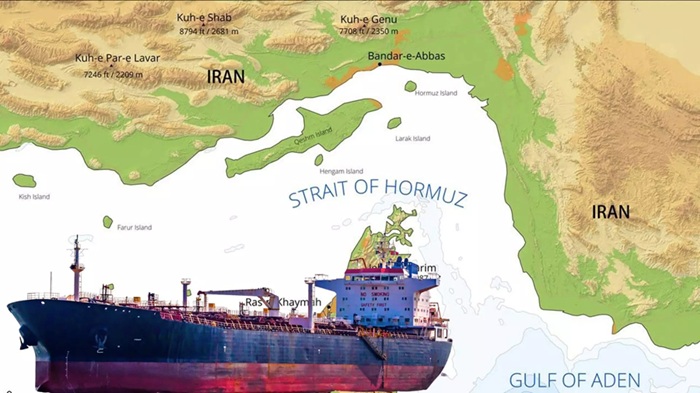
Iran revives garment exports
Iran’s garment exports are on the rise. Iraq, Azerbaijan and Afghanistan are the major destinations of Iranian garments.
Exports from Iran’s clothing and textile industries in the previous Iranian calendar year rose by eight per cent over the figure for the preceding year. Idle units are being revived and new ones are being established. The country is now almost self-sufficient in the supply of some raw materials, such as cotton yarns and only two percent of acrylic yarns are being imported due to the need for color diversity, especially in export products.
Efforts are being made to make things easy for garment manufacturers to enhance exports. The decision to prohibit imports of some items has created huge opportunities for local manufacturers to increase their exports despite all challenges pertaining to the currency.The country has taken measures aimed at renewing the country’s garment manufacturing industry, in a bid to enter international markets.There are about 50,000 apparel manufacturing units in the country.Foreign representatives, branches and distributors of apparel in Iran who seek business licenses have been mandated to produce goods worth 20 per cent of their import value inside Iran and to export at least 50 per cent of this domestic production.
The initiative is aimed at increasing domestic production, creating jobs and reviving Iran’s apparel industry.
Giordano opens stores in the Gulf
Giordano is expanding business opportunities in the Middle East. This includes the introduction of new store concepts and new store openings.
Giordano, based in Hong Kong, is a retailer of men’s, women’s and children’s apparel. The company also operates world-famous apparel and sports brands in certain markets under franchise or license agreements.
Established in 1981, Giordano now operates around 2,100 stores and counters in Greater China, South Korea, Southeast Asia, Australia, India and the Gulf Cooperative Council. The company has won several retail awards. All six economies in the Gulf Cooperation Council (GCC) are set to rebound and grow this year with the region’s two largest economies, Saudi Arabia and the UAE, forecast to grow by eight per cent and five per cent.
The UAE was among the first markets to open its doors to the world during the pandemic, offering a getaway for tourists starved of travel and an opportunity for businesses to rebuild and grow. Saudi Arabia followed, reopening its doors to pilgrims, tourists, and businesses alike. Tourist numbers in the region are set to be further bolstered by the FIFA World Cup 2022, as Qatar prepares to receive an estimated 1.2 million visitors during football’s largest event this November.
Birkenstock clogs in hall of fame, other brands awarded
Birkenstock’s Boston clogs are the shoes of the year. So says luxury fashion portal Lyst while looking at the trends of 2022. The clog has become the defining shoe of the post-pandemic fashion era.
Brand of the year is MiuMiu thanks to its products such as miniskirts and ballet flats. Diesel was awarded the logo of the year title since its new logo made a bigger impact than expected. Celebrity/influencer power has generally bounced back post-pandemic.Top power dresser was Bella Hadid. Her outfits sparked a 1,900 per cent increase in searches. She drove searches for corsets and cargo pants and made the ultra mini platform Ugg boots immediately sell out in September. In just 24 hours, searches for the style increased 152 per cent. Balenciaga was mentioned as having had the fashion show of the year with its haute couture offer. In the 24 hours after the show, online searches for the brand spiked 525 per cent. Prada was praised for the bag of the year. The heritage Re-nylon Re-edition 2000 mini bag was the brand’s most searched item. Searches for it rose 131 per cent and its popularity soared on TikTok thanks to its Gen Z-friendly 90s aesthetic.
Bangladesh wants duty free into US
Bangladesh wants the US to allow duty-free imports of clothing made from US cotton.
Bangladesh also plans to urge the US to reduce the tariff rate on the import of Bangladeshi-made garments as a whole.Bangladesh will request the US Food and Drug Administration to facilitate the registration process for Bangladeshi drug products and for US technical assistance in building quality certification infrastructure.
On the other hand, the US wants to discuss the provisions of the SEED Act to reduce import duties on tree nuts (walnuts, almonds) in Bangladesh, opportunities for the export of agricultural biotechnology and seeds to Bangladesh, draft data protection law, draft regulations on digital, social media, OTT platforms and other digital systems and intellectual property rights.
Other issues, the US wants to discuss relate to labor rights, such as freedom of association and collective bargaining, safe and healthy working environment, labor rights in EPZs, child labor and forced labor.Bangladesh cannot access US Development Finance Corporation (DFC) funding for private sector energy, healthcare, critical infrastructure and technology projects after the suspension of GSP (Generalized System of Preferences) benefits in the US market since June 2013.
Bangladesh plans to submit a proposal to receive such financing from the DFC.