


FW
Speedy delivery, focus on inventory focus to drive fast fashion retailers in 2020
 The fast fashion market has changed tremendously over the last 20 years. Digital-first retailers like Asos, Boohoo, Revolve and Missguided are producing trend-driven garments and accessories designed for digitally native millennial and Gen Z customers. Conference organiser RetailX’s ‘The Fast Fashion 2019’ report reveals, the sector will make up 10-20 per cent of total revenue share in key European fashion markets in 2019.
Despite the wide reach of fashion sector, the online model for fast fashion is not likely to succeed as only a few e-commerce players have fared well in 2019. To succeed, brands need to focus on inventory and supply chain management besides increasing their speed of delivery.
Brands focus on quick deliveries
As most online fast fashion brands depend on short design-to-delivery times, they buy basic clothing in bulk. This enables them to produce trendy pieces that are sold off within a few weeks at a break-even price point. However, retailers like Asos, Boohoo and Misguided sell these trendy pieces at very cheap rates, the government conducted an audit on labor exploitation in these brand factories in November 2018. To allay the fears of the UK’s House of Commons Environmental Audit Committee, Boohoo informed its cheap £5 dresses are a marketing tool to attract customers to visit the website and these loss-leading items make up only 80 of over 6,700 dress styles on the site. The brand aims to attract people with trend-led quick turnover items, sourced locally for speed, so that they then make purchases from the core product offering, typically with higher profit margins.
Another popular brand Missguided ensures quick delivery through ‘near-shoring.’ The brand can turn around a product from China in under four weeks and from Pakistan in under two weeks. It also keeps its budget flexible to alter its collections according to what’s trending on the social media.
Using data to predict trends
Companies that use data to forecast trends are best positioned to succeed. Smart fast fashion companies now rely on data to inform the buying process and buy into only what will sell. For instance, US online retailer Revolve uses proprietary data tools to measure influencer impact and social engagement to inform product choices.
By managing its inventory, the company has recorded a 15 per cent year-on-year net sales growth since 2018 and a return to profitability, with an $82 million rise in profits for Q3 following a loss in Q2. Despite a drop in share prices by approximately 40 per cent since its IPO in June, Revolve still has growth potential thanks in part to its proprietary technology and data tools. In 2019, retailers are also focusing on buying back successful styles that resonate. Boohoo increased stocks of its most popular styles by 110 per cent this season, while PrettyLittleThing increased its replenishments by 265 per cent.
New initiatives for customer acquisition
Driven by payment capabilities of its customers, fast fashion e-tailers: Asos, Missguided, PrettyLittleThing and Boohoo have partnered new pay-later payment service Klarna to lower the barrier to purchasing. The payment platform target millennials and Gen Z consumers.
In 2020, many British fast fashion brands plan to expand their operations globally, particularly in the US, where they have seen increased success in 2019. A recent example of this is Missguided which plans to increase investment in US expansion tenfold. Boohoo Group also increased its international revenue 64 per cent over 2018, owing to its successful stint in the US market.
Influencer marketing will also drive the growth of fast fashion retailers next year as all Revolve, Boohoo Group and Missguided plan to expand upon big influencer and celebrity deals inked in 2019. However, this can lead to market saturation and make finding an influencer space a challenge for retailers in 2020. Retailers therefore, need to constantly push the envelope and stay ahead.
“We should be a part of the global supply chain.”
Hemant Bharat Ram, Managing Director, DCM Novelle
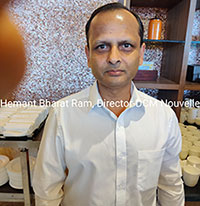 A leading manufacturer and exporter of 100 per cent cotton carded and combed yarns DCM Nouvelle aims to grow its business by 10-15 per cent annually. Formed a few months ago, the company is the textile arm of the former DCM. “We don’t do synthetics. Our focus is on cotton yarn and other sustainable fibers,” says Hemant Bharat Ram, Managing Director of the company.
India is the largest cotton producer in the world. “We should utilise this as an opportunity to compete globally,” opines Ram. “Instead of restricting our cotton trade, we should be a part of the global supply chain. We also should negotiate with RCEP to be part of this global trade bloc,” he observes.
Ram also advises the government to bring fuel and electricity prices on par with the rest of the world. “Synthetic being a byproduct of petroleum, any rise in its price will impact the synthetic industry,” he says.
There is a huge move towards sustainable energy. However, this can prove to be a huge disadvantage for India as it has a huge paddy and sugarcane production. “These crops consume lots of water. Hence, we need to rethink over our agricultural strategies,” deems Ram.
India also needs a new fiscal policy as demonetisation has dried up the liquidity in all major NBFCs and banks. “This will enable our government to invest more in infrastructure building which will not only boost our economy but also the confidence of our investors,” he sums up.
Hemp fabric gains popularity in fashion
Hemp fabrics are leaving a mark on the fashion industry. Online stores have their own fashion lines using fabrics made out of hemp. Hemp Horizons, based in India, deals in hemp-based products like hemp seeds, hemp seed oil, and hemp protein powder. The company is looking to expand into the fashion arena soon. And the primary fabric for all clothing will be hemp. Hopefully the public will see more hemp-based fashion in India, and will be able to leverage its many benefits.
Hemp is an ecologically sustainable crop that has health and nutritional value. Hemp breathes in four times the carbon dioxide than any other plant. Hemp filaments are antibacterial, strong and versatile, and fill in as a characteristic environment-adjusting framework that makes it desirable for both summer and winter. Hemp is a plant that expends fundamentally less water than cotton and doesn't require herbicides, pesticides, manufactured composts or GMO seeds.
China generates 50 per cent of worldwide hemp and holds an enormous portion of licenses on hemp filaments and fabric creation. However as of now the presence of hemp fabric is insignificant and hemp has just a 0.2 per cent share of fiber crops. Hemp still faces a negative notion because of its relationship with psychoactive cannabis and the war on drugs.
SIMA says textile exports decline in 2019
Southern India Mills’ Association (SIMA) says, 2019 was a challenging year for the Indian textile and clothing industry, especially the spinning sector, due to steep fall in cotton yarn exports. Majority of the textile mills had to cut down production and face an unprecedented crisis.
Export of cotton yarn declined by 37 per cent between April and October this year compared to the corresponding period last year. Exports of cotton fabrics and made ups also reduced by 2 per cent while those of manmade yarn, fabric and made ups, and ready-made garments declined by 5 and 3 per cent respectively. The industry is concerned as imports of fabrics and MMF ready-made garments have increased during the same period.
J James, President of Tamil Nadu Association of Cottage and Tiny Enterprises says, year 2019 was one of the worst for the micro units as every bigger factory that gives job orders to these units insist that the unit should have GST registration. These micro units continue to demand total exemption from GST.
Cotton dominates Bangladesh fiber imports
Cotton accounts for 93.57 per cent of the fiber imported by Bangladesh in 2018. Around 74.14 per cent of apparel exported in fiscal 2018-19 was made from cotton fibers, up from 68.67 per cent in fiscal 2008-09.
Since demand for cotton garment items is going down, exporters are getting lower prices from buyers. The preference for polyester, synthetic and viscose fibers arise from their durability and the ease in taking care of clothes made from them. Manufacturers in Bangladesh have been unable to realise the advantages, since manmade fibers account for just 20 per cent of the country’s apparel exports. They have continued increasing production of yarn and garment products from cotton every year. Of the 430 spinning mills in Bangladesh, only 27 churn out synthetic and acrylic yarn.
Synthetic fibers made up 45 per cent of the apparel traded globally in 2017 and witnessed a compound annual growth rate of five per cent between 2007 and 2017. Bangladesh has a five per cent share of the pie whereas Vietnam, its closest competitor in the apparel trade, has a share of ten per cent. In contrast, cotton accounts for around 35 per cent of the trade. Its CAGR is a negative 0.5 per cent.
Sri Lanka’s apparel/textiles industry aims at six per cent export growth
Sri Lanka aims at a six per cent growth in exports this year. From January to November 2019 Sri Lanka’s apparel exports grew 5.8 per cent. The industry hopes to attract large-scale orders by reducing lead times with locally-sourced fabrics instead of importing fabrics. Although Sri Lanka has faster shipping times to the US and EU markets, due to its strategic location, apparel exporters are unable to capitalise on this as the country has to import fabrics from overseas, which contributes to a significant increase of lead time. With locally-sourced fabrics, exporters can target much bigger orders and will also be saving a lot of foreign exchange spent on fabrics as the local value addition increases.
Investors from overseas will be invited to set up fabric mills and other finishing facilities in Sri Lanka. In addition, polyester fabrics, which account for over 50 per cent of fabric requirements, don’t qualify for the EU’s GSP Plus concessions as they are imported from China. A fabric park is coming up in Sri Lanka will have a plant to finish processing polyester fabrics. This will allow the country to qualify for GSP Plus. This fabric park is expected to be fully operational within two years.
Margins of Indian spinners may shrink this year
Operating margin of Indian cotton yarn spinners is expected to shrink by 200 to 400 basis points in fiscal 2020. Higher domestic cotton prices compared with international prices during April to October 2019, a sharp fall in exports, mainly to China and Pakistan, and the resultant domestic oversupply would lead to the squeeze. Mid- and small-sized spinners (having spindles less than 20,000) are likely to be impacted the most, as shrinking revenues and lower margins will impact cash generation. Also, their balance sheets are not as strong as some of the large players, which will impact credit metrics.
While domestic demand is expected to grow three or four per cent this fiscal, supply has been higher because of lower exports. The United States-China trade war has impacted demand for yarn in China, while India has banned yarn exports to Pakistan. China and Pakistan (accounting for 35 per cent and five per cent of yarn exports, respectively, in fiscal 2019) have reduced imports from India by 50 per cent to 60 per cent this fiscal. As a result, exports in the first seven months of fiscal 2020 are lower by around 38 per cent leading to higher domestic inventories and pressure on spreads.
India ITME Society’s completes 40 years of operations
"International Trade Centre (ITC), organised a three day programme from December 19-21, 2019 to celebrate 40 years of its operations. The event commenced with B2B meetings for exclusive delegation of women entrepreneurs from four African Nations looking at sourcing from India, kick started the Celebrations for India ITME Society"
 International Trade Centre (ITC), organised a three day programme from December 19-21, 2019 to celebrate 40 years of its operations. The event commenced with B2B meetings for exclusive delegation of women entrepreneurs from four African Nations looking at sourcing from India, kick started the Celebrations for India ITME Society. This B2B event was attended by 52 Indian Companies with 462 meetings during the day including interaction with Indian Institutes & Associations resulting in business amnd MOUs for student faculty exchange programme and also a promise for out bound delegation from India to Uganda. ITC also focused for this first time initiative of bringing an all women delegation to India in Partnership with India ITME Society. For completing its 40th Year of service, this activity was a step towardssupporting women empowerment by encouraging entrepreneurship in textile sector.
Apart from Business, this first time overseas delegation were also treated to a special Heritage walk of GPO organised& initiated by Ms. Swati Pandey, Postmaster General, Govt. of India.Among the activities offered to the betterment of the industry & for enhancing the quality of Education in Textile Engineering, a special Technical session was organized by India ITME Society. The technical presentation on "Digitisation and sustainability - Two drivers for the textile industry" by Dr.-Ing. Yves-Simon Gloy, Adjunct professor in Clemson University & RWTH Aachen Institute of Textile Technology, Germany was well received by the academic community, attended by 180+ faculty & students from various Institutes like, VJTI, ICT, DKTE, SNDT, NIFT, Kushal Institute, Bangladesh Textile Institute etc. Dr. Prof. JosphatIgadwaMwasigi, MOI University, Kenya, also made presentation & discussed collaboration with Institutes paving way for new partnership in sharing knowledge between India & Kenya. This also shall create avenue for students to explore placement opportunities with multinational companies functioning in Africa.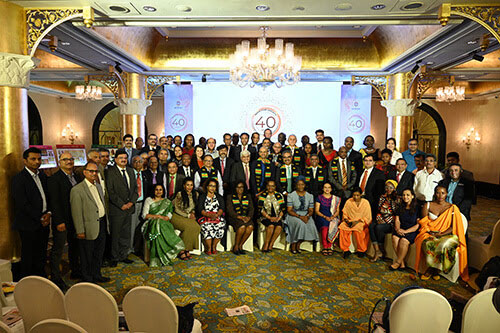
India ITME Society is not only about Textile & Textile Engineering, but functions as a culturally conscious organization promoting all aspect of India as a traditionally rich nation. To showcase rich textile heritage enraptured in our Postal stamps, India ITME Society organized philately exhibition for the invited guests from pan India & across the globe.
Every invited guest, whether from India or overseas had a take away from India ITME Society’s 40th year programme. The various Textile & Textile Engineering Associations renewed their collaboration with India ITME Society through MOUs & also shared their experiences, suggestions & way forward to improve trade relations with their respective countries &organisations in a highly interactive Global Connect session in the afternoon session. The panel of speakers consisted of Industry leaders from India & across the globe.
India ITME Society extended the mood of celebration for both young & old, across the social & business segments. Certificate of merit & a cash prize of 1500 (1 Lakh INR) were awarded to the winners of the contests organized by India ITME Society in various categories.
The evening brought together people from different walks of life, countries and culture, in knowledge, in business.
Rise of sharing economy fostering a circular model in fashion
"A pioneer of rental fashion is Rent the Runway- the first American company that started offering subscription-based fashion services in 2009. In a short time, the company grew rapidly by catering to the growing needs of a new consumer segment. It is currently valued at about $800 million and offers everything from eCommerce apparels to high-end, luxury clothing"
 Just as companies like Lyft, Uber and Airbnb have popularised the concept of car rentals across the world, the concept of rentable fashion is also becoming popular in the apparel market. The CGS 2019 Future of Fashion & Retail Consumer Survey notes, around 72 per cent of global consumers today prefer to rent their clothes rather buying them. They are even willing to pay $50 or more to rent apparels on a monthly basis. This rising affinity for apparel renting has broadened consumer’s access to clothes that earlier faced limited choices.
Other reasons that have lead to a rise in rental fashion include increase in the number of formal occasions such as weddings or black-tie events, an opportunity to explore new trends and accessibility luxury or premium brands that would be otherwise be inaccessible. A recent research from Nottingham Trent University reveals, subscription and rental businesses work exceptionally well for such occasions as most consumers still spend on a few staple items instead of exploring the fast fashion trend.
Pioneers of rental fashion
The traditional fashion and apparel industry segregated consumer segments based on their economic status. However, the sharing economy blurs these lines by attracting a variety of customer profiles. It enables middle-income consumers to indulge themselves and satisfy their gratification for luxury goods. These consumers can now own high-end couture either for a special occasion or for even weeks of months. 
A pioneer of rental fashion is Rent the Runway- the first American company that started offering subscription-based fashion services in 2009. In a short time, the company grew rapidly by catering to the growing needs of a new consumer segment. It is currently valued at about $800 million and offers everything from eCommerce apparels to high-end, luxury clothing. Other companies like Le Tote, Gwynnie Bee, Tulerie and Armoire too have jumped on the rental bandwagon, though with a slightly different philosophy.
For instance, Tulerie allows users to rent clothes, shoes and accessories amongst themselves through an app. The company first interviews its prospective participants and then allows them to list products from a predetermined designer list. This list includes established brands such as Gucci, Prada, Louis Vuitton, and upcoming trendy brands like Monse, Tibi and Zimmerman.
The advantages of such subscription-based services extend beyond cost. They enable consumers to express greater individualism and explore emerging non-commercial trends. This leads to enhanced support and patronage to boutique labels and designers, which improves the health of the industry overall.
A guilt-free shopping experience
A recent survey ‘CGS 2019 Retail and Sustainability’ revealed, around 68 consumers emphasise on sustainability in their products while purchasing them. The sharing economy will help these consumers in making their decisions as subscription-based models offer customers greater choice besides reducing the impact of the industry on the environment. They also foster a circular model which enables brands to provide fashion-conscious youngsters a guilt-free shopping trip.
Global denim segment take to organic cotton
The global denim jeans market is adopting organic cotton in a big way. Denim is on a sustainable journey that touches on every step from fiber and dyes, to finishes and trims. In 2019, mills turned their attention to developing indigo-dyed fabrics that consume less natural resources and use efficient finishing technology. Italian denim mill Berto introduced Sky, a new indigo cast that uses pre-reduced indigo, allowing brands to wash down to a lighter shade while using less water and chemicals. And Prosperity Textile was among the mills that dabbled in indigo-free denim with authentic wash-downs. The mill’s collection features a proprietary eco dyeing technology that is aniline-free, hydrosulfite-free and saves 60 per cent water.
Interest in non-traditional colors also widened the playing field for more sustainable dye techniques. Maritas Denim from Turkey showcased a product line made with clay-based pigments. The resulting earth-hued fabrics use 80 per cent less water, 35 per cent less energy and fewer chemicals than traditional dyeing systems. Tonello debuted a 100 per cent eco-sustainable dyeing system that uses only organic and compostable raw materials. The process uses plant and vegetable waste such as flowers, berries and roots, which are dried and infused with no chemical additives.











