


FW
Problem of excess merchandize awaits global fashion sector post COVID-19
 When the COVID-19 crisis finally ends, the next big challenge for the industry would be to dispose off unsold inventory particularly the spring/summer merchandize that currently waits in factories, distribution warehouses distribution centres, in the port-side storage and the shuttered brick and mortar stores.
This predicament will become manifold once stores reopen as they will be the first stop for much of this unsold inventory. As Doug Cahn, Founder of corporate responsibility consultancy point out, to offload much of the unsold stock, brands will resort to heavy discounts leading to dramatic reduction in prices. Some experts also predict markdowns to meet the Great Recession levels of 70 per cent or more.
Discounts to be of little help
However, these discounts pose their own problems for the industry which is already caught in a vicious cycle of markdowns As Morten Lehmann, Chief 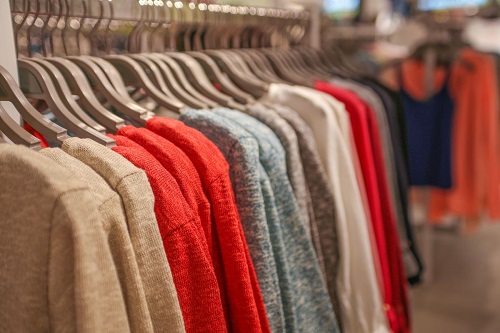 Sustainability Officer of the Global Fashion Agenda believes, a lot of unsold apparels will be put up for sale. Right now, the industry is generating a huge amount of waste and discounting won’t help these brands to clear enough of goods from store shelves.
The period post-COVID-19 may help the industry bury some of its excess inventory, views Steven Bethel, Founder of Ottowa-based Bank & Vogue. While the pandemic may finally right the fashion’s seasonal calendar, in line with the actual season and consumers’ buy now, wear now wants, its unclear whether consumers would be tempted to buy a spring product remanufactured for fall.
Complex supply chain makes redesigning difficult
Lehmann advises manufacturers to upskill themselves by remaking or redesigning goods for the coming season. However, this too comes with its own sets of challenges. According to him, the complex structure of the supply chain prevents them from selling their clothes in local markets as sizes don’t match the required standards.
Yet, interest in this option is ramping as Bethell reveals who advises brands interested in this to consider options that can supplement the garments they have in hand like a silhouette change, etc.
Beyond remanufacturing for this year, some brands and retailers may look to spruce up spring/summer ’20 goods and hold them off for spring/summer ’21, but the issue there becomes one of storage. Some of the unsold inventory may make way to discounters like T.J. Maxx and Ross Stores, which will be spoilt for choice when it comes to merchandise to take These retailers will have a hard time convincing stores in this discovery shopping category to take too much of the same thing.
Impact on the second-hand market
The trickle-down effect of unsold textile goods across the globe will weigh down on the secondhand market, which, itself, will be overloaded with inventory. Besides this, there’s the logistical consideration of getting unsold goods to various new recipients. If the glut of garments can’t be sold at markdown to discounters or on the secondhand market, brands will either have to turn to charity or recycling.
In such a situation, innovation will be the key and if the industry can get sorting sorted and fold circularity into its considerations, there could be new opportunities to use recycling to turn sitting goods into sustainable ones
However, the societal responsibility that has come as a side effect of the coronavirus, could keep spring/summer ’20 goods out of the dumps. Right now, there’s so much pressure on companies to do the right thing that they are going to try hard not to produce excess clothes.
Thus there’s little way fashion can win financially as it struggles with an inventory conundrum that has been piling up even before the pandemic.
AGOA critical for US apparel sourcing: USITC
A newly released study by the U.S. International Trade Commission (USITC) suggests that the African Growth Opportunity Act (AGOA) and its “third-country fabric provision” are critical for US apparel sourcing from sub-Saharan Africa (SSA). Specifically:
U.S. apparel imports from SSA grew faster than the world average. During 2016–19, U.S. apparel imports from SSA enjoyed a compound annual growth rate (CAGR) of 11.8 percent (compared with 1.3 percent CAGR of all countries), from $1.0 billion in 2016 to $1.4 billion in 2019. However, SSA overall remained a small apparel supplier to the U.S. market, accounting for only 1.7 percent of the market shares in 2019 (lower than 2.7 percent in 2004, but was a record high since 2015).
The report suggests that the duty-free preferences awarded under AGOA and the liberal rules of origin available for apparel under the “third-country fabric provision”* are the key competitive advantages of SSA serving as an apparel sourcing destination for U.S. companies. Due to limited yarn and fabric production in SSA, the third-country fabric provision remained critical for SSA exports of apparel to receive duty-free entrance to the United States. Notably, nearly all U.S. imports of apparel from SSA countries entered under AGOA (98 percent). Of these imports, virtually all of them (95.8 percent) used the third-country fabric provision in 2018.
Denim fabric design shifting due to COVID: Kingpins24
In a presentation at the Kingpins24 online event, Kingpins founder Andrew Olah stated that denim fabric design is shifting as a result of COVID-19.
All of the designers at the presentation agreed that with many fabric presentations moving to digital means, they must get creative with how they describe their new collections. And many agreed that this requires significantly reducing their collections.
Kingpins typically sees an array of 4,800 fabrics, with 60 denim mills each presenting around 80 pieces in their collections. Baldi noted that those numbers are highly unnecessary.
And because customers can no longer rely on touching fabrics and scanning the room for materials and innovations that interest them, mills must use other methods of communicating their unique properties. According to Yenici, this is where marketing comes in.
It forces mills to focus on a minimal collection that has a massive impact—and the quality over quantity approach is one that the fashion industry as a whole has been contemplating since the beginning of the pandemic. In Vogue’s Global Conversations series, many designers discussed the concept of slowing down and producing more mindfully for the sake of the environment, the consumer and the designer. By placing more of an emphasis on sustainability and purpose, fashion can become a force for good, they argued.
And that may be why all three panelists pointed to vintage denim as the sector’s most exciting trend. Despite all of the latest innovations in design, it’s often history that inspires the future.
FENC develops new microfiber
Far Eastern New Century Corporation (FENC) has developed a new microfiber for medical masks which addresses a shortage in meltblown non-wovens.
According to the Taiwanese group, the fiber can surpass the daily demand of 13 million facemasks by making up to 20 million per day.
It can be used as the filtration layer of masks to replace meltblown nonwoven. The nonwoven made by this kind of material has a multilayer structure based on close to nanoscale fibers. This structure gives the nonwoven the ability to capture every small particle and allows these facemasks to be washed in water and reused.
China’s sewing machinery exports decline
According to the recently released data by General Administration of Customs, China’s sewing machinery exports escalated by 1.27 per cent in 2019 to $ 2.49 billion in 2019.
The export was dominated by industrial sewing machines in 2019, which accounted for around 49.37 per cent of the total export; however, it marked a Y-o-Y decrease of 4.21 per cent to clock US $ 1.23 billion revenue.
The Asian countries continued to see growth in importing sewing machines from China. Vietnam topped the tally with US $ 373.21 million worth of sewing machines imported from China in 2019, marking 11.48 per cent growth on Y-o-Y basis.
Of overall import by Vietnam, industrial sewing machines accounted for US $ 193.94 million, noting 14.38 per cent growth.
India’s imports increased by m 23.17 per cent to $ 297.68 million. The share of industrial sewing machines was $ 114.58 in overall import value, which declined by 0.85 per cent on the yearly basis.
Affected by Sino-US trade war, China’s sewing machine export to USA declined by a massive 28.30 per cent to $ 109.95 million of which industrial sewing machines contributed just US $ 32.38 million, falling 12.75 per cent. On the other hand, exports to Bangladesh plunged by 1.56 per cent to $ 99.27 million.
China’s manmade fibre industry hit hard in sales, profits drop by 75%
In first two months; Jan-Feb 2020, according to the data from National Bureau of Statistics, the man-made fiber industry saw a freefall in profits by 74.78 percent, PET fiber down by 132.01 percent and polyamide fiber (Nylon) down by 15.64 percent in profits. The total number of man-made fiber companies running in ‘red’ accounts for 48.7 percent. Profit/Sales ratio is reduced to a poor 0.48 percent in the troubled two months.
 The growth and fall in man-made fiber industry considerably depends on consumption market of the midstream and downstream products. China’s retails in January and February fell by 30.9 percent in shop sales for the category of garments, shoes, caps (hats) and knitwear. The brick-and-mortar sales doesn’t seem to have necessarily diverted to the e-commerce retail which also met with a 16.1 percent drop in wearable goods online, thus significant drop rippled nearly all the manmade fiber related supply chain and products.
The individual drop was in Cotton blended yarn 42 percent, chemical fiber made yarn 29.46 percent, cotton blend fabric 52.37 percent, fabrics made of manmade fiber staple 22.96 percent, nonwoven 11.02 percent and in the tire cord fabric 4.14 percent. The export also shrunk for all the textiles and apparel in the country in the first two months that saw a downfall of 20 percent, consequently impacting on the manmade fiber industry.
Production:
The national stats show an obvious drop of man-made fiber production by 13.64 percent to turn out 7.2723 million tons in January and February. The breakup sector wise is as in viscose staple for 448,300 tons, a drop by 33.71 percent, PET fiber for 5.5889 million tons, a decrease by 11.92 percent, polyamide fiber (Nylon) for 508,600 tons, a fallout by 27.11 percent, and polyurethane fiber (Spandex) for 122,300 tons, up by 4.18 percent as a result of rising market demand for coarse-denier Spandex for the ear-loop of face masks.
International Trade:
The import and export of manmade fibers both faced slide down with exception of few product lines. As the data from Chinese Customs shows, the first two months of the year witnessed 114.500 tons in imports, down by 17.2 percent which reflected sectorwise drop in PET staple for 25,400 tons and PET filament for 15,000 tons, both fell respectively by 8.59 percent and 6.85 percent. To be more specific, polyamide filament registered an import of only 9600 tons, a freefall by 34.27 percent, and viscose staple by 27.46 percent for 25,700 tons.
On the export side, China shipped out 638,800 tons of manmade fibers in January and February that saw a descent by 12.33 percent, more specifically, PET staple for 109,900 tons, a 24.11 percent sliding down, and PET filament for 366,900 tons, 14.06 percent less than the previous growth in the same period last year. The show down picture is also seen in the export of polyamide filament for 39,800 tons with 4.41 percent drop, but in the viscose filament and polyurethane fiber, both enjoyed growth up by 20.36 percent and 9.69 percent, respectively.
Investment in fixed assets
The investment plummeted by 35.7 percent in the first two months of this year, 31.9 percentage points lower than the corresponding months last year because some big projects under construction were called to a halt in case of coronavirus spreading.
Economic Profit and Loss
According to the data from National Bureau of Statistics, the man-made fiber industry slided down with a freefall by 74.78 percent in profits of 397 million Yuan, break up for important sectors like PET fiber down by 132.01 percent and polyamide fiber (Nylon) down by 15.64 percent in profits on balance sheet reports. The number of companies running in red accounts for 48.7 percent of the total man-made fiber companies eligible in the national statistics system with the loss of money up by 39.49 percent.
With the sharp fall in profits, the profit/sales rate is reduced to a poor 0.48 percent as the sales income itself ran into a predicament with a significant fall by 28.39 percent to finish with 83.584 billion Yuan in the troubled two months.
A glimpse of Manmade Fiber Production in 2019 (Jan.-Dec.)
| Unit: 10,000 ton | ||
| Products | Jan. – Dec. | Growth Change |
| Manmade Fiber in Total | 5827 | 7.8% |
| --breakdowns as in | ||
| Viscose Fiber | 412.4 | 2.8% |
| -its staple | 394 | 3.0% |
| -its filament | 18.4 | 0.5% |
| PET Fiber | 4751 | 8.3% |
| -its staple | 1020 | 9.7% |
| -its filament | 3731 | 7.9% |
| Polyamide Fiber | 350 | 5.9% |
| Acrylic Fiber | 58 | -5.7% |
| Polyvinyl Fiber | 9.2 | -5.4% |
| Polypropylene Fiber | 38.5 | 7.2% |
| Polyurethane Fiber-Spandex | 72.7 | 9.2% |
| Source: China Chemical Fibers Association |
Contributed by Mr. ZHAO Hong
He is working for CHINA TEXTILE magazine as Editor-in-Chief in addition to being involved in a plethora of activities for the textile industry. He has worked for the Engineering Institute of Ministry of Textile Industry, and for China National Textile Council and continues to serve the industry in the capacity of Deputy Director of China Textile International Exchange Centre, V. President of China Knitting Industry Association, V. President of China Textile Magazine and its Editor-in-Chief for the English Version, Deputy Director of News Centre of China National Textile and Apparel Council (CNTAC), Deputy Director of International Trade Office, CNTAC, Deputy Director of China Textile Economic Research Centre. He was also elected once ACT Chair of Private Sector Consulting Committee of International Textile and Clothing Bureau (ITCB)
Declining prices, falling orders threaten Indian cotton yarn mills
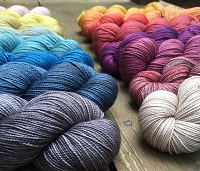 When Prime Minister Narendra Modi extended the nationwide lockdown till May 3, most of cotton mills in India were shut down. However, the government allowed some spinners in Uttar Pradesh, Gujarat, and Punjab to resume production. A small number of spinners resumed work with operating rate ranging between 10 to 50 per cent, mainly focused on fulfilling recent contracts.
Despite this, production has not resumed to its full capacity due to the lack of workers and orders. Some factories have decided to shut down their operations after completing domestic sales and a small number of export orders.
Lackluster market with bleak shipments
Even before India entered into a lockdown, cotton yarn market was still lackluster with bleak shipments in spite of liberating policy on Indian yarn mills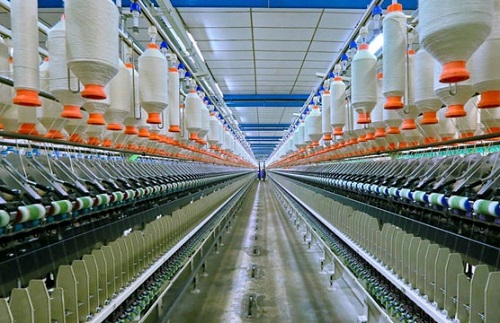 operation. As CCF Group Index reports, the price of Indian forward cotton yarn kept sliding with prices of yarns mainly exported to China, such as Indian carded yarn, combed yarn and open-end yarn declining since February. Prices of combed 32S dropped from $2.96/kg to $2.47/kg; those of carded 32S dropped from $2.59/kg to $2.29/kg, and of OEC10S fell from $1.66/kg to $1.52/kg.
Rapid decline in spinners’ profits
The spot price of Indian cotton also declined from Rs 39,400/maund at the start of Chinese New Year holiday to Rs 37,100/maund. Although this reduction was a result of depreciation of Indian rupees, profits of Indian spinners also declined rapidly. Based on the one-month and two-month cotton stocks, these spinners suffered losses about 10cents/kg.
Declining prices fail to stimulate orders
Cargo prices declined during the period as did the prices of spot imported yarn. The prices of Indian carded 32S declined to 19,100yuan/mt from 20,600yuan/mt in February. Compared to prices in United States dollars into RMB after-tax price, these prices failed to stimulate forward yarn orders. Since the outbreak of the epidemic, however, the prices of these yarns in United States dollars have fluctuated rapidly.
Lockdown leads to decline in orders
The social stock of imported yarn before the lockdown was at an all time high, and shipments were not fast. The operating rate of downstream fabric mills was around 30 to 40 per cent, much lower than that in same period last year. Post lockdown, the willingness of imported yarn mills to order cargos is unlikely to significantly improve before the orders of the fabric mills are improved. Due to the initiatives launched to prevent the spread of COVID 19 outbreak, it will take some time for Indian yarn mills to resume work. As the prices of Indian cotton and cotton yarn prices have been falling, the theoretical profits of spinners are mostly at a loss. Even transactions are limited due to poor shipments in the spot market.
Though the operating rate of Indian yarn mills is gradually recovering, it would be difficult for them recover to 100 per cent.
Comfort over fashion scores as loungewear becomes new dressing norm
 As the work from home culture grows across the world, Fashion Snoops women’s wear editor and head of intimates and loungewear Patricia Maeda and Nia Silva, Fashion Snoops’ materials editor, expect a few key apparel trends to wash over the loungewear and intimates categories in the next 18 months.
As per the trend, comfort will be the backbone of these categories with the required quality achieved through thoughtful, sustainable and aesthetically pleasing designs.
Restoring comfort
Maeda says one of the growing trends is of restoration of comfort. As the need to disconnect and rest is becoming increasingly relevant among millennials they are seeking products that facilitate calm. Hence, sleepwear and loungewear are becoming an essential part of their self-care regime. Silva points out, touch-centric fabrics work such as textured yarns with fuzzy irregularities and fluffy aspects communicate comfort to such consumers.
Maeda opines, skin friendly fabrics rule as soft sleepwear sets made with lightweight, refined natural materials enhanced with smooth cool-touch yarns are preferred by consumers. According to her, softening treatments can be added in the finishing process of these sets to boost the fabric’s comfort level. She also believes that fibers like Supima cotton are essential, not only to ensure the comfort of these sleepwear sets but also for their material strength.
The restore trend also touches on growing trend for restorative travel kits. These practical kits include items like socks, sleep masks and base layers and are often made with hidden functions, like temperature-regulating fibers.
Function over fashion
The second trend is of ‘bare’ and back to basics. As more people are taking a proactive attitude to enhancing the quality of their life, they prefer back to basics functional lingerie that offer a no-fuss comfortable wear. Maeda advises designers to eliminate uncomfortable elastic waistbands and underwire as well as pared-down concepts that reduce the number of chemicals and dyes on the wearer’s body. Soft breathable materials, including those made with man-made cellulose fibers like modal and Tencel, are key to success with consumers. She also reveals that sustainable stretch fibers by Roica and fibers made from citrus byproducts are picking up momentum.
Key items in the bare trend include lingerie sets, like triangle bras and hipster panties, in neutral colorways. Silva also indicates a growing interest in sheer fabrics amongst consumers. According to her, these fabrics emphasize the idea of second-skin intimates. For loungewear, the trend focuses on effortless dressing one-piece garments—either a roomy jumpsuit or cozy romper.
Spurt in street wear styles
Fashion Snoops touts the ‘Back to Street’ trend to be the next evolution of athleisure. This new category of all-purpose fashion offers consumers versatility, practicality and sophisticated style. The trend is spurred on by the growing number of freelancers and part-time employees who are creating the “gig economy” and by lifestyles that require people to wear multiple hats in a single day.
Tapping luxury through minimalistic trend
This trend emphasizes on the quality and luxury of a garment. Silk and satin, high-stretch ribbed knits and elements from fashion like Lurex threads and plush velvets are the preferred materials in this trend.
Key items include athleisure staples like joggers remade in silk, sweater dresses, cashmere sets and tops that play with sculptural volume like big sleeves and cinched waists. Focusing on practical and minimalistic aesthetic, this trend includes thoughtful details, like robes with waist-tie pockets.
World Economic Forum releases new blockchain toolkit
To help organisations improve pandemic preparedness and accelerate an economic rebound post COVID-19, the World Economic Forum (WEF) has released ‘Redesigning Trust: Blockchain Deployment Toolkit’, which enables leaders to maximise benefits and minimise risks of the technology. The first of its kind toolkit is the culmination of more than a year of efforts to capture best practices from blockchain deployment across industries.
Drawing on the global expertise of more than 100 organisations, including governments, companies, start-ups, academic institutions, civil society, international organisations and technology and supply chain experts, the toolkit helps companies manage the complexities of deploying this new technology and will accelerate its positive impact.
The toolkit has been piloted in a variety of different contexts by organisations developing blockchain solutions within their supply chains, including the Abu Dhabi Digital Authority, Hitachi, Saudi Aramco and a number of small and medium enterprises.
The aim of this toolkit is to maintain and strengthen the resilience of global supply chains.
L Brands amends revolving credit facility
L Brands has amended its revolving credit facility to ensure liquidity in light of the ongoing coronavirus pandemic. The parent company of Victoria’s Secret reduced its 2020 capital expenditures from its original forecast of approximately $550 million to approximately $250 million.
It also reduced its spring inventory receipts by approximately 45 per cent at Victoria’s Secret and 20 percent at Bath & Body Works versus last year. The Columbus, Ohio-based apparel group is not paying rent as the Covid-19 pandemic continues to force store closures across North America and globally.
Since the beginning of the COVID-19 crisis, L Brands has announced a number of measures to strengthen its financial flexibility including suspending its quarterly cash dividend as of the second quarter of fiscal 2020, and making a substantial reduction in capital spending and other expenditures.
In particular, it is reducing the base compensation of senior vice presidents and above by 20 percent, while CEO Leslie H Wexner and other members of the board of directors will take no cash salary at all.
Most of its store associates including those currently not working to support the online businesses or who cannot work from home have been furloughed since April 5, 2020.











