


FW
COVID-19: Brands reevaluating luxury businesses in India
 COVID-19 is leading to a reevaluation of the luxury business model in India. With the luxury market expected to contract 39 per cent in 2020, businesses across the country are being forced to either to adapt or perish, says latest McKinsey report. While some of these are resorting to new distribution channels, others are opting for an extension of their product lines, services and product categories.
Diversification for apparel makers
Luxury apparel and accessory makers, Dior and Loreal are making disinfectant gels at their facilities. Luxury British heritage label, Burberry has launched reusable and sustainable masks with anti-microbial technology so have designers like Anita Dogre and Shivan and Narresh. Delhi-based affordable luxury leather goods brand Damilano, is focusing on its ecommerce platform as is Ensemble which is shifting most of its offline inventory to its webstore.
While some brands are launching classic collections that last long, others are introducing smart casual collections. Besides offering private client appointments for physical store shopping, these brands are also providing personal shopping and styling sessions on Zoom or video chat.
Similarly luxe automobile makers like Lamborghini, Mercedes Benz. BMW and Tesla are shifting production to hospital ventilators, protective plexiglass shields and other medical devices. Mercedes-Benz India has launched a new e-commerce platform ‘Merc From Home’, which enables customers to purchase their favorite Benz from the comfort and safety of their home’. Pre-owned car maker, Big Boy Toyz is seeing a 75 per cent surge in its online sales.
Spurt in demand for home fitness equipment
The restriction of most fitness freaks to their homes increased demand for home fitness equipment. To explore this demand, Louis Vuitton launched a stylish range of home fitness equipment including dumbbells and skipping rope. The brand has also introduced a set of opulent playing cards under its homeware line to engage its patrons. According to McKinsey, companies that prioritized customer service witnessed a stronger rebound from the 2008 crisis. In the current scenario too, customer focus will prove to be the gamechanger.
As entire textile value chain sees a dip, manmade cellulosic fibers continues to grow
 Constrained by a slowdown in global economies and growing trade uncertainties, the International Monetary Fund revised its economic outlook in July 2018 from 3.9 per cent to just 2.9 per cent in January 2020. As per Textile Network, the IMF report cites weakening of large emerging markets and geopolitical tensions as some of the reasons for this deceleration in machinery investments and household consumption.
Spunlaid nonwoven dominate global fiber supply
Adverse business conditions affected the textile value chain as global fiber supply was mostly dominated by spunlaid nonwovens. The total supply of these nonwovens accounted for 120 million tons, while the cultivation of natural fibers decreased by 3 per cent to 32 million tons. Cotton output declined to 26 million tons and wool output fell by 1 per cent. The supply of other natural fibers remained stable.
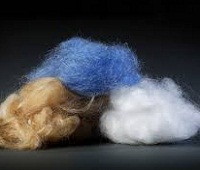
The supply of viscose staple fibers, including modal and lyocell increased, by 8 per cent. Though the supply of filaments declined slightly; acetate tow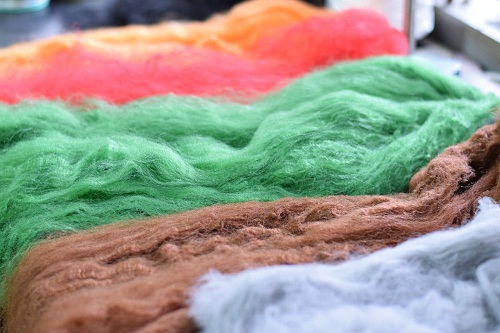 experienced modest growth. Supply of synthetics grew 5 per cent while that of acrylic and polypropylene fibers weakened. Growth of small-scale fiber segments like aramid, carbon and spandex fibers decelerated.
Natural fibers supply declines for 10th year
Registering a decline for the tenth straight year, growth of natural fibers fell to 3 per cent in 2019. This was primarily owing to reduced cotton production in the 2018-19 season. Global supply of cotton declined from 7 per cent in 2018 whereas manmade fibers grew over 6 per cent with synthetics, especially polyester advancing by 5 per cent.
As per the report, textile and clothing trade of 60 countries, including their extra shipments to the EU, reduced in 2019. Exports declined by 1.3 per cent while imports fell 1.7 per cent. Chinese exports softened by1.9 per cent to $272 billion as its apparel shipments dropped by 4.0 per cent to $151 billion.
Textile imports decline, apparels surge
In the first half of 2020, US imports declined 10.1 per cent. Of all its importing countries, textile imports from China surged over 25 per cent while apparel imports contracted 22 per cent. Textile imports from Bangladesh increased to $36 billion while apparel imports declined by 85 per cent in April and 62 per cent in May.
Textile imports from Vietnam, Myanmar, Cambodia and Brazil increased by 6 per cent, 23 per cent, 10 per cent and 38 per cent respectively. Brazil became the second largest cotton exporter during the year and its position is expected to improve in 2019-20 season as projected in ICAC’s July release for production, exports and ending stocks.
Suppliers accuse TCP of cancelling orders from Ethiopia
Suppliers have accused the Children’s Place (TCP) of cancelling orders worth million of dollars from Ethiopia. The company has demanded retroactive rebates on products that had been shipped before the crisis.
One supplier said, his company had lost its credit line after losing nearly $1m because of contract cancellations. Another supplier said that although TCP had started to pay back some money, the company still owed it hundreds of thousands of dollars.
However, Gregory Poole, Chief Supply Chain Officer, TCP, said the company had canceled fewer than 3 per cent of orders from Ethiopia. That had dire consequences for their business.
The Children’s Place is one of four leading US apparel brands sourcing goods from Ethiopia, alongside PVH, JC Penney and H&M. In its annual report last year, TCP cited Ethiopia as a “key sourcing region”. The Worker Rights Consortium said at least seven factories in Ethiopia were producing clothing for TCP stores, employing about 15,000 workers.
Inter-textile Shanghai Home Textiles concludes successfully
The 26th edition of Inter-textile Shanghai Home Textiles successfully concluded on August 26. The fair welcomed a total of 643 exhibitors this year and drawn more than 25,000 trade buyers. The fair has continued to be the perfect forum for linking global suppliers. Home textile industry customers, considering the tough times we are all facing.
Shanghai textile fair introduced a brand-new online business matching platform. Which promote business exchanges between suppliers and buyers from around the globe in view of the current international travel restrictions.
Inter-textile provides a much-needed business platform for the industry as many trade shows were cancelled in the first half of the year. The pandemic has brought great changes to the market trends as well. For instance, customers are now focusing more on their health and safety. So products with anti-bacterial properties are becoming increasingly popular.
H&M ends relationship with Chinese yarn supplier
Swedish clothing giant Hennes & Mauritz AB (H&M) has ended its relationship with a Chinese yarn producer over accusations of forced labor involving ethnic and religious minorities from China’s Xinjiang region.
The fashion retailer specified that it did not work with any garment factories in the region and that it would no longer source cotton from Xinjiang, which is China’s largest cotton-growing area.
A report by the Australian Strategic Policy Institute, published in March, accused H&M of benefitting from a forced labor transfer program through their relationship with the dyed yarn producer Huafu Fashion Co’s factory in Anhui Province.
However, H&M said it never had a relationship with the factory in Anhui, nor Huafu’s operations in Xinjiang It did concede that it has an indirect business relationship with one mill” in Shangyu in Zhejiang Province, belonging to Huafu. The company also said that it had conducted an inquiry at all the garment manufacturing factories it works with in China to ensure that they are not employing workers.
Coats Digital launches GSDCost V5
Coats Digital, the software business of Coats, the world’s leading industrial thread company, has launched GSDCostⱽ⁵, the latest, highly intuitive, browser-based version of the only globally recognized, time-cost manufacturing standard for apparel brands and manufacturers.
The stand-out enhanced feature of GSDCost, is the introduction of a globalised fair wage tool, which combines the international standard time for any given style, with detailed factory efficiencies, contracted hours and the fair living wage for the country. This allows brands and retailers to quickly agree the fair living wage allowance for any given garment, in any factory in the world. The GSDCostV5 fair wage tool brings a new level of visibility and transparency to market-leading brands and manufacturers in discussions on time, cost and compliance. This supports and demonstrates a commitment to fair, sustainable wages and the ethical treatment of garment workers around the world.
GSDCostV5 launches with a native integration into the Res.Q shop floor suite of solutions providing a real-time, digital feedback loop of actual versus standard minute value at the operation level, highlighting variances and opportunities for proactive, continuous improvement. Further integrations with Res.Q will leverage the power of digitized machine inventory and line planning. This will provide the basis for a new level of line balancing, method optimization and faster, more detailed and accurate capacity planning.
GSDCostV5 supports a more collaborative, transparent, efficient and sustainable apparel supply chain, taking time-cost benchmarking, costing optimisation and method improvement to a new level. By doing this, it places people and fair wages at the heart of the recovery from the global pandemic.
Euratex publishes paper on GSP revision
Euratex has issued a position paper on the revision of the Generalised Scheme of Preferences (GSP) where it advocates for a series of changes to be considered in the forthcoming revision.
Euratex says, trade policies can encourage countries in respecting human, social and political rights, but these efforts should not be standalone. They should be accompanied by other programmes and policies. Respect of good governance and human rights comes also from better monitoring of the conventions annexed to the GSP regulation. Plus, their implementation should be quick, effective and the EC should be the primary actor in the assessment process.
Euratex believes that the withdrawal mechanism should be applied to GSP standard beneficiary countries in case of serious and systemic violations of principles related to the protection of the environment and good governance.
EURATEX proposes the next regulation to cover a wider range of products. GSP beneficiary countries will then need to diversify their exports and do not depend on one or few sectors. Such diversification will boost their investments and make their economy more stable in the long term.
Finally, EURATEX emphasises that the current safeguard mechanism should allow a certain level of predictability for the economic operators. Therefore, it should be activated only when conditions are fulfilled, communication on it should be transparent, and it should be extended to all GSP countries.
Ricoh launches new DTG printer
Ricoh, a Japanese innovative technologies and service offering company has launched Ricoh Ri 2000 Direct to Garment (DTG) printer.
The Ricoh Ri 2000 prints 1200x1200 dpi resolution on a wide range of garments, from traditional t-shirts or tote bags to an extended application range of canvas shoes, baseball caps or long sleeve shirts. It also supports the production of textile face masks and safety vests via the flexibility of the quick-change magnetic platen mechanism and the automatic table height adjustment that easily switches between garment types. .
The Ri 2000 sets a new benchmark in terms of productivity and efficiency in its class. This is achieved by integrating hardware and advanced software end-to-end: enabling colour consistency, automation of production workflows and creation of white layers for printing on dark garments with ColorGate’s Textile Production server; continuously monitoring ink supply, temperature and humidity levels, reducing human interaction whenever required; intuitively guiding the operator with a 7-inch color touchscreen display providing maintenance alerts, for all tasks that are not automated; and simplifying maintenance with automated cleaning and an innovative head cleaning jig that eliminates the need to manually maintain print head nozzles.
VITAS encourages garment manufacturers to divert to mask production
Vietnam Textile and Apparel Association (VITAS) is encouraging garment manufacturers to divert their production of face masks, to offset the fall in textile exports and foreign investment in the local supply chain. Vu Duc Diang, Chairman, VITAS says, though masks are small-ticket items, they have big export potential as they are becoming mandatory and ubiquitous around the world. Vietnamese textile makers are betting on mask production, assuming that global demand will be sustained because ending the pandemic will take time.
Another way Vietnamese companies can adapt to this new environment is by adopting new technologies. For example, Vietnamese textile companies are conducting entire business deals via WeChat, from introducing products, to negotiating prices, Giang said. The government can also lobby textile companies to clean up production, such as treating water that had been contaminated with dyes, said. Nguyen Thi Tuyet Mai, General Secretary, VITAS. According to her, a cleaner production process will allow more advanced manufacturers to set up in local industrial parks.
When textile and apparel companies regain their investment appetite, they will continue to move away from China, as well as Taiwan and South Korea, to save costs, Giang said. The pandemic is making global companies realize they need to diversify, including by shifting to Vietnam, he added.
Patagonia weaves a social message in its new range
Outdoor clothing company Patagonia is weaving a label with the message’ Vote the a-holes out’ in its shorts, reports CNBC. Through this tag, the company aims to encourage its customers to voice their concerns about the environment.
The California-based activist brand was encouraged to introduce this tag by the 100 wildfires that burn millions of acres across the West Coast, and a slew of lawsuits filed by towns and cities across the country accusing the oil and gas industry for its deceptive role in climate change. While some have dismissed Patagonia’s new tag as a marketing ploy others have appreciated the company for its longstanding social activism and hope the tag will ignite positive change. Many also see these as a dig at US President Donald Trump, who has repeatedly come under fire for his climate change denialism. However, Patagonia has denied that the tags are directed at Trump.











