


FW
H&M bullish on India despite global slowdown, continues opening stores
 Fast fashion brand H&M is optimistic about India business. Although the world’s second biggest retailer is closing stores globally, it is planning to open new ones in India; both online and offlline, reports Live Mint. Led by Janne Einola, so far, the brand has opened 48 stores in 24 cities besides launching its own portal and its retail on Myntra.
Physical expansion despite headwinds
Before COVID-19, H&M was opening one store every month in India. Now, the brand may go a bit slower but expansion will continue, says Eionala. It is currently opening a new store in Lucknow and plans to open more stores next year. Some physical stores are still closed due to local lockdowns while remaining are operating with restricted hours. The brand’s revenues from physical stores up to August 2020 declined 31 per cent while net sales declined 50 per cent. Yet, the brand plans to continue opening physical stores in India.
Focus on kids’ and casual wear
The brand also plans to focus on online operations and as well as kids wear, says Eionala. During the lockdown, H&M saw growing demand for casual wear, lounge wear and basics. Eionala says, this trend was common for both men’s and women’s apparels. However, women are showing stronger interest for casual and lounge wear, she adds.
COVID-19 has made consumers conscious about their consumption habits. According to her, changing consumption patterns will determine future course for the industry. There will be growing emphasis on sustainability and H&M will benefit particularly since it has been focusing on sustainable operations for years.
India plans
Despite pessimistic industry outlook, Eionala is confident about the brand’s future in India. It has opened almost 50 stores in the past five years and plans to open more stores over the next five years. The brand plans to also launch a loyalty program called Hello Member in the country for better conversations and personalized shopping experiences.
Besides the flagship brand, H&M also plans to launch other brands from its stable like COS, Monki and H&M home in India. It is waiting for the right opportunity to launch these brands and hopes current FDI rules support its India investment plans.
'Scotch & Soda' to open 15 new stores across Europe
Dutch fashion brand Scotch & Soda plans to open 15 new physical stores and seven new concessions by year-end across Europe, Asia-Pacific, North America, and the Middle East.
As per Fashion Network, this will include new directly-operated and franchise stores in key global cities such as Paris, Madrid, Philadelphia, Charlotte, Gothenburg, Riyadh, Mumbai, Bucharest, Dortmund, Stuttgart, and Perth.
The brand plans to launch its first digital store on Tmall in China. It recently also launched its Weibo, Little Red Book, WeChat, and Douyin social media accounts to drive awareness in the country. The label is also adding new products for the upcoming festive season and for SS22.
These include a reporter bag and a cross body in faux leather and a functional foldable tote bag made with recycled nylon. Each of these items will feature its new brand identity, and three new styles of bags will be introduced to celebrate the new logo. Their styles will be exclusive to its franchise and directly operated stores as well as online for the first season.
Footwear brands foraying into clothing struggle with supply chain issues
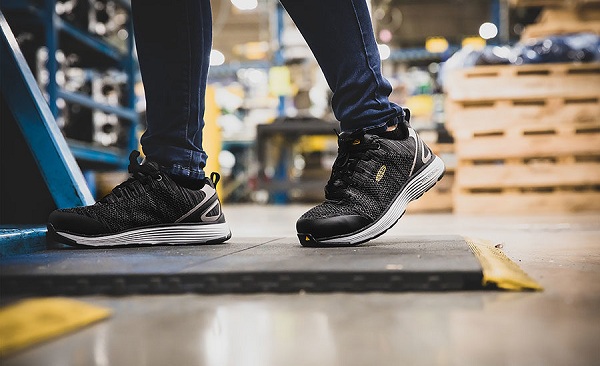
There is a growing trend amongst footwear brands to foray into clothing market. Brands Allbirds, Public Desire, Ego, Lavair are some good examples of this. As reported by Drapers Online, Manchester-based women’s footwear etailer Public Desire launched a DTC women’s wear brand Kaiia in September this year. Focusing on trend-led pieces, the brand sold 300 pieces of bralets and joggers in the UK. Similarly, online women’s footwear retailer Ego launched a collection in July 2021 with US influencer Anastasia Karanikolaou. What’s more the e-tailer recorded a 20 per cent per cent jump in sales since its launch, says CEO Adeel Fiaz. Savoring success, the etialer went on to launch a full own- women’s wear clothing collection.
On similar lines, US/New Zealand sustainable men's and women’s footwear brand Allbirds launched an activewear collection in August this year. Called Natural Run, the women’s and men’s activewear collection is retailed only on Allbirds website.
Decline in footwear retail sparks apparel foray
One major driving footwear brands into the apparel segment is the collapse of several big high street retailers over the past 18 months, including Topshop, Oasis and Warehouse. Their fall has opened up the market for entrepreneurial brands such as Public Desire to target both footwear and apparel market.
The rapid expansion of women’s wear market is also driving Public Desire’s move into clothing. On the other hand, the footwear segment does not offer many categories, says Qasim Aklaq, Managing Director, Kaiia. The footwear brand rolled out its new apparel collection in collaboration with trusted suppliers. It earlier sold some apparel wholesale through Asos and plans to launch new products every week.
Surcing challenges
Many footwear businesses that have forayed into the clothing segment recently are struggling to build sizeable clothing divisions due to sourcing challenges, says Fiaz. He points out the company is now targeting wholesale growth for apparel both with existing partner Asos and in new stockists.
Earlier known for its sustainable footwear, Allbirds launched an activewear collection this summer. The brand plans to tap the booming market and is set to grow by $157.7 billion – or by 11 per cent compound annual growth rate – between 2020 and 2024, as per market research firm Technavio.
Making a mark with the apparel lines
However, despite dip in sales many footwear brands plan to stick to their original business. E-commerce brand Shoeaholics does not plan jeopardize its reputation as a footwear expert and hence, will not foray into the clothing. Public Desire too aims to retain its identity as a footwear expert and, hence, will launch a stand-alone website for its Kaiia.
Footwear brands plan to first ensure their supply chain can cope with increased volumes and shorter lead times needed in clothing segment. They also plan to devise new marketing strategies for their foray into this segment. Only after getting these elements right, do they hope to make a mark in the apparel segment.
CFDA, BCG issue new sustainability report
The Council of Fashion Designers of America(CFDA), in partnership with the Boston Consulting Group (BCG), has issued ‘Sustainability by Design: Rethinking New York Fashion Week,’ a report that looks at guidelines and recommendations for ways the industry can reduce both waste and the carbon footprint of fashion shows, events and activities.
About 75 percent of NYFW stakeholders surveyed in the study said the companies they work for have sustainability targets for the materials they use, waste reduction, partnering with others dedicated to sustainability and energy use. But almost 40 percent of those with such targets view them only as a consideration in their planning strategies, not as a guiding principle.
Companies that have made concerted efforts to increase their sustainability practices have reduced their environmental impact considerably. For example, Burberry, Dior, Gucci and Ralph Lauren, among others, use recycled wood in their sets, send out digital invitations, travel in electric vehicles and use partnerships to offset their remaining carbon emissions, the report said. Missoni and Saint Laurent use energy-efficient LED lighting powered by biofuel-burning generators at the show.
When asked what the greatest obstacles their organization faces in moving toward sustainability for NYFW, some 45 percent said it was more expensive to be sustainable, 27 percent were unclear what goals/targets to set and said they are difficult to measure, 27 percent lack the necessary partnerships, 14 percent said it was unclear what steps/actions to take, and 4 percent said other organizations’ leadership does not view sustainability as a priority.
The study showed that consumers and NYFW stakeholders value the same sustainability practices but to varying degrees. For NYFW stakeholders, they value, in order, use of recycled/waste/scrap materials, fair/ethical labor practices and biodegradable products/packing, participating in recycle/take back programs, up-to-date waste disposal/recycling technologies, commitment to health/safety practices for workers and organic/natural materials.
The survey looked at six impact areas — Content, Sample, Production, Venue, Public Relations and Transportation/logistics — and four sustainability dimensions — Energy, Materials, Waste and Partnership — to see ways to reduce NYFW’s environmental footprint.
Adsale Exhibition Services to co-organize 21st Zhejiang International Trade Fair
Adsale Exhibition Services will co-organize the 21st Zhejiang international trade fair for textile and garment industry, with Yiwu China Commodities City Exhibition, at the Yiwu International Expo Centre in Zhejiang, China, from May 12-14, 2021.
The show will have four thematic zones, including knitting & hosiery machinery, sewing & automatic garment machinery, digital printing technology & application, and knitting products & accessories. The show will showcase world-class textile machinery and cutting-edge technologies. Under the theme of ‘Technological Innovation Promotes Diversified Trans-Boundary, Intelligent Textiles Contributes A Healthy Future’, the exhibition will bring the industry to a whole new level along with the healthy textile trend, helping the enterprises to master the latest industry news and encouraging innovation in the textile industry, according to a press release by Adsale.
On October 13, 2020, the organiser of ZhejiangTex will host the ‘4th International Healthcare and Textile Sci-Tech Pioneer Innovation Conference 2020’ with The China Health Care Association Textile Branch in Yiwu Kingdom hotel. Under the themes of ‘Futuristic Tech, Innovation & Sharing’ and ‘Wear Healthily, Sleep Healthily & Breathe Healthily’, sharing new and innovative business ideas under the epidemic helps the companies turn crisis into opportunities by transforming and upgrading their businesses as soon as possible.
Four Paws releases list of brands opposing mulesing wool
Animal welfare organization Four Paws has released a list of over 180 Australian and international clothing brands who have opposed the use of mulesing wool in their collections. Brands like Patagonia, H&M, Country Road Group, Kmart Group and Hugo Boss figure in the list. These brands have made a commitment to phase out wool used in their products from mulesed sheep. Of the 185 brands, 121 have stated they do not currently accept wool from mulesed sheep or wool from Australia, and 68 have stated their use of robust certification systems, making commitments to help achieve more traceable supply chains.
Outdoor brands like Kathmandu, Ortovox and Patagonia are among the brands that are already non-mulesed certified. Retailers like H&M and Abercrombie & Fitch, as well as fashion brands Witchery and Politix, are among those committed to become non-mulesed certified in the next few years.
Jennie Granstrom, animal welfare, material ethics and biodiversity business expert, H&M Group, said the company is already buying wool from only suppliers that could guarantee wool came from non-mulesed sheep. Humane Society International (HSI) has launched its Better Wool Guide, which it hopes will help consumers understand where their wool comes from. The guide lists the brands and retailers with policies against mulesing, or commitments to phase it out.
Only one-fifth shoppers trust brands’ sustainability claims: Compare Ethics
As per a study by London-based sustainability focused transparency platform Compare Ethics, only one-fifth of shoppers trust brands’ sustainability claims. Conducted by market research firm Centiment, the study focuses on trust as a key factor in the purchase making decisions of consumers. As per the study, consumers are growing ever-resistant to blame-shifting tactics by corporations, especially when the data is available. Around 83 per cent consumers are more likely to trust a product’s sustainability claim if it is verified by a third party, and 53 percent of consumers see brands as positively reforming the garment industry.
There is a dire need for improving communication on social sustainability amongst consumers as only 22 per cent of them associate sustainability with a brand paying workers a living wage. Wendy Hammett, Advisor, London Fashion Fund expects consumer spending to tighten amid coronavirus. He advises brands to consequently anchor trust into their sustainability credentials if they aim to retain loyalty and market share.
Brands should verify the claims they are making. Like Amazon’s Climate Pledge Friendly program they can utilize third-party certifications like Cradle to Cradle and Textile Exchange to verify sustainable claims for products on its site.
Compare Ethics uses its verification technology to build trust in sustainability, helping to connect citizens with products deemed ethical and environmentally sound since its founding in 2018. Its sustainable ranking algorithms have verified more than 3,500 products from 50 brands. The company surveyed 1,250 members of the general public aged 18 to 65 split between male- and female-identifying respondents to uncover these findings.
Cambodian garment sector faces double blow
The Cambodian garment sector is facing a double blow of the COVID-19 pandemic and the partial withdrawal of the country’s duty-free access to the European Union (EU) market, reports Cambodia Daily. The country’s apparel sales to the EU, including the UK, have plummeted by 31 per cent or $403 million in the first six months of this year compared to January-June period in 2019.
According to Patrick Lee, Legal Advisor, CENTRAL Cambodia, apparel export slump is by far the biggest drop in all goods exported by Cambodia in monetary terms. He adds it is hard to say how much of that is due to COVID and how much is due to the withdrawal of the Everything But Arms (EBA) trade benefit.
AEPC, SRTEPC collaborate to boost MMF exports
Apparel Export Promotion Council (AEPC) and The Synthetic & Rayon Textiles Export Promotion Council (SRTEPC) and some other leading companies have collaborated to boost MMF exports. Few days ago, AEPC called for a joint effort to increase MMF apparel export. The council is also willing to focus on R&D regarding the production of MMF fabrics like international standards and has requested the government to provide them an aid of Rs 25 crore for the same.
India’s apparel exports are likely to decline in the current fiscal as the country lags behind in the export of man-made fiber (MMF)-based apparel in the overall product basket. India’s export of MMF-based apparel is only 10 per cent of its total apparel exports. It is hardly $1.6 billion, whereas the world trade is about $200 billion. India exported man-made filaments worth $2.29 billion in 2018-19 and $2.39 billion in 2019-20. At the same time, it imported man-made filaments worth $1.03 billion in 2019-20 and $0.97 billion in 2018-19.
Similarly, India exported man-made staple fibers worth $1.9 billion in 2018-19 and $1.6 billion in 2019-20. Import of these fibers amounted to $ 0.93 billion in 2019-19 and $0.95 billion in 2019-20.
Ispo Munich to debut as a hybrid event in January
For the first time, sporting-goods trade fair Ispo Munich will be held as a hybrid event from January 31-February 3, 2021 at the Munich trade fair grounds and digitally, reports Sportswear International. Trade show organizers, Bavarian state government and Messe München have drawn up a comprehensive protection and hygiene concept for onsite events in January/February 2021. Deadlines have postponed to give more flexibility. The organizers also plan to use pre-built stands to participate in the event in a cost-effective and efficient manner. They expect representatives from European markets in particular and hope to attract more international visitors.
End consumers will also be given the opportunity to participate digitally and to engage in direct dialog with the industry. With presentations, workshops and master classes, brands and companies can present themselves digitally to sports and outdoor enthusiasts around the world and to engage in conversations with them.











