


FW
COVID-19 impact: Retailers shut over 1,000 stores in New York
As per the Center for an Urban Future (CUF), over 1,000 stores were shuttered in New York this year due to the impact of the Covid-19 pandemic, the largest number of closures recorded by the think tank in the 13 years since it began tracking the figure. There are currently 6,891 chain stores operating across New York’s five boroughs, down 13.3 per cent from 7,948 at the end of 2019. By comparison, the decrease in retail store numbers between 2018 and 2019 was only 3.7 per cent. It is worth noting, however, that 2020 is the first year that CUF has included 160 temporary closures in its count.
Out of the five boroughs, Manhattan saw the biggest number of chain store closures in 2020, accounting for 520 of the total 1,057 closures in the city, or 49%.
Both clothing and accessories stores and beauty destinations have closed 22 per cebt of their locations in New York over the last twelve months. Among the clothing and accessories retailers shuttering their New York locations, BCBG Max Azria permanently closed all six of its stores, as did tween fashion chain Justice, sold to Bluestar Alliance by Ascena in November, as part of the latter’s bankruptcy process.
Other brands that shuttered all of their New York locations in 2020 include New York & Co, which ran 17 stores in the city at the end of 2019, Brooklyn Industries, Lucky Brand Jeans and Motherhood Maternity, while Jimmy Jazz currently lists all 26 of its stores as temporarily closed.
The number of chain beauty stores and salons in New York fell from 148 to 116 in 2020, with a large number of closures contributed by MAC Cosmetics, which cut its fleet in the city from 34 locations to 9.
Tencel expands partnership network with new collaborations
In 2020, textile brand Tencel expanded its co-branding partnership network with collaborations across segments including innerwear, apparel and footwear. This year brand also shift to direct-to-consumer engagement with the global #FeelsSoRight campaign, created to drive awareness around sustainability and the brands helming this transition.
Tencel also launched a new blockchain-enabled supply chain traceability platform powered by TextileGenesis. Launched in November, this platform ensures complete traceability for all Tencel branded fibres in finished garments, representing a landmark achievement for the industry's journey toward complete sustainability.
Tencel has always sought to protect the environment and is thoroughly committed to ensuring partners can access sustainable, biodegradable and renewable fibres. The brand is determined to keep up the positive momentum for 2021 by continuing to champion greater circularity, reduce carbon emissions, and educate consumers and partners on eco-responsible alternatives.
Tencel has a growing network of environmentally friendly trailblazers, united by the vision for a sustainable future. This year, the Tencel brand collaborated with a range of exciting brands on eco-conscious collections including longstanding partners AGAM Socks, Amour Vert and Allbirds alongside new partners CottonInk and DAGi. As part of the global #FeelsSoRight campaign, the Tencel brand also collaborated with global innerwear brand Jockey and European innerwear brands Nina Von C and Palmers to create bespoke content designed to spread sustainability awareness around the world.
FLA bans sourcing of goods form Xinjiang
As per a Sourcing Journal report, The Fair Labor Association (FLA) has prohibited the sourcing and production of goods, whether directly or indirectly, from Xinjiang in northwestern China.
The move is a first for the multi-stakeholder initiative, whose affiliates include Adidas, Uniqlo owner Fast Retailing, Gildan, Hanesbrands, Lululemon, Nike, Patagonia and Under Armour.
In March, the FLA’s board of directors urged the Chinese government to end its assault on Uyghur rights. It also asked its affiliates to review their sourcing relationships in Xinjiang, identify alternative sourcing opportunities and develop time-bound plans to “ensure that their sourcing is in line with the FLA’s principles” of improving worker conditions worldwide.
Evdence shows that Uyghurs and other ethnic minorities remain subject to horrendous, ongoing human rights abuses, including arbitrary detention and forced labor. Significantly, more than 100 international civil society organizations have joined forces in a call to action to stop forced labor in Xinjiang, an effort we believe is helpful in seeking to address these systemic rights abuses.”
In early December, US Customs and Border Protection (CBP) issued a new Withhold Release Order (WRO) on cotton goods from the Xinjiang Production and Construction Corps (XPCC), a paramilitary organization that produces one-third of China’s cotton, employs 12 percent of Xinjiang’s population and generates 17 percent of the region’s gross domestic product.
LC Waikiki opens flagship store in Uganda
One of Turkey's major clothing retailers, LC Wakiki, opened its flagship store in Kampala, Uganda.
As per Daily Sabah report, the new store in Uganda is the first of its kind, a high-profile shopping complex in Kampala, and the second in East Africa.
Now a global ambassador for Turkey, LC Waikiki opened its first international store in 2009 and has since expanded rapidly across the world.
The fashion retailer is Europe's fastest-growing urban fashion chain, internationally renowned for offering high-quality apparel at great value.
The Istanbul-based retail chain has over 1,040 stores in 47 countries and employs approximately 47,700 people.
Turkey is strategically located in the midst of Europe and Asia, which allows it to enjoy top quality European products that are sold at cheap Asian prices. Since President Recep Tayyip Erdoğan visited Uganda in 2016, several Turkish businesses have increased their footprint in the African country.
FHCM unveils menswear show calendar
French fashion’s governing body, the Federation de la Haute Couture et de la Mode (FHCM), has unveiled the menswear show calendar for January 2021, and in a major coup the season will include Milan-based Jil Sander, making a French debut.
As per a Fashion Network report, the calendar features 71 fashion houses. Though, as yet, a final decision has not been made by many houses on whether they will stage a live catwalk show; phygital event or classical presentation.
The season, which will feature fall/winter 2021 collections, runs from Tuesday, January 19 to Sunday January 24.
The action kicks off on Tuesday morning with French tailoring powerhouse Berluti and climaxes on Sunday evening with Celine. Jil Sander will open the Sunday morning shows, marking the first time the Hamburg-born, Italian-based and Japanese owned house has come to Paris.
The French season will also boast such powerhouse marques as Louis Vuitton; Dior Men and Hermès along with influential designer brands as Yohji Yamamoto, Rick Owens, Dries Van Noten, Vetements, Paul Smith, Loewe and Thom Browne.
Out of the total of 71 marques listed on the calendar now published on FHCM website, a total of 41 are listed in bold, indicating that they are considering staging an actual live show or event.
Four noted maisons have also been granted official show status on the calendar: LGN Louis-Gabriel Nouchi; Kolor and Taakk both of Japan; and Wales Bonner from the UK.
A further four debutants with make official presentation debuts. They are Arturo Obegero, Basscoutur and Valette Studio, all from France; and Kidill from Japan.
Fashion goes online with new phygital shows
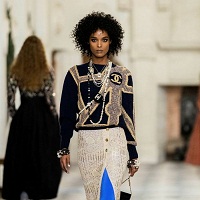 As the pandemic halted travel, fashion brands across the world took the semi-physical, mostly digital approach to present their collections. The phygital approach, guarantees almost six times the impact of purely physical or digital events, say market analysts at Launchmetrics.
Multiple approaches for phygital shows
A Financial Times report defines the term ‘Phygital’ in multiple ways. As the shows held during the current autumn season indicate, they can include both an intimate reception like the one held by Prada in Shanghai in September alongwith a digital film to showcase the label’s Spring/Summer 2021 collections. Similar approach was adopted by Dior to launch its Kim Jones’ 2021 Pre-Fall menswear collection while Bottega Veneta staged two catwalk shows for Spring/Summer 2021 in October 2020.
Designer Sarah Burton also presented her Spring/Summer 2021 Alexander McQueen collection in the brand’s Bond Street store, via a film with Jonathan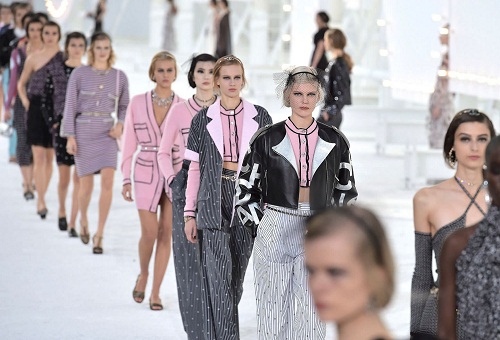 Glazer that showed her dressed being drenched in mud and water as models walked through the river Thames in London at 4am. Kering brand Saint Laurent filmed its latest Spring/Summer 2021 show in a desert. This helped the group grow its online sales by 101.9 per cent while e-commerce sales accounted for 12.5 per cent of total retail sales in the first nine months of the current year.
Anthony Vaccarello, Creative Director, Saint Laurent often designs his physical shows for his online audience too. On September 9, the designer launched a film to showcase a new menswear range, with models darting across Parisian rooftops. The show was later live streamed and watched almost 42.4million times. Following suit, Jones’ Pre-Fall Dior was also digitally and without an audience. Streamed across 18 different channels, including the gaming-geared platform Twitch, the show has garnered 140m views since December 8.
Integrating digital fashion with social media
Though brands have been streaming catwalk shows for almost a decade new, they are now integrating these social-media engagement. As was the case Balmain’s Spring/Summer catwalk show, which alongwith a physical event also included 58 video-screens, creating a “digital front row” of video figures who could not attend including Anna Wintour, Jennifer Lopez, x`and Cindy Crawford. Bottega Veneta’s S/S21 physical show in London’s Sadler’s Wells Theatre was also later streamed across multiple social channels like Tik Tok. Streamed across social media platforms like Weibo and Douyin, Prada’s phygital show had over 48 milllion views. The brand’ Weibo hashtag #PradaSS21 hit 170 million views in one day. The success of the brand’s phygital event led to its triple digit growth in e-commerce in the first half of 2020.
The tremendous success achieved by these shows the industry has become accustomed to experiencing and purchasing fashion online. Only time will tell, if it will ever shift back to its old method of functioning.
Testing times for global retail as bankruptcies abound
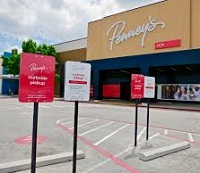 The pandemic has proved to be death knell for US retailers with stores remaining closed for most part of the year. Though steps like curbside pickups, shipping from store websites, furloughs and pay reductions have helped some retailers survive the crisis, the remaining have been forced to go down the bankruptcy lane.
As per a Womens Wear Daily report, brands that went rapidly into bankruptcy included private equity-backed Neiman Marcus Group, J Crew Group and John Varvatos. All these retailers filed for Chapter 11 protection, along with the Ascena Retail Group, Tailored Brands, Centric Brands and Le Tote. These were later joined by other US brands including JC Penney, Brooks Brothers, Retailwinds, Stage Stores, Lucky Brand, True Religion, etc. The situation is almost like a retail forest fire, says Greg Portell, Global Head-Kearney.
Bankruptcies bring unresolved issues to the fore
Though experts expect a new and reformed retail industry to emerge from the crisis, these bankruptcies have highlighted unresolved issues like the creation of the Mytherasa web business by Neiman Marcus. Creditors criticized the moving out of Mytheresa asset from Neiman’s debt structure into other affiliated entities as a maneuver to keep its value out of creditors’ reach. The argument led to Neiman Marcus filing for Chapter 11 bankruptcy besides a dramatic series of collateral events. The retailer emerged from bankruptcy after five months in September, under new owners and with over $4 billion of debt.
The company now faces new challenges like streamlining store base and headcount; generating more foot traffic in its surviving stores amid the pandemic and convincing to return to the stores. It also needs to sustain its online sales growth, and maintain high service levels.
Like Neiman Marcus, J Crew also emerged from bankruptcy in September which helped it to sharply reduce debt. The company now needs to reclaim lost position in the market though some of its stores are likely to remain closed. The new owners, Anchorage Capital Group, named Libby Wadle as its new chief executive officer in November.
Unlike, J Crew, bankruptcy was complicated for JC Penney as the retailer had to overcome opposition of lenders and shareholders before closing stores. Lenders opined that the bankruptcy deal favored a majority lender group while ignoring other creditors. All involved parties finally reached a settlement before the Texas bankruptcy court and approved sale in November. JC Penney is now led by a new team of managers led by Jil Soltau.
Fall before the rising
In Europe, bankruptcy trend was led by the UK with a number of high street stores shutting down due to a dip in physical retail, and the long months of lockdown. Some well-known retailers that shut shop during this time included department store chain Debenhams, which collapsed just hours after Arcadia Group declared bankruptcy in November; Arcadia, the parent of Topshop and Topman, which is being sold off part by part by Deloitte and Laura Ashley, Cath Kidston, Lulu Guinness and Oasis/Warehouse, all of which shut, but quickly found buyers for their IP and/or assets.
Mall operator Intu also went bankrupt this year, while DVF Fashion, Diane von Furstenberg’s UK subsidiary, wound down operations and shut its Bruton Street store in London’s Mayfair.
Now, the introduction of the COVID-19 vaccine and restoration of activities, the retail industry looks to charge ahead anew but now before going through the painful process of restructuring its operations.
FIMAST to be held from April 13-16
A unique event, in which world class manufacturers of yarn, textile machinery and technologies, hosiery, footwear and technical garments exhibit new products and innovations to international clients, FIMAST will be held from April 13-16, 2021 in Italy.
The four-day event will provide multiple contact opportunities with new international customers and consolidate relationships with existing customers through the tools made available by FIMAST.
It will have customizable pre-fitted booths and meet and match area for scheduled b2b meetings. The FIMAST Connect website will provide exhibitors with an online company profile page, an online catalogue, schedule video calls or chats with profiled customers
FIMAST will use functional and elegant pre-fitted exhibition solutions, optimized to facilitate exhibitors’ participation to the show. Booths will be modular and scalable according to needs and can be customized with accessories, furniture and graphics that can be ordered with a click on our online catalogue.
UKVFTA to help Vietnam, UK boost post pandemic recovery
The UK-Vietnam Free Trade Agreement (UKVFTA) is expected will help the two countries boost their post-pandemic recovery, says a report by Vietnam Plus. An article by Pincent Masons expects Vietnam and UK companies to benefit from reduced tariffs on imports and exports. The agreement will deliver annual savings of £114 million to Vietnam on exports to UK and £36 million on UK exports to Vietnam.
During the 2010 – 2019 period trade between Vietnam and the UK reached about $7.6 billion. Saved tariffs will help Vietnam escape the consequences of a decline in global demand that is hindering the export of manufactured goods. The COVID-19 pandemic has led to western countries’ cutting of orders for traditional Vietnamese exports, such as apparel, footwear, electronic devices and automotive equipment.
Associate Professor Wu Ming Jiang from the National University of Singapore’s Lee Kuan Yew School of Public Policy said Vietnam will have more access to the UK’s special strengths in management consultation services and in research and development.
China International Fashion Festival to be held in January 2021
A recent press conference revealed that the 6th China (Shenzhen) International Fashion Festival will be held in January 1-2, 2021 At Shuibei No.1, Luohu, Shenzhen. As per Zhou Shikang, President, Shenzhen Fashion Designers Association and Director-Organizing Committee, China (Shenzhen) International Fashion Festival, the main venue of this Festival is located in famous jewelry enterprises in Shenzhen Shellfish One.
Shenzhen Shuibei, Vice General Manager, No.1 Investment Development Co., Ltd said the main venue of the Shenzhen Fashion Festival has symbolic significance.
The press conference also held ‘Fashion live Innovation Forum’ It was attended by famous fashion designers Deng Dasheng and Yao Ziyi, well-known media people Chai ya, etc. The conference discussed topics like ‘How does fashion live broadcast meet the consumer demand of the audience?’ and ‘How to use the effective information feedback from online live broadcast to guide?’ More than 100 people, including responsible persons of well-known brands in Shenzhen, well-known fashion designers and news media reporters, attended the event.











