


FW
BCI benchmarks Greek AGRO-2 Integrated Management Standards as equivalent
The Better Cotton Initiative (BCI) has benchmarked the Greek AGRO-2 Integrated Management Standards as an equivalent to the Better Cotton Standard System. A Textilegence report says, this will promote sustainable cotton farming in Greece, Europe’s largest cotton producer. The development will enable AGRO-2 certified farmers participating in the BCI Program sell their cotton as Better Cotton from the 2020-21 cotton season. By the end of 2022, 5,000 farmers will grow AGRO-2 licensed cotton (equivalent to Better Cotton), on 40,000 hectare, producing around 185,000 bales.
The AGRO-2 Integrated Management Standards were developed by the national Hellenic Agricultural Organization, ELGO-DEMETER, a statutory body under the Ministry of Rural Development and Food. ELGO-DEMETER and the Inter-Branch Organization of Greek Cotton (DOV) – jointly ELGO-DOV – partnered to promote and implement the AGRO-2 standards for Greek cotton production.
The benchmarking of the AGRO-2 standards to the Better Cotton Standard System began in 2017 following interest expressed by Greek stakeholders. Upon completion, Greece began the official BCI country start-up process; culminating in the signing of a Strategic Partnership Agreement between BCI and ELGO-DOV; to recognize AGRO-2 certified cotton as equivalent to Better Cotton.
Dior emerges as the largest luxury investor in marketing
Dior is the undisputed winner in Launchmetrics survey of luxury industry’s marketing investments in aiding global markets. As per the survey, Dior’s marketing investments increased 3.6 per cent to $618.4 million in Q4 compared to the third quarter of the year. Chanel bagged second place with a marketing investment of $498.5 million, up 12.6 per cent quarter over quarter, while Gucci came in third with an marketing investment of $454.7 million, representing a 22.9 per cent increase.
Louis Vuitton and Saint Laurent rounded out the top five, with marketing investments of $405.8 million and $246.1 million, respectively. Other big winners included Moncler, whose marketing investments increased by 58.4 per cent quarter-over-quarter which placed the brand in 20th place. .
Dior maintained its leading position across the different regions monitored by Launchmetrics, including China, Europe and the United States. Chanel, however, took second place in Europe, third place in the U.S., and fourth place in China. Gucci remained in third place in both Europe and China, but rose to second place in the United States.
Bluesign revises 2020 list of chemical substances
Provider of solutions for a sustainable textile production, Bluesign, has revised its 2020 lists of chemical substances. The lists include toxicological and ecological profile of these substances, their legal classification and new legal consumer safety limits. The revision also includes revised risk assessments based on the Bluesign Critera for chemical assessment, feedback from experts of the Chemical Experts Group (CEG) as well as new analytical standards. It provides an updated list of restrictions on chemical substances published in: BSSL (Bluesign System Substances List); BSBL (Bluesign System Black Limits); and Bluesign RSL.
The BSBL specifies threshold limits for chemical substances in finished chemical products such as auxiliaries or dyes. The compilation of substances in the BSBL includes all substances for which a precautionary hazard-based threshold limit is defined.
The Bluesign RSL is an extract of the BSSL and contains consumer safety limits and recommended testing methods for the most important and legally restricted substances in textile and leather articles and accessories.
India’s apparel exports decline 24.52 per cent in 2020
Provisional data released by Ministry of Commerce and Industry reveals, India’s apparel exports declined by 24.52 per cent during 2020. India was able to ship apparels worth $12.26 billion in 2020 as against $16.25 billion in 2019 as market sentiments were down due to COVID-19. The country shipped most garments in September when its exports grew by 10.22 per cent Y-o-Y to $1.19 billion.
However, in the remaining months, apparel exports continued to decline. The year 2020 witnessed a heavy negative trajectory in apparel exports. The US remained the largest export destination in 2020 with shipments worth $3.30 billion though these declined by 24.04 per cent on Y-o-Y basis.
The second biggest importer was UAE which imported apparels worth $1.52 billion during the year which was a 18.47 per cent decline from the previous year. UK was the top destination for India in Europe as it shipped apparels worth $1.12 billion to the country, a 29.24 per cent yearly decline.
Adidas launches new eco-friendly collection with Stella McCartney
German sportswear giant Adidas has launched a new eco-friendly collection in partnership with British fashion designer Stella McCartney. As per reports, the collection is called ‘Futureplayground ‘and showcases activists and sustainable materials in its brand campaign.
Designed to inspire youth, the collection is Inspired by ‘land’ and borrowing cues from street sports and skater crews with pink, blue, and daring red tones,. It has been designed with Adidas’ ready temperature management technology. Available in a range of floral prints, one of the highlights of this collection is the ultra-lightweight parka made with primegreen, a high-performance yarn made with 50 per ent recycled content with the temperature tech allowing the leggings to remain dry and comforable.
According to Adidas, besides a range of hats, running packs, and bags, the collection includes the Ultraboost Sandal that uses primeknit, the company’s method of using specialized knitting machines that utilize thermoplastic yarns with a result that is strong and flexible single-layered textile all in the shape of a shoe. Created out of primeblue, a high-performance recycled material, the shoe delivers support and flexibility required to enhance an athlete’s motion and movement.
Milan fashion shows cancel physical events
Milan fashion shows, MICAM Milano, MIPEL, TheONE Milano, Lineapelle and Homi Fashion & Jewels Exhibition, which had joined forces in the #strongertogether exhibition project, have decided to cancel physical trade fairs planned from March 20 to 24, 2021 at the Fieramilano Rho exhibition centre.
Under Italy's Prime Ministerial Decree concerning the COVID pandemic, physical trade shows are prohibited until March 5, 2021. Large number of buyers from all over the world are not be expected to attend these events as international limitations on travel and health restrictions prohibit them to travel safely to Fieramilano Rho.
The organizers plan to invest their efforts and investments into digital initiatives over the coming weeks. These virtual events will offer exhibitors an opportunity to digitally present their collections and the results of their undeniable creativity.
AII initiative focuses on Italian luxury footwear and apparel industry
The new initiative launched by the Apparel Impact Institute (AII) focuses on the Italian luxury footwear and apparel industry. As per a Sourcing Journal report, the initiative helps Italian manufacturers coordinate, fund and scale environmental programs with measurable impact.
The program aims to unite brands, manufacturers, philanthropy and nonprofits to create an action plan to address top environmental issues, increase awareness and fund initiatives. The program was launched at the end of 2020 with a prioritized group of Italian manufacturers. The next phase involves recruiting 10-15 more manufacturers and luxury brands to participate.
AII had also launched the Clean by Design initiative led by the Natural Resources Defense Council at its textile mills in 2013. Stella McCartney was the first European partner and the first luxury brand to implement the initiative followed by luxury conglomerate Kering.
Though AII was formed four years ago, it has already made a lasting impact on the fashion industry. The organization began as a collective effort among the Sustainable Apparel Coalition (SAC), the Sustainable Trade Initiative (IDH), Gap Inc, PVH Corp, Target, HSBC Holdings plc and other parties to unite the industry for sustainability.
Sports insoles next focus area for apparel manufacturers
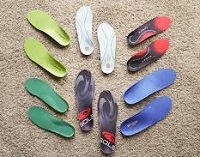 Due to the extra cushioning they provide, sports and athletic insoles are gaining popularity amongst sportsman. A report by Future Market Insights points out, the global sports insoles market is expected to grow at a CAGR of 7.7 per cent from 2020-2030. Insoles help sportsmen maintain feet comfort besides improving their body posture and providing breathability to the sole.
As gel insoles help absorb shocks generated during hardcore sports, they are gaining huge popularity amongst sportsmen, athletes, regular walkers and runners. Incorporated with a Messaging Gel Advanced technology, Dr Scholl’s® Athletic Series Sport Insoles help sportsmen reduce muscle strain. The gel insoles manufactured by Sofe Sole also ensure maximum cushioning for activities like running, cross training and walking. Having Skydex air bubbles in the heel and arch, insoles help sportsmen absorb impact.
Silicon and polymer emerge as favorite materials
Most sports insoles are made from silicone which absorbs the shock on heels, and metatarsal regions and maintains the foot’s arch. Besides silicone,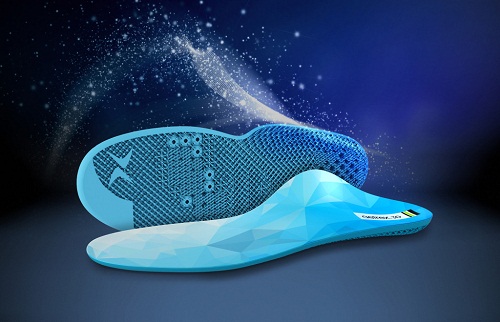 polymer insoles are expected to record remarkable growth in the next few years. One prominent manufacturer of polymer insoles is Amercule whose insoles are made with abrasion-resistant polyurethane, offering unparalleled impact reduction and shock absorption.
Manufacturers are also investing in the research and development of new materials in this area. For example, Nike has developed a new React technology that confirms durability.
Shortens delivery time
Another innovation in the development of sports insoles is 3D printing which simplifies fitting and customization process during insole manufacturing. It also reduces manufacturers’ production and delivery times. Hence, players across the world are opting for 3D printed sports insoles. Phits™ Insoles integrated their leading dynamic measurement foot scan solutions with Materialize’s 3D printing software to manufacture customized, dynamic 3D-printed insoles. Another specialized 3D-printed orthotics manufacturer is 8sole whose advanced biomechanics help alleviate the sportsmen’s pain by exerting only half of the total pressure.
Sports insoles for women are leading market growth as the percentage of women’s participation grew over 10 per cent in the Summer Olympic Games 2016 after 1950s. Many new players are entering the market with the US leading growth.
Rising costs and lack of knowledge impede future growth
Sales have seen good growth with online retailers recording strong CAGR during the forecast period. The rising cost of sports insoles are a major challenge the market. Also, consumers are not aware of many new products that are launched. Counterfeits are another challenge that insole markers have to contend with. Leading players are witnessing an increase in production of fake products which is impeding growth.
The pandemic has also disrupted demand across the globe. Ongoing transport ban has affected raw material imports, slowing production. The market is expected to revive in the current year as many players are switching to online versus offline sales. Players are advertising products at the some of the biggest events like Bauerfeind which sponsored events such as the Olympics and National Basketball Association (NBA) league. Manufacturers are also successfully penetrating newer markets with breakthrough innovations. The market is expected to reach a value of $19,650.9 million by 2030.
Luxury shopping gets a new twist with mystery boxes
 One interesting retail trend that has emerged from the pandemic is the concept of ‘luxury mystery boxes.’ Launched by two upstart companies -- Heat and Scarce -- these boxes contain clothing items from the surplus stock of boutiques, brands like Moncler, Balenciaga and Off-White. As per a Live Mint report, customers generally have no idea about the content of these boxes unless they receive and open them. Sold by gender, these boxes offer streetwear and contemporary styles like T-shirts and small accessories from brands including Rhude, Ambush, Casablanca and Haider Ackermann. Each items are priced at $400. On the launch day, Heat was able to sell thousands of these boxes using a tiered pricing scheme.
Variety of labels at pocket friendly prices
One major benefit these boxes offer customers is their pocket-friendliness. Young shoppers can buy a box containing luxury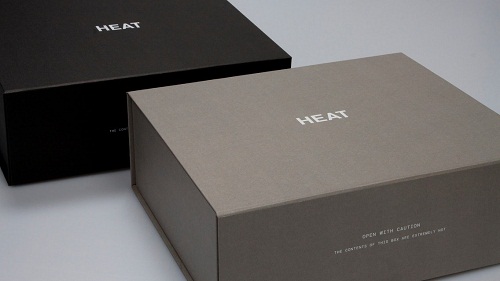 streetwear from Scarce for $698 and an ‘Outfit Box’ for $1,998. These shoppers often value a brand name more than the items and have a blind faith in their chosen brands.
While ordering these boxes, customers can choose their favorite labels. They can also return the boxes if the shipped items do not meet their approval. However, they need to be returned with all their contents within 14 days. Customers also have to pay returns shipping charges. This helps both companies to restrict their returns rate to less than 10 per cent.
Reflection of changing fashion trends
Both Heat and Scarce agree COVID-19 has made the concept of luxury boxes even more enticing for brands and retailers as it helps them offload unsold inventory, However, Heat and Scarce don’t just offload excess merchandise but make it more attractive with their slick packaging. These boxes are a reflection of the new emerging fashion economy where consumers were no longer skeptical of buying off-season clothes as it helps them add variety to their wardrobes.
Higher tariffs impede Bangladesh’s FTAs with trading partners
A report by the General Economic Division of Bangladesh says the country will face an uphill task in convincing major trading partners and regional blocs to sign free trade agreements (FTAs) because of higher tariffs as it looks to retain duty benefits after its graduation from the LDC group, according to a government report.
According to the report titled "Impact assessment and coping up strategies of graduation from LDC status for Bangladesh, ‘currently the country does not have any bilateral FTA with any country.
In December, Bangladesh struck preferential trade agreement (PTA) with Bhutan, its first bilateral trade agreement, as it looks to retain duty-free market access after it becomes a developing nation in 2024.
Under the deal with Bhutan, Bangladesh will get duty preference for 100 goods and extend the same benefit to Bhutan for 34 goods.
Bangladesh may ink PTA with Nepal soon. Besides, the government is in negotiation with 11 more countries to sign FTAs.
Post-LDC, Bangladesh may also have to negotiate a trading arrangement with the EU and the post-Brexit United Kingdom to ensure favourable access to the markets, which account for more than 60 per cent of exports from the country.
Beyond that, Bangladesh may seek more bilateral or regional FTAs if the projected trade creation (trade growth) contributes to growth and employment creation.











