FW
Pickleball apparel the rage in the US
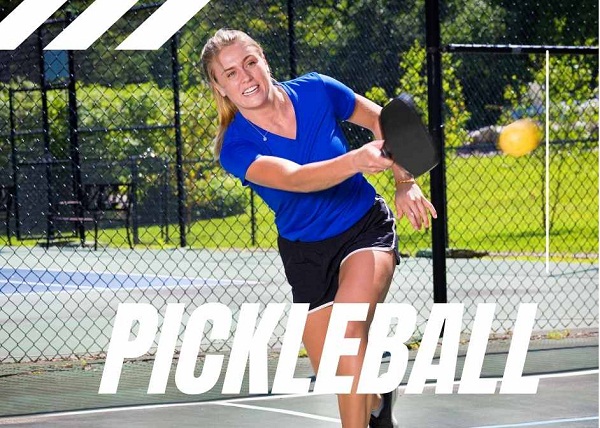
The pickleball apparel market is seeing rapid growth especially in the US.
Pickleball is one of the fastest-growing sports in America. A hybrid of tennis, ping-pong and badminton, it was invented in the 1960s but has exploded in popularity over the last few years. A large part of the sport’s appeal is its accessibility; its rules are simple, and anybody at any age can participate.
Pickleball attracted 4.8 million U.S. players in 2021 — a 40 per cent increase from the year prior. And clothing companies are competing to keep up with the demand for pickleball. Major brands have jumped into the market with their own pickleball products or lines.
Adidas has a whole section on its website devoted to pickleball that sells tennis shoes, polo shirts and tank tops. Fila sells pickleball crewnecks, flounce skorts and racer back tanks, while Marks & Graham sells a pickleball bag.
Making pickleball apparel
When it comes to manufacturing tennis apparel and pickleball apparel, the requirements of a garment are essentially the same. But there are options for tweaks. The ball is smaller in pickleball than tennis, so clothing such as tennis skirts or dresses that have a pocket to hold the ball could be more customized for pickleball. Civile Apparel, a pickleball apparel company, was founded in 2020. The company’s top products include a unisex performance T-shirt, a luminary skirt and a crewneck shirt. Most of the company’s shirts and sweatshirts are punny and playful. And while other pickleball apparel is more performance-driven, Civile Apparel is focused more on the everyday customer looking to wear the shirt off the court.
There are more than 80 USA Pickleball-sanctioned events from now until November 2023.
Led by US, China fall, Kontoor Q3 revenue down seven per cent
For the third quarter Kontoor Brands’ revenue fell by seven per cent. Revenue decreases were primarily driven by significant US retailer inventory rebalancing efforts in the quarter and the impacts of lockdowns in China.
US revenue was down eight per cent over last year. International revenue was down three per cent over the same period in the prior year. China decreased 24 per cent. Europe increased seven per cent.
Wrangler brand global revenue was down four per cent. Wrangler US revenue decreased five per cent compared to last year. Wrangler international revenue increased three per cent. Lee brand global revenue was down 13 per cent from the same period in the prior year. Lee US revenue decreased 19 per cent compared to last year. Lee international revenue decreased six per cent. Strength in Europe was offset by expected reductions in China due to the impact of Covid lockdowns.
Other global revenue of the company fell by 33 per cent compared to the same period in the prior year.Gross margin decreased to 43 per cent, a decrease of 90 basis points on a reported basis and 60 basis points on an adjusted basis compared to the third quarter 2021.
Kontoor Brands is a global lifestyle apparel company with a portfolio led by two of the world’s most iconic consumer brands Wrangler and Lee.
Jockey expands across UAE
Jockey has ten exclusive brand stores in the UAE. These stores are spread across Dubai, Ajman and Sharjah. Jockey started its journey in the UAE in 2014. The brand will continue to expand the network of exclusive brand stores in the UAE while simultaneously exploring newer formats of retailing including shop-in-shops and online platforms as part of the growth journey in the country.In the online space, Jockey is present in various e-commerce marketplaces including Noon, Centrepoint, Amazon, Namshi and Sivvi.
Jockey offers innerwear, sleepwear, loungewear and athleisure for men, women and children including accessories such as thermals, socks, facemasks, towels and caps.
Founded in 1876, Jockey has a rich history as one of the apparel industry’s original pioneers and innovators. Whether it’s inventing the first ever men’s brief in 1934, the revolutionary Y-front design of 1935, orthe Cellophane Wedding in 1938 which was the world’s first fashion show for innerwear, or the special line of underwear created for the first manned moon mission in 1962, or the first to launch the branded waistband, Jockey today is a design norm for innerwear the world over and has been at the forefront at revolutionizing the innerwear industry.Jockey has always strived to enhance consumer experience.
OTB joins fashion coalition
This confirms the commitment of the group to the responsibility and efficiency goals set by the coalition of leading fashion and luxury companies.OTB is an international fashion and luxury group that includes the Diesel, Jil Sander, MaisonMargiela, Marni and Viktor&Rolf and Staff International and Brave Kid. OTB’s membership of the coalition is a further step in its sustainability strategy launched in 2021 which lays the foundation for a virtuous, coordinated path for all company initiatives.Fashion Pact was established in 2019 with the aim of reducing the environmental impact of the fashion and textile industry. The global collective now counts over 70 signatory companies united in their commitment to sharing best practices and finding new solutions to meet three common goals: mitigate global warming, restore biodiversity and protect the oceans.Fashion Pact members are working on a number of initiatives to drive progress against the common goals in areas such as renewable energy, regenerative organic raw materials and biodiversity to help set a baseline in the industry. Over 200 brands are already involved in Fashion Pact.
Diesel is already active in a working group tackling the challenges of increasing the supply chain of regenerative and organic cotton across the fashion industry, and OTB's entry will see the group’s other brands become involved in a variety of areas.
Japan to host sewing machine show
JIAM (Japan International Apparel Machinery) will be held November 30 to December 3, 2022.
Bringing together sewing machine suppliers and apparel manufacturers, the edition will showcase apparel manufacturing solutions catered to each and every need, combining high-level skillsets and time-tested knowledge with the latest modern-day technology. Exhibitors from China, Greece, Germany, Hong Kong, India, Italy, Singapore, Taiwan, and Thailand will showcase their latest products and services.
The previous edition saw 258 exhibitors from 15 countries and regions as well as 15,257 visitors from 72 countries and regions, mainly from Bangladesh, China, India, Korea, Taiwan, Sri Lanka, and Vietnam.
Eleven special organiser seminars will provide relevant industry knowledge and practical skills for daily work. There will be seminars on manufacturing industry and digital technology, skills training seminars on twist jacket (lapel) pattern and matching sewing (front and shoulder seams) and shoulder keeper (prevent shoulder collapse), sustainable fashion and upcycling initiatives, win-win strategy on underwear sewing.
Catering to the B2C market, the home sewing machine zone will feature major domestic household sewing machine suppliers. To promote the joy of sewing, a special workshop will be organised covering topics such as the use of upcycled materials. Visitors will be taught to sew cup sleeves using discarded items and materials.
Marred by fall in exports to US, EU & Japan, China’s garment revenue up just 2%
China's garment industry registered steady expansion in terms of revenue, profits and exports in the first nine months of this year.
The industry’s revenue was up two percent year on year. Profit was up 1.8 percent over one year ago.During the same period, garment exports of the sector surged 14 percent year on year. China’s garment and accessory exports during January 2022 to August 2022 grew by 11 per cent. In the same period the country’s textile exports grew by ten per cent.
The EU countries, the US, Japan and Asean countries are still the major destinations for China’s textile and apparel exports. Year-on-year growth of exports to Asean and Bangladesh increased more rapidly to reach 23 per cent and 36 per cent respectively.
The proportion of China’s textile and apparel exports to Europe, the US and Japan has moved down gradually. The proportion to the US, in particular, has declined rapidly since the US-China trade war. Although China’s textile and apparel still hold a dominant position in those countries, especially in Japan, yet parts of the share are being squeezed by Southeast and South Asia countries.
China is in the middle of an outward shift of its low-end textile and apparel industry, and this is expected to continue in the future.
Cotton prices in India remain subdued
Cotton prices in India are likely to remain subdued over the third quarter of the current fiscal.
There has been an increase in cotton production by almost 12 per cent in the current 2022-2023 domestic season. The higher production of cotton is supported by a higher area under cultivation. Fresh arrivals of cotton have started in Gujarat and other cotton growing states. But with domestic as well as global consumption likely to be lower than in the previous season, a supply surplus is expected which is likely weigh down upon prices.
Though the spread between Indian cotton and international cotton prices has reduced considerably, Indian cotton has continued to be more expensive than international cotton. Spinning mills across India are expecting and waiting for a further fall in cotton prices.
In order to compete in the international cotton yarn market, local mills need to source rawmaterial at prevailing international prices as out of India’s total production of cotton yarn, 40 per cent is being exported. Higher cotton production could cool domestic prices and allow spinners to regain some export competitiveness but international cotton prices could fall on slowing yarn demand from Pakistan and Vietnam amid stable global production.
Cotton prices would be determined upon holding capacity of farmers and export as well as domestic textile industry demand in coming days.
Bangladesh’s EU apparel exports may fall further
Bangladesh expects a 20 per cent fall in apparel exports for October 2022. The country’s apparel exports fell seven per cent in September 2022. Already in the first 20 days of October 2022 Bangladesh’s garment exports fell by 18 per cent.
Among the reasons are the war-related crisis, the global economic turmoil, and a record inflation affecting retail businesses.A number of global brands are suffering from a decline in sales and unsold stocks, compelling many to halt current orders and production at the manufacturers’ end.
Domestic issues like power rationing, load shedding and a severe gas crisis have also impacted the sector.The downtrend is expected to continue for the coming months as the global retail market is disrupted by many challenges like the anticipated recession in the global economy, which is halting retail sales and demand for clothing.
Rising fuel prices and inflation have cut consumers’ purchasing power in European countries and decreased the demand for clothing products.The inflation rate in the European Union (EU), the largest destination of Bangladesh’s apparel items, reached nine per cent in September 2022. European shoppers are expected to reduce their Christmas purchases by up to 22 per cent, which will disallow the top brands, importers of Bangladesh’s apparel products, to clear their whole stock.
Home textile exports fall
Countries like China, India, Sri Lanka, and Pakistan are facing a fall in home textile exports.
China’s home textile exports slipped in the first quarter of this year but improved in the following quarters. They came down to $10.062 billion in the first quarter of 2022 from $12.031 billion in the fourth quarter of 2021 and moved up again to $10.292 billion in the second quarter and $10.681 billion in the third quarter of 2022. The exports amounted to $10.941 billion in the first quarter of 2021.
India’s exports of home textiles declined to $2.189 billion in the first quarter of 2022 from $2.333 billion in the fourth quarter of 2021. The export further slipped to $2.026 billion in the second quarter of 2022. The shipment was $2.153 billion in the first quarter of 2021.
Home textile exports from Sri Lanka came down to $32.516 million in the first quarter, $31.501 million in the second quarter and $27.239 million in the third quarter of 2022 from $34.013 million in the fourth quarter of 2021 and $35,993 million in the first quarter of 2021.
Pakistan’s exports fell to $1.465 billion in the first quarter of 2022 from $1.575 billion in the fourth quarter of 2021. The shipment stood at $1.262 billion in the first quarter of 2021.
Brands need a mix of online, offline presence to succeed in retail today, say experts

In a recently concluded roundtable discussion hosted by a leading ETRetail in association Salesforce, the conclusion was that omni-channel presence is no longer a luxury but a must have for brands to be relevant. Like the rest of the world, the business of retail has undergone a sea change and India in particular has witnessed this change all of a sudden, leaving brands to scramble and adapt as quickly as possible. At the core of the change is the buying behavior of Indian consumers who seek to engage with their preferred brands from just about anywhere, giving rise to the concept of omni-channel presence. Leading the omni-channel presence is online touch point where 43.5 per cent of mobile phone users in India are on their smartphones, the most used device for gathering product information and in a large number of instances, making the purchase.
Phenomenal retail growth
Pallab Roy, Partner, Business Consulting KPMG- India who moderated the session, pointed out as the world’s fifth largest economy, a position that India earned recently, the potential for retail is unprecedented. He expects India’s retail to reach $1.7 trillion by 2029. In terms of digital clout, India ranks the second largest nation of Internet users and the third largest nation of e-commerce purchasers. About 25-30 per cent of retail consumers shop via their smartphones. This combination clearly spells out how brands need to dominate the digital space to communicate, reach out and capture consumers and their wallets.
Roy also stated this scenario was not only conducive for retail brands to reach out to a larger populations but also imperative to be able to sustain themselves in the long run. With impressive growth figures, e-commerce would become perhaps the largest point of sale in the near future. However, he advised brands need to be omni-channel driven rather than just focus on online presence.
A case in point is Godrej Interio, the reputable furniture company. As Subodh Mehta, Senior Vice President, Godrej Interio who participated in the roundtable stated, whilst Godrej Interio has a strong physical presence as consumers still prefer to inspect furniture in real environments, they noticed the changing times and have established their online presence as well which increased their sales immediately – in many cases decisions to purchase were made online and the actual purchase was made in store. Whilst the Indian consumer is very comfortable with a brand’s channel plurality, they usually focus on the channel that suits them best or is the most convenient and then remain loyal to these channels. Moreover, the nature of the product dictates the channel preference.
Talking about brand Suta’s retail transformation journey, Taniya Biswas, Co-Founder explained retail businesses cannot rely on a single channel to survive in this highly competitive market. As a brand Suta aims to provide 365 days of work to weavers which is why, they had to venture into multiple marketplaces, both physical and virtual so to ensure business continuity even if their performance on one channel is substandard.
Talking about the major challenges retailers face in omnichannel ecosystem, Saurabh Gupta, Founder and Director, Kalki Fashions said, none of the customers are purely offline or online shoppers. Therefore, to cater to their needs brands must ensure accessibility across various touchpoints. However, a major challenge that retail brands come across in the omnichannel model is providing 100 per cent inventory visibility to customers across all channels, which happens to be imperative to ensure customer retention.”
Changes in customer journey and experience
Earlier, the vast majority of retail was discount driven but nowadays convenience, availability and choices are the main drivers as consumers are willing to pay full price to enjoy these benefits. Creating a superior customer experience through the right mix of omni-channel, logistics, inventories and customer service will make brands establish themselves firmly in the retail firmament. Interestingly, as digital natives Gen Z enter the retail market place, they are driving the digital channels to provide their complete brand experience which should ideally end in online purchases. This insight is particularly useful as brands can then segment their consumers and focus on communicating and driving traffic towards sales by using their multiple channels, prioritizing each channel for the best suited consumer segment.
On Gen-Z prompting retail brands to go digital, Almona Bhatia, Chief Strategy Officer- Luxury, Tata Cliq said, customer mindset has shifted considerably over years. With Gen Z streaming into the customer pool, organizations are increasingly inclined towards e-commerce since the young generation that is digitally native prefers online over offline.
Explaining why more and more consumers are shifting to digital retail, Devangi Parekh, Director, Aza Fashions highlighted, customer taste has dramatically changed over the last few years. They are comfortable with spending large amounts of money online provided they get adequate information and quality service. Modern-day consumers are digitally present and the convenience factor of e-commerce is an added incentive for them to move to online retail.
Importance of technology in retail journey
Integrating technology in the retail journey has become imperative felt experts, as Nishant Kalra, Regional Vice President-Digital Experience, Salesforce India, said, consumers expect to get the same hyper-personalized shopping experience across all touchpoints, whether physical or virtual. Hence, Salesforce India engages with numerous brands and technology solution providers to homogenize customer journeys across multiple channels, be it online, offline, or even meta-based. He said, technology has made this milestone achievable for retail brands. However, maintaining equilibrium between technology integration and human interaction is imperative to augment service quality as well as customer experience.