FW
Reliance partners with FRX Nofia
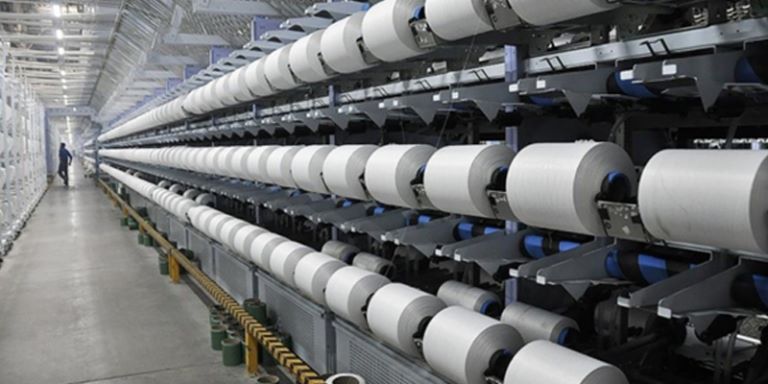
Reliance Industries will use FRX Innovations’ Nofia technology to enhance the sustainable edge of its well-established Recron FS fire-resistant polyester for polyester textile applications. FRX Innovations is an American company offering eco-friendly flame retardant solutions.
Reliance produces polyester staple fibers and filament yarns. Nofia retains a distinctive polymeric phosphorus-based chemistry. Nofia additives are certified by Oeko-Tex Standard 100 for textile applications and other sustainability certifications accrediting that the technology meets these global standards of safety and sustainability.
Recron FS is manufactured at Reliance’s state-of-the-art facilities and Reliance is committed to deliver exceptional fire safety without compromising health, environment and aesthetics. Recron FS is a part of Reliance’s extensive R&D achievements in attaining its commitment to launch new products that are completely sustainable throughout their lifecycle and responsibly using natural resources. Nofia polymeric phosphorus additives deliver improved tenacity. Nofia is the only flame-retardant technology that allows the use of recycled polyester as a feedstock to contents above 60 per cent with the capability of reaching above 90 per cent. This ability to use it with recycled polyester makes it a sustainable technology. The new technology also enables adjustable flame retardancy from levels of 7,000 ppm to 25,000 ppm of phosphorus, depending on end-user needs.
South Korea to host Asean Week
Asean Week will be held in South Korea, November 10 to 13, 2022.
This is an annual cultural event exploring the histories and cultures of the Asean countries Brunei, Darussalam, Cambodia, Indonesia, Laos, Malaysia, Myanmar, Philippines, Singapore, Thailand, Vietnam and South Korea and is aimed at promoting economic, social and cultural cooperation among them.
Asean Week was first launched in June 2019. Textiles and fabric products from Asean member states will be on display at the exhibition, along with introductions to their places of origin as travel destinations and stories related to the fabrics.
The fabrics have been created by master artisans using traditional weaving methods that have been passed down through generations. PuaKumbu from Malaysia will feature spiral patterns and intricate hooks which took a year to complete. Lanh My A silk of Vietnam is made by weaving the finest silk threads colored with dyes made from the mac nua fruit. The textile is often used by Vietnamese fashion designer Nguyen Cong Tri, whose designs have been worn by several celebrities including K-pop star Rose of Blackpink, Margot Robbie and Beyonce.
The event aims at enhancing an understanding and awareness of Asean culture and tourism and providing an opportunity to appreciate the uniqueness which derives from diversity.
India: Gokaldas expands capacity
Gokaldas Exports is building three new manufacturing facilities. These will be in Madhya Pradesh, Tamil Nadu, and Bangladesh. The new facilities will add an extra five million pieces annually to the company’s existing yearly production capacity of 30 million pieces.
Currently, Gokaldas operates 19 manufacturing units. The Madhya Pradesh facility spread over ten acres is being developed in two phases. By the end of fiscal 2024, the company would open its first international factory which would in Bangladesh to produce readymade garments.
Gokaldas is investing Rs100 crores in the construction of a fabric processing facility in Tamil Nadu. The facility would manufacture 20 tons of fabric a day.
Gokaldas Exports is an apparel manufacturer and exporter. The company has improved its bottom line from incurring a loss to a profit and has grown substantially over the last five or six years. The emphasis on operational improvements and the increased focus on value-added pricing have helped Gokaldas gain better realisation from customers.
With all these factors, it has been able to deliver better bottom lines. In fiscal year 2022, the company generated revenues of Rs1,801 crores and expects to have a 25 per cent growth in revenues in fiscal year 2023.
Fall in Sri Lankan garment exports likely
Sri Lanka’s garment exports may fall by at least 30 per cent in the next four months. Some of the orders received by Sri Lanka have been transferred to countries like Bangladesh, Cambodia, Laos, Myanmar, Vietnam and Ethiopia due to the political and economic instability prevailing in the country.
Inflation in many other countries, including the United States, has also led to the reduction of orders.The demand for Sri Lankan garments has also fallen due to the Russian-Ukrainian war, disruption of Russian gas supply, rising fuel prices and inflation in European countries.
Sri Lanka’s main garment export destinations are the United States of America, the European Union and England.
Sri Lanka is attempting to finalise free trade agreements with countries like China, India, Japan and Australia. These are expected to help boost exports and strengthen the industry’s resilience.August 2022 saw a 20 per cent increase in export turnover generated by the apparel sector but at present Sri Lanka is not competing on a level playing field. Its main competitor countries like Bangladesh, Vietnam and some African nations have duty concessions in global markets, which it does not have.Sri Lanka’s only concessions are for the UK and the EU markets, and those come coupled with a variety of strict conditions pertaining to the origin of raw materials.
India: Arvind Q2 profit up 79 per cent
For the second quarter Arvind’s consolidated net profit rose by 79 per cent. Revenue from operations was up two per cent compared to the corresponding period of the previous fiscal.Profit After Tax from continuing business and before the exceptional item was Rs 85 crores.
Accounting for one-time items, PAT was Rs 125 crores. Arvind had a gain of Rs 40.52 crores from exceptional items, which includes profit on the sale of a subsidiary and provision from the value of land in Gujarat. Total expenses were up three per cent. Revenue from textiles was up one per cent.
Overall, textile revenues grew by three per cent as woven and knits volumes held steady. Higher price realisation helped hold unit margins, though it suffered in percentage terms. Revenue from Advance Materials rose five per cent in the second quarter though on a first half basis revenues were up 21 per cent as many orders has spilled over from quarter one to quarter two in the previous year.
Leading textile manufacturer Arvind offers the widest array of textiles and fashion brands in India. The bouquet of brands – both homegrown and global – straddles lifestyles, categories and price points. International fashion brands wanting to enter India are keen to partner with Arvind.
Pak exporters await tax refunds
Textile exporters in Pakistan are awaiting sales tax refunds. They say the delay in refunds has disrupted their business activities and future plans and is badly impacting exports as exporters’ liquidity has already taken a strong hit from negative impacts of the global recession.
There is a fear that textile exports in November might fall. Achieving export targets, say the exporters, is only possible if the government continues its favourable policies towards the industry.
Pakistan’s textile industry, which comprises 46 per cent of the total manufacturing sector, provides employment to around 15 million Pakistanis and contributes 8.5 per cent to the GDP.
Regionally competitive electricity tariffs have enabled the textile sector to perform exceptionally well during recent years. The textile export industry has entered a sustainable economic growth phase; however, the emergence of an economic crisis could be an instant setback.
Exporters say there is a strong but not accurate perception that the government is providing too many subsidizes to the textile sector in terms of energy prices and tax exemptions on imports of raw material. They say the subsidised advances to the textile sector are less than what the government owes to the sector under various refund schemes and that the sector is also paying the cost of this stuck-up working capital.
Canada show sees strong Chinese presence
China is having a strong presence at Apparel Textile Sourcing Canada (ATSC), November 7 to 9, 2022.
There are some 60 exhibitors from China including ten major Chinese brands focused on bringing updated designs and fashion to the professional buyers attending ATSC. These brands include Aparso, V Roc V, Bella Fitness, Rion Sports, Tian Thai Sports, Evergreen, Beyond Garments, Mizuda, Wanshun, and Changshu Garments Town. Both Hubei and Zhejiang provinces have sponsored pavilions, each bringing 20 high-quality textile and garment suppliers to the event. Thirteen Chinese manufacturers have come in person while the others are participating from China and utilizing Canadian representatives on-site.
From January 2022 to September 2022, China’s textile and apparel exports to Canada amounted to $3.85 billion, indicating that Chinese textile enterprises are still actively seeking to reach customers despite the tightening economic situation. Several Chinese exhibitors see ATSC as one of the most efficient ways for overseas companies to enter the Canadian market.
Apparel Textile Sourcing Canada (ATSC) has attracted more than 150 apparel, fabric and home textile companies from overseas. In total more than a dozen countries and regions are participating in the exhibition, including China, India, Bangladesh, Pakistan, South Korea, Mongolia, Vietnam, and more. The event anticipates over 2000 attendees during the three-day trade event.
Adidas Q3 revenue up four per cent
For the third quarter, Adidas’ currency-neutral revenues increased four per cent.
Deteriorating traffic trends in Greater China as well as slowing consumer demand in major Western markets weighed on the revenue development. In addition, the company’s decision to suspend its own operations in Russia significantly reduced revenues during the third quarter, particularly impacting the company’s direct-to-consumer (DTC) business. Excluding Russia/CIS, revenues in the company’s own distribution channels were up at a double-digit rate, reflecting the successful sell-through of Adidas’ products.
Within DTC, the company’s e-commerce revenues increased eight per cent. Wholesale revenues during the quarter were impacted by inventory take backs in Greater China reflecting the company’s initiatives to clean up the full-price channel and clear excess inventory through its own factory outlets.
From a category viewpoint revenue growth was the highest in Adidas’ strategic growth categories football and running, both growing at strong double-digit rates. In football, the jersey launches ahead of the Fifa World Cup 2022 fueled consumer excitement prior to the tournament. Revenues in running were driven by the latest iterations of Adidas’ successful running franchises, including Adizero and Supernova, which both grew more than 50 per cent during the quarter.
Drops as part of the Gucci and Balenciaga partnerships continued to spark excitement around the Adidas brand.
Workshops address gender issues in Cambodia
Cambodia is addressing problems faced by women garment workers. Workshops will be held every year for continued dialogue over gender-equality issues and will operate in all major hubs, including Phnom Penh, Kandal, Kampong Cham, Kampong Chhnang, Kampong Speu, and Takeo.
The aim is to continue to build and have the necessary roadmap to ensure an equal footing within the workforce. Women account for around 90 percent of the workforce in the garment sector in Cambodia and the sector is a key driver for employment, foreign direct investment, and exports. Supporting women is seen as directly contributing to economic growth in Cambodia and providing job opportunities for Cambodian people. As of now highlevel positions are dominated by men.
Gender equality and safer working conditions are vital elements for a rapidly growing country like Cambodia.Cambodian businesses are expected to move toward diversifying the leadership team, investing more in upscaling the workforce, and listening to their team’s voices.
Cambodia has been at the forefront of gender equality but now wants to adopt a gender transformative approach. More sourcing countries are moving to a responsible and sustainable business model. Gender equality helps to drive the local economy by providing a diversified perspective in decision-making.
Global textile chemicals market grows at three per cent
Textile chemicals show good growth. The global textile chemicals market is growing at three per cent a year.
Textile chemicals are highly specialized chemicals that are used in different processes, including pre-treatment, dyeing, printing, and finishing, in the production of textiles. Chemicals used in the textile industry provide desirable properties to textiles.
The global textile chemicals market is significantly driven by the rise in demand for apparel, growth in home furnishing activities, and lucrative presence of manufacturers of textile chemicals across the globe. The apparel segment dominates the global textile chemicals market. Apparel products include active wear, children and adult personal clothing, casual wear and formal wear, lingerie, undergarments, sportswear, and fashion accessories (scarfs, belts, socks, etc).
Growth in awareness about health, hygiene, and safety is a key factor that is likely to propel the demand for apparel in the near future. Growth of end-use industries is expected to lead to a trickle-down effect in the local manufacturing value chain, thus benefitting national manufacturers.
Home furnishing is a key application of textile chemicals. Advent of e-commerce in home furnishing is likely to propel the home furnishing segment. Rise in expenditure on home furnishing in developing economies such as India, China, and Thailand is expected to drive the textile chemicals market, as textile chemicals are widely used in the manufacture and spinning process of home textiles.