


FW
US Cotton Trust Protocol to track cotton fiber in partnership with TextileGenesis
The US Cotton Trust Protocol aims to trace and track cotton fiber on its blockchain platform in partnership with TextileGenesis. This will encourage sustainable practices across the cotton supply chain and enhance its transparency with consumers and retailers.
Launched in 2020, the Trust Protocol has over 300 brands, retailers, mills and manufacturers in its member network, including Gap and Next. Transparency and traceability practices are growing in demand across almost all industries. The Cotton Trust Protocol addresses these challenges by collecting data related to sustainability in cotton production and setting verifiable and measurable goals.
The program aims to reassure brands that the cotton has been sustainably grown and has low environmental and social impact. It works on providing transparency across the supply chain through its Protocol Credit Management System (PCMS), which will be enabled by TextileGenesis platform to record and verify every movement of U.S. cotton fiber. Incorporating the TextileGenesis blockchain solution will capture article-level transactions between the participants in the supply chain.
The Trust Protocol brand and its associate retail members will also be able to claim Protocol Credits on completion of cotton products. These are digital tokens representing the environmental metrics and sustainable practices adopted in the creation of the item. Pilot trials for the program will begin in June of this year and it will be fully launched by the beginning of 2022.
Sodecoton to increase Cameroon’s annual cotton production by 2025
Cameroon’s cotton development corporation Sodecoton plans to increase Central African country Cameroon’s annual cotton production to 600,000 tonne by 2025. To reach this ambitious target, Sodecoton plans to develop high-yielding seed varieties, instead of the earlier planned introduction of genetically modified (GM) crops.
Sodecon expects Cameroon’s cotton production in 2020-21 season to rise to 350,000 tonne. As per China Textile, Cameroon cotton production in the previous season was 328,000 tonne, most of which was exported.
Cameroon exports its cotton to Asian countries, with China being the main destination. The other Asian countries that import Cameroon cotton include Bangladesh, Vietnam and Indonesia.
In 2019, Cameroon exported 18.4 per cent of its cotton to China, followed by 12.2 per cent to Italy, and 11 percent to India. As a part of 2020-30 National Development Strategy the Cameroon government merged Sodecoton and Cotonnière Industrielle du Cameroun (Cicam) last year to boost the country’s cotton textiles industry. Prior to merger, Sodecoton organized the production and marketing of cotton in Cameroon.
Next raises full-year profit forecast
British fashion retailer Next raised its full-year profit forecast for the second time in two months as it reported better than expected trading in the first-quarter. As per reports, the group had predicted a 10 per cent decline in its first quarter sales as against the same period in fiscal 2019-20. However, the retailer has beaten this forecast by £75 million. Full price sales in three weeks to May 1 increased 19 per cent.
Yet, the retailer has not raised its forecast for the rest of the year as the spike in demand witnessed after each of its previous lockdowns petered away after a few weeks, says Simon Wolfson, CEO.
However, the retailer has raised its forecast for 2021-22 pretax profit to £720 million from the £700 million forecast in April. Post easing of lockdowns, Nike has seen a significant recovery in sales of adult clothing, particularly women’s casualwear. But its sales of warm weather holiday wear, such as swimwear, remained at much lower levels than two years ago.
New Gen consumers setting new standards in luxury retail
 Till a decade ago, the luxury market was dominated by baby boomers and Gen X. Today, majority of luxury consumers are barely over 40 years. Having a completely different set of values, millenials are setting new standards in luxury retail. Lowering of age group has led to the inclusion of new styles in luxury, as reports Edited. Streetwear has become an important segment of the luxury market with demand for hoodies rising almost 70 per cent since 2019 and women’s sneakers growing 35 per cent.
However, price rise is mostly driven by traditional categories including handbags. Since 2019, prices of luxury handbags have grown to almost $2,500. However, the market also offers more affordable handbags by Coach’s Pillow Tabby of Telfar’s Medium Shopping which are priced at $500 or lower
Pandemic accelerates luxury’s online shift
The pandemic has accelerated luxury brands’ shift to online platforms. Luxury brands like Cartier, Louis Vuitton, Tom Ford, Dior and Fendi have launched online operation across the US and UK. This has also paved the way for more accessible luxury. Luxury is no longer limited to exclusive or vintage products. The category now also includes streetwear items like T-shirts, hoodies and sneakers priced at $500 or lower.
However, the bulk of luxury goods are priced between $500-$1,000. The market is shifting away from lower end price structure with retailers refusing to operate in the $1,500-$2,000 range. Brands like Gucci and Louis Vuitton have revised prices of their handbags. These are now available online at $2,000-$2,500 as against $1,500-$2,000 in the pre-pandemic period.
Vaccine rollout and reopening of economy has encouraged more consumers to return to the luxury market, opines McKinsey & Co. It expects luxury retail to grow between 1 to 4 per cent in 2021. However, the rising price of luxury goods hasn’t deterred affordable players. They are launching luxury bags priced at $500 or lower. Coach Pillow Tabby has launched a Y2K-inspired, Gen Z approved shoulder bag which has racked up 47,000 views since mid-March in a video. Telfar has also launched a vegan gender-neutral shopping bag that was awarded ‘Fashion Design of 2020 Award’ by London Design Museum.
Growing attraction for resale platforms
With stigma vanishing, second-hand or pre-loved has become more aspirational amongst luxury consumers. With more consumers prioritizing sustainability, they are increasingly attracted to resale platforms like Depop, The RealReal and Vestiaire Collective. This shift within the luxury market is likely to persist with retailers’ growing emphasis on circular economy.
Luxury brands are also focusing on DTC strategies to achieve higher margins and control prices. For instance, Prada has tightened its distribution channels leading to a contraction of stocks of Farfetch, Net-a-Porter, Mr Porter and Selfridges. By 2026, millennials and Gen Z will collectively account for about 60 per cent of global luxury sales, opines Boston Consulting Group. Retailers need to concentrate on this group that has an impressive spending power of over $75 billion. They need to upgrade their digital and social technologies to ensure transparent shopping experiences for millennial consumers.
MMF focus can help Bangladesh enhance textile value chain
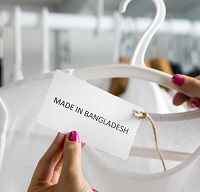 From 2009-19, global textile and apparel trade grew at 3 per cent CAGR to reach $818 billion in 2019. Majority share is likely to be claimed by the apparel segment which is likely to grow to $470 billion, says a Textile Value Chain report. This will be followed by fabric and yarn as the second and third largest traded categories.
Synthetic fibers to drive future MMF demand
Global consumption of fibers has been growing since the last decade. In 2019, consumption reached 108 million metric tons with majority being driven by synthetic fibers. It is likely to further grow by 4 per cent between 2019-23, says a 2020 Lenzing Report. The Fibers Global Supply Demand report 2018 published by Wood Mackenzie predicts majority of consumption will be centered around polyester with 56 per cent consumption followed by cotton 26 per cent. Man-made fibers will continue to attract consumers across the globe.
Over the next few years, manmade fibers are likely to become the fibers of choice for consumers. Their demand will be driven by cost competitiveness,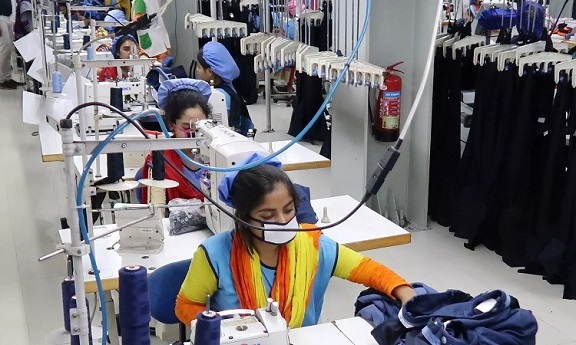 changing perceptions and increasing acceptability. These fibers also offer unlimited recycling opportunities while their versatility makes them useful in end-use categories such as sportswear, leisurewear, women dresses, home textile, automotive, carpets and other industrial sectors
One of the world’s largest RMG producers, Bangladesh has a huge potential in the MMF segment. The country currently has only 27 mills producing man-made fibers. Production of polyester stable fiber is only half of its capacity, as per the Wood Mackenzie Chemicals Report 2018 and TTS analysis. To explore MMF potential further, the country needs to utilize and strengthen its existing resources.
In 2019, Bangladesh held approximately 5 per cent share in global MMF apparel trade whereas it share in the global cotton garments trade was close to 15 per cent. However, its share has consistently been increasing over the last few years with Bangladesh currently having 11 per cent share in global sweater market.
More investments and duty relaxations
To increase its MMF market share, Bangladesh needs to set up more factories production MMF textiles and apparels. It also needs to invest in the backward linkage of the man-made textile value chain, to capture 80 per cent of the demand. Currently, China, Viet Nam, Indonesia, South Korea, Thailand etc, are the world’s leading man-made fiber exporters. On, the other hand, Bangladesh’s exports have stagnated at 20 per cent, says a study by the Bangladesh Garment Manufacturers and Exporters Association (BGMEA).
To accelerate MMF production, Bangladesh needs to ease its FDI rules. The government should also permit raw material imports under a duty-free facility, opines Chairman, BTMA. The current COVID situation and growing apparel sourcing diversification offers Bangladesh an opportunity to enhance its textile value chain with MMF investments.
V2 Retail closes non-performing store in Karnataka
Sportking India’s March quarter profit jumped by 3,475 per cent to Rs 44.33 crore from Rs 1.24 crore posted for the year-ago period. Sales grew 27.51 per cent to Rs 413.37 crore from Rs 324.19 crore during the year-ago quarter.
For the financial year 2020-21, net profit surged 583.9 per cent to Rs 84.53 crore from Rs 12.36 crore in the previous financial year. Sales declined 3.60 per cent to Rs 1306.24 crore from Rs 1,355.05 crore in the financial year ended on March 31, 2020.
Established in 1977, Sportking India manufactures and retails textile products such as knitted fabrics and garments including T-shirts, shirts, sweaters, jackets, jeans, leggings, shorts and nightwear besides yarns.
According to the company website, Sportking India is associated with renowned brands such as S. Oliver, Sailor, Jockey, Interloop, IKEA, H&M, Marks & Spencer and Zara; owns manufacturing facilities in Punjab and Himachal Pradesh and has over 100 retail garment stores across states.
While the company mainly serves Indian customers, it also exports products to over 30 countries including Morocco, Egypt, Kenya, Brazil, Portugal, USA, Czech Republic, Cana, Spain, Poland, South Africa, Vietnam, Singapore, Japan and Dubai.
COVID-19 impacts Bangladesh’s apparel exports to the US
The fallouts of the pandemic COVID-19 have badly impacted the prices of Bangladesh’s apparel exports to the US.
The price of imported apparel in the US declined to $2.60 per Square Metre Equivalent (SME) in February this year against $2.95 per SME in February 2020, according to data from the US Department of Commerce.
The US imported $5.39 billion worth of garments in February this year as against $5.91 billion in the same month of 2020, reports Textile Today.
Last year, during the pandemic time, prices of Bangladeshi-made t-shirts declined in the US markets although the prices of the same t-shirt made in Vietnam were almost double those of Bangladesh to the American markets.
In the US market, the price of a dozen Bangladeshi T-shirts made from cotton fell by 20 percent to $17.99 in 2020 from $22.43 in 2019 while the price of the same product made in Vietnam declined by 17 percent to $31.9 in 2020 from $38.2 in 2019.
After the third quarter of the fiscal year 2020-21, the export earnings from RMG stood at $23.49 billion which was $25.95 billion during the same period of FY2018-19, indicating a 9.49 percent decline equivalent to a short of $2.46 billion.
Knitwear export struggled to retain 0.35 percent growth in March 2021 over March 2019; the average growth of knitwear export for July-March 2020-21 than July-March 2018-19 is -1.15 percent.
Woven garments is facing the toughest time ever, while export has suffered double-digit decline since August 2020, and in March 2021 compared to March 2019 woven export fell by 27.70 percent. The nine-month average growth between 2021 and 2019 stands at -17.62 percent.
The price trend continues to worsen as March 2021 posts a 5.11 percent decline in unit price compared to March 2019.
Fashion Roundtable puts forward11 recommendations
Fashion Roundtable, the secretariat for the All Party Parliamentary Group (APPG) for Textiles and Fashion, has put forward 11 recommendations to help mitigate Brexit's impact on the UK fashion and textile industry.
The APPG has called for the government to; add garment workers to the Shortage Occupation List for visas and reconsider visa requirements for fashion creatives, as well as reinstate VAT refunds for overseas tourists and extend it to EU visitors. It has also called for the government to address issues relating to the rules of origin, which stipulates that goods sent to the EU can only be tariff-free if they are manufactured in the UK.
It has also urged the government to consider improving the ease with which fashion creatives can travel around the EU for business purposes. As a result, it has called for the ATA Carnets "Admission Temporaire/Temporary Admission", a customs declaration that permits the temporary export of goods or equipment, to be subsided or scrapped. It has also proposed a cabotage exemption for the creative and fashion sector which would mean that large amounts of equipment can be moved across borders easily.
The APPG has called for the government to match the £23m package of export support the fishing industry and provide tax relief for brands who manufacture in the UK.
Pakistan emerges as world’s top apparel exporter
Pakistan emerged top apparel exporter to the world in February’21, reveals Sourcing Journal. The country increased its apparel supply to the US amidst COVID-19, says Abdul Razak Dawood, Adviser to Prime Minister. On the other hand, apparel exports by India, Vietnam and Indonesia to the US declined both in value and volume terms.
Pakistan government’s policies for the textile industry played a significant role in enhancing its exports. However, the country is facing a shortage of seven million bales of cotton. Giving in to the pressure from the textile industry, the government recently allowed duty-free import of cotton yarn.
During the pandemic, the medical textile industry also grew as bed sheets were discarded frequently, says Karim Punjani, Head, DH Corporate Research. The pandemic has also accelerated countries’ need to diversify their supply, offering Pakistan an opportunity to boost its exports. Pakistan can encourage foreign direct investment in this sector by inviting companies to move their factories from other countries to the free economic zones in Pakistan, he adds.
Revenue jump leads to revision in Under Armours annual forecast
The 35 per cent jump in revenues has encouraged Under Armour to raise its expectations for annual profit and sales. The brand posted 32 per cent increase in quarterly revenues from North America owning to the rollout of COVID-19 vaccines and new rounds of government stimulus. Revenues from international segment surged 58 per cent.
In the upcoming year, the brand aims to spend more on marketing, stores and website, to take advantage of recovering markets, including North America, China and Germany. It expects marketing and incentive compensations to make up about three quarters of the increase in costs this year. Its full-year adjusted earnings per share are expected to increase between 28 cents and 30 cents while full-year revenues are expected to rise by high-teens percentage.
The company forecasts second-quarter revenue to rise about 70 per cent after store closures hammered sales a year ago. Its first-quarter net revenue rose to $1.26 billion, beating estimates of $1.13 billion, according to IBES data from Refinitiv.











