FW
Russian Fashion Council invites applications for Global Talents Digital
Russian Fashion Council has invited designers from across the globe to apply for the international hybrid fashion event - Global Talents Digital. Dedicated to sustainability, the third Global Talents Digital issue is dedicated to sustainable development of clothing footwear and accessories. The event will take place phygitally in the end of July.
The previous edition of Global Talents Digital was held in September and got over seven million views. 103 participants from 34 countries and areas united to explore the issue of sustainability. The show encompassed designer collections, works of artists and virtual models in collaboration with non-profit organizations and technology startups. It was watched from 1,519 cities throughout the world and streamed on 100 international media websites as well as in the social networks. The shows were covered by media across world Vogue Italy and Forbes USA to Vogue Russia and Kommersant
For the upcoming edition, designers and brands need to present a collection that hasn’t been demonstrated to the audience or the media. They need to prepare a video presentation of the collection or demonstrate it as a stream. They can use AR/VR elements in the presentation. The final list of participants will be announced by the international Advisory Board of Global Talents Digital.
Textile mills use heat recovery technologies to capture waste heat energy
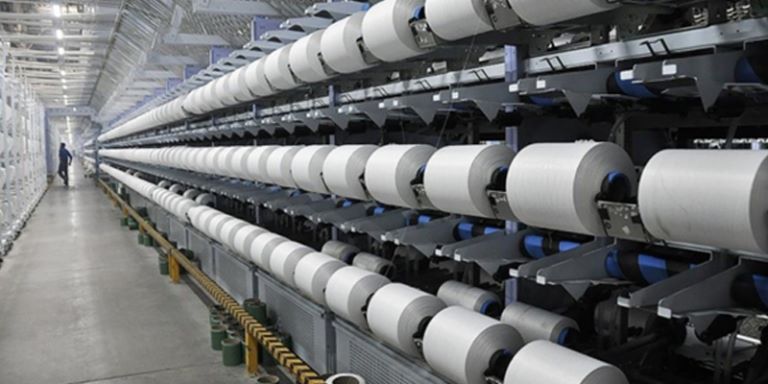
Big spinning, dyeing, washing and weaving mills are using new heat recovery technologies to capture and reuse waste heat energy from gas burners that run the factories. As per Daily Star, mills in Bangladesh are capturing this waste heat energy to boil water and run air conditioning and other purposes for which they can save both energy and money. The waste heat recovery system offers textile industries an economic and green solution to save valuable energy.
According to the program led by International Finance Corporation (PACT), the system reuses waste energy from industrial processes instead of dissipating it into the environment. The recovered heat can be used for onsite power and steam generation and preheat combustion air. Over 335 factories are using the waste recovery systems, which has reduced annual gas consumption by to 1,274,983 cubic metres from 1,291,122 cubic metres, says PACT.
Wherever the industry uses captive power units, steam can be additionally generated for various other uses, such as for chillers, dyeing and availing hot water, which would have otherwise required consuming additional gas, he said.
The overall gas consumption in such industries attains efficiencies of 81 per cent to 86 per cent. Where combined cycle power plants are run, the efficiency is higher, at 47 per cent to 52 per cent, said A Matin Chowdhuy, Managing Director, Malek Spinning Mills. Chowdhury said he has been making savings capturing waste heat energy from gas usage in his three units including Knit Asia, Salek Textile and JM Fabrics at Shafipur in Gazipur. He produces 50 tonne of fabrics a day to produce garment items at Knit Asia.
UK launches Textile 2030 project
The UK government has launched a new project that aims to transform its fast fashion culture into one where products are made sustainably and then re-used or recycled.
Known as Textile 2030, the project will be developed by the University of Leeds School of Design with support from clothing brands such as John Lewis, Primark, Sainsbury’s and Marks & Spencer, and recycling organizations who will set targets, measure the impact of products and track progress towards national targets as part of the initiative.
The project aims to cut carbon by 50 per cent, limit global warming to 1.5°C, in line with the Paris Agreement on climate change, achieve Net Zero by 2050 at the latest and reduce the aggregate water footprint of new products sold by 30 per cent.
This target-based approach will be used so that textiles businesses set tough targets, measure impact and track progress on both an individual business basis, and towards national targets and public reporting.
Federal Board of Revenue waives customs duty on Pakistan’s yarn imports
In its recent notification, Pakistan’s Federal Board of Revenue waived customs duty on cotton yarn imports upto June 30, 2021. The exemption is applicable to cotton yarn, irrespective of its cotton weight or it is meant for retail sale or not, the FBR said in is notification SRO 533(I)/2021.
The FBR's notification follows the April 14 decision of the Economic Coordination Committee (ECC) of Pakistan’s cabinet to withdraw customs duty on the import of cotton yarn.
The withdrawal of customs duty will ensure smooth supply of cotton and cotton yarn and bridge the gap between domestic production and overall demand for inputs," said ECC.
Although yarn prices have been declining, textile exporters in Pakistan believe it is still quite high. Cotton production in Pakistan has been falling in recent times.
Fespa launches new live virtual events
Fespa has introduced a new series of live virtual events aimed at helping printers plan effectively for their business recovery.
Known as Fespa Innovations and Trends (FIT), these new interactive live online events are each themed around a particular area of technology and applications, giving visitors a focused environment to engage with new products and explore trends.
The first event, Wide Format, will take place from 26-27 May 2021. The event will be focussing on wide format graphics and the evolving printed décor market. It will also showcase innovations from a range of leading technology, software and substrate suppliers.
The Gold sponsors for the event include: Durst, highlighting its latest P5 portfolio; EFI, showcasing its new EFI Vutek Q5; HP, showing its new Latex 700 and 800 portfolios; Kornit Digital, explaining how printers can harness its NeoPigment inks; Mimaki, presenting its new 100 series of UV, solvent and sublimation printers; OneVision, highlighting its end-to-end automation suite; and PrintFactory, discussing the benefits of using correct workflow and colour management tools.
Other participating suppliers include Ahlstrom-Munksjö, Aleph, Aslan, Avery Dennison, Dataline, Elitron, Fotoba, Hanglory, Kala, Klieverik, Kongsberg, Mactac, Mutoh, Pigment.Inc, PLASTGommet, Pongs, STS Inks and TTS.
The second event, Printed Clothing, will be conducted from 9-10 June 2021. It will focus on the textile printing and garment decoration sector, covering direct-to-garment (DTG), screen printing, software and materials.
Gold sponsors for the second event include: B-FLEX, showcasing its growing heat transfer vinyl portfolio; EFI Reggiani, introducing its integrated offering for digital textile production; Gemini CAD, highlighting its software solutions for fashion designers, manufacturers and e-commerce brands; Kornit Digital, presenting the latest Kornit HD industrial DTG printers; Polyprint, presenting its DTG & Direct-to-fabric printers and pre-treatment machines; PrintFactory, highlighting its suite of textile software tools; Roland, introducing a new compact DTG printer; and ROQ, showing its latest innovations in automatic screen printing and hybrid printing.
Other exhibitors include technology suppliers such as INO, Klieverik, Lotus Holland, Melco, Pigment.Inc, Sport PrintLab, Vastex, and customised software solution provider Zakeke, and transfer film producer Coveme.
IVL reports record revenue growth in Q2 FY’22
A global sustainable chemical producer, Indorama Ventures Public Company (IVL), reported record Q2 FY22 earnings as the company’s global integrated model continues to benefit from strong consumer trends and management responded effectively to market disruptions.
IVL’s EBITDA grew by 17 per cent Q-o-Q and 59 per cent Y-o-Y to $758 million in the in Q2. Sales revenue rose by about 11 per cent Q-o-Q on a same-store basis, supporting a Core EBITDA margin of 14 per cent. The combination of strong sales and improved margins helped offset higher energy costs in the U.S. and Europe, while management leveraged the company’s leading position in local and regional markets to ensure uninterrupted customer service levels as higher crude oil prices impacted raw materials costs.
The strong second-quarter performance extends the record profit achieved in 2021 as the company’s differentiated product portfolio grows in line with long-term macro-consumer trends. Most of IVL’s products are used in daily household necessities and are resilient against short-term economic headwinds. This innate stability allows management to continue focusing on the company’s long-term growth strategy of developing its unique global leadership position across its integrated petrochemicals value chain. For example, IVL completed two strategic acquisitions in LATAM and Vietnam in the second quarter, which contributed an additional 12% in revenue growth.
Royal DSM partners with seven PMPs
Royal DSM, a global science-based company in nutrition, health and sustainable living has entered into an exclusive partnership with seven Premium Manufacturing Partners (PMPs) to help expand its Dyneema® fabric offerings.
DSM has enjoyed a long and successful relationship with all of the newly appointed PMPs; including, Hwa Sung International in South Korea, IBQ Fabrics in Spain, Naveena Denim in Pakistan, Feinjersey Group in Austria, VDS Weaving in Belgium, Fuchshuber Techno-Tex in Germany and Gayon in China. Each of the fabric mills selected met specific criteria related to quality, manufacturing, innovation and processing know-how of both Dyneema® fiber and fabric.
For more than 30 years, Dyneema®, the world’s strongest fiber™, has provided unmatched levels of performance and protection for critical applications. In fabric form, Dyneema® offers extreme strength at weights up to 45 percent lighter than traditional materials like nylon, polyester and aramid. Available as composites, denim, knits, woven and hybrid fabrics for composite reinforcements, Dyneema® fabric is engineered at the molecular level to protect people in their professional and leisurely activities by providing ultra-light, comfortable and durable solutions for apparel, footwear and outdoor applications.
In addition to the intrinsic performance benefits of Dyneema®, the new PMPs will provide operational advantages to address customer needs, including accessibility to a wide-range of diverse fabric options, increased speed to market, new fabric innovations, world-class capabilities and material processing that meets the strict quality and control requirements of DSM.
Denim apparel imports by US increase by 0.61% in FY21 Q1
Global blue denim apparel imports by the United States in the first quarter surpassed the same period in 2020 by 0.61 percent to a value of $701.84 million, according to data from the Commerce Department’s Office of Textiles & Apparel (OTEXA)
As per Sourcing Journal, Mexico was the top sourcing spot in the first three months of the year, with shipments rising 4.75 percent to $145.48 million, according to OTEXA, while imports from Bangladesh increased 7.99 percent to $133.27 million.
Other winners among the major production countries were China, with imports up 5.96 percent to $71.95 million; Pakistan, with an increase of 8.86 percent to $68.4 million; Nicaragua, up 26.24 percent to $29.32 million, and Turkey, with a gain of 31.39 percent to $13.79 million.
The Western Hemisphere overall saw imports grow 4.73 percent to a value of $185.56 million in the period, which included a 14.08 percent from Central American Free Trade Agreement countries.
Shipments from Sub-Saharan Africa countries also increased, with an overall gain of 18.66 percent to 32.89 million, led by upticks from Ethiopia, Kenya and Tanzania.
For the 12 months through March, Bangladesh held a 20.35 percent market share, followed by Mexico at 16.95 percent, Vietnam at 12.74 percent, China at 11,97 percent and Pakistan at 9.17 percent.
Adidas raises 2021 sales outlook
German sportswear giant Adidas raised its 2021 sales outlook as it expects strong demand for new products despite ongoing lockdowns in Europe, supply chain challenges and political tensions.
Adidas now expects sales to grow at a high-teens percentage rate in 2021, compared to the forecast it gave in March for growth of a mid to high teens rate, with a jump of around 50 per cent expected in the second quarter.
It said the acceleration would be driven by new products as well as big sports events like the European soccer championship and the Copa America.
Brands including Adidas and rivals Nike and Puma faced online attacks in China in March over statements about their sourcing of cotton from Xinjiang after reports of human rights abuses against Uyghur Muslims.
Adidas’s new outlook takes into account the geo-political situation as well as the impact of prolonged lockdowns in Europe and industry-wide supply chain challenges.
However, it saw sales jump 156 per cent in greater China in the first quarter, a year after the coronavirus pandemic hit there. At the end of the first quarter, 89 per cent of the company's stores had reopened.
Adidas’ first-quarter sales rose 20 per cent to €.268 billion ($6.35 billion), ahead of average analyst consensus for 5 billion, while net income from continuing operations jumped to €502 million.
The company stuck to its forecast for 2021 net income from continuing operations to rise to between 1.25 billion and 1.45 billion euros.
Industry set for long-lasting change with growing emphasis on slow fashion
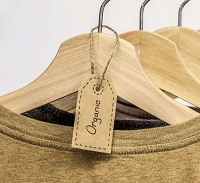 Consumers for long were driven by an insatiable appetite for latest trends. Lured by affordable prices and easy accessibility, they bought clothes in large amounts. However, they soon realized the redundancy of their purchases as most items were used only a handful of times and then discarded. In case, of children, the lifespan of garments was shorter as kids outgrew their sizes.
COVID-19 pandemic has forced consumers and brands to relook their consumption patterns. It has highlighted the unethical methods and techniques used for production of these materials and labor exploitation techniques adopted by brands.
Slow fashion back in the forefront
Another trend the pandemic has brought to fore is of slow fashion. Slow fashion includes the slowing down of apparel design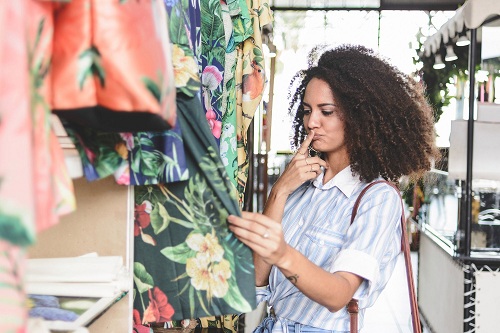 and production processes. The term encompasses environmental impact of apparel production, social justice, supporting artisanal crafts, businesses supporting developing economies, etc. It mandates improvement in current apparel production processes without comprising fashion and style.
As designers control, 80 per cent of a product’s environmental impact, they need to embed sustainability into their garments right from the designing stage, views Sustainable Apparel Coalition. This calls for certain changes in established supply chains of big fashion companies. Brands can be sustainable and fashionable at the same time by focusing on the designing of their garments. They need to ensure the quality, creativity, longevity, craftsmananship and fair wages in their factories meets required standards.
A fillip to fashion resale
On their part, consumers need to invest in clothes that outlast their children’s wear-and-tear. They need to focus on mending or repairing damaged clothes and encourage their kids to value their wardrobes by donating clothes they no longer use.
This will boost the fashion resale market which according to the Thredup 2020 Resale Report, is expected to grow five times over the next five years. On the other hand, traditional retail is expected to shrink as the fashion industry focuses on creating a greener, more sustainable future. With brands transforming their processes, and consumers moving towards conscious shopping, the fashion industry is set for a long-lasting change.