FW
Premium Group announces new trade show formats
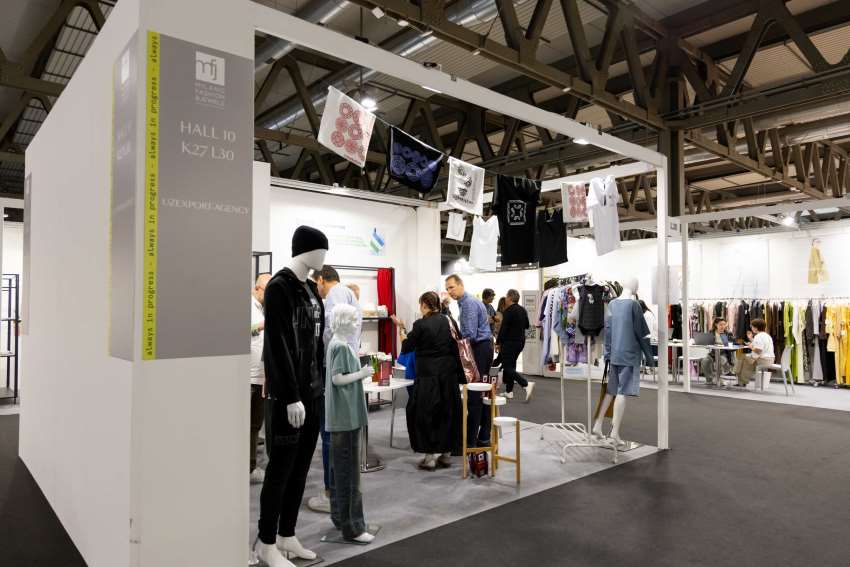
For the first physical Frankfurt Fashion Week in January 2022, Premium Group has announced a new B2C format known as The Group for the show. It has also announced upgraded versions for its Premium and Seek trade show formats.
Premium and Seek, which will take place from January 18 to 20, are to be given a new look in Frankfurt: with more space, new areas and shorter distances, the organizers want to give visitors a "completely new trade fair experience."
The new format of the show known as The Ground is intended as a fashion festival aimed at young end consumers. Responsible for the event concept, alongside Premium bosses Anita Tillmann and JörgArntz or the Premium Group team, is B2C expert Kai Zollhöfer, who was also responsible for the concept of the Bread & Butter by Zalando public event.
The 3-day event, from January 18-20, 2022 is designed to give brands the opportunity to exhibit purpose-driven stories and products, interactively. In addition to the thematic focus on fashion, brands from the fields of wellbeing, beauty, mobility and technology will also present innovative products and solutions.
Africa’s garment exports to the US surge in August’21
Garment exports by African (Sub-Saharan) countries to the US increased during the eighth month of the year.
As per Apparel Resources, Kenya’s exports grew by 51.30 per cent to $44.12 million while Madagascar’s exports grew by over 100 per cent to $23.72 million in the same period.
Lesotho, a promising manufacturing destination, couldn’t remain positive and declined by 32 per cent to ship apparels worth $23.45 million in its largest export market.
Ethiopia clocked US $ 21.80 million in its garment shipment to the US with a surge of over 34 per cent on yearly basis.
Another growing manufacturing hub Morocco, located in North Africa, tapped 97 per cent yearly growth and its apparel exports to US valued $16.87 million in August ’21.
The growth of all these countries, except Lesotho, is a good sign for Africa as an apparel sourcing hub post-pandemic and indicates the continent’s manufacturing base is gaining momentum gradually.
Trident Group launches Trident Foundation with a new website
Trident Group launched the Trident Foundation, an extension of philanthropic arm, with a website Tridentfoundation.org. The website is user-friendly and open to all. Anyone can volunteer and extend a helping hand through physical effort called ‘Shramdaan,’ or donation in kind or monetary values on the website. The foundation aims to promote education, better livelihood, sanitation and women’s empowerment through initiatives like diversity and inclusion, education and skill development, healthcare, etc.
So far Trident Foundation has helped 1500+ students in their education, 300+ women by skilling them at Hastkala Skill Centre, planted more than 7,00,000 lakh trees, removed 35MT of plastic waste from the banks of river Narmada, provided education to 900+ underprivileged children through evening schools, mobile dispensary, 2 wheeler ambulance and provisioning of medical aid to more than 33 villages of Budhni.
Through Trident Foundation, Trident aims to provide healthcare and employment benefits to all stakeholders including employees and shareholders.
Pakistan textile exports grow 26 per cent in Q1 FY22
Pakistan’s textile exports grew a staggering 26 per cent to $1.503 billion in Q1 FY22. Textile exports in August shot up 45 per cent to $1.5 billion in comparison to $1billion in August 2020. As per a report by the Global Village Space, Pakistan’s textile sector is effectively utilizing a competitive power tariff at the rate of 9 cents per kWh and gas at $6.5 per mmBtu for the last two years and this package has now been extended to cover the length of FY22. Prime markets for Pakistan’s textile goods are the North America and European countries. Easing of COVID-19 induced lockdowns in these countries is aiding to a rise in textile exports from Pakistan.
As per Pakistan Bureau of Statistics, ready-made garments exports surged 22.57 per cent in value, and 21.63 per cent in quantity during the starting months of the first quarter of the current fiscal year. Knitwear exports surged 34.12 per cent in value and 14.22 per cent in quantity, while bed wear increased by 24.5 per cent in value and approximately 23 per cent in quantity. Towel exports rose by 20.67 per cent in value and 14.59 per cent in quantity and cotton cloth exports registered an increase by 24.74 per cent in value and dipped by 76.51 per cent in quantity.
ILO adopts new code based on international standards
Adopted by the International Labor Organization (ILO), the new code on safety and health in textiles, clothing, leather and footwear industries is based on international labor standards and other sectoral guidelines. The code advises industries on ways to eliminate reduce and control all major hazards and risks including chemical substances, ergonomic and physical hazards, tools, machines and equipment, as well as building and fire safety.
The code will benefit over 60 million workers around the globe. It has been adopted by experts from governments and employers’ and workers’ organizations. The code will serve as a basis for developing national or company OSH management systems and contribute to the overall improvements of working conditions in this sector and beyond, says Aette Van Leur, Director, ILO Sectoral Policies Department.
Worldwide, about 2.8 million workers die every year from work-related injuries and diseases in different sectors. A further 160 million workers suffer from work-related diseases and 374 million workers experience non-fatal injuries. More than four per cent of the world’s annual gross domestic product (GDP) is lost as a consequence of work-related injuries and diseases.
The new code of practice on safety and health equips the government with occupational safety and health tools and ensures a safer and brighter future for the textiles, clothing, leather and footwear industries, adds Bastian Fochmann, Government Vice-Chairman.
Tehran Modex to attract over 100 textile and clothing companies
Over 100 textile and clothing manufacturers are expected to participate in Tehran Modex, the international trade fair for clothing, fashion, accessories, design, and affiliated industries. As per Tehran Times, the fair scheduled to be held at Shahr-e-Aftab International Exhibition Center from October 12-15, 2021. Abolqasem Shirazi, Chairman, Union of Garments Manufacturers and Sellers, believes the exhibition will introduce the export capacities and potentials of medium-sized units. It will focus on the complete textile chain including design, production, and raw materials.
The exhibition will also help manufacturers focus their exports to specific markets besides expanding into newer destinations. It will also help Iran focus on its major buyers including Iraq, Turkey, Afghanistan, and Armenia.
The value of Iran’s garment exports reached over $113 million during the previous Iranian calendar year 1399 (ended on March 20) to register a 99-percent rise year on year, according to Afsaneh Mehrabi, Director-General, Weaving and Garment Industries Department, Ministry of Industry, Mining and Trade.
African nations become the largest source of cotton for Bangladesh
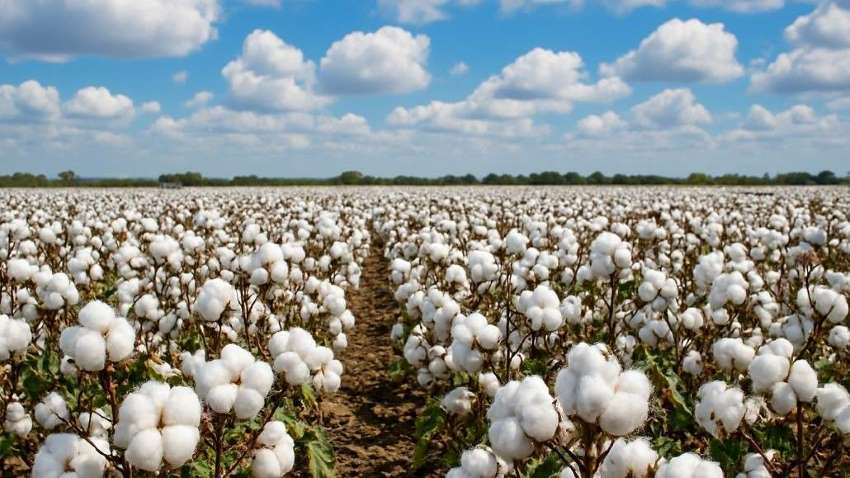
African nations have become the largest source of cotton for Bangladesh as local spinners and millers cut down their dependence on. Last year, Bangladesh had imported 26.12 per cent of its total cotton requirement from India. The country had cut down cotton imports from India by more than 60 per cent two years ago, according to data from the Bangladesh Textile Mills Association (BTMA). Last year, Bangladesh imported 11.35 percent of the cotton from the CIS (Commonwealth of Independent States) countries, 11.14 per cent from the US, 4.65 per cent from Australia and 9.65 per cent from the rest of the world.
One reason for Bangladesh’s declining cotton imports from India is the low quality of the Indian cotton, says Monsoor Ahmed, Secretary, BTMA. Also, Indian cotton traders fail to maintain timely shipments and deliver the right quantity as per agreement, adds Mehdi Ali, President, Bangladesh Cotton Association.
Nick Beighton quits as Asos CEO
Nick Beighton, CEO, Asos has quit the British online fashion retailer as it faces a 40 per cent profit decline in 2022 on account of supply chain pressures and consumers returning to pre-pandemic behavior. Beighton spent 12 years, at Asos including six as CEO. His departure would enable the company find new leadership to accelerate international growth and deliver £7 billion($9.5 billion) annual revenue within four years.
Mat Dunn, Chief Finance Officer will lead the business on a day-to-day basis till a new CEO is sought. Katy Mecklenburgh, Director-Finance, will become interim Chief Financial Officer. Ian Dyson, Senior Independent Non-Executive Director, will be promoted as the company’s chairman on November 29, 2021.
Asos reported a 36 per cent rise in year to August 31 adjusted pretax profit to £193.6 million, driven by a £67.3 million boost from the pandemic when shoppers bought leisurewear, rather that partywear options for a night out, some of which were then returned. The company’s revenue rose by 22 per cent to £3.91 billion as its active customer base increased by 13 per cent to 26.4 million.
US emerges the largest importer as India’s home textile exports rise in July ’21

The largest exporter of home textiles after China, India witnessed a significant increase in home textiles shipments this year. As per a Textile Value Chain report, India’s exports of home textiles including blankets and travelling rugs increased to $108.24 million in July 2021 from around $79.01 in June 2020.
Similarly, exports of bed linen, table linen, toilet linen and kitchen linen increased by 81.8 per cent to $1,260 million while exports of curtains, drapes, interior blinds, valances grew 5.20 per cent to $89.35 million. Furnishing exports except for mattresses, also increased to $1,247.32 million from $805.09 million recorded at the end of July 2020.
US, largest importer of blankets and travelling rugs
The US remained the largest destination for Indian export of blankets and travelling rugs. India’s exports of blankets and travelling rugs to the US increased from $9.33 million in the January-June 2020 period to $10.7 million during the corresponding period of June 2021. India’s exports revenues from the US increased from $0.43 in July 2020 to $0.5 million in July 2021.
Australia emerged as the second largest export destination for blankets and travelling rugs from India during the year through its exports declined by 4.9 per cent. In July 2021, India exported $1.74 million worth of blankets and travelling rugs to Australia against $1.83 million exported during July 2020.
Products worth around $1.7 million were exported from India to China, Canada, and Sweden in July 2021 while exports to the UAE increased 13 per cent to $1.56 million during January -July of 2021.
Sharp rise in export of curtains, drapes, interior blinds, valances
India’s exports of curtains, drapes, interior blinds and valances to the US increased 72.71 per cent to $46.51 million in 2021 from $26.93 million in 2020. In both years, the US remained the largest importer in the category.
It was followed by France and Germany with Indian exports to both countries amounting for $6.24 and $5.56 million in July 2021. India’s exports of curtains, drapes, interior blinds and valances to China recorded a marginal increase of 5.2 per cent from January-July 2021.
On the other hand, exports to the UAE dropped 85.51 per cent from $38.37 million in 2020 to $5.56 million in July 2021.
US’ furnishing imports’ share rises
India’s exports of furnishing articles, except mattresses, etc to the US increased to 724.39 per cent by July 2021 from $455.57 million in July 2020. US’s global share in the imports of these products increased to 58.08 per cent. UK’s and Germany’s global share increased 4.95 per cent and 3.49 per cent respectively to $61.72 million and $43.49 million by July, 2021.
The global share of Canada and Australia recorded a massive increase of 94 per cent with imports worth $39.12 million and $37.08 million January-July 2021 period. Imports of UAE and Spain reached $21 million by the end of July 2021. Imports of other countries totaled $235.84 million.
Plastic pollution rises amidst rising ‘greenwashing’ amongst fashion brands
 A potentially hazardous trend of ‘greenwashing’ is rising amongst high-street brands such as H&M, Primark and Zara, reveals a new report by the Changing Markets Foundation and plastic pollution campaigner City to Sea. Large fashion brands are using polyester made from recycled plastics in their collections. Most polyester fibers are made from old single-use drinking bottles, as per a Daily Mail report. The report rebuts around 59 per cent of the claims currently made by fashion companies as being unsupported and misleading for consumers.
High-street retailer H&M makes 90 per cent of its recycled polyester from single-use plastic bottles. This prevents these bottles from being recycled again. However, these bottles have a significantly lower carbon footprint than conventional polyester, says an H&M spokesperson. The brand continuously invests in new recycling technologies and innovative materials. It has already launched products made of recycled polyester from pre-owned garments, he adds. Researchers believe, this process of recycling plastic bottles into fabric accelerates the release of microplastics into the environment. It also increases brands’ reliance on fossil fuels and encourages people to buy garments that they don’t need.
Polluting human lives through air and food
Often, plastics recycled into synthetics compound the problem of microplastics in the environment. These microplastics end up polluting the seas and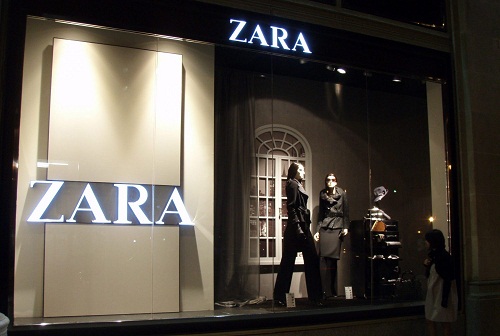 human lives through air, food and drinks. Derived from oil and gas, these fibers continue to distract fashion consumers from deeper environmental problems. To maintain sustainability, brands need to weave it into their operations, opines George Harding-Rolls, Campaigns Adviser, Changing Markets Foundation. They need to stop downcycling plastic bottles into clothes and curb their reliance on fossil fuels, he adds. Consumers too need to opt for second-hand, pre-loved clothes.
Scientists believe, urban flooding has accelerated flushing of microplastics into the oceans. They tested 40 sites around Manchester and found every waterway in the city contaminated with small toxic particles. According to them, some of these waterways are so heavily contaminated that even smallest stream contain microplastics.
No signs of slowing
Researchers believe, around 90 per cent of microplastics in the oceans originate from land. Contamination levels at oceans rise during urban flooding as 70 per cent of the microplastics are transferred from rivers to oceans.
Once plastics are recycle d into fibers, they cannot be recycled further and need to be thrown away. This accumulates more waste in landfills. The tiny microplastics particles shed from clothes while wearing and washing, end up polluting oceans and human lives through air, food and drinks. Their production has increased over the last 20 years, and shows no signs of slowing.