FW
Hatch to include Digital In-Showroom software in Joor’s service offerings
Hatch an innovation entity backed by PVH Corp and Joor, the world’s leading digital wholesale platform for fashion, beauty and home have signed a commercial agreement to include the Hatch Digital In-Showroom software in Joor’s service offerings to customers, accelerating the adoption of the innovative technology among brands.
The Hatch Digital in-Showroom technology offers brands an intuitive way to digitize their physical wholesale appointments. First developed in 2014 by PVH Corp., the Digital In-Showroom technology has since revolutionized the wholesale selling process for Tommy Hilfiger and Calvin Klein. Hatch has been using this technology since , January 2020 through a SaaS model: a software licensing model in which access to the technology – hosted on the cloud – is provided on a subscription basis. Based on this expertise, Hatch also offers digital transformation consultancy services to ease a brand’s transition into the future of wholesale selling.
With the new partnership, Joor will offer select brands exclusive and seamless access to Hatch's Digital in-Showroom software. Founded in 2010, Joor has put the entire buying process online to make wholesale smoother and smarter for both brands and retailers. The platform connects over 8,600 brands with 200,000 retailers across 144 countries every day, with three quarters of the world’s luxury brands using the it to conduct their wholesale business.
One-third of Bangladesh’s apparel exports out of China’s duty-free coverage: BGMEA
Despite China offering duty-free market access to 97 per cent of Bangladesh products, more than a third of total apparel exports continue to remain out of duty-free benefit coverage. As Rubana Huq, President, BGMEA, says, out of 507 million worth of apparels exported by Bangladesh to China in fiscal 2018-19, only $308.4 million worth of apparels enjoyed duty free benefits. Garment products worth $20 million out of the remaining $198 million would be included in the latest duty-free scheme, she adds.
In June, the Tariff Commission of the Chinese State Council granted zero treatment to 97 per cent of tariff products of Bangladesh to its market effective from July 1. China then included additional 5,161 Bangladeshi products to enjoy zero-tariff treatment in its market. Prior to that, 3,095 Bangladeshi products were eligible for duty-free access to the market under the Asia-Pacific Trade Agreement.
To get duty free benefits in China, Bangladesh would have to add 40 per cent more value to its exports, says Huq. Earlier, the threshold for value addition was 30 per cent for the China market. Bangladesh's RMG export to China declined by 34.35 per cent to $72.21 million in the first quarter of fiscal 2020-21. It was $109.99 million during July-September period of the last fiscal.
China records 8.30 per cent growth in apparel retail sales in September ’20
Figures released by National Bureau of Statistics and analyzed by Apparel Resources indicate, China’s apparel and accessories sales in September ’20 grew by 8.30 per cent to RMB 112.50 billion. Total retail sales of consumer goods in China grew by 3.30 per cent to 3,529.5 billion.
However, retail sales were severely impacted by the pandemic that hit China in the first quarter of 2020 as well as in subsequent months till May. This led to an overall drop of 12.40 per cent in apparel retail sales in the country during January-September ’20 period as against the same period of 2019.
August ’20 was the first month when retail sales increased by 0.5 per cent from the same month in 2019 and the figures are even better in in September. Most retail categories grew significantly in comparison to the performance recorded in July ’20. Garment sales increased by 4.20 per cent in August ’20 over July ’20 as compared to 2.50 per cent fall in July ’20 over preceding month.
Focus on textile and garment exports to drive China’s future growth
 China’s goods trade stats from January to September 2020 reveal textile and clothing exports in the first three quarters achieved faster growth than national trade in goods. From January to September 2020, China’s textile and clothing exports increased by 12.2 per cent to 1,515.67 billion yuan, as per General Administration of Customs. This included textile exports worth 828.78 billion yuan and clothing exports worth 686.89 billion yuan.
Cumulative T&C exports rise 9.3 per cent
From January to September 2020, China’s cumulative exports of textile and clothing increased 9.3 per cent to $215.78 billion. Of this, textile exports increased by 33.7 per cent $117.95 billion while clothing exports decreased by 10.3 per cent to 97.83 billion. In the first three quarters, China's total import and export value of goods trade increased by 0.7 per cent to 23.12 trillion yuan. Amongst this, the value of exports increased by 1.8 per cent to 12.71 trillion yuan, while the value of imports decreased by 0.6 per cent to 10.41 trillion yuan.
From January to September 2020, the total value of imports and exports of goods trade increased by 0.7 per cent to 23.1 trillion yuan. Of this, exports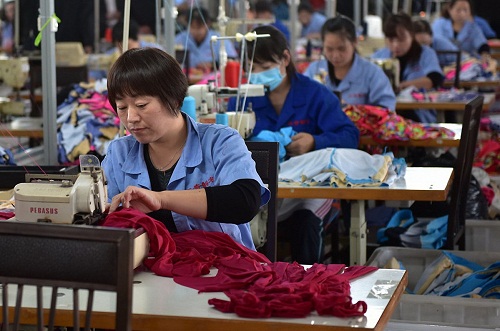 increased by 1.8 per cent to 12.7 trillion yuan while imports decreased by 0.6 per cent 10.4 trillion yuan.
In the first three quarters, the total value of US –China trade increased by 2 per cent to 2.82 trillion yuan. During this period, China’s exports to the United States increased by 1.8 per cent to 2.18 trillion yuan while its imports from the United States increased by 2.8 per cent to 640.86 billion yuan. During the period, China exported 1.31 trillion yuan worth of mechanical and electrical products to the United States, which accounted for 60 per cent of its total export value to the United States.
Cross border e-commerce platform leads to 52.8% trade growth
China's import and export through customs cross-border e-commerce management platform increased 52.8 per cent to reach 187.39 billion yuan. Of this, China’s imports and exports to ASEAN, the EU, the United States, Japan and South Korea increased by 7.7 per cent, 2.9 per cent, 2 per cent, 1.4 per cent and 1.1 per cent to 3.38 trillion yuan, 3.23 trillion yuan, 2.82 trillion yuan, 1.61 trillion yuan and 1.45 trillion yuan, respectively. ASEAN emerged as China's largest trading partner, accounting for 14.6 per cent of its total foreign trade.
China's general imports and exports increased by 2.1 per cent to13.92 trillion yuan. Textile and clothing exports increased 5.4 per cent to reach 2.59 trillion yuan. Among these, the export of textiles including masks increased by 37.5 per cent to 828.78 billion yuan. In future, the Chinese government needs to focus on exports of mechanical equipment, electronic components, textile and clothing, shoes and boots.
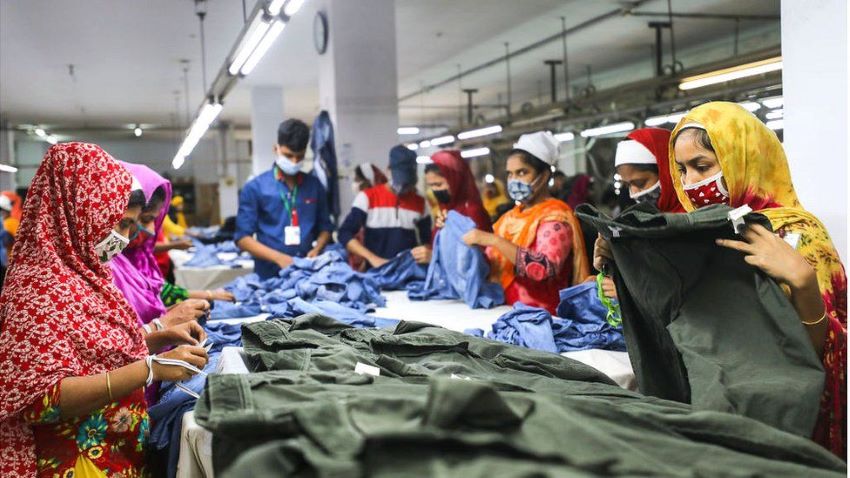
Second COVID-19 wave threatens Bangladesh RMG recovery as it eyes China shift
 Bangladesh garment shipments recovered as stores reopened and international brands and retailers gave new orders to suppliers’ factories. However, the wait for a COVID-19 vaccine, fear of a second wave of infections and US elections is threatening this recovery as manufacturers have witnessed a sharp fall in orders, reports Daily Star. Data from the Export Promotion Bureau shows, in July, Bangladesh garment exports reached $3.24 billion before falling to $2.47 billion in August and totaling $2.41 billion in September. Exports reached rock bottom in April to $0.37 billion. Manufacturers fear, the possibility of a second wave of COVID-19 and complications in US elections may further affect exports.
Second wave may deepen suppliers’ payment crisis
Anwar-ul-Alam Chowdhury Parvez, Managing Director, Evince Group and Former President, BGMEA says, a second wave of infections may have deeper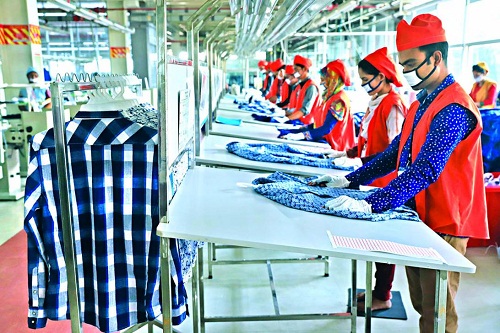 impact on garment exports as stores would have shut down again. Mahmud Hasan Khan Babu, Managing Director, Rising Group, believes further delay in US elections may defer recovery of garment exports from the country.
Rubana Huq, President, BGMEA opines, if the US and EU are hit by a second wave Bangladesh will have to face a tough situations. The first blow of COVID-19 has already exposed significant drawbacks in trade and supply chain, particularly in area of transactions between buyers and suppliers. Currently, one of the major concerns of Bangladesh exports is the uncertainty over payments of confirmed and shipped orders, which amount to $8 billion.
Focus on logistics and port management
Syed Earshad Ahmed, President, American Chamber of Commerce in Bangladesh believe, competitors like Vietnam, Cambodia, Indonesia, Sri Lanka have been getting more advantages and they have better infrastructure and managed the pandemic better than Bangladesh. He advises Bangladesh to focus on logistics and ports management to avoid delays in clearing imports and exports.
As per Ahsan H Mansur, Executive Director, Policy Research Institute, garment exports from Bangladesh are yet to rebound fully. Their full recovery is expected by next March. These exports are been supported by shifting of work orders from China. US’ work orders to China declined by 40.93 per cent between January and August compared to the same period last year.
Meanwhile, the US reduced garment imports from India by 25.47 per cent, 9.92 per cent from Vietnam and 14.76 per cent from Bangladesh between January and August this year compared to the same period last year, according to data from the US Department of Commerce. Mansur believes, Bangladesh might receive some of these work orders that got shifted from China.
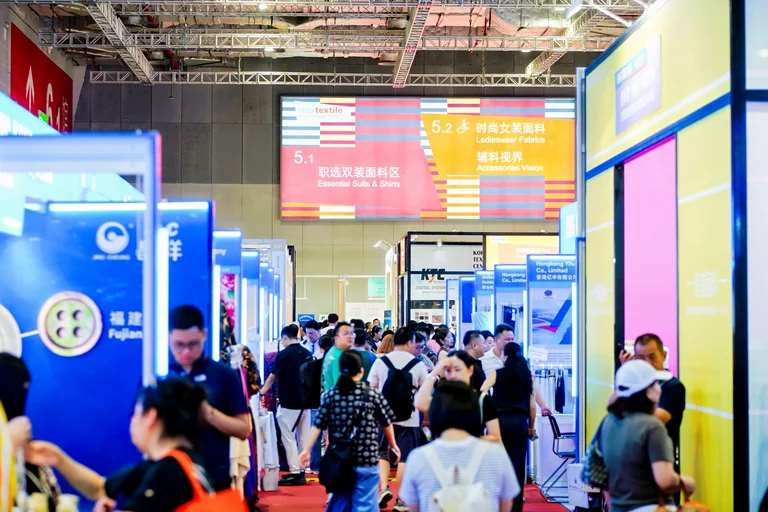
Performance Days replaces physical edition with digital event
After the cancelation of its April edition, Performance Days will replace its physical edition by a digital event on the planned dates of December 09-10.
‘Digital Fair’ will once again present various solutions, such as the online sourcing of materials, which can be ordered to the (home) office, as well as digitalized trends and colors. There are additional features: When logging in to the Digital Fair, visitors can enter their interests, enabling Performance Days targeted matchmaking functions with corresponding suggestions for exhibitors/suppliers.
Performance Days also wants to bring to life new call, chat and video chat functions, which enable digital visitors to enter into dialogue with exhibitors. These shall complement the digital collections with technical data sheets and video presentations, which now allow for questions to be discussed directly online from Asia to Europe and to America. This feature will be available during the two days of the trade fair on December 09-10, and for another 14 days thereafter.
Vietnam postpones International Textile and Garment Industry Exhibition
The Government of Vietnam has postponed the 20th Vietnam Int’l Textile & Garment Industry Exhibition to November 24 – 27, 2021 at Saigon Exhibition & Convention Center (SECC) to ensure the health and safety of visitors and exhibitors.
However, the VTG online expo will continue to operate and promote exhibitors’ products on the official website and Facebook fan page. Since 2001, VTG has been serving the textile industry in Vietnam and is committed to serve the development of textile and related industries.
Turkey ranks sixth in garment and RMG exports
At the 13th Istanbul Fashion Conference last week, organized by the Turkish Clothing Manufacturers’ Association (TGSD) and Istanbul Apparel Exporters Association (IHKIB), Industry and Technology Minister Mustafa Varank informed that Turkey ranks sixth among all countries in the world in terms of garment and readywear industry exports.
Varank said, the Turkish garment industry recorded a $16.5 billion external trade surplus in 2019. He underlined that over one million workers are directly employed in the industry and 68 per cent of employees are women. The minister reiterated the government’s support to sectoral aggregations in many provinces. He informed that the government has set up organized industrial zones in northwestern Bolu, Bursa and Yalova, and southeastern Kahramanmara, Kilis and Diyarbakr.
Varank further underlined that the government supports the garment industry’s research, development and innovation projects through Turkey’s top scientific body, the Scientific and Technological Research Council of Turkey (TÜBITAK), and the Small and Medium Enterprises Development Organization of Turkey (KOSGEB).
Polyprint presents latest DTG products at Innovate Textile & Apparel Trade Show
Polyprint SA, specialized Direct-to-Garment printer manufacturer, is showcasing its latest DTG products at Innovate Virtual Trade Show, being held virtually from October 15-30, 2020. Polyprint is exhibiting solutions including TexJet shortee2 and TexJet echo. The centre of attention will be PreTreater Pro: The NEW automatic pre-treatment machine.
Launched in July 2020, PreTreater Pro is the key to top-quality prints, consistency in repeated jobs and improved washability, while saving on liquids. Its 41x60cm true spray area, precision spraying capabilities with ‘Linear’ & ‘Grid’ edit modes, accurate liquid quantity selection per ml, 4 large diameter flat nozzles for uniform spraying and an auto re-circulation system for liquid homogeneity will seamlessly prepare garments for amazing prints.
The tradeshow will enable attendees to interact with industry professionals through live chat, witness its latest technological breakthroughs at our booth and schedule video meetings to address their every question.
World Textile Information Network (WTiN), the ITA Virtual Trade Show organizers, has planned a pioneering event that generates the unique ability for visitors and exhibitors to reconnect, without limitations.
Do not look at stimulus as a ‘one and done’ deal: Steve Lamar
Stephen Lamar, CEO, American Apparel and Footwear Association (AAFA) has advised lawmakers against looking at stimulus as as ‘one-and-done’ deal. The trade group CEO advocates lawmakers to seek additional rounds of stimulus in the coming months.
As per Lamar, tariffs on China’s apparel, footwear and travel goods could hurt US industries and consumers this holiday season. Tariffs are even being charged on crucial PPE equipment needed in the fight against the coronavirus. US is charging tariffs on many items of personal protective equipment. It still has tariffs on reusable isolation gowns.
This is the wrong time to have these tariffs, Lamar says. According to him, US can use those tariffs to pass along savings to consumers, to hire workers not to pay into these US coffers like this. Despite the political discord and jockeying going on in Washington, Lamar says that there are signs of encouragement that prove that lawmakers could come together on a stimulus.