FW
India, Bangladesh collectively target 35% share in global textile and apparel trade
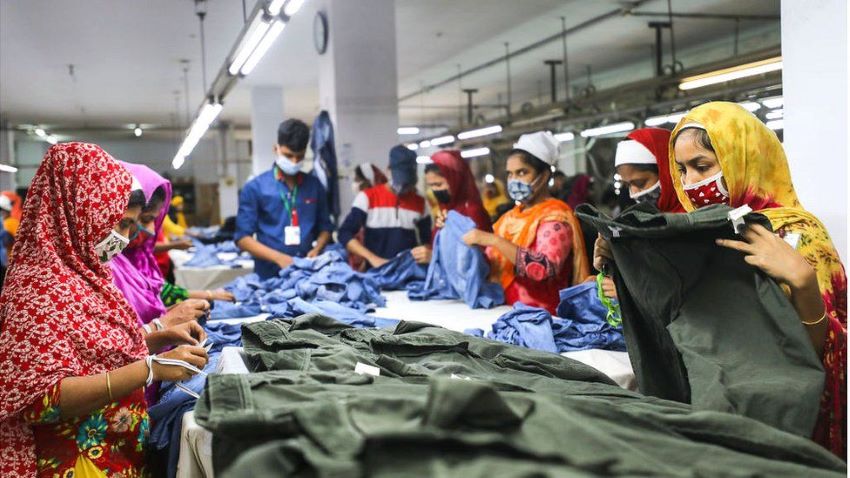
In a recent virtual meeting, textile ministers, senior bureaucrats and industry stalwarts, from India and Bangladesh unanimously agreed that both the countries should collectively target to achieve a 35 per cent share of global textile and apparel trade in the next 5 years.
As of now, India’s overall textile and apparel export is around $ 39 billion (FY19), and before the coronavirus pandemic, it is expected to reach $82 billion in 2021. While on the other hand, Bangladesh apparel export was $27.95 billion in FY20 compared to $34.13 billion in the previous fiscal year. Earlier, its target for 2020-21 was $ 50 billion, while looking at the current conditions, it has now changed and is set at $ 33.78 billion.
Together, both the countries have textile and apparel exports of $66.95 billion, and together they have to achieve at least $350 billion in the next 5 years. They have to grow collectively with the rate of 5.22 times.
Dr Rubana Huq, President, Bangladesh Garment Manufacturers and Exporters Association (BGMEA), insists on collective efforts and urges to focus on ‘go regional, go green’. While Dr A. Sakthivel, Chairman, Apparel Export Promotion Council (AEPC), suggests having a joint expo of Indian and Bangladeshi companies where they can approach buyers together and get better value and more business collectively.
China’s luxury online purchases increase by 30%: Report
As the Digital Luxury Report 2020 recently released by the Boston Consulting Group and Tencent Marketing Insight pointed out, the share of online purchases in the Chinese luxury market — which has benefitted from successful domestic pandemic control — is up 20 to 30 percent year over year. Conversely, the American and European markets are down 25 to 45 percent over that same period.
The main reason for that growth may be attributable to the decline of global travel, making Chinese customers with strong purchasing power shift back to domestic shopping, said Judy Liu, Managing Director-Greater China, Farfetch. In addition, shopping, to some extent, helps people find psychological comfort and relief. The digital channel for luxury brands is no longer a ‘nice to have’ but a ‘must have. Another takeaway from this year’s Shanghai Fashion Week is 2020 will be a good year for independent Chinese designers and domestic brick-and-mortar stores due to lack of foreign competition.
More than 20 select shops have opened in Shanghai alone over the past few months, while new boutique shops in Hangzhou are as big as 600 square meters. More domestic growth is predicted to take place in China’s smaller cities. According to the China Luxury Forecast — a report from Ruder Finn & Consumer Search Group, luxury consumers in lower-tier Chinese cities have shown strong purchasing power, and are poised to become the engine for future growth – outstripping consumers in first- and second-tier cities.
COVID-19 accelerates demand for a unified approach to sustainability in fashion
 The COVID-19 era calls for stricter vetting of policies to tackle the issues of sustainability and forced labor in the fashion industry. As per a Textile Today report, brands need to undergo a strict vetting process to ensure proper utilization of materials and fair manufacturing process. They need to introduce sustainability initiatives to protect their businesses and critical assets; protect human capital, financial capital, and supply chain relationships; manage orders while preserving supply chain relationships; initiate respect collaborations with suppliers and maintain key social and environmental programs.
A unified approach to sustainability
However, these are just short terms initiatives. In the long-term they need to improve focus on transparency in their process. They also need to engage in a 360° collaborative communication with internal and external stakeholders, invest in new business models and innovation, explore new technologies data and digitization, enable AI, data-driven decision making, and rebuild sustainability programs for impact and resilience.
Companies can also use this time to readjust their approach to environmental and social decisions. They need to build a unified approach towards a sustainable business and introduce new eco-friendly products. Manufacturers and buyers also need to protect their workers’ rights and livelihoods.
Sharing the burden
The present system of new work orders places the entire burden of financing raw materials and bearing operational and delivery costs on manufacturers. This allows clients to alter order terms and conditions or leave the contract at any time without hesitation. They can also demand discounts in case of any failure or flaws. In this situation, apparel makers need to develop a new business model that places the responsibility of placing orders and purchasing raw materials on both parties. They need to safeguard human capital, financial capital, and supply chain relationships.
Respectful dialogue with suppliers
They also have to engage in collaborative conversations and respectful dialogue with suppliers on how to address issues together. Maintaining key social and environmental programs would be crucial for these manufacturers who also need to focus on the protection of health and safety of their workers. Moreover, manufacturers need to future-proof their business models by diversifying their product portfolio and embracing new technologies.
Kingpins24 unveils speaker roster and livestream program for digital show
Kingpins24 Amsterdam, the digital-only denim supply chain event from denim trade show Kingpins, has unveiled its complete speaker roster and livestream program for its four-day digital event.
Scheduled for October 27 through October 30, the virtual trade show is set to offer a robust and flexible digital showroom platform equipped with purpose-built tools designed to give denim mills an ideal space to present their collections and engage in effective storytelling, and a space where buyers can conveniently source from in a unified environment
The daily livestream portion of the event will run from 10 a.m. to 1 p.m. CET. The event's short-form content will be organized around a different central theme each day, including inspiration, innovation, fiber and raw materials, and people and social responsibility. Each day will feature three hours of livestreamed content, beginning at 10 a.m. CET.
The event's panels and conversations will focus on a variety of topics, including transparency, blockchain, vertical production, hemp, climate commitments, ethics, legislation and gender equity.
ILO identifies Philippine garment industry as worst affected by COVID-19
The International Labour Organization (ILO) identified the Philippine garment industry as among those severely affected by COVID-19 pandemic in the Asia-Pacific region.
In a new research titled “How COVID-19 is affecting garment workers and factories in Asia and the Pacific, ‘ILO said the total combined imports to the United States, Europe and Japan from ten major apparel and footwear producing countries in Asia also fell significantly between January and June 2020, when compared to the same period in 2019.
It added that the largest percentage decreases in exports were observed in China, India, the Philippines, and Sri Lanka.
The research said delayed or inadequate payments to apparel workers—both employed workers and those on furlough or unemployed—have led to protests in Bangladesh, Cambodia, Indonesia and the Philippines among others. COVID-19 crisis has hit the garment sector in the Asia-Pacific region hard, with plummeting retail sales in key export markets affecting workers and enterprises throughout supply chains.
The report said major buying countries’ imports from garment-exporting countries in Asia dropped by up to 70 percent in the first half of 2020, due to collapsing consumer demand, government lockdown measures, and disruptions to raw material imports necessary for garment production.
US’ swimwear imports decline by 19.24 per cent: OTEXA
As per OTEXA stats, US’ swimwear imports declined 19.24 per cent to $643,37 million from January-August 2020. Imports plunged by 43.45 per cent to $202.78 million during the period as against $358.59 million in the corresponding period previous year. Chinese orders of swimwear were seen shifting to other countries as the US’s decline in the import of this category is much less than the decline China noted in its exports.
Imports from Bangladesh grew 75.20 per cent. The country clocked $14.12 million in its exports in January-August ’19 period, while it increased to $24.73 million in the same period of 2020. Jordan, the largest manufacturing destination in MENA region, saw a 189.80 per cent yearly growth in swimwear exports to the US amounting to $30.63 million. Vietnam, Sri Lanka and Egypt’s exports too surged by 8.07 per cent, 7.73 per cent and 27.60 per cent, respectively. Their exports to the US was worth $164.13 million, $36.46 million and $ 23.51 million.
Malika Savell named Prada’s new Chief Diversity and Inclusion Officer
Prada has appointed Malika Savell, Director-Cultural Diversity- Partnerships & Engagement, LVMH as the new Chief Diversity, Equity and Inclusion Officer for its North American subsidiary, reports. Fashion Network. In her new role, Savell will be responsible for developing policies, strategies and programs to help ensure diverse representation of cultures and perspectives at all levels of the company. She will also be responsible for collaborating with all committees and departments within Prada that are involved in diversity and inclusion issues. She will work closely with Prada's Diversity and Inclusion Advisory Council, created last year after the brand was accused of racism in relation to some of its products in late 2018.
Savell started her corporate career in marketing, soon making a name for herself in experiential marketing, working among others at Sony, NBC and Remy Cointreau, She joined the New York subsidiary of French luxury group LVMH in 2011. Here, she took on several executive roles, eventually being appointed director of cultural diversity- partnerships & engagement in 2019.
COVID-19 makes online shopping more frequent: Euromonitor International
As per Euromonitor International, the COVID-19 pandemic encouraged e-commerce users to increase the frequency of online shopping. The survey finds, online shopping in nearly every category recorded double-digit growth in the percentage of connected consumers making digital purchases between the two fielding timeframes. The only exception was beauty, health and personal care purchases, jumping eight percentage points. In contrast, the percentage of connected consumers purchasing electronics and appliances, foodservice and travel online grew by twice as many points.
Besides shopping more in already-familiar categories, consumers are turning to e-commerce across a broader range of products and services. The percentage of minimal online shoppers, connected consumers who did not use digital or only used digital to shop for one category, dropped significantly during the research and purchase steps in the consumer journey between fielding timeframes.
There was a sharp rise in the number of categories that shoppers researched and purchased online. 60 per cent of connected consumers were heavy online shoppers during the research step in March, exploring four to five categories online, up from 42 per cent in early 2020. Nearly 50 per cent of shoppers purchased products and services across more than three categories, a 12 percentage point increase.
In early 2020, minimal online shoppers and heavy online shoppers were evenly split during the purchase step at 36 per cent and 37 per cent, respectively. By March, there was a nearly 30 percentage point gap between minimal online shoppers and heavy online shoppers.
Connected consumers between the ages of 30 to 44 were the most frequent users of the digital channel across all five categories. Connected consumers over the age of 60 recorded the highest percentage increase of all age groups for researching and purchasing across categories online, excluding beauty, health and personal care, between the two fielding timeframes.
Bangladesh to automate 25 per cent garment manufacturing by 2023: BGMEA
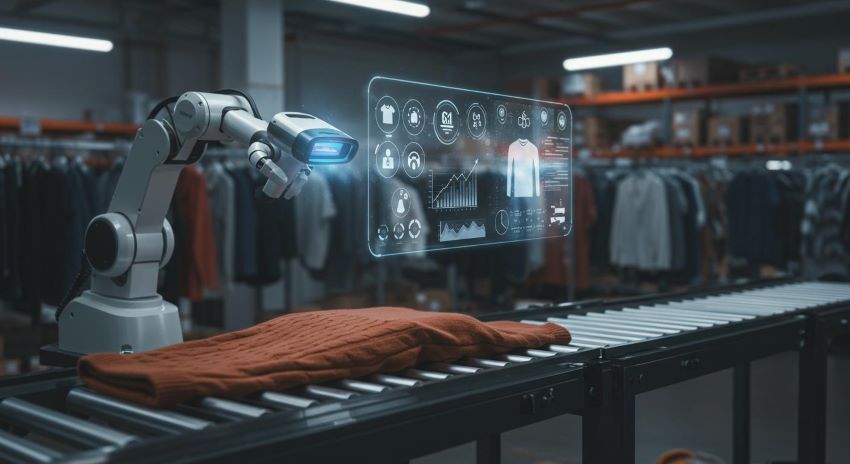
Rubana Huq, President, BGMEA says, Bangladesh will automate around 25 per cent of its garment manufacturing activities by 2023. Addressing a virtual program on ‘Women Power - the Force Multiplier’ organized by the American Chamber of Commerce in Bangladesh (AmCham), Huq said, the sector has already entered the fourth industrial revolution and is witnessing the adoption of artificial intelligence.
She urged the industry to skill and reskill workers, especially females to enable them to make contributions to this important business in the time of automation, she said. Uzma Chowdhury, Chief Financial Officer and Director, PRAN-RFL Group said, women entrepreneurs in Bangladesh have been facing difficulties in accessing finance due to the fallouts of the COVID-19 pandemic
Jatitya Sansad Speaker, Shirin Shamin Chaudhury, said female entreprenuers should get collateral free loans as they face different difficulties in getting a business up and running.
Till date, majority of female entrepreneurs could not avail loans from the government-sponsored stimulus packages, added Ershad Ahmed, President, AmCham
GOTS appoints Ganesh Kasekar as Regional Representative in South Asia
GOTS has appointed Ganesh Kasekar as the Regional Representative and new Head-Quality Assurance and Implementation in South Asia (India, Pakistan, Bangladesh and Sri Lanka). Based in Mumbai, Kasekar takes over the role of Sumit Gupta, the previous GOTS Regional Representative in India and Bangladesh with the additional countries Pakistan and Sri Lanka.
A textile engineer from VJTI, Kasekar holds over 17 years of experience in the textile industry with a special background in inspection and certification in supply chains. As a former business development manager, he has already been involved with supply chain stakeholders internationally, contributing to quality assurance requirements in the textile and leather goods industry.
GOTS is the stringent voluntary global standard for the entire post-harvest processing (including spinning, knitting, weaving, dyeing and manufacturing) of apparel and home textiles made with certified organic fiber such as organic cotton and organic wool, and includes both environmental and social criteria. Its key provisions include a ban on the use of genetically modified organisms (GMOs), highly hazardous chemicals (such as azo dyes and formaldehyde), and child labour, while requiring strong social compliance management systems and strict waste-water treatment practices.
GOTS was developed by leading international standard setters - Organic Trade Association (US), Japan Organic Cotton Association, International Association Natural Textile Industry (Germany), and Soil Association (UK) to define globally recognized requirements that ensure the organic status of textiles, from field to finished product. GOTS is a non-profit organization which is self-financed.