FW
Indonesia’s textile industry to grow 3 per cent this year: Indef
As per the Institute for Development of Economics and Finance (Indef), the Indonesian textile industry will grow only 3 per cent this year, much below the Ministry of Industry's target of 5 per cent, says Ahmad Tauhid, Executive Director, Indef. Several factors will impact the industry’s growth in 2022, as per an Indo Textiles report. These include the uncertainty surrounding spread of Omicron variant whose impact can restrain demand in shopping and trade centers.
Secondly, the trend of imported textile products will affect domestic demand, adds Tauhid. The effectiveness of secure measure import duty introduced by the government in 2020 has proved ineffective. This has thrown many textile industries out of business, he adds. To boost growth in the textile industry, the government needs to improve economy significantly, Tauhid further adds. It also needs to handle the pandemic more effectively; especially with the emergence of a new variant of Omicron.
Bangladesh cotton imports to cross 9 million bales this year
Despite the pandemic’s severe impact on global textile supply chain, Bangladesh's cotton imports are set to cross the 9 million bales mark this year. A report by the Daily Star indicats, in 2021, Bangladesh imported 8.5 million cotton bales worth over $3 billion. Most import was fueled by Bangladesh’s rising garment exports. From July to December 2021, Bangladesh’s garment exports rose 28.02 per cent year-on-year to $19.90 billion. Of this, knitwear exports rose by 30.91 per cent to $11.16 billion while the exports of woven garments increased by 24.50 per cent to $8.73 billion. Faruque Hassan, President, BGMEA, said, the upward trend of garment exports will continue upto June this year as the association has booked a large volume of orders.
Mohammad Ali Khokon, President, Bangladesh Textile Mills Association (BTMA), added, it has already made payments of the letters of credit for importing cotton and expects a rush in import by March and April this year. Khokon further added, currently local spinners can meet 90 per cent of knitwear sector's demand for raw materials but only 40 per cent of woven sector’s needs. As a result, some 6 billion out of the required 10 billion meters of fabrics are imported to meet demand of local woven garment sector at a cost of $2.30 per meter. Therefore, local millers have either been expanding or investing afresh in the primary textile sector, particularly in manmade fibres and spinning mills.
He urged the government to facilitate MMF imports as the country does not produce these. He also urged the government to raise the ceiling for loan from an Export Development Fund to $40 million per borrower from the $30 million at present.
Karl Mayer achieves new milestone producing 1,000 drying cylinders annually
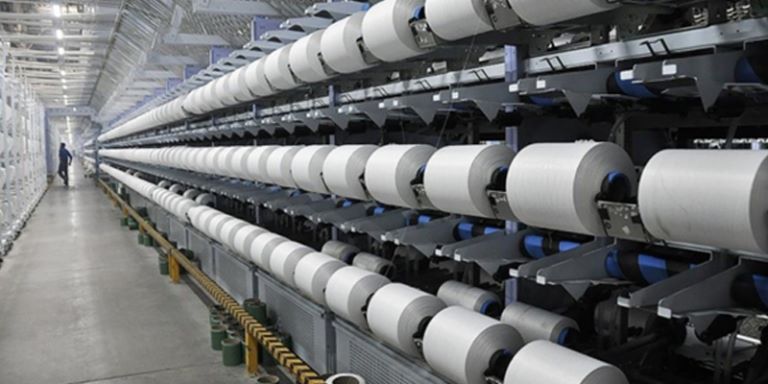
The Textile Drying Profit Center of the Karl Mayer Group reached a new milestone in 2021 as completed the annual production of 1,000 drying cylinders. Karl Mayer Rotal entered the production of steam-heating drying cylinders in 2016. The Group produced these cylinders mainly for its denim and sizing as well as third party businesses. The group soon reached annual production of 800 drying cylinders in 2018 which it further accelerated to 1,000 in December 2021.
The company's drying cylinders become bestsellers thanks to uncompromisingly high quality and safety coupled with an unbeatable price-performance ratio, says Karl-Heinz Vaassen, Head, Textile Drying Profit Center. He and his team have continuously developed their know-how and invested in targeted automation upgrades in order to achieve the output leap. These measures have eliminated bottlenecks in the production chain and accelerated time-consuming production steps.
CFDA launches official New York Fashion Week collection
The Council of Fashion Designers of America (CFDA) has launched its official New York Fashion Week range for February. The range includes garments by a host of new and big-name designers set to showcase their range in the city for the Fall 2022 season.
To be held in partnership with IMG, the seven-day New York Fashion Week American Collections Calendar will host runways and presentations by several big brands including Anna Sui, Christian Siriano, Don Lee, Gabriela Hearst, Jason Wu and Joseph Altuzarrara. On from February 11 to 16, the calendar will also host showcases from NYFW designers including LaQuan Smith, Michael Kors, Khaite, Naeem Khan, and Prabal Gurung, as well as an anniversary collection from Eckhaus Latta.
First-time participants in the show will include Dauphinette, Interior, Judy Turner, Loring, Luchen, Melke, PatBO, Saint Sintra and Zankov. Brands Kuon, Overcoat, Snow Hue Rao, Taylor, Adam Lippes Area, Dennis Bassom, etc will launch their collection digitally.
Being held amidst the third COVID-19 wave in the US, the New York Fashion Week faces logistical challenges including those related to staging physical runways and presentations while adhering to quick-changing pandemic-related protocols.
Pakistan’s textile exports decline 61 per cent in January
Pakistan’s textile exports fell 61 per cent in the first nine days of January, shows official data by the Ministry of Commerce. Data released by the All Pakistan Textile Mills Association (APTMA) also confirms, Pakistan’s textile production declined by $290 million in the first nine days of 2022. Production of value-added textiles accounted for $213 million and other textiles accounted for $77 million in terms of both value and volume, as per a report by the Global Village Space.
Textile mills in Punjab faced disruptions in gas and electricity supply leading to a huge loss to the industry. In October 2021, APTMA had announced a $5 billion investment in the textile sector. It hoped textile exports to hit $21 billion in FY22. SAPM Abdul Razzak Dawood, says, the $5 billion investment will help establish 100 new textile units in Pakistan. Of the $5 billion, $2.5 billion will be used to install new machinery while the remaining will be pumped in by June 2022. Abdul Bashir, Chairman, APTMA, adds, the if government policies remain consistent and long-term the textile sector will hopefully grow by 20 to 25 per cent each year.
However, frequent disruptions in gas supply and low electricity voltages are making it difficult for the textile industry to meet its targets, he adds further.
Activewear, one of the hottest selling categories for DTC brands in 2021
 The DTC activewear market remained one of the busiest in 2021 with a large number of acquisitions and IPOs being launched. Some of the most prolific deals in during the year included the acquisition of Sweaty Betty by Wolverine World Wide, the purchase of Beyond Yoga by Levi’s and the snapping up of Osprey by Helen of Troy, the owner of Hydro Flask.
In terms of monthly website visits Arc’teryx and Tracksmith remained the fastest growing DTC athletics brands. The monthly visits of Arc'teryx in the US spiked 264 per cent over that period while that of Alo Yoga increased 124 per cent and Tracksmith saw 75 per cent hike. The data was tracked by SimilarWeb, which also highlighted growth at equipment makers like Hydrow, Tonal and Mirror.
Investors cash in on rising popularity
In recent years, Outdoor Voices has emerged one of the most significant DTC brands in activewear market. The market is also attracting brands from other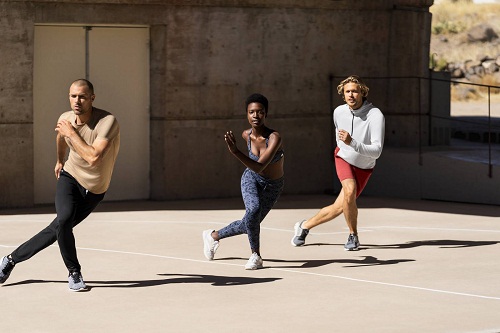 categories like intimate brand ThirdLove, which forayed into activewear in September 2021. It was preceded by Thinx bu a few months ago.
California-based brand Vuori recently announced a $400 million expansion that includes building 100 stores in the US and entering international markets. It brand has been one of the most profitable activewear brands since 2017 and aims to repay shareholders, says Joe Kudla, Founder and CEO.
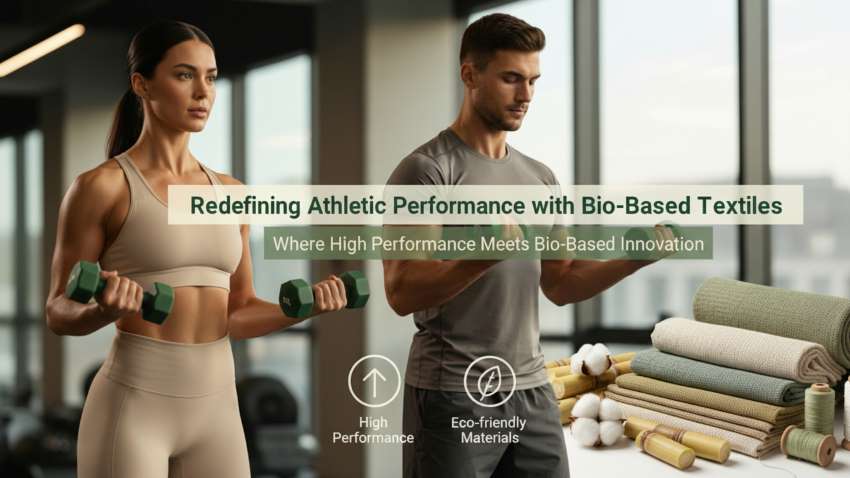
Expansion plans of activewear brands are also being fuelled by rising interest of investors in the category. In recent times, many investors including Norwest GV and Forerunner Ventures have shown an interest in this category. Athleisure or active wear is currently one of the brightest spots in an otherwise challenged apparel sector. DTC brands can capitalize on growing popularity of activewear by selling through not just on their own DTC channels but also through wholesale.
Soaring popularity across categories
Athleisure has been one of the most significant segments in the apparel market. Over the last few years, the segment has attracted many streetwear, lifestyle and women’s wear brands. For example, On is creating many activewear and athleisure products.
The sector is attracting brands beyond DTC as well. In January 2020, Target launched its own private activewear label followed by Kohl’s. JC Penney revamped activewear range in January last year in order to strengthen its order book. Matt Powell, Senior Industry Advisor for Sports, NPD Group point out, activewear remains a hot category for fashion brands. The launch of stretch denim, stretch dress shirts, stretch suits is a testimony to this. The category is also popular in footwear with sports shoes now more popular than fashion footwear. In apparel, the trend is growing steadily with many brands launching activewear collections to cash in on their popularity.
Bangladesh RMG footprint spreads globally with promising export growth
Bangladesh’s exports to traditional markets including the US and the EU grew in 2021. Exports to its single largest market, the US surged from 17.5 per cent in 2018 to 20.30 per cent in 2021, says Faruque Hassan, President, BGMEA. It totaled $7.28 billion in 2021. The share of woven garment exports was worth $4.65 billion while knitwear exports totaled $ 2.62 billion. For the first time, Bangladesh’s RMG export to the US exceeded $7 billion in a year, a growth of 43.62 per cent compared to 2020, says Hassan.
Bangladesh’s exports to its second largest export destination, the EU accounted for 50.07 per cent of its total exports. In the last five years, Bangladesh’s exports to the EU grew from $18.69 billion in 2017 to $ 21.74 billion, a 27.74 per cent year on year growth
Exports to Germany crosses new milestone
Among the EU member states, exports to Germany, France, Italy, Denmark, Belgium, Portugal and Poland grew in 2021. For the first time exports to Germany crossed $6 billion registering a growth of 26.64 per cent. In the same year, exports to UK reached $3.81 billion; Canada saw an increase of 28.46 per cent from $865.17 million in 2020 to $1.12 billion in 2021.
Promising growth to non-traditional markets
Exports to non-traditional markets also showed promising growth during the year. It grew 25.75 per cent to reach $5.7 billion in 2021. Exports of woven garments amounted to $2.54 billion while knitwear garments was worth $3.14 billion. Exports to Japan recorded highest growth of 17.22 per cent to reach $1.03 billion.
Tapping the EAEU market
Exports to other non-traditional markets such as Australia, South Korea, Russia, India, and Mexico also increased remarkably while those to Brazil, China and Turkey declined, as recovery from the pandemic faltered. Exports from Asia showed promising growth as seen by the rising exports from emerging markets like Japan, China, India, South Korea. The Bangladesh government has sent an official proposal to the Eurasian Economic Union (EAEU) comprising of Russia, Belarus, Kazakhstan, Armenia and Kyrgyzstan.
Apparel diplomacy in non-traditional markets
In the last few years, Bangladesh has made tremendous progress in growing its market base. However, the country suffers from low diversification in export items and destination. Hence, BGMEA has launched an initiative to explore non-traditional markets under the apparel diplomacy campaign. The plan is to organize ‘Made in Bangladesh’ road-shows to regions like Middle East, Asia which includes Japan, Korea, China and India, Iraq, Russia and a follow-up visit to Latin American countries. The initiative is aimed at highlighting the industry’s growth, establish contacts and networks, engage with similar organizations to promote trade, identify problems and advance discussions on market access.
Looking to tap high-value market
BGMEA is also planning to tap the untapped potential in existing markets. One of the plan is to enter the high value-added market segment for which it plans to produce more high-end products. The association also aims to invest in new technologies and focus on backward and forward linkage industries. Going digital is also one of Bangladesh’s aim in the next few years, Hassan concludes.
HeiQ launches new textile cooling technology
HeiQ has launched HeiQ Cool, a new dual action textile cooling technology that offers both instant contact cooling and continuous evaporative cooling.
Fabrics powered byHeiQ Cool constantly regulate the skin temperature with a dual cooling capability. In a first step, melting energy absorption delivers instant contact cooling before the first sign of sweat and delays the build-up of heat, followed by a vaporizing energy action that mimics the skin's thermal regulating system by providing continuous evaporative cooling as long as the body is hot and sweaty. Suitable for all fabrics, the initial launch focuses on home textiles, especially sleeping products such as mattress ticking, pillows and bed linen because of its clear benefit to help users get a good night's sleep. It cools before the first sign of sweat, delays the build-up of heat and continuously regulates the temperature. Instantly cool to the touch, the components synergistically recharge the surface layer ensuring a consistently cool, dry and comfortable body climate.
The biobased vegetable oil-derived thermo-functional polymer absorbs heat energy, giving an instant cooling sensation. If the body continues to heat up, perspiration is generated and the patented hydro-functional polymer transports moisture away together with the heat, creating a continuous cooling effect that stops once cooling is complete. The combination of a hydro-functional polymer with biobased vegetable oil-derived thermo-functional polymer formulation of HeiQ Cool contains more than 50% USDA® certified biobased content. It is also OEKO-TEX class 1 suited and meets most brand RSL (restricted substances list) requirements.
Colombiatex de lasAméricas planned from January 25-27, 2022
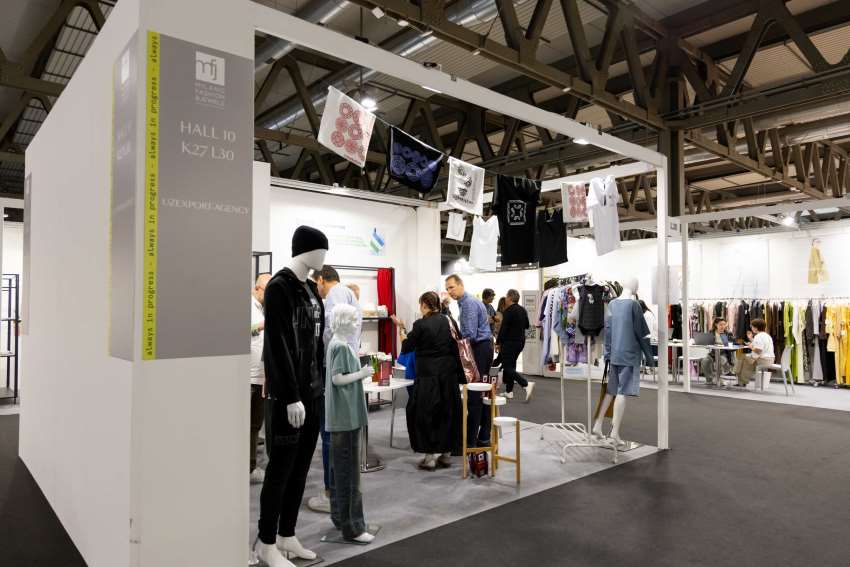
Columbia’s main textile event, Colombiatex de lasAméricas will take place in Medellin from January 25 to 27. As per a Textile World report, the event will be attended by 19 Italian textile machinery manufacturers. It will be organized by Italian Trade Agency and ACIMIT, the Association of Italian Manufacturers of Textile Machinery.
The following ACIMIT member companies will participate in the event. Bonino, Btsr, Color Service, Crosta, Fadis, Flainox, Kairos, Mactec, Mcs, Nexia, Ratti, Reggiani, Santoni, Savio, Smit, SperottoRimar and Tonello.
Italian exports to the important South American market in the first nine months of 2021 reached a value of 9.3 million euros, in strong growth (over +130%), not only compared to the value recorded last year, but also to that of 2019. More than half of the demand for Italian machinery in Colombia refers to finishing machines.
The presence of Italian Companies at Colombiatex is a further sign of confidence for the beginning of 2022. Compared to previous editions of the event, there are more number of Italian exhibitors at the event, the health emergency is far from over and there is great uncertainty characterizing the world economic scenario. The Italian companies exhibiting in Medellin testify to the optimism with which the entire Italian textile machinery industry is looking towards this 2022 year.
Fast Retailing keeps yearly forecast unchanged
Uniqlo operator Fast Retailing has kept its yearly forecast unchanged, even as business in the key market of mainland China was hit by virus restrictions.
The Japanese casualwear behemoth posted better-than-expected sales and profit in the three months to December, thanks to the growing diversification of its business.
The company does not expect the spread of the highly contagious Omicron coronavirus variant to dent overall performance in 2021-22. However, it sounded a note of caution over the unpredictable impact of the pandemic.
Net profit for the first quarter jumped 33 percent on-year to 93.6 billion yen ($817 million) marking its best ever first quarter, Fast Retailing said, as business in many parts of the world rebounded from virus lockdowns.
However, revenue and profit declines were seen in mainland China, which is pursuing a strict zero-COVID strategy and has imposed tough localised restrictions in recent months.
Sales dropped in Japan, too, following strong performance the previous year and as warm autumn weather hit demand for winter outfits.
The company, one of the world's top aooarel retailers, kept its net profit forecast for the year to August 2022 unchanged at 175 billion yen -- a three-percent increase from the previous year's record figure.
Its results have also been boosted by the depreciation of the yen, which recently hit a five-year low against the dollar.