FW
India’s corporate profitability drops 120 bps in Q3
India’s corporate profitabilitydropped 100-120 basis points (bps) year on year and 70-100 bps sequentially in the third quarter of this fiscal, as per a CRISIL survey report. Revenues for RMG Garments and cotton yarn makers increased by 30-35 per cent year on year amid higher exports.
In an analysis of 300 companies, excluding those in the financial services, and oil and gas sectors, CRISIL Research notes a-year decline in 12 quarters. As many as 27 of 40 sectors tracked by the agency are likely to see a contraction in their EBITDA margins.
Margins in consumer discretionary sectors fell by 130-150 bps on-year, and in export-linked by 200-250 bps. For the first nine months this fiscal, EBITDA margin rose by 80-100 bps a year to 22-24 per cent, aided by the low base of last year. Corporate revenue grew by healthy 16-17 per cent to Rs 9.1 lakh crore, driven by surging commodity prices. Volume growth continued to underperform though price hikes provided some offset, added CRISIL
AATCC releases dates for new educational program
AATCC has released dates for a new online educational program Fluorescence and High Visibility for Textiles. The event will take place on February 23-24, 2022. This virtual event will feature industry experts discussing a variety of topics including color, innovation, technology, detergents, laundering, reflective tape, testing, product, and more. Early registration closes on February 15.
Presenters at the event include Rachel Applegate, Erika Simmons, Randy Mumford, Ken Butts, Michael Murphy, Denise Statham, Gregg Woodcock. SGS, Michael Hayes, Katie Aune, Roland Connelly.
AATCC is the world’s leading not-for-profit association serving textile professionals since 1921. AATCC, headquartered in Research Triangle Park, NC, US, provides test method development, quality control materials, and professional networking for members in about 50 countries throughout the world.
Textile Tech Association inaugurated in Dhaka
Textile Tech Association was inaugurated on January 15 at the AHS Auditorium of the Government College of Applied Human Science in Dhaka. As per a Textile Today report, the association was launched with the slogan ‘Analyzing the opportunities & barriers for the female employee. Textile Tech Association will work on building a strong connection between head hunters and job seekers. It will also ensure the equity of both male and female employees for having the best output.
The association aims to be the voice of mid-level working women in the RMG sector says Sabrinna Sharmeen, Founder, Textile Tech Association, former student Govt. College of Applied Human science and Team Leader, Varner AS Bangladesh Liaison office. The inauguration was attended by Faruque Hassan, President, BGMEA as the chief guest. He said, Bangladesh offers many opportunities for women to prove themselves. They are working in many sectors like business, science, journalism, etc., and now in textile and clothing industry women’s initiative would be a millstone for the future economic development of Bangladesh, especially the textile and apparel sector with women empowerment.
The first panel discussion focused on opportunities for females in RMG and how the industry is preparing itself to welcome more females in this sector. The second panel discussion focused on the future of garments and textiles of Bangladesh after an unbelievable growth during COVID. The speakers talked about the clothing sector’s recent challenges, export, clothing price, and product innovation. Besides, they also focused on the need for collaboration between academia and industry and more participation of women in mid-management in this industry.
Richmont reshuffles top management
Reshuffling some of its top management roles, Swiss luxury group Richmont has appointed Laurent Malecraze new CEO of Dunhill. Mauro Girmaldi. Former CEO, Le Pintemps, takes over as the strategic advisor and will notably be in charge of AZ Factory, previously led by Malecaze. Grimaldi has been appointed strategic advisor to Fortunato, as reported by US magazine WWD, which indicated that Grimaldi’s main mission will be to oversee the operational running of AZ Factory.
Grimaldi, who was named global CEO of department store group Le Printemps in early 2020, is a highly experienced luxury industry executive. He was head of retail in France for Tod’s from 2001 to 2003, then took charge of the wholesale and retail business of Dolce & Gabbana, before joining Valentino, where he remained until 2007, as retail and wholesale director EMEA.
Grimaldi then worked for Salvatore Ferragamo, as head of western and central Europe. He left in 2013 to become vice-president of Elie Saab until 2015, before becoming the CEO of Emilo Pucci from 2015 to 2019.
Pitti Uomo inspires participants with novel showcases
Held from January 11-13, 2022, the latest edition of Pitti Uomo aimed at inspire participants despite non-participation by brands such as Cucinelli and Baldessarini and cancellation of events including Ann Demeulemeester’s fashion show. As the pandemic blocked international visitors from Asia and the US, the event was attended mostly by European visitors. Around 259 companies participated in the June 2021 edition of the event while 580 participated In the January 2022 edition. The event happened as a regular trade show without almost no events, parties or get-togethers but simply as a work and meeting occasion for insiders ready for a restart.
A vast selection of brands presented their new collections for Fall/Winter 2022-23. Italian brand DIS launched special sneakers that can be disposed of in 180 days as they are made with Ohoskin, a Made in Italy vegan alternative to animal skin obtained from orange and prickly pear byproducts, and a recycled rubber sole. Socks and knitwear brand, In The Box entered into a collaboration with Peanuts offering sweatshirts decorated by details made from upcycling old military clothes.
Germany, Bangladesh team up for labor development projects
To improve the working conditions of its workers in the textile processing industry, Germany and Bangladesh have launched development projects worth €20.15 million. The agreement was signed by Fatima Yasim, Secretary-Economic Relations Division, Ministry of Finance, Bangladesh and Achim Troster, Ambassador, Federal Republic of Germany.
As per a Textile Today report, the project will ensure access to clean energy for the Bangladeshi people. Yasmin applauded Germany for its continuous support for Bangladesh’s development over the last 50 years. The five projects will be implemented by GIZ in close collaboration with its Bangladeshi partner ministries and institutions.
Consumer spending on clothing surges in US and Mexico: Survey
As per the 9th Wave of the Coronavirus Consumer Response Survey by the latest Things to Know infographic from Cotton Incorporated, consumer spending on clothing surged in the US and Mexico since the start of the pandemic, while it dropped in China. In December 2021, around 60 per cent people shopped for clothing in physical stores in the US, while in Mexico and China, the percentage was 58 and 68 per cent respectively
Consumers continue to focus on comfort. About 51 per cent plan to purchase casual tops and bottoms, 52 per cent plan to purchase loungewear and 52 per cent are interested in T-shirts and denims. Additionally, about 53 per cent plan to go for activewear and athleisure, while 56 per cent are looking to but dress pants, shirts or blazers.
Around 40 per cent people in Mexico revealed plans to purchase casual tops and bottoms, 40 per cent said, they plan to purchase loungewear and 47 per cent evinced interest in T-shirts and denims. Additionally, about 42 per cent said, they plan to go for activewear and athleisure, while 48 per cent are looking to but dress pants, shirts or blazers.
In China 96 per cent consumers also plan to focus on comfort. Around 39 per cent said, they plan to purchase casual tops and bottoms, 40 per cent plan to purchase loungewear and 46 per cent are interested in T-shirts and denims. Additionally, about 43 per cent plan to go for activewear and athleisure, while 50 per cent are looking to but dress pants, shirts or blazers.
Rising prices compel spinners to opt for cotton from high plains of Texas
High cotton prices are creating ripple effects across Indian economy and employment with spinners from South India opting for cotton from the high plains of Texas. The spinning industry in India is largely concentrated in Coimbatore, Erode and Thirppur regions of Tamil Nadu. Textile mills are also situated in the cotton growing areas of Virudhunagar districts. Indian spinners are looking for alternatives to Indian cotton owing to its high prices and lack of consistent quality. Spinning associations have also been demanding a 10 per cent waiver on cotton import duty to boost imports.
Velmurugan Shanmugam, General Manager of Jayalakshmi Textiles says, his company has booked 300 tons of High Plains cotton which is expected to arrive in Tuticorin port in 3-4 months. He hopes, by that time, the government will make a favorable decision on the import duty on cotton. The company has been using small quantities of Giza cotton for high quality yarns of 100-120s. Indian cotton mills are also focusing on the quality and consistency of the available cotton besides encouraging farmers to achieve high quality standards.
Cost-effectiveness can help Vietnam maintain competitiveness in T&A sector
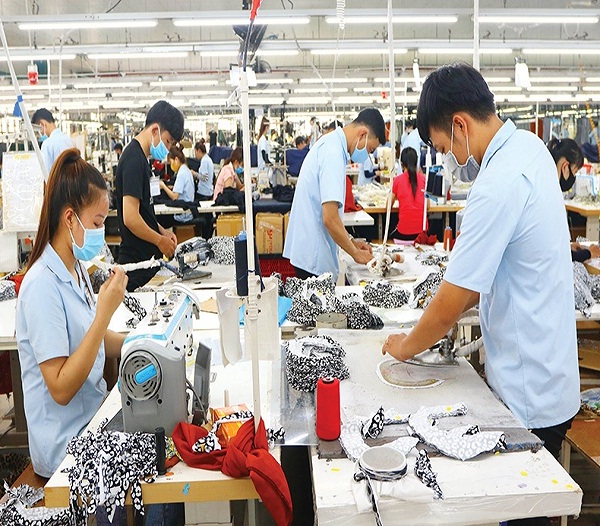
One of the fastest growing garment and textile markets in South East Asia, Vietnam is facing increasing competition from Asian and other markets. In the fourth quarter of FY21, Vietnam was able to meet its target of $39 billion in textile and garment exports, growth of 11.2 per cent compared to 2020. However, this does not indicate a growth in market share, says Le Tien Troung, Chairman, Vietnam National Textile and Garment Group.
In 2022, Vietnam aims for an export turnover of $43.5 billion. However, resurgence in pandemic could dampen demand, says Vu Duc Giang, Chairman, Vietnam Textile and Apparel Association. Freight as rates in the country remains high and it also faces a serious shortage of empty containers.
Rising transportation, labor costs cause concern
Goods transportation has become a serious challenge in Vietnam as air transportation costs have increased fourfold, from $4,250 per tonne to $17,000, as per a Vietnam.net report. Only 16.7 per cent buyers surveyed by the Research Centre for Employment Relations agreed to share these air freight costs with businesses. Meanwhile labor costs too are rising, says Giang. Currently, they account for 26-30 per cent of the entire costs of goods of garment companies. Giang says, costs will continue to rise with an in increase annual base salary of laborers and new insurance policy.
Growing competition from other exporters
Currently, Vietnam is the fifth largest RMG exporter to the US, shows data from the US Office of Textiles and Apparel. Stats reveal, Vietnam exports to the US grew just 14 per cent last year. Many of its importers are shifting towards suppliers from Vietnam’s competitors due to production disruptions. Garment exports by Bangladesh have continued to rise with many buyers once again turning to Bangladesh, says the Bangladesh Knitwear Manufacturers and Exporters Association (BKMEA).
US’ imports from India are also rising with the government increasing export turnover for the textile industry to $80 billion by the 2024-2025 period. In 2021, the government’s autonomous India Program and other policies helped the Indian textile and garment industry recover from the pandemic loss of 13 per cent in 2020. The government has decided to extend its tax and textile refund scheme till 2024. It also plans to accelerate the implementation of other credit schemes for the sector.
Need for flexibility with suppliers
Despite this competition from other countries, Vietnamese garments and textiles can maintain competitiveness by leveraging current advantages. For instance, the EU-Vietnam Free Trade Agreement can help Vietnamese companies increase their market share. However, for this, Vietnamese companies need to be cost-effective compared to Bangladeshi products that are closer to the EU’s border. The global garment and textile industry is looking to establish flexible relationships with suppliers, while also focusing on being environment friendly.
New Fashion for Good project to accelerate shift to dry processing
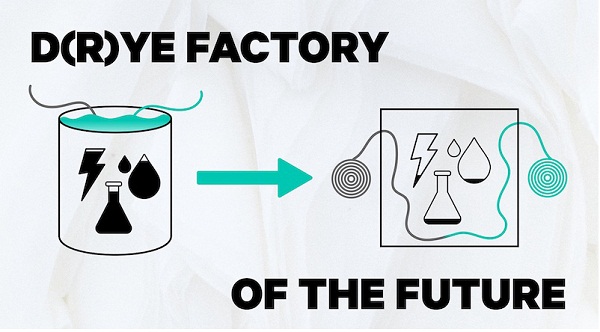
A consortium project to bring together several innovations in textile pre-treatment and coloration has been launched by the global platform for innovation Fashion for Good. Known as e D(R)YE Factory of the Future, the project accelerates a shift from wet to mostly dry processing, reducing greenhouse gas emissions by upto 89 per cent and water consumption by almost 95 per cent.
Creating a strong market pull
The project was launched in partnership with brands having extensive expertise in the textile space such as adidas, Kering, PVH Corp, Arvind Limited, and Welspun India. It aims to introduce new technologies to disrupt current processing, pre-treatment, coloration and finishing, of textiles in the fashion supply chain. “The project partners several innovators to test their innovations in pre-treatment and coloration. It brings together all industry leaders to create a strong market pull,” says Sudhakar Puvvada, Chief Operating Officer at Indigo Mill Designs
Along with the participating Fashion for Good partners and key supply chain players, the project is also joined by eight innovators including Alchemie Technologies, Deven Supercriticals, eCO2Dye, GRINP, Indigo Mill Designs, imogo, MTIX and Stony Creek Colors. These innovators will collaborate with Fashion for Good to showcase new pre-treatment and coloration solutions across five materials; cotton, polyester, blends, denim and wool. They will test technologies including plasma and laser treatments, spray dyeing, supercritical carbon dioxide (CO2) and foam dyeing.
Tier II emissions to reduce by 89%
Traditionally, Tier II activities like pre-treatment, coloration and finishing are carried out in large tanks or baths. They require large amounts of energy, heat and water, leading to a release of 52 per cent of Greenhouse Gas (GHG) emissions and large amounts of toxins into water. To remove the impact of these emissions, the industry needs to shift from wet processes - to mostly dry processes.
This will help it reduce Tier II emissions by 79-89 per cent besides slashing over 25 per cent of GHG emissions. It can also help reduce water consumption in pre-treatment by upto 83 per cent and in coloration by upto 95 per cent.
Meeting net-zero targets
The recent report “Unlocking the Trillion Dollar Fashion Decarbonisation Opportunity” by Fashion for Good and Apparel Impact Institute, helps the industry meet its net-zero ambition. It delineates the required funding and maps integral levers across existing and innovative solutions. It also identifies the potential of the shit from wet to mostly dry processing to reduce the industry’s carbon emissions by 24 per cent and accelerates its implementation.
Fashion for Good will collaborate with several partners to help facilitate the implementation of these solutions at selected manufacturers.