FW
Winnie Park named new CEO of Forever 21
Los Angeles-based fashion brand Forever 21 has named Winnie Park new chief executive officer. As per a Women’s Wear Daily report, Park will succeed Daniel Kulle, the H&M executive who resigned from the top spot in October after less than two years. She was earlier the CEO of Paper Source for six years. She was responsible for transforming the company from a brick-and-mortar retailer to a lifestyle brand with a strong digital platform and led the successful sale of the brand to an affiliate of Barnes & Noble.
At Forever 21, Park will report to Marc Miller, CEO of Sparc, the joint venture between Authentic Brands Group and Simon Property Group that bought Forever 21 out of bankruptcy in February of 2020 for $81.1 million. She will add fresh perspective and approaches in connecting with the Forever 21 customer, which will help drive Forever 21 from its current $2 billion sales level to new heights of success as a leading brand in SPARC’s Fashion and Lifestyle brand portfolio.
Park is currently on the board and audit committee of Dollar Tree, and is on the board for Women in Retail Leadership. She has also served as an independent director and member of the compensation and governance and audit committees for Express.
Columbian city Medellin to host Columbiatex de las Americas from January 25
Columbia’s main textile trade event, Colombiatex de las Américas, will be held in Medellin, from January 25 to 27, 2022. The event will be attended by 19 Italian textile machinery manufacturers and organized by the Italian Trade Agency and ACIMIT, the Association of Italian Manufacturers of Textile Machinery.
In the first nine months of 2021, Italy exported textile machines worth €9.3 million. This was a growth of 130 per cent, not only compared to the value recorded last year, but also to that of 2019. More than half of the demand for Italian machinery in Colombia was for finishing machines.
Compared to previous editions of the event, states there were greater number of Italian exhibitors, although the health emergency is far from over and there is great uncertainty characterizing the world economic scenario, says Alessandro Zucchi, President, ACIMIT.
Coats develops new fiber-laying technology
A revolutionary fiber-laying technology - Lattice Lite Eco – is being launched by industrial threads manufacturer, Coats. The technology uses sustainable materials to create footwear composite materials for the next generation of high performance supershoe.
The revolutionary fibre-laying technology positions yarns precisely in the required place and direction. It creates the required thickness, flexibility, torsion and rigidity of each section of the footplate to ensure they support every part of the foot. This also helps address the constant challenge for developers of footwear to combine high performance with comfort.
Lattice Lite Eco eliminates the need for additional resin steps, such as prepeg or resin transfer moulding, speeding up the manufacturing process and reducing material wastage to 5 per cent, from over 30 per cent for more traditional composite operations. It uses a range of eco-friendly materials including recycled carbon, recycled nylon or materials from natural resources such as basalt and flax.
The technology was developed in the Coats Innovation Hub EMEA in Turkey. Besides footplates, it can also be used in toe caps, torsion bars, heel counters, bindings and knuckle protection. It creates components that are both lightweight and robust which enables products to go further, faster and stronger.
‘Connected’ to be theme of Intertextile Shanghai Apparel Fabrics-Spring 2022
To be held in Shanghai from April 14-16, 2022, Intertextile Shanghai Apparel Fabrics-Spring Edition 2022 will focus on the theme-‘Connected’. The theme will be represented by four key trends: Bio-Clarity, Natural-Harmony, Virtual-Energy and Earth-Celebration. Trend Forum will feature on-trend fabric samples submitted by exhibitors to provide inspiration for visitors on colors, patterns, materials, etc.
The Intertextile Directions Trend Committee will be formed by top trend forecasters from fashion capitals around the world: TOBE TDG By The Doneger Group (New York, USA), Elementi Moda (Milan, Italy), NellyRodi Agency (Paris, France) and Sachiko Inoue (Tokyo, Japan).
Intertextile Shanghai Apparel Fabrics – Spring Edition 2022 will be held concurrently with the Spring Edition of Intertextile Shanghai Home Textiles, Yarn Expo Spring, CHIC and PH Value at the National Exhibition and Convention Center (Shanghai). The fair is co-organized by Messe Frankfurt (HK) Ltd; the Sub-Council of Textile Industry, CCPIT; and the China Textile Information Centre.
Coloreel sells four units to US distribution partner
Swedish innovation brand Coloreel has expanded its business by selling four units to new US distribution partner, ZSK Machines, a division of Notcina Corporation. Sven Öquist, VP Sales, Coloreel Group AB says, this move will enable the company to grow its business in the US. The brand uses its technology to both preserve the craftsmanship of embroidery and take embroidery to the next level.
This enables the brand to access previously complicated designs. Using only a single thread and needle helps it improve s quality and efficiency, enabling immediate start up and faster delivery. Coloreel is also a protagonist of sustainable production. By coloring a single reel of thread, the brand ensures there is no wastewater, hence no water pollution. It also minimizes thread waste and microfiber pollution.
Notcina Corporation is one of the oldest and most respected entities in the industry, started in 1955 by the same family who operates the company today. Three generations ago, the commitment to the sewing & embroidery trade began in Saint Louis, MO, and has since evolved as the industry has evolved. This commitment continues with providing ZSK embroidery machines to the US market.
AATCCC will hold new online educational program from February 23-24, 2022
AATCC will hold its new online educational program, Fluorescence and High Visibility for Textiles from February 23-24, 2022. The virtual event will feature industry experts discussing a variety of topics including color, innovation, technology, detergents, laundering, reflective tape, testing, product, etc. Many industry leaders including Rachel Applegate, Scientist, Procter & Gamble; Erika Simmons, Technical Director, AATCC; Randy Mumford, Technical Manager, Archroma; Ken Butts, Global Key Account Team Manager, Datacolor; Michael Murphy, Senior Advisor, e-Dye; Denise Statham, Director of Technical Services, Workwear Outfitters; Gregg Woodcock, Senior Manager Quality, Hanesbrands; Michael Hayes, Applications Engineer, 3M; Katie Aune, Applications Engineer, 3M and Roland Connelly, Color Supply Chain, Consultant, RoLyn Group Color Consultants will make presentations at the event. The sessions will be moderated by established industry experts Nelson Houser and Steve Simonson.
World’s leading not-for-profit association serving textile professionals since 1921, AATCC, headquartered in Research Triangle Park, NC, US, provides test method development, quality control materials, and professional networking for members in about 50 countries throughout the world.
India’s cotton stocks to decline by 12 lakh bales in FY2021-22: CAI
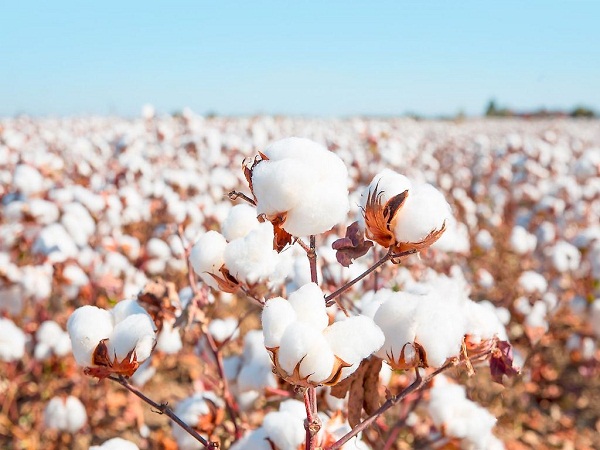
The Crop Committee, Cotton Association of India (CAI) has released its December estimate of the cotton crop for the season 2021-22. As per estimates, cotton stock in India is likely to drop by 12 lakh bales to 348.13 lakh bales against earlier estimate of 360.13 lakh bales. From October 2021 to December 2021, cotton stock in India is estimated to have reached 218.52 lakh bales. This includes arrivals of 140.52 lakh bales of 170 kg each imports of 3 lakh bales of 170 kg each and the opening stock of 75 lakh bales of 170 kg .each at the beginning of the season.
Stocks reach 113.77 by December 2021
By the end of December 2021, India is expected to have a cotton stock of 113.77 lakh bales of 170 kg. Of this, 65 lakh bales of 170 kg each will be available with the textile mills and the remaining 48.77 lakh bales of 170 kg each with the CCI, Maharashtra Federation and others.
From October 31-December 31, 2021, India’s cotton mills are estimated to have held 65.00 lakh cotton bales of stocks. Majority of this; 48.77 lakh bales of 170 kg each was held by the Cotton Corporation of India, Maharashtra Federation, MNS, Ginners, Traders, MCX etc. In all, spinning mills and stockists are estimated to have held 113.77 lakh bales of cotton of 170 kg each.
Production to drop by 348.13 lakh bales in FY2021-22
During the 2021-22 season, India’s cotton production will reduce to 348.13 lakh bales of 170 kg each from its earlier estimate of 380.13 lakh bales, says CAI. Gujarat will see the highest decline in production of 5 lakh bales of 170 kg each. It will be followed by Telangana and Karnataka with decline of 2 lakh bales each. Rajasthan will see the lowest decline in production of 0.25 lakh bales.
Consumption to increase to 345 lakh bales
CAI estimates, India’s domestic cotton consumption will increase to 345 lakh bales from 335 lakh bales during 2021-22. Exports are likely to reach 48 lakh as against the previous year’s export estimate of 78 lakh bales of 170 kg each.. Till September 2022, India will supply 438.13 lakh cotton bales of 170 kg each, estimates CAI. The total cotton supply will include opening stock of 75 lakh bales of 170 kg.
Imports to increase by 5 lakh bales
CAI estimates, India’s cotton imports during FY21-22 will increase by 5 lakh bales to 15 lakh bales of 170 kgs. each from the previous month’s import estimate of 10 lakh bales of 170 kg.
From October 2021 to December 2021, India’s cotton imports are estimated to decline to 140.52 lakh bales of 170 kg each Compared to the average cotton imports from October to December in the last five years, the current year’s cotton imports are likely to increase by 23.11 lakh bales of 170 kgs each compared to the average cotton arrivals of the corresponding months of the last five years.
Global cashmere clothing market to reach $3,333.6 million by 2026: Study
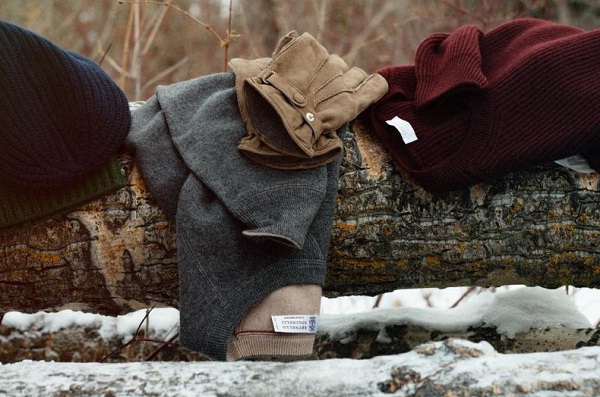
Estimated to be worth $2844.6 million in 2020, the global cashmere clothing market is expected to be worth $3,333.6 million in 2026 with an estimated growth rate of 4.0 per cent CAGR over the next five year, says Cashmere Clothing Market Report by IndustryDataAnalytics, a digital consultancy company providing research reports across Industries.
China tops both production and consumption
The report states, China is the largest exporter of Cashmere clothing in the world. It exports around 70 per cent of the world’s cashmere to various countries. Italy is its largest importer with imports accounting for 78 per cent of total cashmere exported by China in April 2017. China is also the largest importer of Cashmere in the world. The country’s growing national economy and gradually improving quality of life is driving Cashmere up consumption. Many leading companies like Lara Plana and Brunello Cucinelli are known to import large amounts of Cashmere for their products.
China manufactures Cashmere garments in large quantities. Yet, its brand penetration is low as most of brands operate as OEMs. This relegates most local brands to the bottom of the Cashmere value chain across the world. US is also a leading manufacturer of cashmere clothing in the world. In 2016, it manufactured about 19 per cent of world’s cashmere production amounting to 3.5 million units.
Cheap raw materials and labor help Asia dominate
Among the continents, Asia leads global cashmere production due to its low raw material costs and easy availability of cheap labor. This has led to many famous cashmere brands setting up their manufacturing bases across Asia. The fashion luxury cashmere market is largely concentrated with top 20 brands accounting for 50 per cent of global market share.
The report states, Loro Piana, Brunello Cucinelli, Ermenegildo Zegna, Malo, Alyki, Pringle of Scotland, SofiaCashmere, Autumn Cashmere, TSE, Ballantyne, Birdie Cashmere, Maiyet, Gobi, GOYO, Cashmere Holding, Erdos, Hengyuanxiang, Kingdeer, Snow Lotus, Zhenbei Cashmere are some of the leading players in world cashmere market.
US’ spending on apparel and footwear exceeds pre-pandemic levels in 2021
As per a new report by online personal styling service Stitch Fix, US Consumers’ spending on apparel and footwear exceeded pre-pandemic levels in every month of 2021.
As per a Daily Star report, the pandemic greatly accelerated the shift toward online shopping. E-commerce grew to account for 36 per cent of total apparel and footwear sales in 2020, versus 26 per cent in 2019, it said.
Apparel export to the American markets from Bangladesh grew 45.91 per cent year-on-year to $4.23 billion in the July-December period.
Export of goods and footwear made of leather to the US markets also increased thanks to high demand from retailers and brands. The export growth was mainly driven by three factors -- the US-China trade tension, strength in production of both basic garment items and those in the middle range of price and quality, and competitive prices.
The Ha-Meem group exported $550 million worth of garment items in 2021 of which 95 per cent went to the US markets. This year some $100 million-worth more garment items are expected to be shipped to the US markets.
Similarly, the Noman Group, another leading garment exporter, has also been receiving more work orders from the US-based retailers and brands this year compared to last year.
Western retailers and brands have been heading over to Bangladesh with plenty of work orders in an attempt to diversify sources and reduce overdependence on a single source.
Bangladesh’s leather and leather goods and footwear export have witnessed growth of over 18 per cent year-on-year in the July-December period. MdShahidullahAzim, Managing Director, Classic Fashion, said garment exports to the US markets at the end of the year may cross $8 billion as the growth was very high.
Faruque Hassan, President, BGMEA added, the confidence of Bangladeshi apparel items has improved a lot following the strengthening of workplace safety and continuation of product supply even during the pandemic's peak. Local manufacturers Aare also very strong in the production of garment items, he added.
The Lycra Company’s Foshan facility earns high score Higg FEM
The Lycra Company’s largest manufacturing site located in Foshan, China has earned a score in the upper quartile for its third-party audited Higg Facility Environmental Modeule (Higg FEM).
Higg FEM is a sustainability assessment tool that The LYCRA Company is using to determine the Foshan site’s environmental impact, standardize how its environmental performance is measured year over year and identify, prioritize and scale enhancements.
Foshan’sHigg FEM score is based on the percentage of completed and verified self-assessment questions related to its environmental management systems, energy use and greenhouse gas emissions, water use, wastewater, air emissions, waste management and chemical management. The Foshan site completed the full module and had their responses confirmed by an independent verifier.